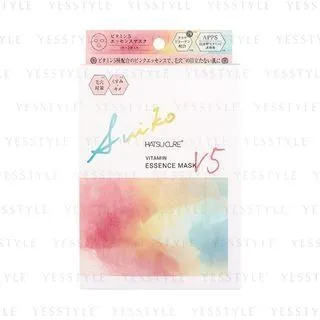
TANGO Suiko Hatsucure Vitamin 5 Essence Mask

TANGO Suiko Hatsucure Vitamin 5 Essence Mask

Efficacy75/100IrritancyHigh

Works for

Moisturizing
Glycerin, Diglycerin + 21 more
Works
What the product description says
“By combining vitamins with different characteristics, it moisturizes and creates smooth, glossy skin with inconspicuous pores and lead.”
Source: Yesstyle

This product can help improve hydration of the skin with the two types of ingredients.

The first type is called “humectants”:
these ingredients help attract water. When humectants are on the surface of the skin, they “pull in” the moisture from the outside environment, or from within deeper layers of the skin. The following ingredients in this product do the job: betaine, diglycerin.

This product also contains ingredients called “occlusives”. They help reduce the speed with which our skin loses moisture to the outside environment. These ingredients also help soften the upper layer of the skin, so it feels less tight and nicer to the touch. The following ingredients in this product do the job: helianthus annuus seed oil, hydrolyzed collagen.

GlycerinKey active· HumectantEffect: HighOne of the best moisturizing ingredients. Naturally present in skin. It attracts water to the upper layer of the skin working as a humectant~4.6–5.7%
DiglycerinKey active· HumectantEffect: HighHelps attract water to the upper layer of the skin~1.8–2.2%
Persea gratissima oilKey active· EmollientEffect: HighAn emollient that helps soften the skin and could be helpful in repairing its barrier function~0.55–0.8%
Helianthus annuus seed oilKey active· Emollient, OcclusiveEffect: HighA great emollient due to its high linoleic acid content. One of the most effective plant oils in helping skin hydration and repairing skin barrier function~0.45–0.65%
Hydrolyzed collagenKey active· Humectant, EmollientEffect: HighA typically plant-derived compound that is supposed mimic human collagen. Cannot penetrate the skin barrier so is not particularly useful in skincare products beyond attracting water to the upper layer of the skin~0.25–0.5%
CyanocobalaminKey activeEffect: HighCan support skin barrier function and reduce inflammation in skin~0.25–0.5%
Soluble collagenKey active· HumectantEffect: HighA typically plant-derived compound that is supposed mimic human collagen. Cannot penetrate the skin barrier so is not particularly useful in skincare products beyond attracting water to the upper layer of the skin~0.25–0.45%
Malus domestica fruit extractKey activeEffect: HighHelps attract water to the upper layer of the skin~0.25–0.45%
Sodium acetylated hyaluronateKey active· HumectantEffect: HighA type of hyaluronic acid that works as an excellent moisturizer by attracting water into the upper layer of the skin. Is typically feels less sticky on the skin compared to the usual hyaluronic acid~0.2–0.4%
Sodium hyaluronateKey active· HumectantEffect: HighOne of the best moisturizing ingredients. Attracts water into the upper layer of the skin~0.2–0.4%
Hydrolyzed hyaluronic acidKey active· HumectantEffect: HighOne of the best moisturizing ingredients. Attracts water into the upper layer of the skin. A version of it is naturally present in skin~0.2–0.4%
Zea mays oilKey activeEffect: HighA good moisturizing plant oil. Due to the high linoleic acid content, it helps soften the upper layer of the skin, reduce water loss and support skin barrier function~0.2–0.35%
BetaineKey active· HumectantEffect: HighHelps attract water to the upper layer of the skin and improves the product texture~0.15–0.25%
Pentylene glycol· EmollientEffect: LowUsed to preserve products, dissolve other ingredients and create a nice product texture~2.3–2.8%
Scutellaria baicalensis root extract· HumectantEffect: LowA plant extract that might contain a compound baicalin that could be helpful in neutralizing free radicals and reducing inflammation in skin. The baicalin concentration in skincare products is often too low for an effective action. Can be used for its fragrant properties~0.2–0.35%
Hydrolyzed conchiolin proteinEffect: Low~0.2–0.4%
Sorbitol· HumectantEffect: LowHelps attract water to the upper layer of the skin and improves the product texture~0.15–0.25%
Butylene glycol· HumectantEffect: LowUsed to create a nice product texture and help delivery of other ingredients. Might be somewhat helpful in attracting water to the upper layer of the skin~0.15–0.25%
TocopherolEffect: Low, below effective dosePure form of vitamin E. Can help moisturise and protect the skin from free radicals. Often used to help stabilise other ingredients or the formula itself~0.35–0.65%
LecithinEffect: Low, below effective doseUsed mostly for creating emulsions - helping oil and water mix together. Helps soften the upper layer of the skin~0.25–0.45%
Prunus armeniaca kernel oilUnder-dosedAn emollient that helps soften the skin~0.6–0.85%
Rosa canina fruit oilUnder-dosedA great emollient. Contains vitamin E (tocopherol) which may give it some anti-oxidant properties. Can contain volatile compounds and can be irritating~0.5–0.7%
Dipotassium glycyrrhizateUnder-dosedA salt derived from licorice. Works as an emollient to soften the upper layer of the skin and can help calm down inflammation. Might be helpful for skin lightening~0.2–0.4%
Anti-oxidation
Side benefit · 3-o-ethyl ascorbic acid, Cynara scolymus leaf extract + 6 more
May help

This product contains antioxidants (3-o-ethyl ascorbic acid) that can help neutralize free radicals in skin to lessen the damage it gets from the UV light (sun). There is some human evidence for this effect in skin, though it is smaller or less consistent than the evidence for the best antioxidants.

3-o-ethyl ascorbic acidKey activeEffect: MediumA vitamin C derivative that is more stable but less potent than pure form of vitamin C. Can help neutralize free radicals and help reduce hyperpigmentation, but the required concentration is likely to be much higher than for the pure form of vitamin C, limiting the ingredient's effectiveness in products~0.8–1.2%
Cynara scolymus leaf extractEffect: LowA plant extract that might have some anti-oxidant properties. It might be irritating~0.3–0.5%
Malus domestica fruit extractEffect: LowHelps attract water to the upper layer of the skin~0.25–0.45%
Scutellaria baicalensis root extractEffect: LowA plant extract that might contain a compound baicalin that could be helpful in neutralizing free radicals and reducing inflammation in skin. The baicalin concentration in skincare products is often too low for an effective action. Can be used for its fragrant properties~0.2–0.35%
Magnesium ascorbyl phosphateEffect: Low, below effective doseA derivative of vitamin C that is more stable, but less bioavailable than the pure form of vitamin C. It does not penetrate the skin well, but has been shown to convert to pure vitamin C once in skin. It can be helpful in stimulating collagen production and lightening the skin tone, but the required concentration is likely to be very high~1.1–1.3%
Prunus armeniaca kernel oilEffect: Low, below effective doseAn emollient that helps soften the skin~0.6–0.85%
Rosa canina fruit oilEffect: Low, below effective doseA great emollient. Contains vitamin E (tocopherol) which may give it some anti-oxidant properties. Can contain volatile compounds and can be irritating~0.5–0.7%
TocopherolUnder-dosedPure form of vitamin E. Can help moisturise and protect the skin from free radicals. Often used to help stabilise other ingredients or the formula itself~0.35–0.65%
Anti-aging
Side benefit · Retinyl palmitate, 3-o-ethyl ascorbic acid + 2 more
May help

This product contains retinyl palmitate. There is some human evidence that this ingredient helps reduce and prevent fine lines and wrinkles and improve skin elasticity and firmness, though it is smaller or less consistent than the evidence for the best anti-aging ingredients.

Retinyl palmitateKey activeEffect: MediumThree steps removed from the active form of vitamin A - retinoic acid. To have an effect in the skin, it first needs to be converted twice to become the retinoic acid. This means it is less potent than retinol, but could also be less irritating. Once converted to the retinoic acid in the skin, it helps against all signs of aging, improves skin cell turnover and helps fight blemishes and clogged pores. However, in many cosmetic formulations, it is used in a concentration that is too low to have the full effect~0.6–0.9%
3-o-ethyl ascorbic acidEffect: LowA vitamin C derivative that is more stable but less potent than pure form of vitamin C. Can help neutralize free radicals and help reduce hyperpigmentation, but the required concentration is likely to be much higher than for the pure form of vitamin C, limiting the ingredient's effectiveness in products~0.8–1.2%
Magnesium ascorbyl phosphateEffect: Low, below effective doseA derivative of vitamin C that is more stable, but less bioavailable than the pure form of vitamin C. It does not penetrate the skin well, but has been shown to convert to pure vitamin C once in skin. It can be helpful in stimulating collagen production and lightening the skin tone, but the required concentration is likely to be very high~1.1–1.3%
TocopherolEffect: Low, below effective dosePure form of vitamin E. Can help moisturise and protect the skin from free radicals. Often used to help stabilise other ingredients or the formula itself~0.35–0.65%
Evens skin tone
Side benefit · 3-o-ethyl ascorbic acid, Retinyl palmitate + 2 more
May help

The following ingredient (ingredients) in this product might be helpful, but there is no evidence to confirm that it actually works: 3-o-ethyl ascorbic acid, retinyl palmitate.

3-o-ethyl ascorbic acidKey activeEffect: MediumA vitamin C derivative that is more stable but less potent than pure form of vitamin C. Can help neutralize free radicals and help reduce hyperpigmentation, but the required concentration is likely to be much higher than for the pure form of vitamin C, limiting the ingredient's effectiveness in products~0.8–1.2%
Retinyl palmitateKey activeEffect: MediumThree steps removed from the active form of vitamin A - retinoic acid. To have an effect in the skin, it first needs to be converted twice to become the retinoic acid. This means it is less potent than retinol, but could also be less irritating. Once converted to the retinoic acid in the skin, it helps against all signs of aging, improves skin cell turnover and helps fight blemishes and clogged pores. However, in many cosmetic formulations, it is used in a concentration that is too low to have the full effect~0.6–0.9%
Magnesium ascorbyl phosphateEffect: Low, below effective doseA derivative of vitamin C that is more stable, but less bioavailable than the pure form of vitamin C. It does not penetrate the skin well, but has been shown to convert to pure vitamin C once in skin. It can be helpful in stimulating collagen production and lightening the skin tone, but the required concentration is likely to be very high~1.1–1.3%
Dipotassium glycyrrhizateEffect: Low, below effective doseA salt derived from licorice. Works as an emollient to soften the upper layer of the skin and can help calm down inflammation. Might be helpful for skin lightening~0.2–0.4%

Can it cause trouble?

Irritancy
6 strong irritants: Retinyl palmitate, Citrus paradisi fruit extract + 4 more — patch-test recommended
High risk
We flagged 20 ingredients with irritancy potential. Severity depends on your sensitivity threshold; the table lists the worst offenders first.
IngredientFunctionIrritationEst. amount
3-o-ethyl ascorbic acidA vitamin C derivative that is more stable but less potent than pure form of vitamin C. Can help neutralize free radicals and help reduce hyperpigmentation, but the required concentration is likely to be much higher than for the pure form of vitamin C, limiting the ingredient's effectiveness in productsHigh~0.8–1.2%est.
Retinyl palmitateThree steps removed from the active form of vitamin A - retinoic acid. To have an effect in the skin, it first needs to be converted twice to become the retinoic acid. This means it is less potent than retinol, but could also be less irritating. Once converted to the retinoic acid in the skin, it helps against all signs of aging, improves skin cell turnover and helps fight blemishes and clogged pores. However, in many cosmetic formulations, it is used in a concentration that is too low to have the full effectHigh~0.6–0.9%est.
Cynara scolymus leaf extractA plant extract that might have some anti-oxidant properties. It might be irritatingHigh~0.3–0.5%est.
Citrus paradisi fruit extract—High~0.2–0.4%est.
Citrus aurantium dulcis juice—High~0.2–0.4%est.
Citrus limon juice—High~0.2–0.4%est.
Citrus aurantifolia juice—High~0.25–0.5%est.
Citrus aurantium dulcis peel oilAn essentil oil from orange peel. Potential allergen and can be irritatingHigh~0.2–0.4%est.
Scutellaria baicalensis root extractA plant extract that might contain a compound baicalin that could be helpful in neutralizing free radicals and reducing inflammation in skin. The baicalin concentration in skincare products is often too low for an effective action. Can be used for its fragrant propertiesHigh~0.2–0.35%est.
Pentylene glycolUsed to preserve products, dissolve other ingredients and create a nice product textureMedium~2.3–2.8%est.
Magnesium ascorbyl phosphateA derivative of vitamin C that is more stable, but less bioavailable than the pure form of vitamin C. It does not penetrate the skin well, but has been shown to convert to pure vitamin C once in skin. It can be helpful in stimulating collagen production and lightening the skin tone, but the required concentration is likely to be very highMedium~1.1–1.3%est.
Prunus armeniaca kernel oilAn emollient that helps soften the skinMedium~0.6–0.85%est.
Persea gratissima oilAn emollient that helps soften the skin and could be helpful in repairing its barrier functionMedium~0.55–0.8%est.
Rosa canina fruit oilA great emollient. Contains vitamin E (tocopherol) which may give it some anti-oxidant properties. Can contain volatile compounds and can be irritatingMedium~0.5–0.7%est.
Malus domestica fruit extractHelps attract water to the upper layer of the skinMedium~0.25–0.45%est.
Hydrolyzed conchiolin protein—Medium~0.2–0.4%est.
Sodium citrateHelps to control the skin's pH level. Maintains the skin's natural film of amino-lactic acids and oils. Helps to preserve productsMedium~0.2–0.35%est.
EthylhexylglycerinA preservativeMedium~0.2–0.35%est.
Disodium edtaStabilizes the product formulationMedium~0.1–0.2%est.
Comedogenic
1 ingredient rated 2 or more on the 0–5 pore-clogging scale
1 flagged
These ingredients have a comedogenic rating of 2 or more on a 0–5 scale; the table shows each one's rating. In leave-on products they can clog pores in acne-prone skin.
IngredientFunctionRatingEst. amount
Zea mays oilA good moisturizing plant oil. Due to the high linoleic acid content, it helps soften the upper layer of the skin, reduce water loss and support skin barrier function3/5~0.2–0.35%est.
Did this help you decide?

User reviews

Would you recommend?
No community reviews yet.

Be the first — your take helps the next person decide.

Ingredients

Filter by role to see what each ingredient is doing.

Water~45–55%
Formula
Irritation risk
Low

Plain old water

More about Water
Glycerin~4.6–5.7%
Key active
Irritation risk
Low
Works for
Moisturizing

One of the best moisturizing ingredients. Naturally present in skin. It attracts water to the upper layer of the skin working as a humectant

More about Glycerin
Dipropylene glycol~4–4.9%
Formula
Irritation risk
Low

Helps to dissolve other ingredients in a formulation. Slows down the rate of product drying

More about Dipropylene glycol
Isopentyldiol~3–3.7%
Formula
Irritation risk
Low

Helps dissolve other ingredients in a formulation

More about Isopentyldiol
Pentylene glycol~2.3–2.8%
Irritant · medium
Irritation risk
Medium
Works for
Moisturizing

Used to preserve products, dissolve other ingredients and create a nice product texture

More about Pentylene glycol
Diglycerin~1.8–2.2%
Key active
Irritation risk
Low
Works for
Moisturizing

Helps attract water to the upper layer of the skin

More about Diglycerin
Jellyfish extract~1.5–1.9%
Formula
Trisodium ascorbyl palmitate phosphate~1.3–1.6%
Irritant · high
Magnesium ascorbyl phosphate~1.1–1.3%
Irritant · medium
Irritation risk
Medium
Works for
Evens skin toneAnti-agingAnti-oxidation

A derivative of vitamin C that is more stable, but less bioavailable than the pure form of vitamin C. It does not penetrate the skin well, but has been shown to convert to pure vitamin C once in skin. It can be helpful in stimulating collagen production and lightening the skin tone, but the required concentration is likely to be very high

More about Magnesium ascorbyl phosphate
3-o-ethyl ascorbic acid~0.8–1.2%
Key activeIrritant · high
Irritation risk
High
Works for
Anti-oxidationEvens skin toneAnti-aging

A vitamin C derivative that is more stable but less potent than pure form of vitamin C. Can help neutralize free radicals and help reduce hyperpigmentation, but the required concentration is likely to be much higher than for the pure form of vitamin C, limiting the ingredient's effectiveness in products

More about 3-o-ethyl ascorbic acid
Retinyl palmitate~0.6–0.9%
Key activeIrritant · high
Irritation risk
High
Works for
Anti-agingEvens skin toneAnti-blemishExfoliation

Three steps removed from the active form of vitamin A - retinoic acid. To have an effect in the skin, it first needs to be converted twice to become the retinoic acid. This means it is less potent than retinol, but could also be less irritating. Once converted to the retinoic acid in the skin, it helps against all signs of aging, improves skin cell turnover and helps fight blemishes and clogged pores. However, in many cosmetic formulations, it is used in a concentration that is too low to have the full effect

More about Retinyl palmitate
Prunus armeniaca kernel oil~0.6–0.85%
Under-dosedIrritant · medium
Irritation risk
Medium
Works for
MoisturizingAnti-oxidation

An emollient that helps soften the skin

More about Prunus armeniaca kernel oil
Persea gratissima oil~0.55–0.8%
Key activeIrritant · medium
Irritation risk
Medium
Works for
Moisturizing

An emollient that helps soften the skin and could be helpful in repairing its barrier function

More about Persea gratissima oil
Rosa canina fruit oil~0.5–0.7%
Under-dosedIrritant · medium
Irritation risk
Medium
Works for
MoisturizingAnti-oxidation

A great emollient. Contains vitamin E (tocopherol) which may give it some anti-oxidant properties. Can contain volatile compounds and can be irritating

More about Rosa canina fruit oil
Helianthus annuus seed oil~0.45–0.65%
Key active
Irritation risk
Low
Works for
Moisturizing

A great emollient due to its high linoleic acid content. One of the most effective plant oils in helping skin hydration and repairing skin barrier function

More about Helianthus annuus seed oil
Natto gum~0.45–0.65%
Formula
Irritation risk
Low
More about Natto gum
Tocopherol~0.35–0.65%
Under-dosed
Irritation risk
Low
Works for
Anti-oxidationAnti-agingAnti-inflammatoryMoisturizing

Pure form of vitamin E. Can help moisturise and protect the skin from free radicals. Often used to help stabilise other ingredients or the formula itself

More about Tocopherol
Passiflora edulis fruit extract~0.3–0.55%
Formula
Cynara scolymus leaf extract~0.3–0.5%
Irritant · high
Irritation risk
High
Works for
Anti-oxidation

A plant extract that might have some anti-oxidant properties. It might be irritating

More about Cynara scolymus leaf extract
Cyanocobalamin~0.25–0.5%
Key active
Irritation risk
Low
Works for
Anti-inflammatoryMoisturizing

Can support skin barrier function and reduce inflammation in skin

More about Cyanocobalamin
Crataegus oxyacantha extract~0.25–0.45%
Formula
Ziziphus jujuba fruit extract~0.2–0.4%
Formula
Malus domestica fruit extract~0.25–0.45%
Key activeIrritant · medium
Irritation risk
Medium
Works for
MoisturizingAnti-oxidation

Helps attract water to the upper layer of the skin

More about Malus domestica fruit extract
Citrus paradisi fruit extract~0.2–0.4%
Irritant · high
Citrus aurantium dulcis juice~0.2–0.4%
Irritant · high
Citrus limon juice~0.2–0.4%
Irritant · high
Citrus aurantifolia juice~0.25–0.5%
Irritant · high
Irritation risk
High
Works for
Exfoliation
More about Citrus aurantifolia juice
Citrus aurantium dulcis peel oil~0.2–0.4%
Irritant · high
Irritation risk
High

An essentil oil from orange peel. Potential allergen and can be irritating

More about Citrus aurantium dulcis peel oil
Dipotassium glycyrrhizate~0.2–0.4%
Under-dosed
Irritation risk
Low
Works for
MoisturizingAnti-inflammatoryEvens skin tone

A salt derived from licorice. Works as an emollient to soften the upper layer of the skin and can help calm down inflammation. Might be helpful for skin lightening

More about Dipotassium glycyrrhizate
Malus domestica fruit cell culture extract~0.2–0.4%
Formula
Scutellaria baicalensis root extract~0.2–0.35%
Irritant · high
Irritation risk
High
Works for
AntibacterialAnti-oxidationMoisturizingReduces irritationAnti-inflammatory

A plant extract that might contain a compound baicalin that could be helpful in neutralizing free radicals and reducing inflammation in skin. The baicalin concentration in skincare products is often too low for an effective action. Can be used for its fragrant properties

More about Scutellaria baicalensis root extract
Sodium hyaluronate~0.2–0.4%
Key active
Irritation risk
Low
Works for
Moisturizing

One of the best moisturizing ingredients. Attracts water into the upper layer of the skin

More about Sodium hyaluronate
Bis-ethoxydiglycol cyclohexane 1,4-dicarboxylate~0.25–0.45%
Formula
Vaccinium myrtillus leaf extract~0.2–0.4%
Formula
Hydrolyzed collagen~0.25–0.5%
Key active
Irritation risk
Low
Works for
Moisturizing

A typically plant-derived compound that is supposed mimic human collagen. Cannot penetrate the skin barrier so is not particularly useful in skincare products beyond attracting water to the upper layer of the skin

More about Hydrolyzed collagen
Soluble collagen~0.25–0.45%
Key active
Irritation risk
Low
Works for
Moisturizing

A typically plant-derived compound that is supposed mimic human collagen. Cannot penetrate the skin barrier so is not particularly useful in skincare products beyond attracting water to the upper layer of the skin

More about Soluble collagen
Soluble proteoglycan~0.2–0.4%
Formula
Hydrolyzed conchiolin protein~0.2–0.4%
Irritant · medium
Irritation risk
Medium
Works for
Moisturizing
More about Hydrolyzed conchiolin protein
Sodium acetylated hyaluronate~0.2–0.4%
Key active
Irritation risk
Low
Works for
Moisturizing

A type of hyaluronic acid that works as an excellent moisturizer by attracting water into the upper layer of the skin. Is typically feels less sticky on the skin compared to the usual hyaluronic acid

More about Sodium acetylated hyaluronate
Hydrolyzed hyaluronic acid~0.2–0.4%
Key active
Irritation risk
Low
Works for
Moisturizing

One of the best moisturizing ingredients. Attracts water into the upper layer of the skin. A version of it is naturally present in skin

More about Hydrolyzed hyaluronic acid
Zea mays oil~0.2–0.35%
Key activeComedogenic 3/5
Irritation risk
Low
Comedogenicity
3/5
Works for
MoisturizingCleansing

A good moisturizing plant oil. Due to the high linoleic acid content, it helps soften the upper layer of the skin, reduce water loss and support skin barrier function

More about Zea mays oil
Polyglyceryl-6 isostearate~0.25–0.45%
Formula
Irritation risk
Low
Works for
Cleansing
More about Polyglyceryl-6 isostearate
Malic acid~0.2–0.35%
Formula
Irritation risk
Low

Helps adjust the product pH

More about Malic acid
Sodium citrate~0.2–0.35%
Irritant · medium
Irritation risk
Medium

Helps to control the skin's pH level. Maintains the skin's natural film of amino-lactic acids and oils. Helps to preserve products

More about Sodium citrate
Ethylhexylglycerin~0.2–0.35%
Irritant · medium
Irritation risk
Medium

A preservative

More about Ethylhexylglycerin
Lecithin~0.25–0.45%
Formula
Irritation risk
Low
Works for
CleansingMoisturizing

Used mostly for creating emulsions - helping oil and water mix together. Helps soften the upper layer of the skin

More about Lecithin
Butylene glycol~0.15–0.25%
Formula
Irritation risk
Low
Works for
Moisturizing

Used to create a nice product texture and help delivery of other ingredients. Might be somewhat helpful in attracting water to the upper layer of the skin

More about Butylene glycol
Betaine~0.15–0.25%
Key active
Irritation risk
Low
Works for
Moisturizing

Helps attract water to the upper layer of the skin and improves the product texture

More about Betaine
Sorbitol~0.15–0.25%
Formula
Irritation risk
Low
Works for
Moisturizing

Helps attract water to the upper layer of the skin and improves the product texture

More about Sorbitol
Disodium edta~0.1–0.2%
Irritant · medium
Irritation risk
Medium

Stabilizes the product formulation

More about Disodium edta
Xanthan gum~0.1–0.15%
Formula
Irritation risk
Low
Works for
Cleansing

Used to create a thicker product consistency

More about Xanthan gum
Phenoxyethanol~0.1–0.2%
Formula
Irritation risk
Low

A preservative. It helps prevent bacterial growth in cosmetic products

More about Phenoxyethanol
Ingredient list view

Water, Glycerin, Dipropylene glycol, Isopentyldiol, Pentylene glycol, Diglycerin, Jellyfish extract, Trisodium ascorbyl palmitate phosphate, Magnesium ascorbyl phosphate, 3-o-ethyl ascorbic acid, Retinyl palmitate, Prunus armeniaca kernel oil, Persea gratissima oil, Rosa canina fruit oil, Helianthus annuus seed oil, Natto gum, Tocopherol, Passiflora edulis fruit extract, Cynara scolymus leaf extract, Cyanocobalamin, Crataegus oxyacantha extract, Ziziphus jujuba fruit extract, Malus domestica fruit extract, Citrus paradisi fruit extract, Citrus aurantium dulcis juice, Citrus limon juice, Citrus aurantifolia juice, Citrus aurantium dulcis peel oil, Dipotassium glycyrrhizate, Malus domestica fruit cell culture extract, Scutellaria baicalensis root extract, Sodium hyaluronate, Bis-ethoxydiglycol cyclohexane 1,4-dicarboxylate, Vaccinium myrtillus leaf extract, Hydrolyzed collagen, Soluble collagen, Soluble proteoglycan, Hydrolyzed conchiolin protein, Sodium acetylated hyaluronate, Hydrolyzed hyaluronic acid, Zea mays oil, Polyglyceryl-6 isostearate, Malic acid, Sodium citrate, Ethylhexylglycerin, Lecithin, Butylene glycol, Betaine, Sorbitol, Disodium edta, Xanthan gum, Phenoxyethanol

Compare prices

Retailers ranked by price — lowest first.

Yesstyle
$18.70 Out of stock
Check

Affiliate links · As an Amazon Associate, WIMJ earns from qualifying purchases.

Worth comparing, line by line.

Match % combines shared ingredients, the first five ingredients, shared actives and hero ingredients, irritancy (lower counts in the alternative's favour), texture and body area. Only products in the same routine step are compared.

Side-by-side comparison of this product against its closest alternatives
TANGOSuiko Hatsucure Vitamin 5 Essence MaskYOUR PRODUCTNo7Lift & Luminate TRIPLE ACTION Serum Boost Sheet MasksRohto MentholatumHada Labo Koi-Gokujyun Mask 20 pcs - 2 TypesFOREOGlow Addict Activated Mask
Match—57%56%55%
Price—$5.99$26.55$20.28
Shared key ingredients—5 of 196 of 194 of 19
Key difference—Acetyl Dipeptide-1 Cetyl EsterNiacinamideNiacinamide
Irritancy High Medium Low Medium
Drying alcohol————
View product Shop Shop Shop

More alternatives: ISANA Vitamin C Caffeine Sheet MaskMAKE.iN VitaminC 100 Moist Face Mask

Cheaper alternatives? See how this stacks up against similar formulas.
We compare ingredient profiles across our catalog — pick the closest match for your budget.
Open dupe finder

Product summary

"TANGO - Suiko Hatsucure Vitamin 5 Essence Mask" could be helpful for: Evens skin tone, Anti-aging and Moisturizing, but its actives are not the most effective or are not well-studied.

Ingredient callouts

  • this product includes a form of Retinoids (vitamin A) - retinyl palmitate 0.60% - 0.90%, but this type of vitamin A is not very effective. It could in theory help with fine lines and wrinkles, but the effect is most likely minimal.
  • Humectants (betaine 0.15% - 0.25%, hydrolyzed hyaluronic acid 0.20% - 0.40%, sodium acetylated hyaluronate 0.20% - 0.40%, soluble collagen 0.25% - 0.45%, hydrolyzed collagen 0.25% - 0.50%, sodium hyaluronate 0.20% - 0.40%, diglycerin 1.80% - 2.20% and glycerin 4.60% - 5.70%). These ingredients help attract water to the upper layer of the skin and improve the skin hydration.

Price

The product retails for 18.70$ in the United States.

For a detailed price comparison: click here.

Sources cited in this review

Every concentration estimate and effectiveness label is anchored to one of these 24 studies and safety reviews.

  1. 1
  2. 2
  3. 3
  4. 4
  5. 5
  6. 6
TANGO Suiko Hatsucure Vitamin 5 Essence Mask
TANGOSuiko Hatsucure Vitamin 5 Essence Mask

Affiliate links · As an Amazon Associate, WIMJ earns from qualifying purchases.

As an Amazon Associate, WIMJ earns from qualifying purchases.