Works for
1 of 1 advertised claim delivered
Moisturizing20 ingredients credited for this claimGood support
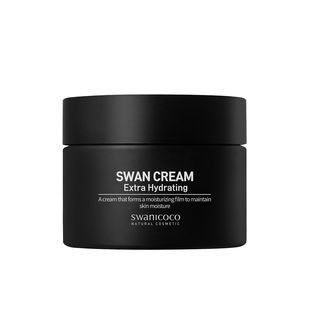
“Swan Cream Extra Hydrating”
This product can help improve hydration of the skin with the two types of ingredients.
The first type is called “humectants”:
these ingredients help attract water.
When humectants are on the surface of the skin, they “pull in” the moisture from the outside environment, or from
within deeper layers of the skin. The following ingredients in this product do the job:
betaine, biosaccharide gum-1.
This product also contains ingredients called “occlusives”. They help reduce the speed with which our skin loses moisture to the outside environment. These ingredients also help soften the upper layer of the skin, so it feels less tight and nicer to the touch. The following ingredients in this product do the job: saccharomyces/imperata cylindrica root ferment extract, theobroma cacao seed butter.
Can it cause trouble?
Irritancy13 flagged ingredientsMedium risk
Comedogenic3 ingredients rated 2 or more on the 0–5 pore-clogging scale3 flagged
User reviews
Be the first — your take helps the next person decide.
Ingredients
Filter by role to see what each ingredient is doing.
Saccharomyces ferment filtrate~25–37%
- Irritation risk
- Low
A product of yeast fermentation. Helps attract water to the upper layer of the skin
More about Saccharomyces ferment filtrateButylene glycol~5.7–8.5%
- Irritation risk
- Low
Used to create a nice product texture and help delivery of other ingredients. Might be somewhat helpful in attracting water to the upper layer of the skin
More about Butylene glycolMacadamia ternifolia seed oil~4.4–6.5%
- Irritation risk
- Medium
Plant oil from nuts that helps soften the upper layer of the skin. Contains a high concentration of oleic acid that can weaken skin's barrier function and increase water-loss while enhancing penetration of other ingredients
More about Macadamia ternifolia seed oilGlycerin~3.2–4.8%
- Irritation risk
- Low
One of the best moisturizing ingredients. Naturally present in skin. It attracts water to the upper layer of the skin working as a humectant
More about GlycerinCetearyl alcohol~2.6–3.9%
- Irritation risk
- Low
- Comedogenicity
- 2/5
A non-drying alcohol. Works as an emollient. Helps water and oil mix together and creates a nice product texture
More about Cetearyl alcoholIsohexadecane~2.1–3.1%
- Irritation risk
- Low
Improves the texture of the product and helps soften the skin. Helps oil and water mix together and can be used as a cleansing agent
More about IsohexadecaneCetyl ethylhexanoate~1.5–2.3%
- Irritation risk
- Medium
An emollient that helps soften the skin and creates a thicker product texture
More about Cetyl ethylhexanoatePolyglyceryl-3 methylglucose distearate~1.3–1.9%
- Irritation risk
- Medium
Helps water and oil mix together
More about Polyglyceryl-3 methylglucose distearate1,2-hexanediol~0.55–1.25%
Glyceryl stearate~0.9–1.35%
- Irritation risk
- Low
An emollient that softens the skin and forms a protective layer on its surface. Helps water and oil mix together
More about Glyceryl stearateButyrospermum parkii butter~0.6–1.35%
- Irritation risk
- Low
- Comedogenicity
- 3/5
A great moisturising ingredient that softens the skin and reduces water loss from its upper layer. It also can be helpful in protecting skin from free radicals
More about Butyrospermum parkii butterBetaine~0.4–0.95%
- Irritation risk
- Low
Helps attract water to the upper layer of the skin and improves the product texture
More about BetainePolyacrylate-13~0.55–1.25%
- Irritation risk
- Low
Used to create a thicker product consistency and stabilize the product formulation
More about Polyacrylate-13Saccharomyces/viscum album ferment extract~0.35–0.8%
- Irritation risk
- Low
Polyisobutene~0.45–1.1%
Lactobacillus/soybean ferment extract~0.3–0.75%
- Irritation risk
- Low
A fermentation product created by bacteria Lactobacillus out of soybean. The fermented product helps to attract water to the upper layer of the skin and has anti-bacterial properties. It might be helpful in calming down inflammation and could be helpful in evening out skin tone, but studies are lacking
More about Lactobacillus/soybean ferment extractPentylene glycol~0.35–0.85%
- Irritation risk
- Medium
Used to preserve products, dissolve other ingredients and create a nice product texture
More about Pentylene glycolSaccharomyces/imperata cylindrica root ferment extract~0.35–0.8%
- Irritation risk
- Low
Yeast extract obtained from a plant root (cogon grass). It works as an excellent humectant attracting water to the upper layer of the skin. Can have some anti-inflammatory effect
More about Saccharomyces/imperata cylindrica root ferment extractCaprylyl glycol~0.3–0.7%
- Irritation risk
- Medium
Helps preserve products and creates a nice product texture
More about Caprylyl glycolAllantoin~0.15–0.55%
- Irritation risk
- Low
Helps calm down inflammation in skin and can help reduce itching. Helps to repair the skin barrier and keep skin hydrated
More about AllantoinPolysorbate 20~0.15–0.65%
Xanthan gum~0.15–0.6%
- Irritation risk
- Low
Used to create a thicker product consistency
More about Xanthan gumBiosaccharide gum-1~0.15–0.5%
- Irritation risk
- Low
Helps attract water to the upper layer of the skin and is claimed to provide a longer-lasting hydration because of its ability to create a water-binding film on the surface of the skin
More about Biosaccharide gum-1Theobroma cacao seed butter~0.2–0.7%
- Irritation risk
- Low
- Comedogenicity
- 3/5
Helps soften the upper layer of the skin and can be helpful in restoring the skin barrier function. Might have some anti-oxidant effect
More about Theobroma cacao seed butterOlea europaea fruit oil~0.15–0.6%
- Irritation risk
- Medium
An emollient that helps soften the skin but is not effective for restoring its barrier function. Might be helpful to calm down inflammation
More about Olea europaea fruit oilArgania spinosa kernel oil~0.2–0.7%
- Irritation risk
- Medium
An emollient that helps soften the upper layer of the skin. Might have some weak anti-oxidant properties
More about Argania spinosa kernel oilTerminalia chebula fruit extract~0.15–0.55%
- Irritation risk
- Low
Diospyros kaki fruit extract~0.15–0.55%
- Irritation risk
- Low
Rhus semialata gall extract~0.15–0.55%
- Irritation risk
- Low
Pyrus pyrifolia fruit extract~0.15–0.7%
- Irritation risk
- Low
Monarda didyma leaf extract~0.15–0.55%
- Irritation risk
- Low
Camellia sinensis leaf extract~0.1–0.5%
- Irritation risk
- Low
Can contain potent anti-oxidant compounds (abbreviated ECG, GCG, EGC, and EGCG) that might help protect the skin from free radicals. Can help calm down inflammation and has some anti-bacterial properties. Unfortunately, these antioxidants are unstable and lose their effectiveness very quickly in products. The concentration of the antioxidant compounds in the extract also tends to be low to be effective in topical formulation
More about Camellia sinensis leaf extractVaccinium angustifolium fruit extract~0.1–0.35%
- Irritation risk
- Medium
A plant extract tha can have anti-oxidant properties, but evidence of effectiveness in skin is lacking
More about Vaccinium angustifolium fruit extractRubus idaeus fruit extract~0.1–0.4%
- Irritation risk
- Medium
A fruit extract that might have some anti-oxidant properties but evidence of effectiveness in skin is lacking
More about Rubus idaeus fruit extractRubus fruticosus fruit extract~0.05–0.3%
- Irritation risk
- Medium
A plant extract that might help neutralize free radicals in skin
More about Rubus fruticosus fruit extractFragaria chiloensis fruit extract~0.05–0.3%
- Irritation risk
- Medium
Euterpe oleracea fruit extract~0.05–0.2%
- Irritation risk
- Medium
A plant extract that can have some anti-oxidant effect in skin
More about Euterpe oleracea fruit extractIngredient list view
Saccharomyces ferment filtrate, Butylene glycol, Macadamia ternifolia seed oil, Glycerin, Cetearyl alcohol, Isohexadecane, Cetyl ethylhexanoate, Polyglyceryl-3 methylglucose distearate, 1,2-hexanediol, Glyceryl stearate, Butyrospermum parkii butter, Betaine, Polyacrylate-13, Saccharomyces/viscum album ferment extract, Polyisobutene, Lactobacillus/soybean ferment extract, Pentylene glycol, Saccharomyces/imperata cylindrica root ferment extract, Caprylyl glycol, Allantoin, Polysorbate 20, Xanthan gum, Biosaccharide gum-1, Theobroma cacao seed butter, Olea europaea fruit oil, Argania spinosa kernel oil, Terminalia chebula fruit extract, Diospyros kaki fruit extract, Rhus semialata gall extract, Pyrus pyrifolia fruit extract, Monarda didyma leaf extract, Camellia sinensis leaf extract, Vaccinium angustifolium fruit extract, Rubus idaeus fruit extract, Rubus fruticosus fruit extract, Fragaria chiloensis fruit extract, Euterpe oleracea fruit extract
Compare prices
Retailers ranked by price — lowest first.

Affiliate links · prices updated regularly
Sources cited in this review
Every concentration estimate and effectiveness label is anchored to one of these 13 studies and safety reviews.
- 1
- 2
- 3
- 4
- 5
- 6Use of Probiotics for Dermal Applicationsresearchgate.net

Affiliate links · As an Amazon Associate, WIMJ earns from qualifying purchases.