Works for
1 of 1 advertised claim delivered
Moisturizing20 ingredients credited for this claimStrong support
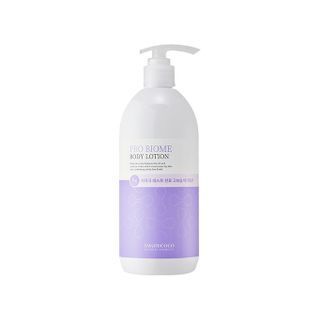
“A lightweight, floral musk scented body lotion enriched with 79.81% Rice Bran Water and botanical ingredients to deeply moisturize, leaving supple and soft skin.”
This product can help improve hydration of the skin with the two types of ingredients.
The first type is called “humectants”:
these ingredients help attract water.
When humectants are on the surface of the skin, they “pull in” the moisture from the outside environment, or from
within deeper layers of the skin. The following ingredients in this product do the job:
glycerin, hyaluronic acid.
This product also contains ingredients called “occlusives”. They help reduce the speed with which our skin loses moisture to the outside environment. These ingredients also help soften the upper layer of the skin, so it feels less tight and nicer to the touch. The following ingredients in this product do the job: beeswax, butyrospermum parkii butter.
The following ingredients in this product are especially good for supporting the skin barrier and helping with the hydration level: madecassoside, panthenol
Anti-oxidationNot advertised by the brand · 6 ingredients credited for this claimStrong support
This product contains antioxidants (madecassoside) that can help neutralize free radicals in skin. By doing so, they can lessen the damage the skin gets from the UV light (sun).
The following ingredients - centella asiatica extract also can have an antioxidant effect, but there is less evidence to confirm their effectiveness in skin.
Anti-agingNot advertised by the brand · 5 ingredients credited for this claimModerate support
This product contains centella asiatica extract, madecassoside. These ingredients might be able to help reduce and prevent fine lines and wrinkles, improve skin elasticity and firmness, but there is not enough evidence that it actually works.
Can it cause trouble?
Irritancy2 strong irritants: Sorbitan sesquioleate, ParfumMedium risk
Comedogenic2 ingredients rated 2 or more on the 0–5 pore-clogging scale2 flagged
User reviews
Be the first — your take helps the next person decide.
Ingredients
Filter by role to see what each ingredient is doing.
Oryza sativa bran water79.81%
- Irritation risk
- Low
Might be somewhat helpful for attracting water to the upper layer of the skin
More about Oryza sativa bran waterGlycerin~22–34%
- Irritation risk
- Low
One of the best moisturizing ingredients. Naturally present in skin. It attracts water to the upper layer of the skin working as a humectant
More about GlycerinIsopropyl myristate~4.9–7.4%
- Irritation risk
- Low
- Comedogenicity
- 3/5
An emollient that helps soften the skin. Could be comedogenic
More about Isopropyl myristate1,2-hexanediol~1.6–2.4%
Caprylic/capric triglyceride~3.8–5.7%
- Irritation risk
- Medium
A good mix of fatty acids that forms a protective layer on the skin. Improves the shelf life of products. Derived from coconut and glycerin
More about Caprylic/capric triglycerideBeeswax~2.9–4.3%
- Irritation risk
- Low
Forms a protective barrier that holds water and keeps dry skin hydrated. Keeps an emulsion from separating into its oil and liquid components, and increases the thickness of a product. Can be an allergen
More about BeeswaxSorbitan sesquioleate~1.8–2.8%
- Irritation risk
- High
Used to help oil and water mix together. Can be irritating
More about Sorbitan sesquioleateButyrospermum parkii butter~1.7–2.5%
- Irritation risk
- Low
- Comedogenicity
- 3/5
A great moisturising ingredient that softens the skin and reduces water loss from its upper layer. It also can be helpful in protecting skin from free radicals
More about Butyrospermum parkii butterGlyceryl stearate~1.3–1.9%
- Irritation risk
- Low
An emollient that softens the skin and forms a protective layer on its surface. Helps water and oil mix together
More about Glyceryl stearateButylene glycol~0.95–1.45%
- Irritation risk
- Low
Used to create a nice product texture and help delivery of other ingredients. Might be somewhat helpful in attracting water to the upper layer of the skin
More about Butylene glycolPropanediol~0.6–1.4%
- Irritation risk
- Low
Acts as a solvent for other ingredients. Speeds up the absorption of other ingredients into the skin
More about PropanediolCetearyl olivate~0.45–1.05%
Chlorphenesin~0.16–0.32%
Carbomer~0.35–0.8%
- Irritation risk
- Low
Helps create a thicker or gel-like product texture. It is not a surfactant but can be used in gentle cleansing formulations
More about CarbomerEthylhexylglycerin~0.3–0.7%
Sorbitan olivate~0.2–0.8%
Tromethamine~0.2–0.75%
Water~0.2–0.7%
Xanthan gum~0.15–0.65%
- Irritation risk
- Low
Used to create a thicker product consistency
More about Xanthan gumDisodium edta~0.15–0.6%
Lactobacillus/eriodictyon californicum ferment extract~0.15–0.5%
- Irritation risk
- Low
Lactobacillus/pumpkin ferment extract~0.1–0.45%
- Irritation risk
- Medium
An enzyme-based exfoliant
More about Lactobacillus/pumpkin ferment extractLactobacillus ferment~0.1–0.45%
- Irritation risk
- Low
A fermentation product created by bacteria Lactobacillus. The fermented product has anti-bacterial properties and might be helpful in calming down inflammation, but studies are lacking. Helps attract water to the upper layer of the skin. Can be used as a preservative
More about Lactobacillus fermentHyaluronic acid~0.1–0.4%
- Irritation risk
- Low
One of the best moisturizing ingredients. Attracts water into the upper layer of the skin. Naturally present in skin. Typically has large molecule size unless advertised otherwise on the product label. Helps support skin's barrier function and may help to reduce inflammation
More about Hyaluronic acidHydrolyzed hyaluronic acid~0.1–0.35%
- Irritation risk
- Low
One of the best moisturizing ingredients. Attracts water into the upper layer of the skin. A version of it is naturally present in skin
More about Hydrolyzed hyaluronic acidSodium hyaluronate~0.1–0.35%
- Irritation risk
- Low
One of the best moisturizing ingredients. Attracts water into the upper layer of the skin
More about Sodium hyaluronateDipropylene glycol~0.1–0.35%
- Irritation risk
- Low
Helps to dissolve other ingredients in a formulation. Slows down the rate of product drying
More about Dipropylene glycolFructan~0.1–0.4%
- Irritation risk
- Low
Bifida ferment lysate~0.1–0.4%
- Irritation risk
- Low
Consists of remains of dead yeast bacteria cells. Helps to hydrate the skin and reduce irritation. Might has some anti-oxidant effect
More about Bifida ferment lysateCentella asiatica extract~0.1–0.5%
- Irritation risk
- Medium
A plant extract that has been shown to be able to reduce inflammation in skin, support restoration of skin barrier function, as well as support collagen production. Contains active compounds called centelloids: asiaticoside, madecasosside, asiatic acid and madecassic acid. Might be helpful in preventing stretch marks. It can be itself be irritating though.
More about Centella asiatica extractLeuconostoc/radish root ferment filtrate~0.1–0.35%
- Irritation risk
- Medium
A preservative that comes from radishes fermented by a bacteria. New research suggests that the preservation properties in the ingredient come from an ammonium salt that is not present naturally in radish root but used in its cultivation. Is problematic because the exact amount of the preservative agents is difficult to determine
More about Leuconostoc/radish root ferment filtrateLactose~0.1–0.35%
- Irritation risk
- Low
Helps attract water to the upper layer of the skin
More about LactoseLactobacillus/soybean ferment extract~0.1–0.35%
- Irritation risk
- Low
A fermentation product created by bacteria Lactobacillus out of soybean. The fermented product helps to attract water to the upper layer of the skin and has anti-bacterial properties. It might be helpful in calming down inflammation and could be helpful in evening out skin tone, but studies are lacking
More about Lactobacillus/soybean ferment extractLactobacillus/milk ferment filtrate~0.1–0.35%
- Irritation risk
- Low
Lactobacillus ferment lysate~0.1–0.35%
- Irritation risk
- Low
A "broth" with parts of dead cells of lactobacteria. Might be helpful supporting diverse microbiome in skin, but evidence is lacking
More about Lactobacillus ferment lysateLactococcus ferment lysate~0.1–0.3%
- Irritation risk
- Low
Consists of remains of dead bacteria cells. Is likely helpful in attracting water to the upper layer of the skin. Might be helpful in reducing inflammation and neutralizing free radicals in skin
More about Lactococcus ferment lysatePanthenol~0.1–0.3%
- Irritation risk
- Low
Helps attract water to the upper layer of the skin and can help improve skin barrier function
More about PanthenolLactobacillus/rice ferment~0.1–0.4%
- Irritation risk
- Low
Madecassoside~0.1–0.35%
- Irritation risk
- Medium
An antioxidant that is typically derived from plant Centella Asiatica. It can help neutralize free radicals in skin and support skin barrier function. It could, however, itself be irritating. It is often unstable in formulations
More about MadecassosideTetrasodium edta~0.05–0.2%
Parfum~0.05–0.2%
- Irritation risk
- High
An aromatic blend of unspecified and possibly irritating ingredients
More about ParfumIngredient list view
Oryza sativa bran water, Glycerin, Isopropyl myristate, 1,2-hexanediol, Caprylic/capric triglyceride, Beeswax, Sorbitan sesquioleate, Butyrospermum parkii butter, Glyceryl stearate, Butylene glycol, Propanediol, Cetearyl olivate, Chlorphenesin, Carbomer, Ethylhexylglycerin, Sorbitan olivate, Tromethamine, Water, Xanthan gum, Disodium edta, Lactobacillus/eriodictyon californicum ferment extract, Lactobacillus/pumpkin ferment extract, Lactobacillus ferment, Hyaluronic acid, Hydrolyzed hyaluronic acid, Sodium hyaluronate, Dipropylene glycol, Fructan, Bifida ferment lysate, Centella asiatica extract, Leuconostoc/radish root ferment filtrate, Lactose, Lactobacillus/soybean ferment extract, Lactobacillus/milk ferment filtrate, Lactobacillus ferment lysate, Lactococcus ferment lysate, Panthenol, Lactobacillus/rice ferment, Madecassoside, Tetrasodium edta, Parfum
Compare prices
Retailers ranked by price — lowest first.

Affiliate links · prices updated regularly
Product summary
"SWANICOCO - Pro Biome Body Lotion" is effective for: Moisturizing
This product could be helpful for: Anti-aging, but its actives are not the most effective or are not well-studied.
Ingredient callouts
- Actives derived from an extract of the Centella Asiatica plant (also known as Gotu Kola) - madecassoside 0.10% - 0.40% The Centella Asiatica Actives, even in low concentration, can help reduce inflammation in skin, strengthen the skin barrier and reduce photodamage. They can also help to decrease scarring.
- Humectants (sodium hyaluronate 0.10% - 0.40%, hydrolyzed hyaluronic acid 0.10% - 0.35%, hyaluronic acid 0.10% - 0.40%, lactobacillus ferment 0.10% - 0.45% and glycerin 22.00% - 34.00%). These ingredients help attract water to the upper layer of the skin and improve the skin hydration.
Price
The product retails for 41.70$ in the United States.
For a detailed price comparison: click here.
Sources cited in this review
Every concentration estimate and effectiveness label is anchored to one of these 27 studies and safety reviews.
- 1
- 2
- 3
- 4Safety Assessment of Tromethamine as Used in Cosmeticscir-safety.org
- 5
- 6

Affiliate links · As an Amazon Associate, WIMJ earns from qualifying purchases.