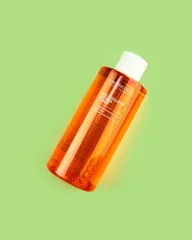
Works for:
based on ingredients and %- Cleansing
Can it cause trouble?
- Irritation risk: medium
- Comedogenic risk ingredients: 0
Key actives

Product Summary
"SWANICOCO - Multi Solution Vitamin Toner" could be helpful for: Evens skin tone and Moisturizing, but its actives are not the most effective or are not well-studied.
Ingredient callouts
- Humectants (sodium hyaluronate 0.20% - 0.75%, hydrolyzed hyaluronic acid 0.30% - 0.70%, hyaluronic acid 0.35% - 0.80%, glycerin 0.95% - 1.40%, sodium hyaluronate 2.50% - 3.70%, hydrolyzed hyaluronic acid 3.30% - 4.90% and hyaluronic acid 4.30% - 6.40%). These ingredients help attract water to the upper layer of the skin and improve the skin hydration.
Price
The product retails at around 22.78$ in the United States.
For a detailed price comparison: click here.
Works for
Cleansing
What does the product description say?
3. Mix with water in the ratio of 8:2 to cleanse the face.
Source: Yesstyle
This product works by removing dirt and oil from the surface of the skin.
Keep in mind that cleansing can disrupt the skin barrier, and most people do not need to cleanse their skin more than once per day.
How honest is this product?
| Promise | Can it deliver? |
|---|---|
| Cleansing |
Total Promises Fulfilled score: 75/100.
We receive a small commission for purchases made through these links at no cost for you. Thank you for your support! Learn more
Potential irritants
Comedogenic ingredients
No comedogenic ingredients detected
User reviews (0)
Averages from community submissions.
No reviews yet for this product.
Be the first to share your experience!
Tried this product?
Help capture what the ingredient list can't—texture, finish, pilling, scent, and more. Answer what you can, skip the rest.
Takes ~30 seconds.
Reviews are shown in aggregate. No personal details.
| Product | Similarity | Price | Irritancy |
|---|---|---|---|
 SWANICOCO Multi Solution Vitamin Toner | Current | $21.20 | |
 the Torriden Store Dive in Skin Booster Lotion Hydratante | 37% | ≈ $27.04 | |
 Löwengrip Clean & Calm - Micellar Water | 36% | ≈ $19.00 | |
 CeraVe Hydrating Micellar Water | 36% | ≈ $13.62 | |
 Q+A Niacinamide Daily Toner | 35% | ≈ $8.10 | |
 Eucerin DermatoClean Hyaluron Toner | 35% | ≈ $4.55 |
Key Actives
Can contain potent anti-oxidant compounds (abbreviated ECG, GCG, EGC, and EGCG) that might help protect the skin from free radicals. Can help calm down inflammation and has some anti-bacterial properties. Unfortunately, these antioxidants are unstable and lose their effectiveness very quickly in products. The concentration of the antioxidant compounds in the extract also tends to be low to be effective in topical formulation
One of the best moisturizing ingredients. Attracts water into the upper layer of the skin. Naturally present in skin. Typically has large molecule size unless advertised otherwise on the product label. Helps support skin's barrier function and may help to reduce inflammation
One of the best moisturizing ingredients. Naturally present in skin. It attracts water to the upper layer of the skin working as a humectant
One of the best moisturizing ingredients. Attracts water into the upper layer of the skin. A version of it is naturally present in skin
One of the best moisturizing ingredients. Attracts water into the upper layer of the skin
A plant extract that might help neutralize free radicals in skin
Potential irritants
A vitamin C derivative that is more stable but less potent than pure form of vitamin C. Can help neutralize free radicals and help reduce hyperpigmentation, but the required concentration is likely to be much higher than for the pure form of vitamin C, limiting the ingredient's effectiveness in products
A berry extract. Might have some anti-oxidant properties
A plant extract that might help neutralize free radicals in skin
A plant extract that can be irritating. It can have some anti-bacterial properties, but there are no evidence of a beneficial effect for skin
A plant extract that has astringent properties. In other words, it might be able to interact with keratin in the uppermost layer of the skin to reduce swelling and create a temporal tightening effect. It can be irritating
A plant extract that might have some anti-oxidant properties, but evidence of effectiveness in skin is lacking
A plant extract that might contain a compound baicalin that could be helpful in neutralizing free radicals and reducing inflammation in skin. The baicalin concentration in skincare products is often too low for an effective action. Can be used for its fragrant properties
An aromatic blend of unspecified and possibly irritating ingredients
A plant extract that might help neutralize free radicals in skin, but research on its effectiveness is lacking
A fruit extract that might help to attract water to the upper layer of the skin, but there is no evidence for any other benefits to the skin
Used to preserve products, dissolve other ingredients and create a nice product texture
Helps preserve products and creates a nice product texture
Comedogenic ingredients
We couldn't find any comedogenic ingredients in this product
All ingredients
A plant extract that might help neutralize free radicals in skin, but research on its effectiveness is lacking
Used to create a nice product texture and help delivery of other ingredients. Might be somewhat helpful in attracting water to the upper layer of the skin
One of the best moisturizing ingredients. Naturally present in skin. It attracts water to the upper layer of the skin working as a humectant
A vitamin C derivative that is more stable but less potent than pure form of vitamin C. Can help neutralize free radicals and help reduce hyperpigmentation, but the required concentration is likely to be much higher than for the pure form of vitamin C, limiting the ingredient's effectiveness in products
One of the best moisturizing ingredients. Attracts water into the upper layer of the skin. Naturally present in skin. Typically has large molecule size unless advertised otherwise on the product label. Helps support skin's barrier function and may help to reduce inflammation
One of the best moisturizing ingredients. Attracts water into the upper layer of the skin. A version of it is naturally present in skin
One of the best moisturizing ingredients. Attracts water into the upper layer of the skin
Can contain potent anti-oxidant compounds (abbreviated ECG, GCG, EGC, and EGCG) that might help protect the skin from free radicals. Can help calm down inflammation and has some anti-bacterial properties. Unfortunately, these antioxidants are unstable and lose their effectiveness very quickly in products. The concentration of the antioxidant compounds in the extract also tends to be low to be effective in topical formulation
A berry extract. Might have some anti-oxidant properties
A plant extract that might help neutralize free radicals in skin
A plant extract that can be irritating. It can have some anti-bacterial properties, but there are no evidence of a beneficial effect for skin
A plant extract that has astringent properties. In other words, it might be able to interact with keratin in the uppermost layer of the skin to reduce swelling and create a temporal tightening effect. It can be irritating
A fruit extract that might help to attract water to the upper layer of the skin, but there is no evidence for any other benefits to the skin
A plant extract that might have some anti-oxidant properties, but evidence of effectiveness in skin is lacking
A plant extract that might contain a compound baicalin that could be helpful in neutralizing free radicals and reducing inflammation in skin. The baicalin concentration in skincare products is often too low for an effective action. Can be used for its fragrant properties
Acts as a solvent for other ingredients. Speeds up the absorption of other ingredients into the skin
Used to thicken product formulations and create gel-like textures
Helps attract water to the upper layer of the skin and repair the skin barrier function
Used to preserve products, dissolve other ingredients and create a nice product texture
Helps preserve products and creates a nice product texture
An aromatic blend of unspecified and possibly irritating ingredients
Ingredient list view
Water, Hippophae rhamnoides fruit extract, Butylene glycol, Glycerin, 1,2-hexanediol, 3-o-ethyl ascorbic acid, Hyaluronic acid, Hydrolyzed hyaluronic acid, Sodium hyaluronate, Camellia sinensis leaf extract, Vaccinium macrocarpon fruit extract, Pearl extract, Chrysanthemum indicum flower extract, Camellia japonica flower extract, Prunus mume flower extract, Nelumbium speciosum flower extract, Arnica montana flower extract, Alchemilla vulgaris extract, Ananas sativus fruit extract, Actinidia chinensis fruit extract, Scutellaria baicalensis root extract, Propanediol, Glycereth-25 pca isostearate, Hydroxyethylcellulose, Xylitol, Pentylene glycol, Disodium edta, Caprylyl glycol, Ethylhexylglycerin, Parfum
- Abundance of active ingredients in sea-buckthorn oil
- Glycerol and the skin: holistic approach to its origin and functions
- The influence of alkane chain length on the skin irritation potential of 1,2-alkanediols
- Antioxidant Ability and Stability Studies of 3-O-Ethyl Ascorbic Acid, a Cosmetic Tyrosinase Inhibitor
- Efficacy of a New Topical Nano-hyaluronic Acid in Humans
- Physiochemical properties and application of hyaluronic acid: a systematic review
- Hyaluronic acid: A key molecule in skin aging
- Hyaluronan (Hyaluronic Acid): a natural moisturizer for skin care
- Effects of Topical Arnica Gel on Post-Laser Treatment Bruises
- Effects of microcurrent application alone or in combination with topical Hypericum perforatum L. and Arnica montana L. on surgically induced wound healing in Wistar rats
- The seamy side of natural medicines: contact sensitization to arnica (Arnica montana L.) and marigold (Calendula officinalis L.)
- Accelerated resolution of laser‐induced bruising with topical 20% arnica: a rater‐blinded randomized controlled trial
- Effect of herbal mixture composed of Alchemilla vulgaris and Mimosa on wound healing process.
- Scutellaria baicalensis, the golden herb from the garden of Chinese medicinal plants
- Flavonoids in Treating Psoriasis
- Improvement of skin barrier dysfunction by Scutellaria baicalensis GEOGI extracts through lactic acid fermentation
- Safety Assessment of Scutellaria baicalensis-Derived Ingredients as Used in Cosmetics