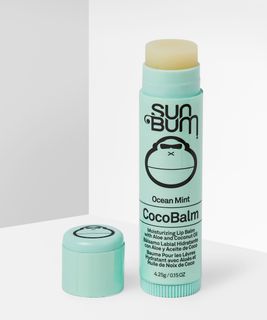
Sun Bum CocoBalm Lip Balm

Sun Bum CocoBalm Lip Balm

Efficacy75/100IrritancyHigh
Edit

Works for

1 of 1 advertised claim delivered

Moisturizing
14 ingredients credited for this claim
Good support
What the product description says
“Whether you're out and about or frolicking on the beach, the deliciously flavoured lip hydrator protects from UV rays up to SPF30.”
Source: Lookfantastic CA

This product can help soften the skin and reduce its moisture loss with emollients and occlusives: caprylic/capric triglyceride, squalene.

Keep in mind that this product does not contain effective ingredients to attract water to the upper layer of the skin. This is why an additional product with humectants like glycerin or hyaluronic acid can be helpful (apply it before this product for the best results).

Caprylic/capric triglycerideKey active· Emollient, OcclusiveEffect: HighA good mix of fatty acids that forms a protective layer on the skin. Improves the shelf life of products. Derived from coconut and glycerin~22–34%
Theobroma cacao seed butterKey active· EmollientEffect: HighHelps soften the upper layer of the skin and can be helpful in restoring the skin barrier function. Might have some anti-oxidant effect~0.45–1.05%
SqualeneKey active· Emollient, OcclusiveEffect: HighAn oil that is naturally part of skin sebum that helps to soften its upper layer, reduce water loss and neutralize free radicals. It might be comedogenic. Avoid applying large concentrations (or pure oil) before sun exposure as oxidized squalene can clog pores and lead to skin irritation. Today squalene is mostly derived from vegetable oils or synthetized by yeast~0.45–1%
Hydrogenated ethylhexyl olivateKey active· EmollientEffect: MediumHelps soften the upper layer of the skin~0.8–1.2%
Cetyl alcoholKey active· EmollientEffect: MediumA non-drying alcohol that works to soften the skin and stabilize product formulations helping oil and water mix together~0.2–0.7%
Hydrogenated olive oil unsaponifiablesKey active· EmollientEffect: MediumHelp soften the upper layer of the skin~0.5–1.2%
Ethylhexyl palmitateKey active· EmollientEffect: MediumAn emollient that helps soften the skin and create a nice product texture~4.1–6.2%
Ethylhexyl stearate· EmollientEffect: LowHelps soften the upper layer of the skin~1–1.5%
Peg-8· HumectantEffect: LowUsed to create a nice product consistency~0.1–0.4%
Paraffinum liquidumUnder-dosedEffect: HighMineral oil. One of the most effective and well studied occlusive and emollient moisturizing ingredients. Helps reduce moisture loss in skin and repair skin barrier function~0.15–0.65%
Argania spinosa kernel oilUnder-dosedEffect: HighAn emollient that helps soften the upper layer of the skin. Might have some weak anti-oxidant properties~0.5–1.1%
Cucumis sativus fruit extractEffect: Low, below effective doseMight be somewhat helpful in reducing hyperpigmentation and neutralizing free radicals but its typical concentration in a product is too low for having an effect~0.15–0.7%
Aloe barbadensis leaf extractEffect: Low, below effective doseTraditionally used to treat sunburns, dermatitis and inflammation, but evidence for its effectiveness is lacking. The extract can contain humectants that help attract water into the skin~0.3–0.75%
Camellia sinensis leaf extractEffect: Low, below effective doseCan contain potent anti-oxidant compounds (abbreviated ECG, GCG, EGC, and EGCG) that might help protect the skin from free radicals. Can help calm down inflammation and has some anti-bacterial properties. Unfortunately, these antioxidants are unstable and lose their effectiveness very quickly in products. The concentration of the antioxidant compounds in the extract also tends to be low to be effective in topical formulation~0.15–0.7%
Anti-oxidation
Not advertised by the brand · 11 ingredients credited for this claim
Moderate support

This product contains antioxidants (punica granatum extract, squalene) that might be able to help neutralize free radicals in skin to lessen the damage it gets from the UV light (sun). There is not enough evidence to confirm their effectiveness in skin though.

Punica granatum extractKey activeEffect: MediumA plant extract that can help neutralize free radicals in skin and even out the skin tone, but is typically used in products in a concentration that is too low to be effective~0.2–0.8%
SqualeneKey activeEffect: MediumAn oil that is naturally part of skin sebum that helps to soften its upper layer, reduce water loss and neutralize free radicals. It might be comedogenic. Avoid applying large concentrations (or pure oil) before sun exposure as oxidized squalene can clog pores and lead to skin irritation. Today squalene is mostly derived from vegetable oils or synthetized by yeast~0.45–1%
Theobroma cacao seed butterEffect: LowHelps soften the upper layer of the skin and can be helpful in restoring the skin barrier function. Might have some anti-oxidant effect~0.45–1.05%
Calendula officinalis flower extractEffect: LowA plant extract that has some anti-oxidant and anti-bacterial properties. Can be irritating~0.15–0.6%
Camellia sinensis leaf extractUnder-dosedEffect: MediumCan contain potent anti-oxidant compounds (abbreviated ECG, GCG, EGC, and EGCG) that might help protect the skin from free radicals. Can help calm down inflammation and has some anti-bacterial properties. Unfortunately, these antioxidants are unstable and lose their effectiveness very quickly in products. The concentration of the antioxidant compounds in the extract also tends to be low to be effective in topical formulation~0.15–0.7%
Cucumis sativus fruit extractEffect: Low, below effective doseMight be somewhat helpful in reducing hyperpigmentation and neutralizing free radicals but its typical concentration in a product is too low for having an effect~0.15–0.7%
BisabololEffect: Low, below effective doseAn active component of chamomile plant that historically has been used to calm down irritated skin. A recent study shows that bisabolol indeed can have some anti-inflammatory effect on skin, even though conclusive data is lacking. Bisabolol has a sweet floral scent and can be added to products for its aromatic properties~0.15–0.6%
Salix alba bark extractEffect: Low, below effective doseA plant extract that can help neutralize free radicals in skin. It contains a compound salicin that can theoretically be converted into salicylic acid that, in turn, helps reduce inflammation in skin, but the evidence of effectiveness in skin is lacking and the extract is usually not used in a concentration that would enable an exfoliating effect~0.15–0.65%
Tocopheryl acetateEffect: Low, below effective doseA more stable but less bio-available form of vitamin E compared to Tocopherol. Might help moisturize and protect the skin from free radicals, but mostly used in low concentrations to stabilize other ingredients.~0.15–0.65%
Panax ginseng root extractEffect: Low, below effective doseA plant extract that might have some anti-inflammatory properties, but solid evidence is lacking. It can be irritating~0.2–0.8%
Argania spinosa kernel oilEffect: Low, below effective doseAn emollient that helps soften the upper layer of the skin. Might have some weak anti-oxidant properties~0.5–1.1%

Can it cause trouble?

Irritancy
8 strong irritants: Parfum, Rosmarinus officinalis extract + 6 more — patch-test recommended
High risk
We flagged 22 ingredients with irritancy potential. Severity depends on your sensitivity threshold; the table lists the worst offenders first.
IngredientFunctionIrritationEst. amount
ParfumAn aromatic blend of unspecified and possibly irritating ingredientsHigh~1.9–2.9%est.
Rosmarinus officinalis extract—High~0.2–0.75%est.
Salvia officinalis extract—High~0.3–0.75%est.
Salix alba bark extractA plant extract that can help neutralize free radicals in skin. It contains a compound salicin that can theoretically be converted into salicylic acid that, in turn, helps reduce inflammation in skin, but the evidence of effectiveness in skin is lacking and the extract is usually not used in a concentration that would enable an exfoliating effectHigh~0.15–0.65%est.
Equisetum arvense extractA plant extract that might have anti-oxidant properties. Can be irritatingHigh~0.3–0.7%est.
Panax ginseng root extractA plant extract that might have some anti-inflammatory properties, but solid evidence is lacking. It can be irritatingHigh~0.2–0.8%est.
Citrus limon peel extractA very irritating fragrant ingredientHigh~0.15–0.6%est.
Citrus grandis fruit extract—High~0.15–0.55%est.
Calendula officinalis flower extractA plant extract that has some anti-oxidant and anti-bacterial properties. Can be irritatingHigh~0.15–0.6%est.
Propylene glycolHelps oil and water mix together and can enhance the penetration of other ingredients into the skin. It can be irritatingHigh~0.15–0.6%est.
CitralA fragrance with a lemon scent. A likely irritantHigh~0.1–0.35%est.
Caprylic/capric triglycerideA good mix of fatty acids that forms a protective layer on the skin. Improves the shelf life of products. Derived from coconut and glycerinMedium~22–34%est.
HomosalateA weak sunscreen that offers some protection against the sun rays that cause sunburn (UVB), but does not offer meaningful protection against protect against the most aging sun rays (UVA). It loses its effectiveness quickly when exposed to sunlight. It is an organic, or so called "chemical" sunscreen. When used in low concentrations, helps to stabilize the product formulationMedium~4.1–6.1%est.
OctocryleneA weak sunscreen that protects against the sun rays that cause sunburn (UVB) and is somewhat effective against the UVA rays. It is quite stable and can help stabilize other, more vulnerable, sunscreen ingredients like Avobenzone. It is an organic, or so called "chemical" sunscreenMedium~3.5–5.2%est.
Diisobutyl adipateUsed to improve the product consistencyMedium~1.4–2.1%est.
Butyl methoxydibenzoylmethaneAvobenzone. An organic, or so-called "chemical" UV filter. Protects against both UVA and UVB rays. Needs to be combined with other filters in a formulation to be stable.Medium~1.5–2.2%est.
Argania spinosa kernel oilAn emollient that helps soften the upper layer of the skin. Might have some weak anti-oxidant propertiesMedium~0.5–1.1%est.
Punica granatum extractA plant extract that can help neutralize free radicals in skin and even out the skin tone, but is typically used in products in a concentration that is too low to be effectiveMedium~0.2–0.8%est.
Cucumis sativus fruit extractMight be somewhat helpful in reducing hyperpigmentation and neutralizing free radicals but its typical concentration in a product is too low for having an effectMedium~0.15–0.7%est.
Aloe barbadensis leaf extractTraditionally used to treat sunburns, dermatitis and inflammation, but evidence for its effectiveness is lacking. The extract can contain humectants that help attract water into the skinMedium~0.3–0.75%est.
Tocopheryl acetateA more stable but less bio-available form of vitamin E compared to Tocopherol. Might help moisturize and protect the skin from free radicals, but mostly used in low concentrations to stabilize other ingredients.Medium~0.15–0.65%est.
Peg-8Used to create a nice product consistencyMedium~0.1–0.4%est.
Comedogenic
4 ingredients rated 2 or more on the 0–5 pore-clogging scale
4 flagged
These ingredients have a comedogenic rating of 2 or more on a 0–5 scale; the table shows each one's rating. In leave-on products they can clog pores in acne-prone skin.
IngredientFunctionRatingEst. amount
Ethylhexyl palmitateAn emollient that helps soften the skin and create a nice product texture3/5~4.1–6.2%est.
Theobroma cacao seed butterHelps soften the upper layer of the skin and can be helpful in restoring the skin barrier function. Might have some anti-oxidant effect3/5~0.45–1.05%est.
Macrocystis pyrifera extract—3/5~0.15–0.65%est.
SqualeneAn oil that is naturally part of skin sebum that helps to soften its upper layer, reduce water loss and neutralize free radicals. It might be comedogenic. Avoid applying large concentrations (or pure oil) before sun exposure as oxidized squalene can clog pores and lead to skin irritation. Today squalene is mostly derived from vegetable oils or synthetized by yeast2/5~0.45–1%est.
Edit
Cheaper Alternatives
Similar formulations, better price
No cheaper similar product found.

User reviews

Would you recommend?
No community reviews yet.

Be the first — your take helps the next person decide.

Write a review · ~30s

Ingredients

Filter by role to see what each ingredient is doing.

Caprylic/capric triglyceride~22–34%
Key activeIrritant · medium
Irritation risk
Medium
Works for
Moisturizing

A good mix of fatty acids that forms a protective layer on the skin. Improves the shelf life of products. Derived from coconut and glycerin

More about Caprylic/capric triglyceride
Ethylhexyl palmitate~4.1–6.2%
Key activeComedogenic 3/5
Irritation risk
Low
Comedogenicity
3/5
Works for
Moisturizing

An emollient that helps soften the skin and create a nice product texture

More about Ethylhexyl palmitate
Ozokerite~4.6–6.9%
Formula
Irritation risk
Low

Used to thicken the product consistency

More about Ozokerite
Homosalate~4.1–6.1%
Irritant · medium
Irritation risk
Medium
Works for
Sun protection

A weak sunscreen that offers some protection against the sun rays that cause sunburn (UVB), but does not offer meaningful protection against protect against the most aging sun rays (UVA). It loses its effectiveness quickly when exposed to sunlight. It is an organic, or so called "chemical" sunscreen. When used in low concentrations, helps to stabilize the product formulation

More about Homosalate
Octocrylene~3.5–5.2%
Irritant · medium
Irritation risk
Medium
Works for
Sun protection

A weak sunscreen that protects against the sun rays that cause sunburn (UVB) and is somewhat effective against the UVA rays. It is quite stable and can help stabilize other, more vulnerable, sunscreen ingredients like Avobenzone. It is an organic, or so called "chemical" sunscreen

More about Octocrylene
Parfum~1.9–2.9%
Irritant · high
Irritation risk
High

An aromatic blend of unspecified and possibly irritating ingredients

More about Parfum
Ethylhexyl salicylate~2.1–3.1%
Formula
Irritation risk
Low
Works for
Sun protection

Octisalate. A UV filter. It offers some protection against the sun rays that cause sunburn (UVB), but does not protect against the most aging sun rays (UVA). It loses its effectiveness quickly when exposed to sunlight. It is an organic, or so called "chemical" sunscreen

More about Ethylhexyl salicylate
Diisobutyl adipate~1.4–2.1%
Irritant · medium
Irritation risk
Medium

Used to improve the product consistency

More about Diisobutyl adipate
Butyl methoxydibenzoylmethane~1.5–2.2%
Irritant · medium
Irritation risk
Medium
Works for
Sun protection

Avobenzone. An organic, or so-called "chemical" UV filter. Protects against both UVA and UVB rays. Needs to be combined with other filters in a formulation to be stable.

More about Butyl methoxydibenzoylmethane
Ethylhexyl stearate~1–1.5%
Formula
Irritation risk
Low
Works for
Moisturizing

Helps soften the upper layer of the skin

More about Ethylhexyl stearate
Hydrogenated ethylhexyl olivate~0.8–1.2%
Key active
Irritation risk
Low
Works for
Moisturizing

Helps soften the upper layer of the skin

More about Hydrogenated ethylhexyl olivate
Hydrogenated olive oil unsaponifiables~0.5–1.2%
Key active
Irritation risk
Low
Works for
Moisturizing

Help soften the upper layer of the skin

More about Hydrogenated olive oil unsaponifiables
Argania spinosa kernel oil~0.5–1.1%
Under-dosedIrritant · medium
Irritation risk
Medium
Works for
MoisturizingAnti-oxidation

An emollient that helps soften the upper layer of the skin. Might have some weak anti-oxidant properties

More about Argania spinosa kernel oil
Theobroma cacao seed butter~0.45–1.05%
Key activeComedogenic 3/5
Irritation risk
Low
Comedogenicity
3/5
Works for
MoisturizingAnti-oxidationAnti-dandruff

Helps soften the upper layer of the skin and can be helpful in restoring the skin barrier function. Might have some anti-oxidant effect

More about Theobroma cacao seed butter
Saccharin~0.4–0.9%
Formula
Irritation risk
Low
More about Saccharin
Squalene~0.45–1%
Key activeComedogenic 2/5
Irritation risk
Low
Comedogenicity
2/5
Works for
MoisturizingAnti-oxidation

An oil that is naturally part of skin sebum that helps to soften its upper layer, reduce water loss and neutralize free radicals. It might be comedogenic. Avoid applying large concentrations (or pure oil) before sun exposure as oxidized squalene can clog pores and lead to skin irritation. Today squalene is mostly derived from vegetable oils or synthetized by yeast

More about Squalene
Tocopheryl linoleate/oleate~0.35–0.8%
Formula
Silica~0.45–1%
Formula
Irritation risk
Low

Used to absorb oil and can temporarily mattify skin

More about Silica
Punica granatum extract~0.2–0.8%
Key activeIrritant · medium
Irritation risk
Medium
Works for
Anti-oxidationEvens skin tone

A plant extract that can help neutralize free radicals in skin and even out the skin tone, but is typically used in products in a concentration that is too low to be effective

More about Punica granatum extract
Rosmarinus officinalis extract~0.2–0.75%
Irritant · high
Salvia officinalis extract~0.3–0.75%
Irritant · high
Cucumis sativus fruit extract~0.15–0.7%
Irritant · medium
Irritation risk
Medium
Works for
Anti-oxidationMoisturizing

Might be somewhat helpful in reducing hyperpigmentation and neutralizing free radicals but its typical concentration in a product is too low for having an effect

More about Cucumis sativus fruit extract
Salix alba bark extract~0.15–0.65%
Irritant · high
Irritation risk
High
Works for
Anti-inflammatoryAnti-oxidationExfoliationAnti-blemish

A plant extract that can help neutralize free radicals in skin. It contains a compound salicin that can theoretically be converted into salicylic acid that, in turn, helps reduce inflammation in skin, but the evidence of effectiveness in skin is lacking and the extract is usually not used in a concentration that would enable an exfoliating effect

More about Salix alba bark extract
Equisetum arvense extract~0.3–0.7%
Irritant · high
Irritation risk
High

A plant extract that might have anti-oxidant properties. Can be irritating

More about Equisetum arvense extract
Camellia sinensis leaf extract~0.15–0.7%
Under-dosed
Irritation risk
Low
Works for
AntibacterialAnti-oxidationAnti-agingMoisturizingEvens skin toneAnti-blemish

Can contain potent anti-oxidant compounds (abbreviated ECG, GCG, EGC, and EGCG) that might help protect the skin from free radicals. Can help calm down inflammation and has some anti-bacterial properties. Unfortunately, these antioxidants are unstable and lose their effectiveness very quickly in products. The concentration of the antioxidant compounds in the extract also tends to be low to be effective in topical formulation

More about Camellia sinensis leaf extract
Panax ginseng root extract~0.2–0.8%
Irritant · high
Irritation risk
High
Works for
Anti-inflammatoryAnti-oxidation

A plant extract that might have some anti-inflammatory properties, but solid evidence is lacking. It can be irritating

More about Panax ginseng root extract
Ginkgo biloba root extract~0.15–0.65%
Formula
Macrocystis pyrifera extract~0.15–0.65%
Comedogenic 3/5
Irritation risk
Low
Comedogenicity
3/5
More about Macrocystis pyrifera extract
Citrus limon peel extract~0.15–0.6%
Irritant · high
Irritation risk
High

A very irritating fragrant ingredient

More about Citrus limon peel extract
Citrus grandis fruit extract~0.15–0.55%
Irritant · high
Calendula officinalis flower extract~0.15–0.6%
Irritant · high
Irritation risk
High
Works for
Anti-oxidation

A plant extract that has some anti-oxidant and anti-bacterial properties. Can be irritating

More about Calendula officinalis flower extract
Aloe barbadensis leaf extract~0.3–0.75%
Irritant · medium
Irritation risk
Medium
Works for
Moisturizing

Traditionally used to treat sunburns, dermatitis and inflammation, but evidence for its effectiveness is lacking. The extract can contain humectants that help attract water into the skin

More about Aloe barbadensis leaf extract
Tocopheryl acetate~0.15–0.65%
Irritant · medium
Irritation risk
Medium
Works for
Anti-oxidation

A more stable but less bio-available form of vitamin E compared to Tocopherol. Might help moisturize and protect the skin from free radicals, but mostly used in low concentrations to stabilize other ingredients.

More about Tocopheryl acetate
Bisabolol~0.15–0.6%
Formula
Irritation risk
Low
Works for
Reduces irritationAnti-inflammatoryAnti-oxidation

An active component of chamomile plant that historically has been used to calm down irritated skin. A recent study shows that bisabolol indeed can have some anti-inflammatory effect on skin, even though conclusive data is lacking. Bisabolol has a sweet floral scent and can be added to products for its aromatic properties

More about Bisabolol
Isostearyl linoleate~0.3–0.75%
Formula
Propylene glycol~0.15–0.6%
Irritant · high
Irritation risk
High
Works for
Moisturizing

Helps oil and water mix together and can enhance the penetration of other ingredients into the skin. It can be irritating

More about Propylene glycol
Polysorbate 80~0.15–0.6%
Formula
Irritation risk
Low
Works for
Cleansing

Helps water and oil mix together

More about Polysorbate 80
Water~0.1–0.5%
Formula
Irritation risk
Low

Plain old water

More about Water
Cetyl alcohol~0.2–0.7%
Key active
Irritation risk
Low
Works for
CleansingMoisturizing

A non-drying alcohol that works to soften the skin and stabilize product formulations helping oil and water mix together

More about Cetyl alcohol
Paraffinum liquidum~0.15–0.65%
Under-dosed
Irritation risk
Low
Works for
Moisturizing

Mineral oil. One of the most effective and well studied occlusive and emollient moisturizing ingredients. Helps reduce moisture loss in skin and repair skin barrier function

More about Paraffinum liquidum
Peg-8~0.1–0.4%
Irritant · medium
Irritation risk
Medium
Works for
Moisturizing

Used to create a nice product consistency

More about Peg-8
Citral~0.1–0.35%
Irritant · high
Irritation risk
High

A fragrance with a lemon scent. A likely irritant

More about Citral
Ingredient list view

Caprylic/capric triglyceride, Ethylhexyl palmitate, Ozokerite, Homosalate, Octocrylene, Parfum, Ethylhexyl salicylate, Diisobutyl adipate, Butyl methoxydibenzoylmethane, Ethylhexyl stearate, Hydrogenated ethylhexyl olivate, Hydrogenated olive oil unsaponifiables, Argania spinosa kernel oil, Theobroma cacao seed butter, Saccharin, Squalene, Tocopheryl linoleate/oleate, Silica, Punica granatum extract, Rosmarinus officinalis extract, Salvia officinalis extract, Cucumis sativus fruit extract, Salix alba bark extract, Equisetum arvense extract, Camellia sinensis leaf extract, Panax ginseng root extract, Ginkgo biloba root extract, Macrocystis pyrifera extract, Citrus limon peel extract, Citrus grandis fruit extract, Calendula officinalis flower extract, Aloe barbadensis leaf extract, Tocopheryl acetate, Bisabolol, Isostearyl linoleate, Propylene glycol, Polysorbate 80, Water, Cetyl alcohol, Paraffinum liquidum, Peg-8, Citral

Compare prices

Retailers ranked by price — lowest first.

Lookfantastic US
$6.70
Buy
Amazon USPrice as of 10/12/2026 12:41 GMT
$9.51
Buy

Affiliate links · prices updated regularly · As an Amazon Associate, WIMJ earns from qualifying purchases.

Cheaper alternatives? See how this stacks up against similar formulas.
We compare ingredient profiles across our catalog — pick the closest match for your budget.
Open dupe finder

Sources cited in this review

Every concentration estimate and effectiveness label is anchored to one of these 23 studies and safety reviews.

  1. 1
  2. 2
  3. 3
  4. 4
  5. 5
  6. 6

Affiliate links · As an Amazon Associate, WIMJ earns from qualifying purchases.

As an Amazon Associate, WIMJ earns from qualifying purchases.