Works for
ExfoliationSalicylic acid, Lactic acidWorks well
“Blackhead Clearing Green Tea Scrub”
This product can help exfoliate the skin. In other words, it helps break down the bonds between dead cells on the surface of the skin and speed up the skin turnover. Skin often appears softer and brighter after exfoliation, but overdoing it can result in disrupted skin barrier. The following ingredient is doing the exfoliating job in this product: salicylic acid.
Anti-blemishSalicylic acid, Camellia sinensis leaf extractWorks well
“Blackhead Clearing Green Tea Scrub”
This product can help reduce breakouts and clogged pores because it contains the following ingredient: salicylic acid. This ingredient is used for treating acne and can have a noticeable effect.
Evens skin toneSalicylic acid, Camellia sinensis leaf extract + 1 moreNot delivered
“It moderately exfoliates, helping to clear blackheads, unclog pores, for a more even skin tone.”
This product might help improve the skin tone through exfoliation. In other words, it helps to speed up the shedding of cells from the upper layer of the skin, and this might help reduce hyperpigmentation.
MoisturizingSide benefit · Glycerin, Cetearyl alcohol + 4 moreWorks
This product contains good ingredients to attract water to the upper layer of the skin. These ingredients are called "humectants": glycerin.
When humectants are on the surface of the skin, they “pull in” the moisture from the outside environment, or from within deeper layers of the skin. If the air is dry, humectants can speed up the moisture loss from the skin. This is why it is a good idea to use another product on top of this one to help "seal in" the moisture (look for ingredients like dimethicone, squalane, oils and butters).
Can it cause trouble?
Irritancy3 strong irritants: Parfum, Limonene + 1 more — patch-test recommendedHigh risk
Comedogenic4 ingredients rated 2 or more on the 0–5 pore-clogging scale4 flagged


User reviews
Be the first — your take helps the next person decide.
Ingredients
Filter by role to see what each ingredient is doing.
Water~45–55%
Hydrated silica~5.7–7%
Glyceryl stearate~3.6–4.4%
- Irritation risk
- Low
An emollient that softens the skin and forms a protective layer on its surface. Helps water and oil mix together
More about Glyceryl stearateGlycerin~3.1–3.7%
- Irritation risk
- Low
One of the best moisturizing ingredients. Naturally present in skin. It attracts water to the upper layer of the skin working as a humectant
More about GlycerinCetearyl alcohol~2.4–2.9%
- Irritation risk
- Low
- Comedogenicity
- 2/5
A non-drying alcohol. Works as an emollient. Helps water and oil mix together and creates a nice product texture
More about Cetearyl alcoholSodium lauryl sulfoacetate~2.2–2.7%
- Irritation risk
- Low
Helps oil and water mix together
More about Sodium lauryl sulfoacetateCocamidopropyl betaine~2.2–2.7%
- Irritation risk
- High
Helps water and oil mix together. Used as a cleansing ingredient. Could be an allergen
More about Cocamidopropyl betaineCetyl alcohol~1.5–1.8%
- Irritation risk
- Low
A non-drying alcohol that works to soften the skin and stabilize product formulations helping oil and water mix together
More about Cetyl alcoholSalicylic acid~1–1.2%
- Irritation risk
- High
Used for skin exfoliation. It has an anti-inflammatory and anti-bacterial effect, helps to unclog pores, prevent blemishes and speed up healing of the existing ones. Sometimes referred to as a BHA (beta-hydroxy acid)
More about Salicylic acidTriethanolamine~0.95–1.15%
- Irritation risk
- Medium
Used to adjust pH of the product and can help improve the product's smell
More about TriethanolamineAcetylated lanolin alcohol~0.7–1.1%
Benzoic acid~0.25–0.5%
Benzyl alcohol~0.45–0.7%
- Irritation risk
- High
A preservative. Can be used to mask unpleasant smell. Can be irritating
More about Benzyl alcoholCamellia sinensis leaf extract~0.45–0.7%
- Irritation risk
- Low
Can contain potent anti-oxidant compounds (abbreviated ECG, GCG, EGC, and EGCG) that might help protect the skin from free radicals. Can help calm down inflammation and has some anti-bacterial properties. Unfortunately, these antioxidants are unstable and lose their effectiveness very quickly in products. The concentration of the antioxidant compounds in the extract also tends to be low to be effective in topical formulation
More about Camellia sinensis leaf extractCarbomer~0.45–0.65%
- Irritation risk
- Low
Helps create a thicker or gel-like product texture. It is not a surfactant but can be used in gentle cleansing formulations
More about CarbomerCeteareth-20~0.5–0.75%
- Irritation risk
- Medium
- Comedogenicity
- 2/5
Helps oil and water mix together. Has some emollient properties
More about Ceteareth-20Cetyl acetate~0.45–0.65%
- Irritation risk
- Low
- Comedogenicity
- 3/5
Disodium edta~0.3–0.6%
Lactic acid~0.3–0.55%
- Irritation risk
- Medium
An exfoliating and moisturizing alpha-hydroxy acid (AHA). Typically causes less irritation than other AHAs, for example, glycolic acid. At high concentrations (about 15%), lactic acid can help reduce lines and wrinkles. Recent studies show that lactic acid can support the "good" bacteria living on skin's surface (healthy skin microbiome)
More about Lactic acidParfum~0.25–0.45%
- Irritation risk
- High
An aromatic blend of unspecified and possibly irritating ingredients
More about ParfumPeg-100 stearate~0.35–0.65%
- Irritation risk
- Low
Helps oil and water mix togehter and creates a nice product texture
More about Peg-100 stearatePolysorbate 60~0.25–0.5%
Potassium sorbate~0.2–0.4%
Sodium benzoate~0.2–0.35%
Sodium chloride~0.25–0.4%
- Irritation risk
- Low
Used to stabilize mixtures of oil and water, and create thicker, gel-like product textures
More about Sodium chlorideSodium sulfate~0.2–0.4%
- Irritation risk
- Medium
Used to improve the product consistency and stabilize formulations
More about Sodium sulfateSorbic acid~0.15–0.25%
Limonene~0.15–0.25%
- Irritation risk
- High
A common frangrance that can easily irritate skin, especially if exposed to air, light or heat
More about LimoneneLinalool~0.1–0.25%
Ci 17200~0.1–0.2%
Ci 19140~0.1–0.15%
Ci 42090~0.05–0.1%
Ingredient list view
Water, Hydrated silica, Glyceryl stearate, Glycerin, Cetearyl alcohol, Sodium lauryl sulfoacetate, Cocamidopropyl betaine, Cetyl alcohol, Salicylic acid, Triethanolamine, Acetylated lanolin alcohol, Benzoic acid, Benzyl alcohol, Camellia sinensis leaf extract, Carbomer, Ceteareth-20, Cetyl acetate, Disodium edta, Lactic acid, Parfum, Peg-100 stearate, Polysorbate 60, Potassium sorbate, Sodium benzoate, Sodium chloride, Sodium sulfate, Sorbic acid, Limonene, Linalool, Ci 17200, Ci 19140, Ci 42090
Compare prices
Retailers ranked by price — lowest first.
Affiliate links · As an Amazon Associate, WIMJ earns from qualifying purchases.
Worth comparing, line by line.
Match % combines shared ingredients, the first five ingredients, shared actives and hero ingredients, irritancy (lower counts in the alternative's favour), texture and body area. Only products in the same routine step are compared.
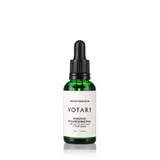
| St. IvesBlackhead Clearing Green Tea ScrubYOUR PRODUCT | BarefacedToning Pads II | NorevaAcnomega 200 | VotarySensitive Resurfacing Peel | |
|---|---|---|---|---|
| Match | — | 89% | 89% | 88% |
| Price | $4.97 | $52.00+$47.03 | $30.29+$25.32 | $92.60+$87.63 |
| Shared key ingredients | — | 4 of 5 | 3 of 5 | 3 of 5 |
| Key difference | — | Glycolic Acid | Glycolic Acid | Lactobacillus Ferment |
| Irritancy | High | Medium | Medium | Low |
| Drying alcohol | — | Contains drying alcohol | — | — |
| View product | Shop | Shop | Shop |

More alternatives: CeraVe Blemish Control Gel Moisturiser with 2% Salicylic Acid & Niacinamide for Blemish-Prone SkinNourishMax Tri-Acid Exfoliating Complex Peeling Pads
Product summary
"St Ives - Blackhead Clearing Green Tea Scrub" is effective for: Anti-inflammatory, Exfoliation and Anti-blemish
This product could be helpful for: Moisturizing, but its actives are not the most effective or are not well-studied.
Ingredient callouts
- Salicylic acid (1.00% - 1.20%). This is an oil-soluble exfoliating acid. Because of this property, it can work inside pores and help reduce the congestion. It has an anti-inflammatory effect and is used to treat acne. Because it is a quite strong exfoliator, be careful with using this product too often: it could result in over-exfoliation.
- Humectants (glycerin 3.10% - 3.70%). These ingredients help attract water to the upper layer of the skin and improve the skin hydration.
Price
The product retails for 5.65£ in the United Kingdom.
For a detailed price comparison: click here.
Sources cited in this review
Every concentration estimate and effectiveness label is anchored to one of these 9 studies and safety reviews.
- 1
- 2Salicylic acid as a peeling agent: a comprehensive reviewncbi.nlm.nih.gov
- 3Beta Hydroxy Acidsfda.gov
- 4A review of toxicity from topical salicylic acid preparationssciencedirect.com
- 5
- 6Epidermal and dermal effects of topical lactic acidncbi.nlm.nih.gov

Affiliate links · As an Amazon Associate, WIMJ earns from qualifying purchases.