Works for:
based on ingredients and %- Cleansing
Can it cause trouble?
- Irritation risk: high
- Comedogenic risk ingredients: 1
Key actives

Works for
Cleansing
What does the product description say?
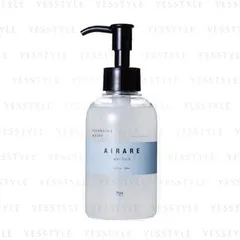
Airare Cleansing Water
Source: From product name
This product works by removing dirt and oil from the surface of the skin.
Keep in mind that cleansing can disrupt the skin barrier, and most people do not need to cleanse their skin more than once per day.
Helps create a thicker or gel-like product texture. It is not a surfactant but can be used in gentle cleansing formulations
Used mostly for creating emulsions - helping oil and water mix together. Helps soften the upper layer of the skin
How honest is this product?
| Promise | Can it deliver? |
|---|---|
| Cleansing |
Total Promises Fulfilled score: 75/100.
We receive a small commission for purchases made through these links at no cost for you. Thank you for your support! Learn more
Potential irritants
Comedogenic ingredients
User reviews (0)
Averages from community submissions.
No reviews yet for this product.
Be the first to share your experience!
Tried this product?
Help capture what the ingredient list can't—texture, finish, pilling, scent, and more. Answer what you can, skip the rest.
Takes ~30 seconds.
Reviews are shown in aggregate. No personal details.
Key Actives
Pure form of vitamin E. Can help moisturise and protect the skin from free radicals. Often used to help stabilise other ingredients or the formula itself
Can be helpful in reducing inflammation in skin, including inflamed acne. It can be irritating
Used mostly for creating emulsions - helping oil and water mix together. Helps soften the upper layer of the skin
An emollient. Found to be as effective as a moisturizer for dry skin as mineral oil. Could be comedogenic
One of the best moisturizing ingredients. Naturally present in skin. It attracts water to the upper layer of the skin working as a humectant
Softens the upper layer of skin and helps restore the healthy skin barrier. Has shown to help calm down inflammation in skin. It is a stable oil, meaning that it retains its properties even when exposed to air.
Helps create a thicker or gel-like product texture. It is not a surfactant but can be used in gentle cleansing formulations
Potential irritants
Essential oil that can be irritating
Can be helpful in reducing inflammation in skin, including inflamed acne. It can be irritating
A plant extract that is used as a fragrance. Can be irritating
Can be drying and contribute to skin irritation. Used in formulars to dissolve other ingredients, create a thinner product consistency or for its antibacterial properties
An aromatic blend of unspecified and possibly irritating ingredients
Traditionally used to treat sunburns, dermatitis and inflammation, but data on its effectiveness is lacking. While the majority of the content is plain water, it can contain some goodies like vitamins, enzymes, minerals, and humectants that help attract water into the skin
Softens the upper layer of skin and helps restore the healthy skin barrier. Has shown to help calm down inflammation in skin. It is a stable oil, meaning that it retains its properties even when exposed to air.
An emollient that helps soften the skin but is not effective for restoring its barrier function. Might be helpful to calm down inflammation
A plant extract that might have some anti-oxidant properties, but evidence is lacking
Comedogenic ingredients
An emollient. Found to be as effective as a moisturizer for dry skin as mineral oil. Could be comedogenic
All ingredients
An emollient. Found to be as effective as a moisturizer for dry skin as mineral oil. Could be comedogenic
One of the best moisturizing ingredients. Naturally present in skin. It attracts water to the upper layer of the skin working as a humectant
Traditionally used to treat sunburns, dermatitis and inflammation, but data on its effectiveness is lacking. While the majority of the content is plain water, it can contain some goodies like vitamins, enzymes, minerals, and humectants that help attract water into the skin
Softens the upper layer of skin and helps restore the healthy skin barrier. Has shown to help calm down inflammation in skin. It is a stable oil, meaning that it retains its properties even when exposed to air.
An emollient that helps soften the skin but is not effective for restoring its barrier function. Might be helpful to calm down inflammation
A plant extract that might have some anti-oxidant properties, but evidence is lacking
Essential oil that can be irritating
Can be helpful in reducing inflammation in skin, including inflamed acne. It can be irritating
A plant extract that is used as a fragrance. Can be irritating
Used mostly for creating emulsions - helping oil and water mix together. Helps soften the upper layer of the skin
Pure form of vitamin E. Can help moisturise and protect the skin from free radicals. Often used to help stabilise other ingredients or the formula itself
Can be drying and contribute to skin irritation. Used in formulars to dissolve other ingredients, create a thinner product consistency or for its antibacterial properties
Used to create a nice product texture and help delivery of other ingredients. Might be somewhat helpful in attracting water to the upper layer of the skin
An aromatic blend of unspecified and possibly irritating ingredients
Helps create a thicker or gel-like product texture. It is not a surfactant but can be used in gentle cleansing formulations
A preservative. It helps prevent bacterial growth in cosmetic products
Ingredient list view
Water, Peg-7 caprylic/capric glycerides, Cocos nucifera oil, Unknown, Peg-7, Glycerin, Unknown, Aloe barbadensis leaf water, Simmondsia chinensis seed oil, Olea europaea fruit oil, Unknown, Rosa canina fruit extract, Unknown, Lavandula angustifolia flower extract, Rosmarinus officinalis leaf extract, Ci 15850, Eugenia caryophyllus flower extract, Lecithin, Tocopherol, Alcohol, Butylene glycol, Parfum, Potassium hydroxide, Carbomer, Phenoxyethanol, Polyglyceryl-4 lauryl ether
- Glycerol and the skin: holistic approach to its origin and functions
- Use of “natural” oils for moisturization: Review of olive, coconut, and sunflower seed oil
- Evaluation of Skin Irritation and Acute and Subacute Oral Toxicity of Lavandula angustifolia Essential Oils in Rabbit and Mice
- Assessment report on Lavandula angustifolia Mill., aetheroleum and Lavandula angustifolia Mill., flos
- Allergic contact dermatitis induced by rosemary leaf extract in a cleansing gel