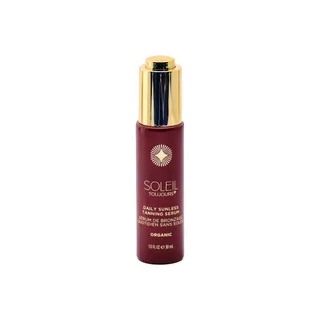
Soleil Toujours Daily Sunless Tanning Serum

Soleil Toujours Daily Sunless Tanning Serum

Efficacy75/100IrritancyHigh

Works for

Moisturizing
Glycerin, Chondrus crispus extract + 4 more
Works
What the product description says
“Aloe, Turmeric Root Extract, Raspberry Seed Oil and Azadirachta Flower Extract soothe and nourish skin, leaving face supple and soft.”
Source: Shoprescuespa

This product can help improve hydration of the skin with the two types of ingredients.

The first type is called “humectants”:
these ingredients help attract water. When humectants are on the surface of the skin, they “pull in” the moisture from the outside environment, or from within deeper layers of the skin. The following ingredients in this product do the job: glycerin, aloe barbadensis leaf juice.

This product also contains ingredients called “occlusives”. They help reduce the speed with which our skin loses moisture to the outside environment. These ingredients also help soften the upper layer of the skin, so it feels less tight and nicer to the touch. The following ingredients in this product do the job: chondrus crispus extract.

GlycerinKey active· HumectantEffect: HighOne of the best moisturizing ingredients. Naturally present in skin. It attracts water to the upper layer of the skin working as a humectant~2.3–3.4%
Chondrus crispus extractKey active· OcclusiveEffect: HighRed algae extract that helps attract water to the upper layer of the skin and create a nicer product consistency~0.5–1.2%
Corallina officinalis extractKey activeEffect: HighRed algae extract that helps attract water to the upper layer of the skin and might contain antioxidants~0.35–0.8%
Aloe barbadensis leaf juice· HumectantEffect: LowTraditionally used to treat sunburns, dermatitis and inflammation, but evidence for its effectiveness is lacking. The extract can contain humectants that help attract water into the skin~23–34%
Propylene glycol· HumectantEffect: LowHelps oil and water mix together and can enhance the penetration of other ingredients into the skin. It can be irritating~0.45–1.05%
TocopherolEffect: Low, below effective dosePure form of vitamin E. Can help moisturise and protect the skin from free radicals. Often used to help stabilise other ingredients or the formula itself~0.35–0.85%
Anti-oxidation
Not advertised by the brand · Rubus idaeus seed oil, Tocopheryl acetate + 6 more
May help

This product contains antioxidants (rubus idaeus seed oil) that might be able to help neutralize free radicals in skin to lessen the damage it gets from the UV light (sun). There is not enough evidence to confirm their effectiveness in skin though.

Rubus idaeus seed oilKey activeEffect: MediumA plant oil that might be able to help neutralize free radicals in skin~0.85–1.25%
Tocopheryl acetateEffect: LowA more stable but less bio-available form of vitamin E compared to Tocopherol. Might help moisturize and protect the skin from free radicals, but mostly used in low concentrations to stabilize other ingredients.~0.5–1.2%
Corallina officinalis extractEffect: LowRed algae extract that helps attract water to the upper layer of the skin and might contain antioxidants~0.35–0.8%
Melia azadirachta flower extractEffect: LowA plant extract that might be helpful to neutralize free radicals in skin~0.35–0.8%
Ocimum sanctum leaf extractEffect: LowA plant extract that is rich in a fragrance compound eugenol that is a frequent allergen and can be irritating. It might also contain anti-oxidants to help neutralize free radicals~0.35–0.8%
BisabololEffect: Low, below effective doseAn active component of chamomile plant that historically has been used to calm down irritated skin. A recent study shows that bisabolol indeed can have some anti-inflammatory effect on skin, even though conclusive data is lacking. Bisabolol has a sweet floral scent and can be added to products for its aromatic properties~0.4–0.9%
Sodium ascorbyl phosphateUnder-dosedA stable derivative of vitamin C. It is oil-soluble which means it is more likely to penetrate the skin compared to the pure form of vitamin C (which is water-soluble), but it is less bio-available and is way less effective in stimulating collagen and reducing wrinkles compared to the pure form of vitamin C (L-ascorbic acid) and its other derivatives (for example, magnesium ascorbyl phosphate). At the same time, this vitamin C derivative has been shown in studies to be effective in reducing acne, blemishes and clogged pores. It is less irritating then the pure form of vitamin C~1–1.6%
TocopherolUnder-dosedPure form of vitamin E. Can help moisturise and protect the skin from free radicals. Often used to help stabilise other ingredients or the formula itself~0.35–0.85%

Can it cause trouble?

Irritancy
11 strong irritants: Alcohol, Parfum + 9 more — patch-test recommended
High risk
We flagged 24 ingredients with irritancy potential. Severity depends on your sensitivity threshold; the table lists the worst offenders first.
IngredientFunctionIrritationEst. amount
DihydroxyacetoneA self-tanning agentHigh~5–7.5%est.
AlcoholCan be drying and contribute to skin irritation. Used in formulars to dissolve other ingredients, create a thinner product consistency or for its antibacterial propertiesHigh~5.2–7.7%est.
ParfumAn aromatic blend of unspecified and possibly irritating ingredientsHigh~1.2–1.8%est.
Propylene glycolHelps oil and water mix together and can enhance the penetration of other ingredients into the skin. It can be irritatingHigh~0.45–1.05%est.
Melia azadirachta leaf extractA plant extract that has anti-bacterial properties. Can be used to preserve the product. Can be irritatingHigh~0.35–0.85%est.
Ocimum sanctum leaf extractA plant extract that is rich in a fragrance compound eugenol that is a frequent allergen and can be irritating. It might also contain anti-oxidants to help neutralize free radicalsHigh~0.35–0.8%est.
Ocimum basilicum flower/leaf extractUsed as a fragrance. Canbe irritatingHigh~0.35–0.8%est.
Curcuma longa root extractA plant extract that can contain an active compound curcumin, that may have some anti-inflammatory properties when applied to the skin, but solid research is lacking and the typical concentration used in skincare products is too low. Can be an irritantHigh~0.35–0.8%est.
Hexyl cinnamalA fragrance with jasmine smell. A likely irritantHigh~0.35–0.75%est.
Citrus aurantium dulcis fruit extractA plant extract that is used as a fragrance. Can be irritating and lead to photosensitivityHigh~0.35–0.85%est.
Santalum album oilUsed as a fragrance. Can be irritatingHigh~0.35–0.8%est.
Zingiber officinale root oilAn essential oil that is likely to be irritating and can cause photosensitivityHigh~0.2–0.7%est.
Cinnamomum zeylanicum leaf oil—High~0.15–0.65%est.
CitralA fragrance with a lemon scent. A likely irritantHigh~0.1–0.45%est.
LimoneneA common frangrance that can easily irritate skin, especially if exposed to air, light or heatHigh~0.1–0.5%est.
Aloe barbadensis leaf juiceTraditionally used to treat sunburns, dermatitis and inflammation, but evidence for its effectiveness is lacking. The extract can contain humectants that help attract water into the skinMedium~23–34%est.
Sodium ascorbyl phosphateA stable derivative of vitamin C. It is oil-soluble which means it is more likely to penetrate the skin compared to the pure form of vitamin C (which is water-soluble), but it is less bio-available and is way less effective in stimulating collagen and reducing wrinkles compared to the pure form of vitamin C (L-ascorbic acid) and its other derivatives (for example, magnesium ascorbyl phosphate). At the same time, this vitamin C derivative has been shown in studies to be effective in reducing acne, blemishes and clogged pores. It is less irritating then the pure form of vitamin CMedium~1–1.6%est.
EthoxydiglycolHelps to improve the product consistencyMedium~0.85–1.25%est.
Rubus idaeus seed oilA plant oil that might be able to help neutralize free radicals in skinMedium~0.85–1.25%est.
Tocopheryl acetateA more stable but less bio-available form of vitamin E compared to Tocopherol. Might help moisturize and protect the skin from free radicals, but mostly used in low concentrations to stabilize other ingredients.Medium~0.5–1.2%est.
Citric acidCan work as an exfoliant but is typically used to adjust the product pHMedium~0.45–1.05%est.
EthylhexylglycerinA preservativeMedium~0.4–0.95%est.
Melia azadirachta flower extractA plant extract that might be helpful to neutralize free radicals in skinMedium~0.35–0.8%est.
Triethyl citrateUsed as a fragrance. Rarely causes irritationMedium~0.35–0.8%est.
Comedogenic
2 ingredients rated 2 or more on the 0–5 pore-clogging scale
2 flagged
These ingredients have a comedogenic rating of 2 or more on a 0–5 scale; the table shows each one's rating. In leave-on products they can clog pores in acne-prone skin.
IngredientFunctionRatingEst. amount
Chondrus crispus extractRed algae extract that helps attract water to the upper layer of the skin and create a nicer product consistency3/5~0.5–1.2%est.
Corallina officinalis extractRed algae extract that helps attract water to the upper layer of the skin and might contain antioxidants3/5~0.35–0.8%est.

User reviews

Would you recommend?
No community reviews yet.

Be the first — your take helps the next person decide.

Ingredients

Filter by role to see what each ingredient is doing.

Aloe barbadensis leaf juice~23–34%
Irritant · medium
Irritation risk
Medium
Works for
MoisturizingAntibacterialAnti-inflammatoryReduces rednessReduces irritationAnti-blemishAnti-aging

Traditionally used to treat sunburns, dermatitis and inflammation, but evidence for its effectiveness is lacking. The extract can contain humectants that help attract water into the skin

More about Aloe barbadensis leaf juice
Dihydroxyacetone~5–7.5%
Irritant · high
Irritation risk
High
Works for
Tanning

A self-tanning agent

More about Dihydroxyacetone
Alcohol~5.2–7.7%
Irritant · high
Irritation risk
High
Works for
Antibacterial

Can be drying and contribute to skin irritation. Used in formulars to dissolve other ingredients, create a thinner product consistency or for its antibacterial properties

More about Alcohol
Erythrulose~4–5.9%
Formula
Irritation risk
Low
More about Erythrulose
Water~3–4.5%
Formula
Irritation risk
Low

Plain old water

More about Water
Glycerin~2.3–3.4%
Key active
Irritation risk
Low
Works for
Moisturizing

One of the best moisturizing ingredients. Naturally present in skin. It attracts water to the upper layer of the skin working as a humectant

More about Glycerin
Xanthan gum~1.7–2.6%
Formula
Irritation risk
Low
Works for
Cleansing

Used to create a thicker product consistency

More about Xanthan gum
Polysorbate 20~1.4–2.1%
Formula
Irritation risk
Low
Works for
Cleansing

Helps oil and water mix together

More about Polysorbate 20
Parfum~1.2–1.8%
Irritant · high
Irritation risk
High

An aromatic blend of unspecified and possibly irritating ingredients

More about Parfum
Sodium ascorbyl phosphate~1–1.6%
Under-dosedIrritant · medium
Irritation risk
Medium
Works for
Anti-blemishAnti-oxidationAnti-aging

A stable derivative of vitamin C. It is oil-soluble which means it is more likely to penetrate the skin compared to the pure form of vitamin C (which is water-soluble), but it is less bio-available and is way less effective in stimulating collagen and reducing wrinkles compared to the pure form of vitamin C (L-ascorbic acid) and its other derivatives (for example, magnesium ascorbyl phosphate). At the same time, this vitamin C derivative has been shown in studies to be effective in reducing acne, blemishes and clogged pores. It is less irritating then the pure form of vitamin C

More about Sodium ascorbyl phosphate
Ethoxydiglycol~0.85–1.25%
Irritant · medium
Irritation risk
Medium

Helps to improve the product consistency

More about Ethoxydiglycol
Rubus idaeus seed oil~0.85–1.25%
Key activeIrritant · medium
Irritation risk
Medium
Works for
Anti-oxidation

A plant oil that might be able to help neutralize free radicals in skin

More about Rubus idaeus seed oil
Tocopheryl acetate~0.5–1.2%
Irritant · medium
Irritation risk
Medium
Works for
Anti-oxidation

A more stable but less bio-available form of vitamin E compared to Tocopherol. Might help moisturize and protect the skin from free radicals, but mostly used in low concentrations to stabilize other ingredients.

More about Tocopheryl acetate
Chondrus crispus extract~0.5–1.2%
Key activeComedogenic 3/5
Irritation risk
Low
Comedogenicity
3/5
Works for
Moisturizing

Red algae extract that helps attract water to the upper layer of the skin and create a nicer product consistency

More about Chondrus crispus extract
Propylene glycol~0.45–1.05%
Irritant · high
Irritation risk
High
Works for
Moisturizing

Helps oil and water mix together and can enhance the penetration of other ingredients into the skin. It can be irritating

More about Propylene glycol
Citric acid~0.45–1.05%
Irritant · medium
Irritation risk
Medium

Can work as an exfoliant but is typically used to adjust the product pH

More about Citric acid
Bisabolol~0.4–0.9%
Formula
Irritation risk
Low
Works for
Anti-inflammatoryReduces irritationAnti-oxidation

An active component of chamomile plant that historically has been used to calm down irritated skin. A recent study shows that bisabolol indeed can have some anti-inflammatory effect on skin, even though conclusive data is lacking. Bisabolol has a sweet floral scent and can be added to products for its aromatic properties

More about Bisabolol
Phenoxyethanol~0.45–1%
Formula
Irritation risk
Low

A preservative. It helps prevent bacterial growth in cosmetic products

More about Phenoxyethanol
Ethylhexylglycerin~0.4–0.95%
Irritant · medium
Irritation risk
Medium

A preservative

More about Ethylhexylglycerin
Tocopherol~0.35–0.85%
Under-dosed
Irritation risk
Low
Works for
Anti-oxidationAnti-inflammatoryAnti-agingMoisturizing

Pure form of vitamin E. Can help moisturise and protect the skin from free radicals. Often used to help stabilise other ingredients or the formula itself

More about Tocopherol
Caramel~0.35–0.85%
Formula
Irritation risk
Low
More about Caramel
Melia azadirachta leaf extract~0.35–0.85%
Irritant · high
Irritation risk
High
Works for
AntibacterialAnti-blemish

A plant extract that has anti-bacterial properties. Can be used to preserve the product. Can be irritating

More about Melia azadirachta leaf extract
Melia azadirachta flower extract~0.35–0.8%
Irritant · medium
Irritation risk
Medium
Works for
Anti-oxidation

A plant extract that might be helpful to neutralize free radicals in skin

More about Melia azadirachta flower extract
Corallina officinalis extract~0.35–0.8%
Key activeComedogenic 3/5
Irritation risk
Low
Comedogenicity
3/5
Works for
MoisturizingAnti-oxidation

Red algae extract that helps attract water to the upper layer of the skin and might contain antioxidants

More about Corallina officinalis extract
Ocimum sanctum leaf extract~0.35–0.8%
Irritant · high
Irritation risk
High
Works for
Anti-oxidation

A plant extract that is rich in a fragrance compound eugenol that is a frequent allergen and can be irritating. It might also contain anti-oxidants to help neutralize free radicals

More about Ocimum sanctum leaf extract
Ocimum basilicum flower/leaf extract~0.35–0.8%
Irritant · high
Irritation risk
High

Used as a fragrance. Canbe irritating

More about Ocimum basilicum flower/leaf extract
Curcuma longa root extract~0.35–0.8%
Irritant · high
Irritation risk
High
Works for
Anti-inflammatory

A plant extract that can contain an active compound curcumin, that may have some anti-inflammatory properties when applied to the skin, but solid research is lacking and the typical concentration used in skincare products is too low. Can be an irritant

More about Curcuma longa root extract
Triethyl citrate~0.35–0.8%
Irritant · medium
Irritation risk
Medium

Used as a fragrance. Rarely causes irritation

More about Triethyl citrate
Hexyl cinnamal~0.35–0.75%
Irritant · high
Irritation risk
High

A fragrance with jasmine smell. A likely irritant

More about Hexyl cinnamal
Vanillin~0.35–0.85%
Formula
Irritation risk
Low
More about Vanillin
Citrus aurantium dulcis fruit extract~0.35–0.85%
Irritant · high
Irritation risk
High

A plant extract that is used as a fragrance. Can be irritating and lead to photosensitivity

More about Citrus aurantium dulcis fruit extract
Pogostemon cablin leaf extract~0.35–0.8%
Formula
Santalum album oil~0.35–0.8%
Irritant · high
Irritation risk
High

Used as a fragrance. Can be irritating

More about Santalum album oil
Zingiber officinale root oil~0.2–0.7%
Irritant · high
Irritation risk
High

An essential oil that is likely to be irritating and can cause photosensitivity

More about Zingiber officinale root oil
Cinnamomum zeylanicum leaf oil~0.15–0.65%
Irritant · high
Heliotropine~0.15–0.6%
Formula
Irritation risk
Low
More about Heliotropine
Gamma-decalactone~0.15–0.55%
Formula
Hexenyl acetate~0.15–0.55%
Formula
Citral~0.1–0.45%
Irritant · high
Irritation risk
High

A fragrance with a lemon scent. A likely irritant

More about Citral
Decanal~0.1–0.45%
Formula
Irritation risk
Low
More about Decanal
Limonene~0.1–0.5%
Irritant · high
Irritation risk
High

A common frangrance that can easily irritate skin, especially if exposed to air, light or heat

More about Limonene
Ingredient list view

Aloe barbadensis leaf juice, Dihydroxyacetone, Alcohol, Erythrulose, Water, Glycerin, Xanthan gum, Polysorbate 20, Parfum, Sodium ascorbyl phosphate, Ethoxydiglycol, Rubus idaeus seed oil, Tocopheryl acetate, Chondrus crispus extract, Propylene glycol, Citric acid, Bisabolol, Phenoxyethanol, Ethylhexylglycerin, Tocopherol, Caramel, Melia azadirachta leaf extract, Melia azadirachta flower extract, Corallina officinalis extract, Ocimum sanctum leaf extract, Ocimum basilicum flower/leaf extract, Curcuma longa root extract, Triethyl citrate, Hexyl cinnamal, Vanillin, Citrus aurantium dulcis fruit extract, Pogostemon cablin leaf extract, Santalum album oil, Zingiber officinale root oil, Cinnamomum zeylanicum leaf oil, Heliotropine, Gamma-decalactone, Hexenyl acetate, Citral, Decanal, Limonene

Compare prices

Retailers ranked by price — lowest first.

No pricing data available yet for this product.

Worth comparing, line by line.

Match % combines shared ingredients, the first five ingredients, shared actives and hero ingredients, irritancy (lower counts in the alternative's favour), texture and body area. Only products in the same routine step are compared.

Side-by-side comparison of this product against its closest alternatives
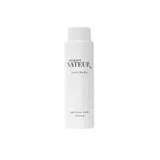
Soleil ToujoursDaily Sunless Tanning SerumYOUR PRODUCTAgent NateurHoli Youth Body SerumStriVectinSuper-C Retinol Brighten and Correct Vitamin C SerumBAWDYThe Super Tight Body Serum
Match—50%49%48%
Price—$213.23$60.11—
Shared key ingredients—1 of 93 of 91 of 9
Key difference—CaffeineRetinolPanthenol
Irritancy High Medium High High
Drying alcohol Contains drying alcohol ———
View product Shop Shop Shop

More alternatives: NOW Foods Vitamin C + Ferulic Acid SerumDISCIPLE Skincare Triple-C Gel Serum

Cheaper alternatives? Browse formulas in the same category.
We compare ingredient profiles across our catalog — pick the closest match for your budget.
Open dupe finder

Sources cited in this review

Every concentration estimate and effectiveness label is anchored to one of these 21 studies and safety reviews.

  1. 1
  2. 2
  3. 3
  4. 4
  5. 5
  6. 6
Soleil Toujours Daily Sunless Tanning Serum
Soleil ToujoursDaily Sunless Tanning Serum

Affiliate links · As an Amazon Associate, WIMJ earns from qualifying purchases.

As an Amazon Associate, WIMJ earns from qualifying purchases.