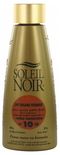
Soleil Noir Vitaminised Sun Milk Low Protection SPF10
Works for
0 of 1 advertised claim delivered
Sun protectionSPF 10 · 3 UV filters · Broad spectrumNo real protectionSPF too low
This product does not offer sun protection, or it is very low.
This product can be considered "reef safe" because it does not contain the UV filters (oxybenzone and octinoxate) that can be harmful to coral reefs when present in the water in high concentrations.
MoisturizingNot advertised by the brand · 15 ingredients credited for this claimStrong support
This product can help improve hydration of the skin with the two types of ingredients.
The first type is called “humectants”:
these ingredients help attract water.
When humectants are on the surface of the skin, they “pull in” the moisture from the outside environment, or from
within deeper layers of the skin. The following ingredients in this product do the job:
glycerin.
This product also contains ingredients called “occlusives”. They help reduce the speed with which our skin loses moisture to the outside environment. These ingredients also help soften the upper layer of the skin, so it feels less tight and nicer to the touch. The following ingredients in this product do the job: cocos nucifera oil, helianthus annuus seed oil.
The following ingredients in this product are especially good for supporting the skin barrier and helping with the hydration level: panthenol
Anti-oxidationNot advertised by the brand · 7 ingredients credited for this claimModerate support
This product contains antioxidants (tocopheryl linoleate) that might be able to help neutralize free radicals in skin to lessen the damage it gets from the UV light (sun). There is not enough evidence to confirm their effectiveness in skin though.
Can it cause trouble?
Irritancy3 strong irritants: Rosa moschata seed oil, Rosmarinus officinalis leaf extract + 1 more — patch-test recommendedHigh risk
Comedogenic5 ingredients rated 2 or more on the 0–5 pore-clogging scale5 flagged


User reviews
Be the first — your take helps the next person decide.
Ingredients
Filter by role to see what each ingredient is doing.
Water~45–55%
Triheptanoin~9–11%
- Irritation risk
- Low
A synthetic triglyceride. Helps soften the upper layer of the skin
More about TriheptanoinCocoglycerides~4.5–5.5%
- Irritation risk
- High
Help soften the upper layer of the skin and make it easier for oil and water mix together. Recently, a rising number of allergic reactions to cocoglycerides and other coconut-derived surfactants has been reported. As there is a significant overlap between frequent irritants and allergens, we flag this ingredient for attention of those with very sensitive, reactive skin
More about CocoglyceridesGlyceryl stearate~3.2–3.9%
- Irritation risk
- Low
An emollient that softens the skin and forms a protective layer on its surface. Helps water and oil mix together
More about Glyceryl stearateCoco-caprylate/caprate~2.7–3.3%
- Irritation risk
- Low
Helps to soften the upper layer of the skin without creating a greasy texture
More about Coco-caprylate/caprateGlycerin~2.3–2.9%
- Irritation risk
- Low
One of the best moisturizing ingredients. Naturally present in skin. It attracts water to the upper layer of the skin working as a humectant
More about GlycerinCeteareth-20~2.1–2.5%
- Irritation risk
- Medium
- Comedogenicity
- 2/5
Helps oil and water mix together. Has some emollient properties
More about Ceteareth-20Olea europaea fruit oil~1.6–2%
- Irritation risk
- Medium
An emollient that helps soften the skin but is not effective for restoring its barrier function. Might be helpful to calm down inflammation
More about Olea europaea fruit oilCocos nucifera oil~1.4–1.7%
- Irritation risk
- Low
- Comedogenicity
- 3/5
An emollient. Found to be as effective as a moisturizer for dry skin as mineral oil. Could be comedogenic
More about Cocos nucifera oilCetearyl alcohol~1.3–1.5%
- Irritation risk
- Low
- Comedogenicity
- 2/5
A non-drying alcohol. Works as an emollient. Helps water and oil mix together and creates a nice product texture
More about Cetearyl alcoholCeteareth-12~0.95–1.2%
Tocopherol~0.75–1.1%
- Irritation risk
- Low
Pure form of vitamin E. Can help moisturise and protect the skin from free radicals. Often used to help stabilise other ingredients or the formula itself
More about TocopherolEthylhexyl triazone~1–1.2%
- Irritation risk
- Medium
Uvinul T. A UV filter. Effective against UVB rays. It is photostable. Can increase water resistance properties of the sunscreen. Unfortunately, not approved by the FDA (US) yet
More about Ethylhexyl triazoneDiethylamino hydroxybenzoyl hexyl benzoate~0.9–1.1%
- Irritation risk
- Medium
Uvinul A Plus. A new generation broad spectrum sunscreen that offers an effective protection especially in the UVA range. It is stable in formulations. Unfortunately, is not approved by the FDA (US) yet
More about Diethylamino hydroxybenzoyl hexyl benzoateBis-ethylhexyloxyphenol methoxyphenyl triazine~0.75–1.15%
- Irritation risk
- Medium
Tinosorb S. One of the most effective broad spectrum sunscreen ingredients. Protects from both UVA and UVB rays. It is photostable. Unfortunately, not approved by FDA (US) yet.
More about Bis-ethylhexyloxyphenol methoxyphenyl triazineVp/hexadecene copolymer~0.6–0.95%
- Irritation risk
- Low
Creates a nice product texture and can support water-resistance of sunscreens
More about Vp/hexadecene copolymerTocopheryl linoleate~0.6–0.9%
- Irritation risk
- Medium
A relative of vitamin E (Tocopherol). It can have an anti-oxidant effect in skin and/or to stabilize the product fromulation. It could be irritating but most of the reported allergy and irritation cases appeared in one geographic location (Switzerland) in 1992, and might be due to the quality issues in manufacturing of a particular batch of the ingredient
More about Tocopheryl linoleateAloe barbadensis leaf juice powder~0.55–0.85%
- Irritation risk
- Medium
Traditionally used to treat sunburns, dermatitis and inflammation, but evidence for its effectiveness is lacking. The extract can contain humectants that help attract water into the skin
More about Aloe barbadensis leaf juice powderPanthenol~0.55–0.8%
- Irritation risk
- Low
Helps attract water to the upper layer of the skin and can help improve skin barrier function
More about PanthenolTocopheryl acetate~0.5–0.75%
- Irritation risk
- Medium
A more stable but less bio-available form of vitamin E compared to Tocopherol. Might help moisturize and protect the skin from free radicals, but mostly used in low concentrations to stabilize other ingredients.
More about Tocopheryl acetateSodium ascorbyl phosphate~0.5–0.75%
- Irritation risk
- Medium
A stable derivative of vitamin C. It is oil-soluble which means it is more likely to penetrate the skin compared to the pure form of vitamin C (which is water-soluble), but it is less bio-available and is way less effective in stimulating collagen and reducing wrinkles compared to the pure form of vitamin C (L-ascorbic acid) and its other derivatives (for example, magnesium ascorbyl phosphate). At the same time, this vitamin C derivative has been shown in studies to be effective in reducing acne, blemishes and clogged pores. It is less irritating then the pure form of vitamin C
More about Sodium ascorbyl phosphateBeta-carotene~0.45–0.7%
Zea mays oil~0.35–0.65%
- Irritation risk
- Low
- Comedogenicity
- 3/5
A good moisturizing plant oil. Due to the high linoleic acid content, it helps soften the upper layer of the skin, reduce water loss and support skin barrier function
More about Zea mays oilBorago officinalis seed oil~0.45–0.7%
- Irritation risk
- Low
A plant oil that is effective in reducing irritation in skin, restore the barrier function and support its hydration
More about Borago officinalis seed oilGlycine soja oil~0.4–0.6%
- Irritation risk
- Medium
- Comedogenicity
- 2/5
A good emollient that helps soften the skin and helps repair its barrier function. It can clog pores if used in high concentrations.
More about Glycine soja oilRosa moschata seed oil~0.45–0.65%
- Irritation risk
- High
Rosmarinus officinalis leaf extract~0.3–0.55%
- Irritation risk
- High
Can be helpful in reducing inflammation in skin, including inflamed acne. It can be irritating
More about Rosmarinus officinalis leaf extractHelianthus annuus seed oil~0.35–0.6%
- Irritation risk
- Low
A great emollient due to its high linoleic acid content. One of the most effective plant oils in helping skin hydration and repairing skin barrier function
More about Helianthus annuus seed oilDaucus carota sativa root extract~0.25–0.45%
- Irritation risk
- Low
Carrot extract. Might have anti-oxidant properties and be used to add orange color
More about Daucus carota sativa root extractParfum~0.2–0.35%
- Irritation risk
- High
An aromatic blend of unspecified and possibly irritating ingredients
More about ParfumCarbomer~0.15–0.3%
- Irritation risk
- Low
Helps create a thicker or gel-like product texture. It is not a surfactant but can be used in gentle cleansing formulations
More about CarbomerChlorphenesin~0.15–0.3%
Potassium sorbate~0.15–0.3%
Citric acid~0.1–0.15%
- Irritation risk
- Medium
Can work as an exfoliant but is typically used to adjust the product pH
More about Citric acidIngredient list view
Water, Triheptanoin, Cocoglycerides, Glyceryl stearate, Coco-caprylate/caprate, Glycerin, Ceteareth-20, Olea europaea fruit oil, Cocos nucifera oil, Cetearyl alcohol, Ceteareth-12, Tocopherol, Ethylhexyl triazone, Diethylamino hydroxybenzoyl hexyl benzoate, Bis-ethylhexyloxyphenol methoxyphenyl triazine, Vp/hexadecene copolymer, Tocopheryl linoleate, Aloe barbadensis leaf juice powder, Panthenol, Tocopheryl acetate, Sodium ascorbyl phosphate, Beta-carotene, Zea mays oil, Borago officinalis seed oil, Glycine soja oil, Rosa moschata seed oil, Rosmarinus officinalis leaf extract, Helianthus annuus seed oil, Daucus carota sativa root extract, Parfum, Carbomer, Chlorphenesin, Potassium sorbate, Citric acid
Compare prices
Retailers ranked by price — lowest first.

Worth comparing, line by line.
Match % combines shared ingredients, the first five ingredients, shared actives and hero ingredients, irritancy (lower counts in the alternative's favour), texture and body area. Only products in the same routine step are compared.
| Soleil NoirVitaminised Sun Milk Low Protection SPF10YOUR PRODUCT | Dr. CeuracleHyal Reyouth Moist Sun SPF50+ PA++++ | NiveaSUN Kids Suncream Lotion Extra Water Resistant SPF 50+, Swim & Play | SalteeSPF30 Body Sea & Sun Lotion OR Saltee SPF50 Face Sea & Sun Formula GWP | |
|---|---|---|---|---|
| Match | — | 56% | 55% | 55% |
| Price | $18.61 | $15.60−$3.01 | $10.58−$8.03 | — |
| Shared key ingredients | — | 6 of 14 | 5 of 14 | 4 of 14 |
| Key difference | — | Niacinamide | Avobenzone | Acetyl Hexapeptide-1 |
| Irritancy | High | Medium | Medium | Medium |
| SPF | SPF 10 | SPF 50 | SPF 50 | SPF 30 |
| Drying alcohol | — | — | Contains drying alcohol | — |
| View product | Shop | Shop | Shop |


Product summary
"Soleil Noir - Vitaminised Sun Milk Low Protection SPF10" "is a broad spectrum sunscreen meaning that it protects both from UVB rays (" burning "- they cause sunburn) and UVA rays (" aging "- they don't cause sunburn but lead to premature aging and pigmentation issues). However, this product does not offer enough sun protection. We recommend to use a sunscreen with at least SPF 30 daily.
Its formula is also hydrating, so you might not need an additional moistruizer during the day.
Sunscreen filters
This is a so-called" chemical "sunscreen. It means that it uses organic UV filters. They typically offer good sun protection and rarely leave a white cast, but they can be irritating for some people with sensitive skin. The UV filters in this sunscreen are: tinosorb s 0.75% - 1.15%, uvinul a plus 0.90% - 1.10% and uvinul t 1.00% - 1.20%.
Irritation risk
This formulation includes some common irritants, including ingredients that do not provide a benefit for the skin. We assess the overall irritancy of this product to be high. For a detailed overview of all potential irritants: click here
You can see the detailed formula review with the breakdown of all actives in the product and the full ingredient list with estimated concentrations in the tables below.
Price
The product retails for 14.08£ in the United Kingdom.
For a detailed price comparison: click here.
Sources cited in this review
Every concentration estimate and effectiveness label is anchored to one of these 26 studies and safety reviews.
- 1Safety Assessment of Alkyl Esters as Used in Cosmeticscir-safety.org
- 2
- 3Use of “natural” oils for moisturization: Review of olive, coconut, and sunflower seed oilonlinelibrary.wiley.com
- 4Vitamin E in dermatologyncbi.nlm.nih.gov
- 5Vitamin E and Skin Healthlpi.oregonstate.edu
- 6

Affiliate links · As an Amazon Associate, WIMJ earns from qualifying purchases.