Works for
MoisturizingPanthenol, Butyrospermum parkii butter + 11 moreWorks well
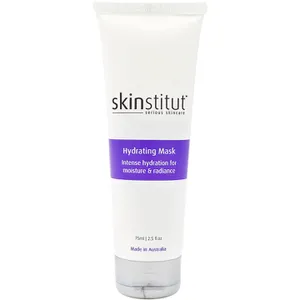
“Hydrating Mask”
This product can help improve hydration of the skin with the two types of ingredients.
The first type is called “humectants”:
these ingredients help attract water.
When humectants are on the surface of the skin, they “pull in” the moisture from the outside environment, or from
within deeper layers of the skin. The following ingredients in this product do the job:
glycerin, trehalose.
This product also contains ingredients called “occlusives”. They help reduce the speed with which our skin loses moisture to the outside environment. These ingredients also help soften the upper layer of the skin, so it feels less tight and nicer to the touch. The following ingredients in this product do the job: butyrospermum parkii butter, helianthus annuus seed oil.
The following ingredients in this product are especially good for supporting the skin barrier and helping with the hydration level: panthenol
Anti-agingButyrospermum parkii butter, Tocopherol + 2 moreNot delivered
“This is an almost-instant skin fix; dehydration, dryness, and fine lines fade into submission.”
This product does not contain ingredients that are able to reduce fine lines and wrinkles or help with skin elasticity, but it can improve the look of the skin temporarily through moisturization. Well-moisturized skin might also be able to repair the sun damage better.This ingredient - butyrospermum parkii butter - could be helpful for preventing or repairing signs of aging in theory, but there is no evidence that it actually works.
Can it cause trouble?
Irritancy3 strong irritants: Retinyl palmitate, Zingiber officinale root extract + 1 more — patch-test recommendedHigh risk
Comedogenic1 ingredient rated 2 or more on the 0–5 pore-clogging scale1 flagged

User reviews
Be the first — your take helps the next person decide.
Ingredients
Filter by role to see what each ingredient is doing.
Water~45–55%
Dicaprylyl carbonate~5.2–6.4%
- Irritation risk
- Low
Helps products spread more easily and works as an emollient to soften skin
More about Dicaprylyl carbonatePotassium lauroyl wheat amino acids~5.1–6.2%
Butyrospermum parkii butter~3.3–4%
- Irritation risk
- Low
- Comedogenicity
- 3/5
A great moisturising ingredient that softens the skin and reduces water loss from its upper layer. It also can be helpful in protecting skin from free radicals
More about Butyrospermum parkii butterRhus verniciflua peel wax~2.3–2.8%
- Irritation risk
- Low
Propylene glycol~1.9–2.3%
- Irritation risk
- High
Helps oil and water mix together and can enhance the penetration of other ingredients into the skin. It can be irritating
More about Propylene glycolPalm glycerides~1.7–2%
Sodium polyacrylate~1.5–1.8%
- Irritation risk
- Low
Used to create a gel-like product texture, as well as to stabilize emulsions
More about Sodium polyacrylateCapryloyl glycine~1.3–1.5%
- Irritation risk
- Low
Helps oil and water mix together, preserve cosmetic products, and attract water to the upper layer of the skin
More about Capryloyl glycineTocopherol~0.95–1.2%
- Irritation risk
- Low
Pure form of vitamin E. Can help moisturise and protect the skin from free radicals. Often used to help stabilise other ingredients or the formula itself
More about TocopherolPanthenol~0.7–1.05%
- Irritation risk
- Low
Helps attract water to the upper layer of the skin and can help improve skin barrier function
More about PanthenolTrehalose~0.55–0.85%
- Irritation risk
- Low
A sugar that attracts water to the upper layer of the skin
More about TrehaloseCaprylhydroxamic acid~0.5–0.8%
Hydrolyzed vegetable protein~0.45–0.7%
Rubus idaeus fruit extract~0.4–0.65%
- Irritation risk
- Medium
A fruit extract that might have some anti-oxidant properties but evidence of effectiveness in skin is lacking
More about Rubus idaeus fruit extractEthoxydiglycol~0.4–0.65%
Glycerin~0.45–0.7%
- Irritation risk
- Low
One of the best moisturizing ingredients. Naturally present in skin. It attracts water to the upper layer of the skin working as a humectant
More about GlycerinAesculus hippocastanum seed extract~0.35–0.65%
- Irritation risk
- High
Plant extract. Might have some anti-oxidant properties. Can be irritating
More about Aesculus hippocastanum seed extractEthylhexylglycerin~0.3–0.6%
Tocopheryl acetate~0.3–0.55%
- Irritation risk
- Medium
A more stable but less bio-available form of vitamin E compared to Tocopherol. Might help moisturize and protect the skin from free radicals, but mostly used in low concentrations to stabilize other ingredients.
More about Tocopheryl acetatePeg-40 hydrogenated castor oil~0.3–0.55%
- Irritation risk
- Medium
Helps oil and water mix together
More about Peg-40 hydrogenated castor oilPhenoxyethanol~0.25–0.5%
- Irritation risk
- Low
A preservative. It helps prevent bacterial growth in cosmetic products
More about PhenoxyethanolRetinyl palmitate~0.25–0.4%
- Irritation risk
- High
Three steps removed from the active form of vitamin A - retinoic acid. To have an effect in the skin, it first needs to be converted twice to become the retinoic acid. This means it is less potent than retinol, but could also be less irritating. Once converted to the retinoic acid in the skin, it helps against all signs of aging, improves skin cell turnover and helps fight blemishes and clogged pores. However, in many cosmetic formulations, it is used in a concentration that is too low to have the full effect
More about Retinyl palmitateHelianthus annuus seed oil~0.25–0.5%
- Irritation risk
- Low
A great emollient due to its high linoleic acid content. One of the most effective plant oils in helping skin hydration and repairing skin barrier function
More about Helianthus annuus seed oilDisodium edta~0.2–0.4%
Caprylyl glycol~0.25–0.45%
- Irritation risk
- Medium
Helps preserve products and creates a nice product texture
More about Caprylyl glycolBisabolol~0.2–0.35%
- Irritation risk
- Low
An active component of chamomile plant that historically has been used to calm down irritated skin. A recent study shows that bisabolol indeed can have some anti-inflammatory effect on skin, even though conclusive data is lacking. Bisabolol has a sweet floral scent and can be added to products for its aromatic properties
More about BisabololLinseed acid~0.3–0.6%
Zingiber officinale root extract~0.15–0.25%
- Irritation risk
- High
A plant extract that can contain an irritating essential oil. Might have some anti-oxidant effect, but evidence is lacking
More about Zingiber officinale root extractParfum~0.1–0.2%
- Irritation risk
- High
An aromatic blend of unspecified and possibly irritating ingredients
More about ParfumTocopherol~0.15–0.25%
- Irritation risk
- Low
Pure form of vitamin E. Can help moisturise and protect the skin from free radicals. Often used to help stabilise other ingredients or the formula itself
More about TocopherolSorbitol~0.1–0.2%
- Irritation risk
- Low
Helps attract water to the upper layer of the skin and improves the product texture
More about SorbitolLactic acid~0.1–0.15%
- Irritation risk
- Medium
An exfoliating and moisturizing alpha-hydroxy acid (AHA). Typically causes less irritation than other AHAs, for example, glycolic acid. At high concentrations (about 15%), lactic acid can help reduce lines and wrinkles. Recent studies show that lactic acid can support the "good" bacteria living on skin's surface (healthy skin microbiome)
More about Lactic acidSodium hydroxide~0.05–0.1%
Ingredient list view
Water, Dicaprylyl carbonate, Potassium lauroyl wheat amino acids, Butyrospermum parkii butter, Rhus verniciflua peel wax, Propylene glycol, Palm glycerides, Sodium polyacrylate, Capryloyl glycine, Tocopherol, Panthenol, Trehalose, Caprylhydroxamic acid, Hydrolyzed vegetable protein, Rubus idaeus fruit extract, Ethoxydiglycol, Glycerin, Aesculus hippocastanum seed extract, Ethylhexylglycerin, Tocopheryl acetate, Peg-40 hydrogenated castor oil, Phenoxyethanol, Retinyl palmitate, Helianthus annuus seed oil, Disodium edta, Caprylyl glycol, Bisabolol, Linseed acid, Zingiber officinale root extract, Parfum, Tocopherol, Sorbitol, Lactic acid, Sodium hydroxide
Compare prices
Retailers ranked by price — lowest first.
Worth comparing, line by line.
Match % combines shared ingredients, the first five ingredients, shared actives and hero ingredients, irritancy (lower counts in the alternative's favour), texture and body area. Only products in the same routine step are compared.
| SkinstitutHydrating MaskYOUR PRODUCT | InstitutHydrating Mask | BaleaRetinol Face Mask | APIVITAExpress Beauty Face Mask with Prickly Pear | |
|---|---|---|---|---|
| Match | — | 71% | 64% | 60% |
| Price | — | — | — | $4.46 |
| Shared key ingredients | — | 9 of 9 | 5 of 9 | 5 of 9 |
| Key difference | — | — | Pantolactone | Caprylic/Capric Triglyceride |
| Irritancy | High | High | Medium | Medium |
| Drying alcohol | — | — | — | — |
| View product | Shop | Shop | Shop |
More alternatives: Liz Earle Cica Skin Restore Paste TubeHolland & Barrett Vitamin E mask
Sources cited in this review
Every concentration estimate and effectiveness label is anchored to one of these 20 studies and safety reviews.
- 1Surfactants and experimental irritant contact dermatitisncbi.nlm.nih.gov
- 2Propylene Glycolpubmed.ncbi.nlm.nih.gov
- 3Skin-sensitizing and irritant properties of propylene glycolonlinelibrary.wiley.com
- 4Vitamin E in dermatologyncbi.nlm.nih.gov
- 5Vitamin E and Skin Healthlpi.oregonstate.edu
- 6Skin moisturizing effects of panthenol-based formulationspdfs.semanticscholar.org

Affiliate links · As an Amazon Associate, WIMJ earns from qualifying purchases.