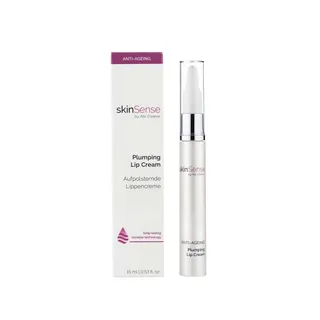
skinSense Plumping Lip Cream

skinSense Plumping Lip Cream

Efficacy62/100IrritancyMedium

Works for

Moisturizing
Glycerin, Arginine + 18 more
Works
What the product description says
“Plumping Lip Cream”
From product name

This product can help improve hydration of the skin with the two types of ingredients.

The first type is called “humectants”:
these ingredients help attract water. When humectants are on the surface of the skin, they “pull in” the moisture from the outside environment, or from within deeper layers of the skin. The following ingredients in this product do the job: arginine, glycerin.

This product also contains ingredients called “occlusives”. They help reduce the speed with which our skin loses moisture to the outside environment. These ingredients also help soften the upper layer of the skin, so it feels less tight and nicer to the touch. The following ingredients in this product do the job: arginine, myristyl myristate.

GlycerinKey active· HumectantEffect: HighOne of the best moisturizing ingredients. Naturally present in skin. It attracts water to the upper layer of the skin working as a humectant~3.8–4.6%
ArginineKey active· Humectant, OcclusiveEffect: HighAn amino acid that is naturally present in skin and helps keep it hydrated. When used together with AHAs, it can reduce their irritating effect on the skin~2.4–3%
Myristyl myristateKey active· Emollient, OcclusiveEffect: HighAn emollient. Is not recommended for acne-prone skin as it can be comedogenic~1.8–2.1%
Prunus amygdalus dulcis oilKey active· EmollientEffect: MediumAn emollient that softens the skin~0.35–0.65%
Hydrogenated vegetable oilKey active· EmollientEffect: MediumAn oil from a mixture of different vegetables. Helps soften the upper layer of the skin~0.3–0.55%
GlycineKey active· HumectantEffect: HighHelps to attract water to the upper layer of the skin and can help restore the skin barrier function~0.2–0.35%
Ethyl linoleateKey active· EmollientEffect: HighHelps reduce acne and blemishes. Helps to soften the upper layer of the skin and reduce inflammation. Might be helpful in reducing hyperpigmentation and evening out the skin tone, but evidence of effectiveness in skin are lacking~0.2–0.35%
ProlineKey activeEffect: Medium~0.2–0.4%
Sesamum indicum seed extractKey activeEffect: HighPlant oil that due to its high content of linoleic acid can help support skin's barrier function improving its hydration~0.15–0.3%
Hydrolyzed soy proteinKey active· HumectantEffect: MediumHelps attract water to the upper layer of the skin. Might have some anti-aging, anti-oxidant, and skin lightening properties, but solid evidence is missing~0.1–0.2%
Dicaprylyl ether· EmollientEffect: LowHelps soften the upper layer of the skin while creating a non-greasy feel on the skin. Helps to dissolve other ingredients~5.4–6.5%
Glyceryl stearate· EmollientEffect: LowAn emollient that softens the skin and forms a protective layer on its surface. Helps water and oil mix together~2.8–3.4%
Octyldodecanol· EmollientEffect: LowAn emollient that helps to soften the skin and create a pleasant product texture and stabilize the formulation~1–1.2%
Sorbitol· HumectantEffect: LowHelps attract water to the upper layer of the skin and improves the product texture~0.2–0.35%
Ethyl oleate· EmollientEffect: LowEthyl oleate is a long-chain fatty acid ethyl ester resulting from the formal condensation of the carboxy group of oleic acid with the hydroxy group of ethanol. It derives from an oleic acid. In skincare, it is used to soften the upper layer of the skin, improve the product texture and smell~0.2–0.35%
LecithinEffect: Low, below effective doseUsed mostly for creating emulsions - helping oil and water mix together. Helps soften the upper layer of the skin~0.3–0.55%
TocopherolEffect: Low, below effective dosePure form of vitamin E. Can help moisturise and protect the skin from free radicals. Often used to help stabilise other ingredients or the formula itself~0.2–0.35%
Caprylic/capric triglycerideUnder-dosedA good mix of fatty acids that forms a protective layer on the skin. Improves the shelf life of products. Derived from coconut and glycerin~0.75–1.1%
Butyrospermum parkii butterUnder-dosedA great moisturising ingredient that softens the skin and reduces water loss from its upper layer. It also can be helpful in protecting skin from free radicals~0.25–0.45%
PanthenolUnder-dosedHelps attract water to the upper layer of the skin and can help improve skin barrier function~0.2–0.4%
Anti-aging
Prunus amygdalus dulcis oil, Butyrospermum parkii butter + 2 more
Not delivered
What the product description says
“This moisturising lip cream helps to plump the lips and reduce the appearance of fine lines and wrinkles around the mouth area.”
Source: Face the future

This product does not contain ingredients that are able to reduce fine lines and wrinkles or help with skin elasticity, but it can improve the look of the skin temporarily through moisturization. Well-moisturized skin might also be able to repair the sun damage better.

This ingredient hexylresorcinol might be able to help neutralize free radicals in skin and help it fight off some of the sun damage.

Prunus amygdalus dulcis oilEffect: LowAn emollient that softens the skin~0.35–0.65%
Butyrospermum parkii butterEffect: Low, below effective doseA great moisturising ingredient that softens the skin and reduces water loss from its upper layer. It also can be helpful in protecting skin from free radicals~0.25–0.45%
TocopherolEffect: Low, below effective dosePure form of vitamin E. Can help moisturise and protect the skin from free radicals. Often used to help stabilise other ingredients or the formula itself~0.2–0.35%
Retinyl palmitateUnder-dosedThree steps removed from the active form of vitamin A - retinoic acid. To have an effect in the skin, it first needs to be converted twice to become the retinoic acid. This means it is less potent than retinol, but could also be less irritating. Once converted to the retinoic acid in the skin, it helps against all signs of aging, improves skin cell turnover and helps fight blemishes and clogged pores. However, in many cosmetic formulations, it is used in a concentration that is too low to have the full effect~0.15–0.3%
Anti-oxidation
Not advertised by the brand · Hexylresorcinol, Prunus amygdalus dulcis oil + 3 more
May help

This product contains antioxidants (hexylresorcinol) that might be able to help neutralize free radicals in skin to lessen the damage it gets from the UV light (sun). There is not enough evidence to confirm their effectiveness in skin though.

HexylresorcinolKey activeEffect: MediumMight be helpful in reducing hyperpigmentation and neutralizing free radicals in skin~0.2–0.35%
Prunus amygdalus dulcis oilEffect: LowAn emollient that softens the skin~0.35–0.65%
Hydrolyzed soy proteinEffect: LowHelps attract water to the upper layer of the skin. Might have some anti-aging, anti-oxidant, and skin lightening properties, but solid evidence is missing~0.1–0.2%
Butyrospermum parkii butterEffect: Low, below effective doseA great moisturising ingredient that softens the skin and reduces water loss from its upper layer. It also can be helpful in protecting skin from free radicals~0.25–0.45%
TocopherolUnder-dosedPure form of vitamin E. Can help moisturise and protect the skin from free radicals. Often used to help stabilise other ingredients or the formula itself~0.2–0.35%

Can it cause trouble?

Irritancy
2 strong irritants: Aroma, Retinyl palmitate
Medium risk
We flagged 12 ingredients with irritancy potential. Severity depends on your sensitivity threshold; the table lists the worst offenders first.
IngredientFunctionIrritationEst. amount
AromaAn unspecified blend of fragrant irritating ingredientsHigh~0.45–0.65%est.
Retinyl palmitateThree steps removed from the active form of vitamin A - retinoic acid. To have an effect in the skin, it first needs to be converted twice to become the retinoic acid. This means it is less potent than retinol, but could also be less irritating. Once converted to the retinoic acid in the skin, it helps against all signs of aging, improves skin cell turnover and helps fight blemishes and clogged pores. However, in many cosmetic formulations, it is used in a concentration that is too low to have the full effectHigh~0.15–0.3%est.
Ammonium lauryl sulfate—High~0.2–0.35%est.
Cetyl phosphateHelps oil and water mix togetherMedium~1.9–2.4%est.
Myristyl myristateAn emollient. Is not recommended for acne-prone skin as it can be comedogenicMedium~1.8–2.1%est.
Caprylic/capric triglycerideA good mix of fatty acids that forms a protective layer on the skin. Improves the shelf life of products. Derived from coconut and glycerinMedium~0.75–1.1%est.
Potassium sorbateA preservativeMedium~0.3–0.6%est.
Citric acidCan work as an exfoliant but is typically used to adjust the product pHMedium~0.25–0.45%est.
HexylresorcinolMight be helpful in reducing hyperpigmentation and neutralizing free radicals in skinMedium~0.2–0.35%est.
Trisodium ethylenediamine disuccinateUsed to improve stability of the formulationMedium~0.2–0.35%est.
Ethyl linoleateHelps reduce acne and blemishes. Helps to soften the upper layer of the skin and reduce inflammation. Might be helpful in reducing hyperpigmentation and evening out the skin tone, but evidence of effectiveness in skin are lackingMedium~0.2–0.35%est.
Ethyl oleateEthyl oleate is a long-chain fatty acid ethyl ester resulting from the formal condensation of the carboxy group of oleic acid with the hydroxy group of ethanol. It derives from an oleic acid. In skincare, it is used to soften the upper layer of the skin, improve the product texture and smellMedium~0.2–0.35%est.
Comedogenic
3 ingredients rated 2 or more on the 0–5 pore-clogging scale
3 flagged
These ingredients have a comedogenic rating of 2 or more on a 0–5 scale; the table shows each one's rating. In leave-on products they can clog pores in acne-prone skin.
IngredientFunctionRatingEst. amount
Myristyl myristateAn emollient. Is not recommended for acne-prone skin as it can be comedogenic3/5~1.8–2.1%est.
Butyrospermum parkii butterA great moisturising ingredient that softens the skin and reduces water loss from its upper layer. It also can be helpful in protecting skin from free radicals3/5~0.25–0.45%est.
Hydrogenated vegetable oilAn oil from a mixture of different vegetables. Helps soften the upper layer of the skin2/5~0.3–0.55%est.

User reviews

Would you recommend?
No community reviews yet.

Be the first — your take helps the next person decide.

Ingredients

Filter by role to see what each ingredient is doing.

Water~45–55%
Formula
Irritation risk
Low

Plain old water

More about Water
Dicaprylyl ether~5.4–6.5%
Formula
Irritation risk
Low
Works for
Moisturizing

Helps soften the upper layer of the skin while creating a non-greasy feel on the skin. Helps to dissolve other ingredients

More about Dicaprylyl ether
Glycerin~3.8–4.6%
Key active
Irritation risk
Low
Works for
Moisturizing

One of the best moisturizing ingredients. Naturally present in skin. It attracts water to the upper layer of the skin working as a humectant

More about Glycerin
Glyceryl stearate~2.8–3.4%
Formula
Irritation risk
Low
Works for
CleansingMoisturizing

An emollient that softens the skin and forms a protective layer on its surface. Helps water and oil mix together

More about Glyceryl stearate
Arginine~2.4–3%
Key active
Irritation risk
Low
Works for
Moisturizing

An amino acid that is naturally present in skin and helps keep it hydrated. When used together with AHAs, it can reduce their irritating effect on the skin

More about Arginine
Cetyl phosphate~1.9–2.4%
Irritant · medium
Irritation risk
Medium
Works for
Cleansing

Helps oil and water mix together

More about Cetyl phosphate
Myristyl myristate~1.8–2.1%
Key activeComedogenic 3/5Irritant · medium
Irritation risk
Medium
Comedogenicity
3/5
Works for
Moisturizing

An emollient. Is not recommended for acne-prone skin as it can be comedogenic

More about Myristyl myristate
Pentaerythrityl distearate~1.5–1.8%
Formula
Irritation risk
Low
Works for
Cleansing
More about Pentaerythrityl distearate
Stearyl alcohol~1.3–1.6%
Formula
Irritation risk
Low
Works for
Cleansing

An emollient that helps soften the skin

More about Stearyl alcohol
Octyldodecanol~1–1.2%
Formula
Irritation risk
Low
Works for
Moisturizing

An emollient that helps to soften the skin and create a pleasant product texture and stabilize the formulation

More about Octyldodecanol
Caprylic/capric triglyceride~0.75–1.1%
Under-dosedIrritant · medium
Irritation risk
Medium
Works for
Moisturizing

A good mix of fatty acids that forms a protective layer on the skin. Improves the shelf life of products. Derived from coconut and glycerin

More about Caprylic/capric triglyceride
Carbomer~0.55–0.85%
Formula
Irritation risk
Low
Works for
Cleansing

Helps create a thicker or gel-like product texture. It is not a surfactant but can be used in gentle cleansing formulations

More about Carbomer
Dimethyl isosorbide~0.5–0.75%
Formula
Irritation risk
Low

Used to dissolve other ingredients in a product and can enhance their ability to penetrate the skin

More about Dimethyl isosorbide
Aroma~0.45–0.65%
Irritant · high
Irritation risk
High

An unspecified blend of fragrant irritating ingredients

More about Aroma
Sodium benzoate~0.25–0.5%
Formula
Irritation risk
Low

A preservative

More about Sodium benzoate
Sodium polyacrylate~0.45–0.65%
Formula
Irritation risk
Low
Works for
Mattifying

Used to create a gel-like product texture, as well as to stabilize emulsions

More about Sodium polyacrylate
Potassium sorbate~0.3–0.6%
Irritant · medium
Irritation risk
Medium

A preservative

More about Potassium sorbate
Prunus amygdalus dulcis oil~0.35–0.65%
Key active
Irritation risk
Low
Works for
MoisturizingAnti-oxidationAnti-aging

An emollient that softens the skin

More about Prunus amygdalus dulcis oil
Hydrogenated vegetable oil~0.3–0.55%
Key activeComedogenic 2/5
Irritation risk
Low
Comedogenicity
2/5
Works for
Moisturizing

An oil from a mixture of different vegetables. Helps soften the upper layer of the skin

More about Hydrogenated vegetable oil
Lecithin~0.3–0.55%
Formula
Irritation risk
Low
Works for
CleansingMoisturizing

Used mostly for creating emulsions - helping oil and water mix together. Helps soften the upper layer of the skin

More about Lecithin
Citric acid~0.25–0.45%
Irritant · medium
Irritation risk
Medium

Can work as an exfoliant but is typically used to adjust the product pH

More about Citric acid
Panthenol~0.2–0.4%
Under-dosed
Irritation risk
Low
Works for
MoisturizingReduces rednessReduces irritation

Helps attract water to the upper layer of the skin and can help improve skin barrier function

More about Panthenol
Hexylresorcinol~0.2–0.35%
Key activeIrritant · medium
Irritation risk
Medium
Works for
Anti-oxidationEvens skin tone

Might be helpful in reducing hyperpigmentation and neutralizing free radicals in skin

More about Hexylresorcinol
Sesamum indicum seed extract~0.15–0.3%
Key active
Irritation risk
Low
Works for
Moisturizing

Plant oil that due to its high content of linoleic acid can help support skin's barrier function improving its hydration

More about Sesamum indicum seed extract
Butyrospermum parkii butter~0.25–0.45%
Under-dosedComedogenic 3/5
Irritation risk
Low
Comedogenicity
3/5
Works for
MoisturizingAnti-agingAnti-oxidation

A great moisturising ingredient that softens the skin and reduces water loss from its upper layer. It also can be helpful in protecting skin from free radicals

More about Butyrospermum parkii butter
Trisodium ethylenediamine disuccinate~0.2–0.35%
Irritant · medium
Irritation risk
Medium

Used to improve stability of the formulation

More about Trisodium ethylenediamine disuccinate
Arachidyl propionate~0.2–0.4%
Formula
Vanillyl butyl ether~0.2–0.35%
Formula
Retinyl palmitate~0.15–0.3%
Under-dosedIrritant · high
Irritation risk
High
Works for
Evens skin toneAnti-blemishAnti-agingExfoliation

Three steps removed from the active form of vitamin A - retinoic acid. To have an effect in the skin, it first needs to be converted twice to become the retinoic acid. This means it is less potent than retinol, but could also be less irritating. Once converted to the retinoic acid in the skin, it helps against all signs of aging, improves skin cell turnover and helps fight blemishes and clogged pores. However, in many cosmetic formulations, it is used in a concentration that is too low to have the full effect

More about Retinyl palmitate
Tocopherol~0.2–0.35%
Under-dosed
Irritation risk
Low
Works for
Anti-oxidationMoisturizingAnti-agingAnti-inflammatory

Pure form of vitamin E. Can help moisturise and protect the skin from free radicals. Often used to help stabilise other ingredients or the formula itself

More about Tocopherol
Sorbitol~0.2–0.35%
Formula
Irritation risk
Low
Works for
Moisturizing

Helps attract water to the upper layer of the skin and improves the product texture

More about Sorbitol
Proline~0.2–0.4%
Key active
Irritation risk
Low
Works for
Moisturizing
More about Proline
Glycine~0.2–0.35%
Key active
Irritation risk
Low
Works for
Moisturizing

Helps to attract water to the upper layer of the skin and can help restore the skin barrier function

More about Glycine
Ethyl linolenate~0.25–0.4%
Formula
Hydrated silica~0.3–0.55%
Formula
Irritation risk
Low
Works for
Mattifying
More about Hydrated silica
Ethyl linoleate~0.2–0.35%
Key activeIrritant · medium
Irritation risk
Medium
Works for
MoisturizingAnti-blemishAnti-inflammatoryEvens skin tone

Helps reduce acne and blemishes. Helps to soften the upper layer of the skin and reduce inflammation. Might be helpful in reducing hyperpigmentation and evening out the skin tone, but evidence of effectiveness in skin are lacking

More about Ethyl linoleate
Ethyl oleate~0.2–0.35%
Irritant · medium
Irritation risk
Medium
Works for
Moisturizing

Ethyl oleate is a long-chain fatty acid ethyl ester resulting from the formal condensation of the carboxy group of oleic acid with the hydroxy group of ethanol. It derives from an oleic acid. In skincare, it is used to soften the upper layer of the skin, improve the product texture and smell

More about Ethyl oleate
Bis(tripeptide-1) copper acetate~0.15–0.25%
Formula
Hydrolyzed soy protein~0.1–0.2%
Key active
Irritation risk
Low
Works for
MoisturizingAnti-oxidationAnti-inflammatoryEvens skin tone

Helps attract water to the upper layer of the skin. Might have some anti-aging, anti-oxidant, and skin lightening properties, but solid evidence is missing

More about Hydrolyzed soy protein
Methylcellulose~0.1–0.15%
Formula
Irritation risk
Low

Helps improve the product texture

More about Methylcellulose
Ammonium lauryl sulfate~0.2–0.35%
Irritant · high
Irritation risk
High
Works for
Cleansing
More about Ammonium lauryl sulfate
Ingredient list view

Water, Dicaprylyl ether, Glycerin, Glyceryl stearate, Arginine, Cetyl phosphate, Myristyl myristate, Pentaerythrityl distearate, Stearyl alcohol, Octyldodecanol, Caprylic/capric triglyceride, Carbomer, Dimethyl isosorbide, Aroma, Sodium benzoate, Sodium polyacrylate, Potassium sorbate, Prunus amygdalus dulcis oil, Hydrogenated vegetable oil, Lecithin, Citric acid, Panthenol, Hexylresorcinol, Sesamum indicum seed extract, Butyrospermum parkii butter, Trisodium ethylenediamine disuccinate, Arachidyl propionate, Vanillyl butyl ether, Retinyl palmitate, Tocopherol, Sorbitol, Proline, Glycine, Ethyl linolenate, Hydrated silica, Ethyl linoleate, Ethyl oleate, Bis(tripeptide-1) copper acetate, Hydrolyzed soy protein, Methylcellulose, Ammonium lauryl sulfate

Compare prices

Retailers ranked by price — lowest first.

🇬🇧 Amazon UK (UK)
Price unavailable Out of stock
Check

Affiliate links · As an Amazon Associate, WIMJ earns from qualifying purchases.

Worth comparing, line by line.

Match % combines shared ingredients, the first five ingredients, shared actives and hero ingredients, irritancy (lower counts in the alternative's favour), texture and body area. Only products in the same routine step are compared.

Side-by-side comparison of this product against its closest alternatives
skinSensePlumping Lip CreamYOUR PRODUCTAugustinus BaderThe Ultimate Soothing CreamEucerinAquaphor SOS Lip RepairBaleaQ10 Anti-Age Eye Cream
Match—51%49%48%
Price—$265.00$9.85$7.90
Shared key ingredients—6 of 145 of 145 of 14
Key difference—NiacinamideCera AlbaCarthamus Tinctorius Seed Oil
Irritancy Medium Low Low Low
Drying alcohol————
View product Shop Shop Shop

More alternatives: Maruderm Hyaluronic Acid Moisturizer Face & Body CreamUriage CICA DAILY REPAIRING CREAM CONCENTRATE

Cheaper alternatives? Browse formulas in the same category.
We compare ingredient profiles across our catalog — pick the closest match for your budget.
Open dupe finder

Sources cited in this review

Every concentration estimate and effectiveness label is anchored to one of these 16 studies and safety reviews.

  1. 1
  2. 2
  3. 3
  4. 4
  5. 5
  6. 6
skinSense Plumping Lip Cream
skinSensePlumping Lip Cream

Affiliate links · As an Amazon Associate, WIMJ earns from qualifying purchases.

As an Amazon Associate, WIMJ earns from qualifying purchases.