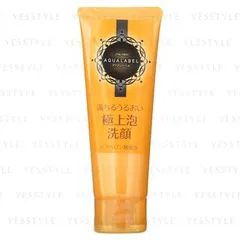
Works for:
based on ingredients and %- Cleansing
Doesn't work for:
based on ingredients and %- Exfoliation
Can it cause trouble?
- Irritation risk: high
- Comedogenic risk ingredients: 3
Key actives

Cleansing
What does the product description say?
Aqualabel Wash EX
Source: From product name
This product works by removing dirt and oil from the surface of the skin. It uses a combination of mild cleansing agents (glyceryl stearate se, lauric acid, myristic acid, sodium methyl cocoyl taurate, stearic acid) and should be able to cleanse the skin gently. Still keep in mind that any cleansing can disrupt the skin barrier, and most people do not need to cleanse their skin more than once per day.
Even though this formulation is mild, the following cleansing agents could trigger an irritation or allergy for some people: sodium methyl cocoyl taurate
Used to stabilize the product formulations and works as an emollient
Helps water and oil mix together. Has anti-bacterial properties that might be helpful in preventing blemishes
Helps oil and water mix together. Could be comedogenic
Helps oil and water mix together. Can be used as cleansing agent
Helps oil and water mix together and works as an emollient
Exfoliation
What does the product description say?
Cleansing foam is enriched with collagen, amino acids, ginseng extract, hyaluronic acid and other herbal ingredients to replenish moisture in skin while getting rid of excess oil, dirt and dead surface skin cells.
Source: Yesstyle
This product does not contain effective exfoliating ingredients. It might be able to deliver physical exfoliation, that is scrub off some of the dead cells on the surface of the skin. We do not recommend physical exfoliation, because it is not uniform (some bits of skin can get exfoliated too much while others not at all). It can also traumatize the skin and aggrevate acne and other skin conditions.
How honest is this product?
| Promise | Can it deliver? |
|---|---|
| Cleansing | |
| Exfoliation |
Total Promises Fulfilled score: 50/100.
We receive a small commission for purchases made through these links at no cost for you. Thank you for your support! Learn more
Potential irritants
Comedogenic ingredients
User reviews (0)
Averages from community submissions.
No reviews yet for this product.
Be the first to share your experience!
Tried this product?
Help capture what the ingredient list can't—texture, finish, pilling, scent, and more. Answer what you can, skip the rest.
Takes ~30 seconds.
Reviews are shown in aggregate. No personal details.
Key Actives
Helps water and oil mix together. Has anti-bacterial properties that might be helpful in preventing blemishes
Helps oil and water mix together and works as an emollient
Used to stabilize the product formulations and works as an emollient
One of the best moisturizing ingredients. Naturally present in skin. It attracts water to the upper layer of the skin working as a humectant
Helps oil and water mix together. Could be comedogenic
Helps oil and water mix together. Can be used as cleansing agent
One of the best moisturizing ingredients. Attracts water into the upper layer of the skin
A typically plant-derived compound that is supposed mimic human collagen. Cannot penetrate the skin barrier so is not particularly useful in skincare products beyond attracting water to the upper layer of the skin
Potential irritants
Helps oil and water mix together. Can be used as cleansing agent
Helps oil and water mix together and can enhance the penetration of other ingredients into the skin. It can be irritating
Oil of a very fragrant pink rose used as fragrance in cosmetics. Extensive research has shown it has mixed benefits. In the pro column, inhaling this flower’s scent seems to have relaxing properties and the plant’s petals contain skin-soothing and antioxidant compounds that can benefit skin. On the flipside, the numerous chemicals that create this rose’s distinctive fragrance pose a risk of causing skin aggravation.
A plant extract that might have some anti-inflammatory properties, but solid evidence is lacking. It can be irritating
Can be drying and contribute to skin irritation. Used in formulars to dissolve other ingredients, create a thinner product consistency or for its antibacterial properties
An aromatic blend of unspecified and possibly irritating ingredients
Helps oil and water mix together. Could be comedogenic
Helps water and oil mix together. Has anti-bacterial properties that might be helpful in preventing blemishes
Comedogenic ingredients
Helps oil and water mix together. Could be comedogenic
Helps water and oil mix together. Has anti-bacterial properties that might be helpful in preventing blemishes
Used to stabilize the product formulations and works as an emollient
All ingredients
One of the best moisturizing ingredients. Naturally present in skin. It attracts water to the upper layer of the skin working as a humectant
Helps oil and water mix together. Could be comedogenic
Helps water and oil mix together. Has anti-bacterial properties that might be helpful in preventing blemishes
Helps oil and water mix together. Can be used as cleansing agent
Used to stabilize the product formulations and works as an emollient
Helps oil and water mix together and can enhance the penetration of other ingredients into the skin. It can be irritating
Helps soften the upper layer of the skin and create a nice product finish
Oil of a very fragrant pink rose used as fragrance in cosmetics. Extensive research has shown it has mixed benefits. In the pro column, inhaling this flower’s scent seems to have relaxing properties and the plant’s petals contain skin-soothing and antioxidant compounds that can benefit skin. On the flipside, the numerous chemicals that create this rose’s distinctive fragrance pose a risk of causing skin aggravation.
One of the best moisturizing ingredients. Attracts water into the upper layer of the skin
A typically plant-derived compound that is supposed mimic human collagen. Cannot penetrate the skin barrier so is not particularly useful in skincare products beyond attracting water to the upper layer of the skin
A plant extract that might have some anti-inflammatory properties, but solid evidence is lacking. It can be irritating
Used to create a nice product texture and help delivery of other ingredients. Might be somewhat helpful in attracting water to the upper layer of the skin
Can be drying and contribute to skin irritation. Used in formulars to dissolve other ingredients, create a thinner product consistency or for its antibacterial properties
A preservative. It helps prevent bacterial growth in cosmetic products
An aromatic blend of unspecified and possibly irritating ingredients
An umbrella term for the following three colorants: CI 77491, CI 77492, CI 77499. They might be able to offer some protection against visible light, but the degree of the protection is not clear
Ingredient list view
Water, Glycerin, Stearic acid, Myristic acid, Potassium hydroxide, Lauric acid, Peg-8, Sodium methyl cocoyl taurate, Glyceryl stearate se, Unknown, Propylene glycol, Unknown, Dimethyl ether, Polyquaternium-39, Rosa damascena extract, Sodium hyaluronate, Unknown, Soluble collagen, Panax ginseng root extract, Disodium edta, Butylene glycol, Alcohol, Methylparaben, Propylparaben, Phenoxyethanol, Parfum, Iron oxides
- Glycerol and the skin: holistic approach to its origin and functions
- The fatty acid profile of the skin surface lipid layer in papulopustular rosacea
- Safety Assessment of Alkyl Taurate Amides and Taurate Salts as Used in Cosmetics
- Surfactants and experimental irritant contact dermatitis
- Propylene Glycol
- Skin-sensitizing and irritant properties of propylene glycol
- Hyaluronic acid: A key molecule in skin aging
- Hyaluronan (Hyaluronic Acid): a natural moisturizer for skin care
- Ginseng in Dermatology: A Review
- Antiaging effects of the mixture of Panax ginseng and Crataegus pinnatifida in human dermal fibroblasts and healthy human skin