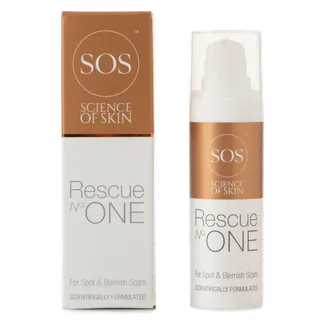
Science of Skin Rescue No. One

Science of Skin Rescue No. One

Efficacy50/100IrritancyLow

Works for

Anti-blemish
Epigallocatechin gallate
Not delivered
What the product description says
“Formulated to tackle spot, blemish and acne scarring and redness caused by spot breakouts.”
Source: Science of Skin

This product contains ingredients (epigallocatechin gallate) that could help reduce blemishes and clogged pores in theory, but there is not enough evidence that they actually work.

Epigallocatechin gallateEffect: MediumA polyphenol found in tea. This particular compound abbreviated EGCG is the most powerful antioxidant among those extracted from tea (usually green tea). Unfortunately, EGCG is unstable, requires a low pH (below 4) to prevent quick degradation, and does not penetrate the skin very well. This is why the full anti-oxidant effect of EGCG is typically not realized when it is added to topical skincare~0.45–0.65%
Anti-oxidation
Side benefit · Epigallocatechin gallate, Vitis vinifera seed extract + 2 more
Works well

This product contains antioxidants (vitis vinifera seed extract) that can help neutralize free radicals in skin. By doing so, they can lessen the damage the skin gets from the UV light (sun).

The following ingredients - epigallocatechin gallate also can have an antioxidant effect, but there is less evidence to confirm their effectiveness in skin.

Epigallocatechin gallateKey activeEffect: MediumA polyphenol found in tea. This particular compound abbreviated EGCG is the most powerful antioxidant among those extracted from tea (usually green tea). Unfortunately, EGCG is unstable, requires a low pH (below 4) to prevent quick degradation, and does not penetrate the skin very well. This is why the full anti-oxidant effect of EGCG is typically not realized when it is added to topical skincare~0.45–0.65%
Vitis vinifera seed extractKey activeEffect: HighA plant extract that contains resveratrol and other anti-oxidant compounds that can help neutralize free radicals, reduce inflammation in skin and even out its tone. Can be also used to stabilize the product formulation~0.1–0.2%
Chlorella vulgaris extractEffect: LowA plant extract that can help to attract water to the upper layer of the skin and might have some anti-oxidant and anti-inflammatory properties~0.1–0.2%
TocopherolUnder-dosedPure form of vitamin E. Can help moisturise and protect the skin from free radicals. Often used to help stabilise other ingredients or the formula itself~0.35–0.65%
Moisturizing
Side benefit the brand mentions · Caprylic/capric triglyceride, Glycerin + 11 more
Works
What the product description says
“Rescue can be used in place of your moisturiser or as a primer under your make-up.”
Source: N/A

This product can help improve hydration of the skin with the two types of ingredients.

The first type is called “humectants”:
these ingredients help attract water. When humectants are on the surface of the skin, they “pull in” the moisture from the outside environment, or from within deeper layers of the skin. The following ingredients in this product do the job: glycerin, hydrolyzed algin.

This product also contains ingredients called “occlusives”. They help reduce the speed with which our skin loses moisture to the outside environment. These ingredients also help soften the upper layer of the skin, so it feels less tight and nicer to the touch. The following ingredients in this product do the job: caprylic/capric triglyceride, helianthus annuus seed oil.

Caprylic/capric triglycerideKey active· Emollient, OcclusiveEffect: HighA good mix of fatty acids that forms a protective layer on the skin. Improves the shelf life of products. Derived from coconut and glycerin~6.5–8%
GlycerinKey active· HumectantEffect: HighOne of the best moisturizing ingredients. Naturally present in skin. It attracts water to the upper layer of the skin working as a humectant~4.1–5%
CyclopentasiloxaneKey active· EmollientEffect: MediumA silicone that helps improve the product texture and spreadability. Can absorb oil creating a short-term mattifying effect on the skin~3.3–4%
Cetyl alcoholKey active· EmollientEffect: MediumA non-drying alcohol that works to soften the skin and stabilize product formulations helping oil and water mix together~2.4–3%
Cetearyl alcoholKey active· EmollientEffect: MediumA non-drying alcohol. Works as an emollient. Helps water and oil mix together and creates a nice product texture~2–2.5%
Helianthus annuus seed oilKey active· Emollient, OcclusiveEffect: HighA great emollient due to its high linoleic acid content. One of the most effective plant oils in helping skin hydration and repairing skin barrier function~0.25–0.5%
Hydrolyzed alginKey active· HumectantEffect: MediumDerived from brown algae. Helps attract water to the upper layer of the skin~0.15–0.3%
Chlorella vulgaris extractKey activeEffect: MediumA plant extract that can help to attract water to the upper layer of the skin and might have some anti-oxidant and anti-inflammatory properties~0.1–0.2%
Glyceryl stearate· EmollientEffect: LowAn emollient that softens the skin and forms a protective layer on its surface. Helps water and oil mix together~1.5–1.9%
Butylene glycol· HumectantEffect: LowUsed to create a nice product texture and help delivery of other ingredients. Might be somewhat helpful in attracting water to the upper layer of the skin~0.5–0.75%
Epigallocatechin gallateEffect: LowA polyphenol found in tea. This particular compound abbreviated EGCG is the most powerful antioxidant among those extracted from tea (usually green tea). Unfortunately, EGCG is unstable, requires a low pH (below 4) to prevent quick degradation, and does not penetrate the skin very well. This is why the full anti-oxidant effect of EGCG is typically not realized when it is added to topical skincare~0.45–0.65%
TocopherolEffect: Low, below effective dosePure form of vitamin E. Can help moisturise and protect the skin from free radicals. Often used to help stabilise other ingredients or the formula itself~0.35–0.65%
LecithinEffect: Low, below effective doseUsed mostly for creating emulsions - helping oil and water mix together. Helps soften the upper layer of the skin~0.25–0.45%
Evens skin tone
Side benefit the brand mentions · Epigallocatechin gallate
May help
What the product description says
“Our unique, scientifically proven cream contains a breakthrough, naturally active green tea extract (EGCG), formulated to help combat redness and scarring produced by acne, spots and blemishes.”
Source: N/A

The following ingredient (ingredients) in this product might be helpful, but there is no evidence to confirm that it actually works: epigallocatechin gallate.

Epigallocatechin gallateKey activeEffect: MediumA polyphenol found in tea. This particular compound abbreviated EGCG is the most powerful antioxidant among those extracted from tea (usually green tea). Unfortunately, EGCG is unstable, requires a low pH (below 4) to prevent quick degradation, and does not penetrate the skin very well. This is why the full anti-oxidant effect of EGCG is typically not realized when it is added to topical skincare~0.45–0.65%
Anti-aging
Side benefit · Epigallocatechin gallate, Vitis vinifera seed extract + 1 more
May help

This product contains epigallocatechin gallate, vitis vinifera seed extract. There is some human evidence that these ingredients help reduce and prevent fine lines and wrinkles and improve skin elasticity and firmness, though it is smaller or less consistent than the evidence for the best anti-aging ingredients.

Epigallocatechin gallateKey activeEffect: MediumA polyphenol found in tea. This particular compound abbreviated EGCG is the most powerful antioxidant among those extracted from tea (usually green tea). Unfortunately, EGCG is unstable, requires a low pH (below 4) to prevent quick degradation, and does not penetrate the skin very well. This is why the full anti-oxidant effect of EGCG is typically not realized when it is added to topical skincare~0.45–0.65%
Vitis vinifera seed extractKey activeEffect: MediumA plant extract that contains resveratrol and other anti-oxidant compounds that can help neutralize free radicals, reduce inflammation in skin and even out its tone. Can be also used to stabilize the product formulation~0.1–0.2%
TocopherolEffect: Low, below effective dosePure form of vitamin E. Can help moisturise and protect the skin from free radicals. Often used to help stabilise other ingredients or the formula itself~0.35–0.65%

Can it cause trouble?

Irritancy
7 flagged ingredients
Low risk
We flag 7 ingredients with irritancy potential; the product's overall irritancy is low. The table lists each ingredient's own rating.
IngredientFunctionIrritationEst. amount
Caprylic/capric triglycerideA good mix of fatty acids that forms a protective layer on the skin. Improves the shelf life of products. Derived from coconut and glycerinMedium~6.5–8%est.
Peg-75 stearateHelps water and oil mix togetherMedium~1.2–1.5%est.
Ceteth-20Helps water and oil mix togetherMedium~1.1–1.3%est.
Steareth-20Helps oil and water mix togetherMedium~0.8–1.15%est.
Acrylates/c10-30 alkyl acrylate crosspolymerMaintains the texture of skincare products. Allows the product to spread evenly. Helps oil and water mix togetherMedium~0.25–0.5%est.
EthylhexylglycerinA preservativeMedium~0.25–0.45%est.
Chlorella vulgaris extractA plant extract that can help to attract water to the upper layer of the skin and might have some anti-oxidant and anti-inflammatory propertiesMedium~0.1–0.2%est.
Comedogenic
3 ingredients rated 2 or more on the 0–5 pore-clogging scale
3 flagged
These ingredients have a comedogenic rating of 2 or more on a 0–5 scale; the table shows each one's rating. In leave-on products they can clog pores in acne-prone skin.
IngredientFunctionRatingEst. amount
Hydrolyzed alginDerived from brown algae. Helps attract water to the upper layer of the skin3/5~0.15–0.3%est.
Chlorella vulgaris extractA plant extract that can help to attract water to the upper layer of the skin and might have some anti-oxidant and anti-inflammatory properties3/5~0.1–0.2%est.
Cetearyl alcoholA non-drying alcohol. Works as an emollient. Helps water and oil mix together and creates a nice product texture2/5~2–2.5%est.
Did this help you decide?

User reviews

Would you recommend?
No community reviews yet.

Be the first — your take helps the next person decide.

Ingredients

Filter by role to see what each ingredient is doing.

Water~45–55%
Formula
Irritation risk
Low

Plain old water

More about Water
Dipropylene glycol diperlargonate
Not recognized
Caprylic/capric triglyceride~6.5–8%
Key activeIrritant · medium
Irritation risk
Medium
Works for
Moisturizing

A good mix of fatty acids that forms a protective layer on the skin. Improves the shelf life of products. Derived from coconut and glycerin

More about Caprylic/capric triglyceride
Glycerin~4.1–5%
Key active
Irritation risk
Low
Works for
Moisturizing

One of the best moisturizing ingredients. Naturally present in skin. It attracts water to the upper layer of the skin working as a humectant

More about Glycerin
Cyclopentasiloxane~3.3–4%
Key active
Irritation risk
Low
Works for
MattifyingMoisturizing

A silicone that helps improve the product texture and spreadability. Can absorb oil creating a short-term mattifying effect on the skin

More about Cyclopentasiloxane
Cetyl alcohol~2.4–3%
Key active
Irritation risk
Low
Works for
CleansingMoisturizing

A non-drying alcohol that works to soften the skin and stabilize product formulations helping oil and water mix together

More about Cetyl alcohol
Cetearyl alcohol~2–2.5%
Key activeComedogenic 2/5
Irritation risk
Low
Comedogenicity
2/5
Works for
CleansingMoisturizing

A non-drying alcohol. Works as an emollient. Helps water and oil mix together and creates a nice product texture

More about Cetearyl alcohol
Phenoxyethanol~0.5–1%
Formula
Irritation risk
Low

A preservative. It helps prevent bacterial growth in cosmetic products

More about Phenoxyethanol
Glyceryl stearate~1.5–1.9%
Formula
Irritation risk
Low
Works for
CleansingMoisturizing

An emollient that softens the skin and forms a protective layer on its surface. Helps water and oil mix together

More about Glyceryl stearate
Peg-75 stearate~1.2–1.5%
Irritant · medium
Irritation risk
Medium
Works for
Cleansing

Helps water and oil mix together

More about Peg-75 stearate
Ceteth-20~1.1–1.3%
Irritant · medium
Irritation risk
Medium
Works for
Cleansing

Helps water and oil mix together

More about Ceteth-20
Steareth-20~0.8–1.15%
Irritant · medium
Irritation risk
Medium
Works for
Cleansing

Helps oil and water mix together

More about Steareth-20
Poloxamer 235~0.6–0.9%
Formula
Irritation risk
Low
Works for
Cleansing
More about Poloxamer 235
Poloxamer 338~0.55–0.85%
Formula
Irritation risk
Low
Works for
Cleansing
More about Poloxamer 338
Butylene glycol~0.5–0.75%
Formula
Irritation risk
Low
Works for
Moisturizing

Used to create a nice product texture and help delivery of other ingredients. Might be somewhat helpful in attracting water to the upper layer of the skin

More about Butylene glycol
Tocophersolan~0.45–0.7%
Formula
Irritation risk
Low
More about Tocophersolan
Epigallocatechin gallate~0.45–0.65%
Key active
Irritation risk
Low
Works for
Anti-agingAnti-oxidationAnti-blemishEvens skin toneMoisturizing

A polyphenol found in tea. This particular compound abbreviated EGCG is the most powerful antioxidant among those extracted from tea (usually green tea). Unfortunately, EGCG is unstable, requires a low pH (below 4) to prevent quick degradation, and does not penetrate the skin very well. This is why the full anti-oxidant effect of EGCG is typically not realized when it is added to topical skincare

More about Epigallocatechin gallate
Xanthan gum~0.4–0.65%
Formula
Irritation risk
Low
Works for
Cleansing

Used to create a thicker product consistency

More about Xanthan gum
Tocopherol~0.35–0.65%
Under-dosed
Irritation risk
Low
Works for
Anti-oxidationAnti-inflammatoryAnti-agingMoisturizing

Pure form of vitamin E. Can help moisturise and protect the skin from free radicals. Often used to help stabilise other ingredients or the formula itself

More about Tocopherol
Maltodextrin~0.3–0.55%
Formula
Irritation risk
Low
Works for
Mattifying

Used to stabilize the product formulation and can help absorb oil

More about Maltodextrin
Acrylates/c10-30 alkyl acrylate crosspolymer~0.25–0.5%
Irritant · medium
Irritation risk
Medium

Maintains the texture of skincare products. Allows the product to spread evenly. Helps oil and water mix together

More about Acrylates/c10-30 alkyl acrylate crosspolymer
Ethylhexylglycerin~0.25–0.45%
Irritant · medium
Irritation risk
Medium

A preservative

More about Ethylhexylglycerin
Helianthus annuus seed oil~0.25–0.5%
Key active
Irritation risk
Low
Works for
Moisturizing

A great emollient due to its high linoleic acid content. One of the most effective plant oils in helping skin hydration and repairing skin barrier function

More about Helianthus annuus seed oil
Lecithin~0.25–0.45%
Formula
Irritation risk
Low
Works for
CleansingMoisturizing

Used mostly for creating emulsions - helping oil and water mix together. Helps soften the upper layer of the skin

More about Lecithin
Sodium hydroxide~0.2–0.35%
Formula
Irritation risk
Low

Used to adjust the product's pH

More about Sodium hydroxide
Hydrolyzed algin~0.15–0.3%
Key activeComedogenic 3/5
Irritation risk
Low
Comedogenicity
3/5
Works for
Moisturizing

Derived from brown algae. Helps attract water to the upper layer of the skin

More about Hydrolyzed algin
Maris aqua~0.15–0.25%
Formula
Irritation risk
Low

Sea water. Helps dissolve other ingredients in a product

More about Maris aqua
Chlorella vulgaris extract~0.1–0.2%
Key activeComedogenic 3/5Irritant · medium
Irritation risk
Medium
Comedogenicity
3/5
Works for
MoisturizingAnti-inflammatoryAnti-oxidation

A plant extract that can help to attract water to the upper layer of the skin and might have some anti-oxidant and anti-inflammatory properties

More about Chlorella vulgaris extract
Magnolia officinalis bark extract~0.1–0.2%
Formula
Vitis vinifera seed extract~0.1–0.2%
Key active
Irritation risk
Low
Works for
Anti-oxidationAnti-agingAnti-inflammatoryAntibacterial

A plant extract that contains resveratrol and other anti-oxidant compounds that can help neutralize free radicals, reduce inflammation in skin and even out its tone. Can be also used to stabilize the product formulation

More about Vitis vinifera seed extract
Ingredient list view

Water, Unknown, Caprylic/capric triglyceride, Glycerin, Cyclopentasiloxane, Cetyl alcohol, Cetearyl alcohol, Phenoxyethanol, Glyceryl stearate, Peg-75 stearate, Ceteth-20, Steareth-20, Poloxamer 235, Poloxamer 338, Butylene glycol, Tocophersolan, Epigallocatechin gallate, Xanthan gum, Tocopherol, Maltodextrin, Acrylates/c10-30 alkyl acrylate crosspolymer, Ethylhexylglycerin, Helianthus annuus seed oil, Lecithin, Sodium hydroxide, Hydrolyzed algin, Maris aqua, Chlorella vulgaris extract, Magnolia officinalis bark extract, Vitis vinifera seed extract

Compare prices

Retailers ranked by price — lowest first.

Amazon USPrice as of 11/23 06:19 GMT
$18.00
Buy

Affiliate links · As an Amazon Associate, WIMJ earns from qualifying purchases.

Worth comparing, line by line.

Match % combines shared ingredients, the first five ingredients, shared actives and hero ingredients, irritancy (lower counts in the alternative's favour), texture and body area. Only products in the same routine step are compared.

Side-by-side comparison of this product against its closest alternatives
Science of SkinRescue No. OneYOUR PRODUCTEucerinAtoControl Face Care CreamREVOLUTION SKINCAREHyaluronic Acid Hydrating Night CreamEpicurenHydro Plus Moisturizer
Match—38%37%36%
Price$18.00$18.04$13.06−$4.94$67.10+$49.10
Shared key ingredients—4 of 73 of 74 of 7
Key difference—PhytosphingosineGlycogenAnhydroxylitol
Irritancy Low Low Low Low
Drying alcohol————
View product Shop Shop Shop

More alternatives: Vasanti Best of You[th] Brightening MoisturizerCetaphil Pro Sens Night Cream - Redness & Rosacea

Cheaper alternatives? See how this stacks up against similar formulas.
We compare ingredient profiles across our catalog — pick the closest match for your budget.
Open dupe finder

Sources cited in this review

Every concentration estimate and effectiveness label is anchored to one of these 14 studies and safety reviews.

  1. 1
  2. 2
  3. 3
  4. 4
  5. 5
    Vitamin E in dermatologyncbi.nlm.nih.gov
  6. 6
    Vitamin E and Skin Healthlpi.oregonstate.edu

Affiliate links · As an Amazon Associate, WIMJ earns from qualifying purchases.

As an Amazon Associate, WIMJ earns from qualifying purchases.