Works for
1 of 1 advertised claim delivered
Moisturizing17 ingredients credited for this claimStrong support
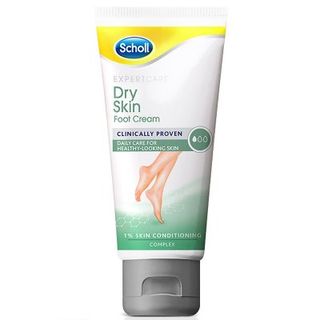
“Dry Skin Foot Cream”
This product can help improve hydration of the skin with the two types of ingredients.
The first type is called “humectants”:
these ingredients help attract water.
When humectants are on the surface of the skin, they “pull in” the moisture from the outside environment, or from
within deeper layers of the skin. The following ingredients in this product do the job:
diglycerin, glycerin.
This product also contains ingredients called “occlusives”. They help reduce the speed with which our skin loses moisture to the outside environment. These ingredients also help soften the upper layer of the skin, so it feels less tight and nicer to the touch. The following ingredients in this product do the job: isopropyl myristate, cetearyl alcohol.
The following ingredients in this product are especially good for supporting the skin barrier and helping with the hydration level: urea
Anti-agingNot advertised by the brand · 2 ingredients credited for this claimModerate support
This product contains lysine. This ingredient might be able to help reduce and prevent fine lines and wrinkles, improve skin elasticity and firmness, but there is not enough evidence that it actually works.
Can it cause trouble?
Irritancy9 strong irritants: Parfum, Hydroxyisohexyl 3-cyclohexene carboxaldehyde + 7 more — patch-test recommendedHigh risk
Comedogenic3 ingredients rated 2 or more on the 0–5 pore-clogging scale3 flagged
User reviews
Be the first — your take helps the next person decide.
Ingredients
Filter by role to see what each ingredient is doing.
Water~45–55%
Glycerin~4.5–5.5%
- Irritation risk
- Low
One of the best moisturizing ingredients. Naturally present in skin. It attracts water to the upper layer of the skin working as a humectant
More about GlycerinUrea~4.1–5%
- Irritation risk
- Low
Naturally present in skin (urea makes up about 7% of natural moisturizing factors in skin). Attracts water to the upper layer of the skin. Also has a positive effect on the skin barrier beyond the humectant action. Can enhance penetration of other ingredients. Is an exfoliating ingredient when used in high concentrations
More about UreaEthylhexyl palmitate~3.3–4.1%
- Irritation risk
- Low
- Comedogenicity
- 3/5
An emollient that helps soften the skin and create a nice product texture
More about Ethylhexyl palmitateIsopropyl myristate~2.7–3.2%
- Irritation risk
- Low
- Comedogenicity
- 3/5
An emollient that helps soften the skin. Could be comedogenic
More about Isopropyl myristateCetearyl alcohol~2.1–2.6%
- Irritation risk
- Low
- Comedogenicity
- 2/5
A non-drying alcohol. Works as an emollient. Helps water and oil mix together and creates a nice product texture
More about Cetearyl alcoholGlyceryl stearate~1.8–2.2%
- Irritation risk
- Low
An emollient that softens the skin and forms a protective layer on its surface. Helps water and oil mix together
More about Glyceryl stearatePetrolatum~1.5–1.9%
- Irritation risk
- Low
One of the most effective and the most studied occlusive ingredients that creates a protective layer on top of the skin preventing moisture loss
More about PetrolatumSucrose distearate~1.3–1.6%
Stearic acid~1.2–1.4%
- Irritation risk
- Low
Helps oil and water mix together and works as an emollient
More about Stearic acidDiglycerin~0.8–1.2%
- Irritation risk
- Low
Helps attract water to the upper layer of the skin
More about DiglycerinSodium pca~0.7–1.05%
- Irritation risk
- Low
Naturally present in skin and helps to attract water to its upper layer
More about Sodium pcaPropylene glycol~0.65–1%
- Irritation risk
- High
Helps oil and water mix together and can enhance the penetration of other ingredients into the skin. It can be irritating
More about Propylene glycolPhenoxyethanol~0.6–0.95%
- Irritation risk
- Low
A preservative. It helps prevent bacterial growth in cosmetic products
More about PhenoxyethanolSucrose stearate~0.65–1%
Cyclopentasiloxane~0.65–0.95%
- Irritation risk
- Low
A silicone that helps improve the product texture and spreadability. Can absorb oil creating a short-term mattifying effect on the skin
More about CyclopentasiloxanePolysorbate 60~0.6–0.9%
Allantoin~0.5–0.75%
- Irritation risk
- Low
Helps calm down inflammation in skin and can help reduce itching. Helps to repair the skin barrier and keep skin hydrated
More about AllantoinHydrolyzed wheat protein~0.45–0.7%
- Irritation risk
- Medium
Can help attract water to the upper layer of the skin. Avoid if sensitive to gluten
More about Hydrolyzed wheat proteinLactic acid~0.45–0.65%
- Irritation risk
- Medium
An exfoliating and moisturizing alpha-hydroxy acid (AHA). Typically causes less irritation than other AHAs, for example, glycolic acid. At high concentrations (about 15%), lactic acid can help reduce lines and wrinkles. Recent studies show that lactic acid can support the "good" bacteria living on skin's surface (healthy skin microbiome)
More about Lactic acidLysine~0.4–0.6%
- Irritation risk
- Low
An amino-acid that helps to attract water to the upper layer of the skin. In combination with other amino-acids, might help to reduce fine lines and wrinkles
More about LysinePca~0.4–0.6%
- Irritation risk
- Low
Naturally present in skin and helps to attract water to its upper layer
More about PcaSorbitol~0.25–0.5%
- Irritation risk
- Low
Helps attract water to the upper layer of the skin and improves the product texture
More about SorbitolXanthan gum~0.3–0.55%
- Irritation risk
- Low
Used to create a thicker product consistency
More about Xanthan gumParfum~0.25–0.45%
- Irritation risk
- High
An aromatic blend of unspecified and possibly irritating ingredients
More about ParfumMethylparaben~0.15–0.3%
Disodium edta~0.25–0.45%
Ethylparaben~0.2–0.4%
Butylparaben~0.2–0.4%
Propylparaben~0.15–0.3%
Hydroxyisohexyl 3-cyclohexene carboxaldehyde~0.15–0.3%
- Irritation risk
- High
A fragrance. Can be irritating
More about Hydroxyisohexyl 3-cyclohexene carboxaldehydeBenzyl salicylate~0.15–0.25%
Hydroxycitronellal~0.1–0.2%
- Irritation risk
- High
A fragrance. A likely allergen and can be irritating
More about HydroxycitronellalAlpha-isomethyl ionone~0.1–0.2%
- Irritation risk
- High
A fragrance. Potential allergen and can be irritating
More about Alpha-isomethyl iononeLinalool~0.1–0.2%
Hexyl cinnamal~0.1–0.15%
Citronellol~0.05–0.1%
Geraniol~0.05%
Ingredient list view
Water, Glycerin, Urea, Ethylhexyl palmitate, Isopropyl myristate, Cetearyl alcohol, Glyceryl stearate, Petrolatum, Sucrose distearate, Stearic acid, Diglycerin, Sodium pca, Propylene glycol, Phenoxyethanol, Sucrose stearate, Cyclopentasiloxane, Polysorbate 60, Allantoin, Hydrolyzed wheat protein, Lactic acid, Lysine, Pca, Sorbitol, Xanthan gum, Parfum, Methylparaben, Disodium edta, Ethylparaben, Butylparaben, Propylparaben, Hydroxyisohexyl 3-cyclohexene carboxaldehyde, Benzyl salicylate, Hydroxycitronellal, Alpha-isomethyl ionone, Linalool, Hexyl cinnamal, Citronellol, Geraniol
Compare prices
Retailers ranked by price — lowest first.
Affiliate links · prices updated regularly · As an Amazon Associate, WIMJ earns from qualifying purchases.
Worth comparing, line by line.
Match % combines shared ingredients, the first five ingredients, shared actives and hero ingredients, irritancy (lower counts in the alternative's favour), texture and body area. Only products in the same routine step are compared.
| SchollDry Skin Foot CreamYOUR PRODUCT | CCSFoot Cream | |
|---|---|---|
| Match | — | 50% |
| Price | $7.92 | $8.58+$0.66 |
| Shared key ingredients | — | 3 of 11 |
| Key difference | — | Mineral Oil |
| Irritancy | High | Medium |
| Drying alcohol | — | — |
| View product | Shop |

Product summary
Judging from the ingredient list, "Scholl - Dry Skin Foot Cream" works well for improving skin hydration As we expect from a proper moisturizer, the formula includes a combo of effective humectants and emollients. These are the two different types of ingredients that are essential for improving the skin hydration and supporting a healthy skin barrier. Humectants in this product (urea, diglycerin, glycerin, pca and sodium pca) help to increase the water content in the upper layer of the skin. (These ingredients do so by "capturing" water molecules from the outside air or from within the deeper layers of the skin). Emollients in this formulation (isopropyl myristate, cetearyl alcohol, cyclopentasiloxane, ethylhexyl palmitate and glyceryl stearate) help to reduce the moisture loss from the skin. They also soften the skin surface and relieve the feeling of dryness and tightness.
Irritation risk
There are quite a few common irritants in this product, including ingredients without particular skin benefits. We would not recommend it for sensitive skin. We assess the overall irritancy of this moisturizer to be high. For a detailed overview of all potential irritants: click here
You can see the detailed formula review with the breakdown of all actives in the product and the full ingredient list with estimated concentrations in the tables below.
Price
The product retails for 25.76CA$ in Canada, for 19.99$ in the United States and from 5.99£ up to 31.83£ in the United Kingdom.
For a detailed price comparison: click here.
Sources cited in this review
Every concentration estimate and effectiveness label is anchored to one of these 11 studies and safety reviews.
- 1
- 2Topical urea in skincare: A reviewpubmed.ncbi.nlm.nih.gov
- 3Surfactants and experimental irritant contact dermatitisncbi.nlm.nih.gov
- 4Propylene Glycolpubmed.ncbi.nlm.nih.gov
- 5Skin-sensitizing and irritant properties of propylene glycolonlinelibrary.wiley.com
- 6

Affiliate links · As an Amazon Associate, WIMJ earns from qualifying purchases.