Works for
MoisturizingPanthenol, Cetearyl alcohol + 14 moreWorks well
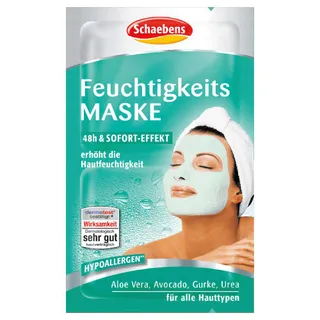
“Moisturizing Mask”
This product can help improve hydration of the skin with the two types of ingredients.
The first type is called “humectants”:
these ingredients help attract water.
When humectants are on the surface of the skin, they “pull in” the moisture from the outside environment, or from
within deeper layers of the skin. The following ingredients in this product do the job:
hydroxyethyl urea, sodium lactate.
This product also contains ingredients called “occlusives”. They help reduce the speed with which our skin loses moisture to the outside environment. These ingredients also help soften the upper layer of the skin, so it feels less tight and nicer to the touch. The following ingredients in this product do the job: caprylic/capric triglyceride, glycine soja oil.
The following ingredients in this product are especially good for supporting the skin barrier and helping with the hydration level: panthenol
Anti-agingAscorbyl palmitate, TocopherolNot delivered
“The active ingredient complex with valuable extracts of aloe vera, avocado, urea, cucumber and pure thermal water increases the lasting moisture content of the skin and thus reduces the risk of premature aging and so-called dryness wrinkles.”
This product does not contain ingredients that are able to reduce fine lines and wrinkles or help with skin elasticity, but it can improve the look of the skin temporarily through moisturization. Well-moisturized skin might also be able to repair the sun damage better.
ExfoliationSide benefit · Hydroxyethyl ureaWorks well
This product can help exfoliate the skin. In other words, it helps break down the bonds between dead cells on the surface of the skin and speed up the skin turnover. Skin often appears softer and brighter after exfoliation, but overdoing it can result in disrupted skin barrier. The following ingredient is doing the exfoliating job in this product: hydroxyethyl urea.
Can it cause trouble?
Irritancy3 strong irritants: Hamamelis virginiana water, Alcohol + 1 more — patch-test recommendedHigh risk
Comedogenic2 ingredients rated 2 or more on the 0–5 pore-clogging scale2 flagged


User reviews
Be the first — your take helps the next person decide.
Ingredients
Filter by role to see what each ingredient is doing.
Water~45–55%
Cetearyl alcohol~6.3–7.7%
- Irritation risk
- Low
- Comedogenicity
- 2/5
A non-drying alcohol. Works as an emollient. Helps water and oil mix together and creates a nice product texture
More about Cetearyl alcoholGlycine soja oil~4.2–5.1%
- Irritation risk
- Medium
- Comedogenicity
- 2/5
A good emollient that helps soften the skin and helps repair its barrier function. It can clog pores if used in high concentrations.
More about Glycine soja oilHydroxyethyl urea~3.1–3.8%
- Irritation risk
- Low
A derivative of urea, a compound that is naturally present in skin. Attracts water to the upper layer of the skin. Can enhance penetration of other ingredients
More about Hydroxyethyl ureaC12-15 alkyl benzoate~2.4–2.9%
- Irritation risk
- Low
Enhances the product texture and makes it more spreadable. Helps reduce water loss from the outer layer of skin. Extands the shelf life by preventing bacteria growth
More about C12-15 alkyl benzoateSorbitol~1.9–2.4%
- Irritation risk
- Low
Helps attract water to the upper layer of the skin and improves the product texture
More about SorbitolCaprylic/capric triglyceride~1.8–2.2%
- Irritation risk
- Medium
A good mix of fatty acids that forms a protective layer on the skin. Improves the shelf life of products. Derived from coconut and glycerin
More about Caprylic/capric triglycerideHamamelis virginiana water~1.3–1.6%
- Irritation risk
- High
A plant extract that can help calm down inflammation in skin. Can, however, itself be irritating
More about Hamamelis virginiana waterHydrogenated polydecene~1.2–1.4%
- Irritation risk
- Low
Helps to soften the upper layer of the skin and create a nice product texture
More about Hydrogenated polydecenePersea gratissima oil~1–1.2%
- Irritation risk
- Medium
An emollient that helps soften the skin and could be helpful in repairing its barrier function
More about Persea gratissima oilAloe barbadensis leaf juice powder~0.65–1%
- Irritation risk
- Medium
Traditionally used to treat sunburns, dermatitis and inflammation, but evidence for its effectiveness is lacking. The extract can contain humectants that help attract water into the skin
More about Aloe barbadensis leaf juice powderAscorbyl palmitate~0.55–0.85%
- Irritation risk
- Medium
Being a lipid soluble form of vitamin C, it is more stable and can penetrate the skin better than L-Ascorbic acid. It is effective in protecting the skin from free radicals, as well as evening the skin tone, but is less effective in stimulating collagen production compared to L-Ascorbic acid.
More about Ascorbyl palmitateBht~0.5–0.75%
Bisabolol~0.4–0.6%
- Irritation risk
- Low
An active component of chamomile plant that historically has been used to calm down irritated skin. A recent study shows that bisabolol indeed can have some anti-inflammatory effect on skin, even though conclusive data is lacking. Bisabolol has a sweet floral scent and can be added to products for its aromatic properties
More about BisabololCucumis sativus fruit extract~0.4–0.65%
- Irritation risk
- Medium
Might be somewhat helpful in reducing hyperpigmentation and neutralizing free radicals but its typical concentration in a product is too low for having an effect
More about Cucumis sativus fruit extractLecithin~0.45–0.7%
- Irritation risk
- Low
Used mostly for creating emulsions - helping oil and water mix together. Helps soften the upper layer of the skin
More about LecithinPanthenol~0.35–0.65%
- Irritation risk
- Low
Helps attract water to the upper layer of the skin and can help improve skin barrier function
More about PanthenolTocopherol~0.35–0.6%
- Irritation risk
- Low
Pure form of vitamin E. Can help moisturise and protect the skin from free radicals. Often used to help stabilise other ingredients or the formula itself
More about TocopherolTocopheryl acetate~0.3–0.55%
- Irritation risk
- Medium
A more stable but less bio-available form of vitamin E compared to Tocopherol. Might help moisturize and protect the skin from free radicals, but mostly used in low concentrations to stabilize other ingredients.
More about Tocopheryl acetateAlcohol~0.25–0.5%
- Irritation risk
- High
Can be drying and contribute to skin irritation. Used in formulars to dissolve other ingredients, create a thinner product consistency or for its antibacterial properties
More about AlcoholAmmonium lactate~0.25–0.45%
- Irritation risk
- Low
Benzoic acid~0.25–0.45%
Citric acid~0.2–0.4%
- Irritation risk
- Medium
Can work as an exfoliant but is typically used to adjust the product pH
More about Citric acidDisodium phosphate~0.2–0.4%
- Irritation risk
- Low
Helps adjust the product pH and stabilize the formulation
More about Disodium phosphateEthylhexylglycerin~0.2–0.4%
Glyceryl oleate~0.25–0.45%
- Irritation risk
- High
Helps oil and water mix together. Can be irritating
More about Glyceryl oleateGlyceryl stearate~0.25–0.5%
- Irritation risk
- Low
An emollient that softens the skin and forms a protective layer on its surface. Helps water and oil mix together
More about Glyceryl stearateParfum~0.2–0.35%
- Irritation risk
- High
An aromatic blend of unspecified and possibly irritating ingredients
More about ParfumPhenoxyethanol~0.2–0.4%
- Irritation risk
- Low
A preservative. It helps prevent bacterial growth in cosmetic products
More about PhenoxyethanolPotassium phosphate~0.2–0.4%
Propylene glycol~0.2–0.35%
- Irritation risk
- High
Helps oil and water mix together and can enhance the penetration of other ingredients into the skin. It can be irritating
More about Propylene glycolSodium cetearyl sulfate~0.3–0.55%
- Irritation risk
- Medium
Helps water and oil mix together and works as a cleansing agent
More about Sodium cetearyl sulfateSodium chloride~0.2–0.4%
- Irritation risk
- Low
Used to stabilize mixtures of oil and water, and create thicker, gel-like product textures
More about Sodium chlorideSodium hydroxide~0.15–0.3%
Sodium lactate~0.15–0.3%
- Irritation risk
- Medium
Helps attract water to the upper layer of the skin. Is often used to adjust the pH level of the product
More about Sodium lactateSodium sulfate~0.15–0.3%
- Irritation risk
- Medium
Used to improve the product consistency and stabilize formulations
More about Sodium sulfateTetrasodium glutamate diacetate~0.1–0.2%
- Irritation risk
- Low
Helps stabilize the product formulation
More about Tetrasodium glutamate diacetateCi 42090~0.1–0.15%
Ci 47005~0.05–0.15%
- Irritation risk
- Low
Ingredient list view
Water, Cetearyl alcohol, Glycine soja oil, Hydroxyethyl urea, C12-15 alkyl benzoate, Sorbitol, Caprylic/capric triglyceride, Hamamelis virginiana water, Hydrogenated polydecene, Persea gratissima oil, Aloe barbadensis leaf juice powder, Ascorbyl palmitate, Bht, Bisabolol, Cucumis sativus fruit extract, Lecithin, Panthenol, Tocopherol, Tocopheryl acetate, Alcohol, Ammonium lactate, Benzoic acid, Citric acid, Disodium phosphate, Ethylhexylglycerin, Glyceryl oleate, Glyceryl stearate, Parfum, Phenoxyethanol, Potassium phosphate, Propylene glycol, Sodium cetearyl sulfate, Sodium chloride, Sodium hydroxide, Sodium lactate, Sodium sulfate, Tetrasodium glutamate diacetate, Ci 42090, Ci 47005
Compare prices
Retailers ranked by price — lowest first.
Affiliate links · As an Amazon Associate, WIMJ earns from qualifying purchases.
Worth comparing, line by line.
Match % combines shared ingredients, the first five ingredients, shared actives and hero ingredients, irritancy (lower counts in the alternative's favour), texture and body area. Only products in the same routine step are compared.
| SchaebensMoisturizing MaskYOUR PRODUCT | BaleaFace Mask Milk Honey | RevidermCalming Hydro Mask | MEDIHEALD.N.A Hydrating Protein Sheet Mask | |
|---|---|---|---|---|
| Match | — | 53% | 52% | 51% |
| Price | — | $0.80 | — | — |
| Shared key ingredients | — | 3 of 8 | 3 of 8 | 4 of 8 |
| Key difference | — | Glycerin | Ceramide Np | Copper Tripeptide-1 |
| Irritancy | High | Medium | Medium | Medium |
| Drying alcohol | Contains drying alcohol | — | — | — |
| View product | Shop | Shop | Shop |


More alternatives: Mesoestetic Hydra-Vital Face MaskHolland & Barrett Vitamin E mask
Product summary
"Schaebens - Moisturizing Mask" is effective for: Moisturizing and Exfoliation
Ingredient callouts
- Humectants (sodium lactate 0.15% - 0.30%, panthenol 0.35% - 0.65% and hydroxyethyl urea 3.10% - 3.80%). These ingredients help attract water to the upper layer of the skin and improve the skin hydration.
Price
The product retails from 1.19$ up to 24.97$ in the United States, for 38.99CA$ in Canada and for 7.99£ in the United Kingdom.
For a detailed price comparison: click here.
Sources cited in this review
Every concentration estimate and effectiveness label is anchored to one of these 13 studies and safety reviews.
- 1
- 2Safety Assessment of Polyene Group as Used in Cosmeticscir-safety.org
- 3
- 4Skin moisturizing effects of panthenol-based formulationspdfs.semanticscholar.org
- 5
- 6Vitamin E in dermatologyncbi.nlm.nih.gov

Affiliate links · As an Amazon Associate, WIMJ earns from qualifying purchases.