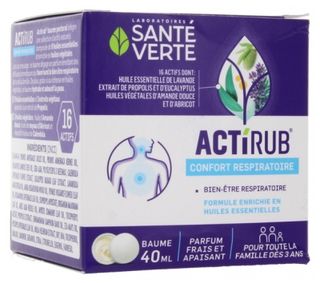
Works for
1 of 1 advertised claim delivered
Moisturizing8 ingredients credited for this claimGood support
“Its richness in botanical oils soothes and moisturizes thus the skin.”
This product can help soften the skin and reduce its moisture loss with emollients and occlusives: cera alba, helianthus annuus seed oil.
Keep in mind that this product does not contain effective ingredients to attract water to the upper layer of the skin. This is why an additional product with humectants like glycerin or hyaluronic acid can be helpful (apply it before this product for the best results).
Can it cause trouble?
Irritancy14 strong irritants: Calendula officinalis flower extract, Lavandula angustifolia oil + 12 more — patch-test recommendedHigh risk
Comedogenic2 ingredients rated 2 or more on the 0–5 pore-clogging scale2 flagged
User reviews
Be the first — your take helps the next person decide.
Ingredients
Filter by role to see what each ingredient is doing.
Prunus amygdalus dulcis oil~25–37%
- Irritation risk
- Low
An emollient that softens the skin
More about Prunus amygdalus dulcis oilPrunus armeniaca kernel oil~5.2–7.8%
- Irritation risk
- Medium
An emollient that helps soften the skin
More about Prunus armeniaca kernel oilHelianthus annuus seed oil~4.7–7%
- Irritation risk
- Low
A great emollient due to its high linoleic acid content. One of the most effective plant oils in helping skin hydration and repairing skin barrier function
More about Helianthus annuus seed oilCera alba~3.7–5.5%
- Irritation risk
- Medium
Forms a protective barrier that holds water and keeps dry skin hydrated. Keeps an emulsion from separating into its oil and liquid components, and increases the thickness of a product. Can be an allergen
More about Cera albaPolyglyceryl-3 beeswax~2.5–3.7%
- Irritation risk
- Medium
Helps water and oil mix together. Could be an allergen (beeswax)
More about Polyglyceryl-3 beeswaxCalendula officinalis flower extract~1.9–2.8%
- Irritation risk
- High
A plant extract that has some anti-oxidant and anti-bacterial properties. Can be irritating
More about Calendula officinalis flower extractEucalyptus radiata leaf extract~1.7–2.6%
- Irritation risk
- Low
Lavandula angustifolia oil~1.2–1.9%
- Irritation risk
- High
An essential oil. Potential allergen and can be irritating. It has some anti-bacterial properties
More about Lavandula angustifolia oilAniba rosaeodora wood oil~1–1.45%
- Irritation risk
- High
Thymus vulgaris flower/leaf oil~0.85–1.3%
- Irritation risk
- High
Rosmarinus officinalis leaf oil~0.55–1.25%
- Irritation risk
- High
A plant oil with high content of volatile compounds that can irritate the skin. Can be used as a fragrance. Has anti-bacterial properties and might help neutralize free radicals on the surface of the skin
More about Rosmarinus officinalis leaf oilIsopropyl myristate~0.55–1.25%
- Irritation risk
- Low
- Comedogenicity
- 3/5
An emollient that helps soften the skin. Could be comedogenic
More about Isopropyl myristateOriganum majorana leaf oil~0.45–1%
- Irritation risk
- High
Abies alba needle oil~0.4–0.9%
- Irritation risk
- Low
Myrtus communis leaf oil~0.35–0.85%
- Irritation risk
- Low
Tocopheryl acetate~0.4–0.9%
- Irritation risk
- Medium
A more stable but less bio-available form of vitamin E compared to Tocopherol. Might help moisturize and protect the skin from free radicals, but mostly used in low concentrations to stabilize other ingredients.
More about Tocopheryl acetatePropolis extract~0.4–0.9%
- Irritation risk
- High
A complex substance produced by honey bees. Can have anti-bacterial and some anti-oxidant effect. Is an allergen and can be irritating
More about Propolis extractCinnamomum camphora bark oil~0.35–0.75%
- Irritation risk
- High
Zea mays oil~0.2–0.75%
- Irritation risk
- Low
- Comedogenicity
- 3/5
A good moisturizing plant oil. Due to the high linoleic acid content, it helps soften the upper layer of the skin, reduce water loss and support skin barrier function
More about Zea mays oilHyssopus officinalis leaf oil~0.2–0.75%
- Irritation risk
- Low
Inula helenium extract~0.2–0.7%
- Irritation risk
- Low
Bht~0.15–0.6%
Bha~0.15–0.55%
Tocopherol~0.15–0.55%
- Irritation risk
- Low
Pure form of vitamin E. Can help moisturise and protect the skin from free radicals. Often used to help stabilise other ingredients or the formula itself
More about TocopherolLinalool~0.1–0.4%
Limonene~0.1–0.35%
- Irritation risk
- High
A common frangrance that can easily irritate skin, especially if exposed to air, light or heat
More about LimoneneGeraniol~0.05–0.3%
Citral~0.05–0.3%
Citronellol~0.05–0.2%
Eugenol~0.05–0.15%
Farnesol~0.05–0.15%
Ingredient list view
Prunus amygdalus dulcis oil, Prunus armeniaca kernel oil, Helianthus annuus seed oil, Cera alba, Polyglyceryl-3 beeswax, Calendula officinalis flower extract, Eucalyptus radiata leaf extract, Lavandula angustifolia oil, Aniba rosaeodora wood oil, Thymus vulgaris flower/leaf oil, Rosmarinus officinalis leaf oil, Isopropyl myristate, Origanum majorana leaf oil, Abies alba needle oil, Myrtus communis leaf oil, Tocopheryl acetate, Propolis extract, Cinnamomum camphora bark oil, Zea mays oil, Hyssopus officinalis leaf oil, Inula helenium extract, Bht, Bha, Tocopherol, Linalool, Limonene, Geraniol, Citral, Citronellol, Eugenol, Farnesol
Compare prices
Retailers ranked by price — lowest first.

Affiliate links · prices updated regularly
Sources cited in this review
Every concentration estimate and effectiveness label is anchored to one of these 22 studies and safety reviews.
- 1
- 2
- 3
- 4Effect of topically applied lipids on surfactant-irritated skinonlinelibrary.wiley.com
- 5
- 6

Affiliate links · As an Amazon Associate, WIMJ earns from qualifying purchases.