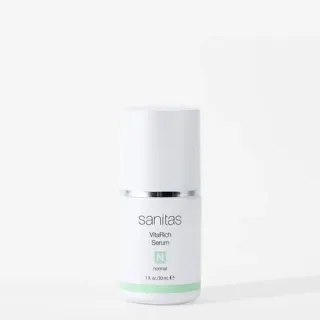
Works for
Anti-agingTetrahexyldecyl ascorbate, Retinyl palmitateWorks well
“Diminishes the visible signs of aging, hydrates and improves the appearance of brightness and firmness.”
This product can help reduce and prevent fine lines and wrinkles, improve skin elasticity and firmness because it contains tetrahexyldecyl ascorbate.
These ingredients in the product can also be helpful, even though there is less evidence for their effectiveness: retinyl palmitate.
Keep in mind that it typically takes at least 6 weeks to notice any results because the changes that are needed to improve fine lines and elasticity happen in the deeper layers of the skin. No topical anti-aging product can “erase” wrinkles or fully reverse signs of aging.
Evens skin toneTetrahexyldecyl ascorbate, Retinyl palmitateWorks well
“This super-antioxidant blend of vitamins A, D, E + K + Tetrahexyldecyl ascorbate (vitamin C ester) form a skin conversant blend of essential nutrients that helps lessen the appearance of wrinkles and dark spots, helps brighten and protect the skin and calm the look of redness.”
This product can help reduce hypepigmentation and even out the skin tone because it contains the following effective ingredients: tetrahexyldecyl ascorbate
The following ingredient (ingredients) in this product might be helpful, but there is no evidence to confirm that it actually can help even out the skin tone: retinyl palmitate.
Keep in mind that you would need to apply any topical skincare targetted at hypigmentation consistently for a couple of months to get a result. No topical skincare product can help get rid of hyperpigmentation (including post-acne marks and age spots) instantly.
MoisturizingSqualane, Helianthus annuus seed oilWorks
“Diminishes the visible signs of aging, hydrates and improves the appearance of brightness and firmness.”
This product can help soften the skin and reduce its moisture loss with emollients and occlusives: helianthus annuus seed oil, squalane.
Keep in mind that this product does not contain effective ingredients to attract water to the upper layer of the skin. This is why an additional product with humectants like glycerin or hyaluronic acid can be helpful (apply it before this product for the best results).
Anti-oxidationSide benefit · Tetrahexyldecyl ascorbate, Tocopheryl acetateWorks well
This product contains antioxidants (tetrahexyldecyl ascorbate) that can help neutralize free radicals in skin. By doing so, they can lessen the damage the skin gets from the UV light (sun).
Can it cause trouble?
Irritancy1 strong irritant: Retinyl palmitateMedium risk
ComedogenicClean of flagged comedogenic ingredientsNone flagged

User reviews
Be the first — your take helps the next person decide.
Ingredients
Filter by role to see what each ingredient is doing.
Squalane~26–39%
- Irritation risk
- Low
An oil naturally present in skin. Works as an emollient to soften the skin and form a protective layer on its surface without a greasy feeling.
More about SqualaneTocopheryl acetate~10–15%
- Irritation risk
- Medium
A more stable but less bio-available form of vitamin E compared to Tocopherol. Might help moisturize and protect the skin from free radicals, but mostly used in low concentrations to stabilize other ingredients.
More about Tocopheryl acetateTetrahexyldecyl ascorbate~5.2–7.7%
- Irritation risk
- Medium
Being a lipid soluble form of vitamin C, it is more stable than ascorbic acid, but still degrades quickly and needs to be stabilized in a formulation with another ingredient. It is claimed to penetrate skin better than pure vitamin C and have the the similar benefits, but solid studies of its effectiveness are lacking. Is likely to require a higher concentration in a product than pure vitamin C to be effective. It might be able to help reduce pore clogging.
More about Tetrahexyldecyl ascorbateRetinyl palmitate~3.7–5.5%
- Irritation risk
- High
Three steps removed from the active form of vitamin A - retinoic acid. To have an effect in the skin, it first needs to be converted twice to become the retinoic acid. This means it is less potent than retinol, but could also be less irritating. Once converted to the retinoic acid in the skin, it helps against all signs of aging, improves skin cell turnover and helps fight blemishes and clogged pores. However, in many cosmetic formulations, it is used in a concentration that is too low to have the full effect
More about Retinyl palmitateCholecalciferol~2.2–3.3%
- Irritation risk
- Low
Phytonadione~1.3–1.9%
- Irritation risk
- Low
Helianthus annuus seed oil~1.8–2.7%
- Irritation risk
- Low
A great emollient due to its high linoleic acid content. One of the most effective plant oils in helping skin hydration and repairing skin barrier function
More about Helianthus annuus seed oilIngredient list view
Squalane, Tocopheryl acetate, Tetrahexyldecyl ascorbate, Retinyl palmitate, Cholecalciferol, Phytonadione, Helianthus annuus seed oil
Compare prices
Retailers ranked by price — lowest first.

Worth comparing, line by line.
Match % combines shared ingredients, the first five ingredients, shared actives and hero ingredients, irritancy (lower counts in the alternative's favour), texture and body area. Only products in the same routine step are compared.
| Sanitas SkincareVitaRich SerumYOUR PRODUCT | VERSOSuper C Serum | SKKN by KimOil Drops | Josie MaranArgan Bright Skin Vitamin C Serum | |
|---|---|---|---|---|
| Match | — | 59% | 59% | 57% |
| Price | $66.00 | $38.00−$28.00 | — | $60.12−$5.88 |
| Shared key ingredients | — | 2 of 4 | 2 of 4 | 2 of 4 |
| Key difference | — | Biosaccharide Gum-1 | Glycine Soja Oil | Marshmallow Root Extract |
| Irritancy | Medium | Low | Low | Low |
| Drying alcohol | — | — | — | — |
| View product | Shop | Shop | Shop |


More alternatives: The Ordinary Ascorbyl Tetraisopalmitate Solution 20% in Vitamin FDermadoctor Kakadu C High Potency Evening Oil
Sources cited in this review
Every concentration estimate and effectiveness label is anchored to one of these 6 studies and safety reviews.
- 1
- 2
- 3
- 4
- 5Effect of topically applied lipids on surfactant-irritated skinonlinelibrary.wiley.com
- 6

Affiliate links · As an Amazon Associate, WIMJ earns from qualifying purchases.