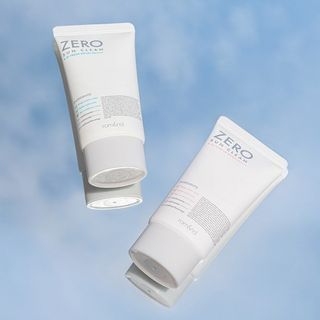
romand Zero Sun Clean - 2 Types
Works for
2 of 2 advertised claims delivered
Sun protectionSPF 50 · 4 UV filtersBroad spectrum
This product offers a good level of protection against both UVB and UVA rays.
This sunscreen uses organic (so-called "chemical") sunscreen filters. Organic, or "chemical" filters usually provide reliable sun protection and rarely leave a white cast. Sunscreens with organic filters can sting eyes.
This product can be considered "reef safe" because it does not contain the UV filters (oxybenzone and octinoxate) that can be harmful to coral reefs when present in the water in high concentrations.
Evens skin toneNo ingredient credited for this claimStrong support
“The Tone-Up version uses physical UV filters of zinc oxide and titanium dioxide, and offers a brightening effect and velvety finish.”
This product offers broad spectrum sun protection. It means that it can prevent hyperpigmentation and help keep the skin tone even (sun damage is the main factor causing age spots, darkening of post-acne marks and other discolorations).
Anti-agingNot advertised by the brand · 1 ingredient credited for this claimStrong support
This product can help prevent early signs of skin aging because it offers a good level of broad spectrum sun protection. Sun damage is the main cause of premature skin aging, and protecting your skin from the sun is the best anti-aging strategy.
MoisturizingNot advertised by the brand · 11 ingredients credited for this claimGood support
This product contains good ingredients to attract water to the upper layer of the skin. These ingredients are called "humectants": glycerin, butylene glycol.
When humectants are on the surface of the skin, they “pull in” the moisture from the outside environment, or from within deeper layers of the skin. If the air is dry, humectants can speed up the moisture loss from the skin. This is why it is a good idea to use another product on top of this one to help "seal in" the moisture (look for ingredients like dimethicone, squalane, oils and butters).
Can it cause trouble?
Irritancy5 strong irritants: Rosmarinus officinalis leaf oil, Salvia sclarea oil + 3 more — patch-test recommendedHigh risk
Comedogenic1 ingredient rated 2 or more on the 0–5 pore-clogging scale1 flagged
User reviews
Be the first — your take helps the next person decide.
Ingredients
Filter by role to see what each ingredient is doing.
Water~45–55%
Dibutyl adipate~5.6–6.8%
- Irritation risk
- Low
Helps soften the upper layer of the skin and create a nice product consistency
More about Dibutyl adipatePropanediol~4.2–5.1%
- Irritation risk
- Low
Acts as a solvent for other ingredients. Speeds up the absorption of other ingredients into the skin
More about PropanediolDiethylamino hydroxybenzoyl hexyl benzoate~3.6–4.4%
- Irritation risk
- Medium
Uvinul A Plus. A new generation broad spectrum sunscreen that offers an effective protection especially in the UVA range. It is stable in formulations. Unfortunately, is not approved by the FDA (US) yet
More about Diethylamino hydroxybenzoyl hexyl benzoatePolymethylsilsesquioxane~2.3–2.9%
- Irritation risk
- Low
A silicone that improves product texture and helps dissolve other ingredients. Can form a non-greasy film on the skin to prevent moisture loss
More about PolymethylsilsesquioxaneEthylhexyl triazone~2.5–3%
- Irritation risk
- Medium
Uvinul T. A UV filter. Effective against UVB rays. It is photostable. Can increase water resistance properties of the sunscreen. Unfortunately, not approved by the FDA (US) yet
More about Ethylhexyl triazoneMethylene bis-benzotriazolyl tetramethylbutylphenol~2.1–2.5%
- Irritation risk
- Medium
Tinosorb M. A UV filter. Is effective against both UVA and UVB rays. It also provides some protection against visible light. It is photostable and can also be used to improve photostability of other sunscreen ingredients. Its physical properties help to create lightweight sunscreen formulations. It can leave a slight white cast. Unfortunately, it is not approved by the FDA (US) yet
More about Methylene bis-benzotriazolyl tetramethylbutylphenolCoco-caprylate/caprate~1.4–1.8%
- Irritation risk
- Low
Helps to soften the upper layer of the skin without creating a greasy texture
More about Coco-caprylate/caprateCaprylyl methicone~1.2–1.4%
- Irritation risk
- Low
A type of silicone that helps to soften the upper layer of the skin and create a nice product finish on the skin
More about Caprylyl methiconeDiethylhexyl butamido triazone~1.4–1.7%
- Irritation risk
- Medium
Uvasorb HEB. A UV filter. Is effective against UVB and UVA II rays (but not UVA I). It is photostable. Unfortunately, is not approved by FDA (US) yet
More about Diethylhexyl butamido triazoneGlycerin~0.75–1.1%
- Irritation risk
- Low
One of the best moisturizing ingredients. Naturally present in skin. It attracts water to the upper layer of the skin working as a humectant
More about GlycerinButylene glycol~0.6–0.85%
- Irritation risk
- Low
Used to create a nice product texture and help delivery of other ingredients. Might be somewhat helpful in attracting water to the upper layer of the skin
More about Butylene glycol1,2-hexanediol~0.5–0.75%
Pentylene glycol~0.55–0.8%
- Irritation risk
- Medium
Used to preserve products, dissolve other ingredients and create a nice product texture
More about Pentylene glycolBehenyl alcohol~0.5–0.75%
- Irritation risk
- Low
Non-drying alcohol that helps water and oil mix together. Also serves as an emollient
More about Behenyl alcoholPoly c10-30 alkyl acrylate~0.45–0.7%
- Irritation risk
- Low
Polyglyceryl-3 methylglucose distearate~0.45–0.7%
- Irritation risk
- Medium
Helps water and oil mix together
More about Polyglyceryl-3 methylglucose distearateDecyl glucoside~0.5–0.75%
- Irritation risk
- High
Helps oil and water mix together. Can be irritating
More about Decyl glucosideTromethamine~0.35–0.6%
Carbomer~0.3–0.55%
- Irritation risk
- Low
Helps create a thicker or gel-like product texture. It is not a surfactant but can be used in gentle cleansing formulations
More about CarbomerAcrylates/c10-30 alkyl acrylate crosspolymer~0.3–0.6%
- Irritation risk
- Medium
Maintains the texture of skincare products. Allows the product to spread evenly. Helps oil and water mix together
More about Acrylates/c10-30 alkyl acrylate crosspolymerOlea europaea fruit oil~0.3–0.55%
- Irritation risk
- Medium
An emollient that helps soften the skin but is not effective for restoring its barrier function. Might be helpful to calm down inflammation
More about Olea europaea fruit oilSodium stearoyl glutamate~0.3–0.6%
- Irritation risk
- Medium
Helps oil and water mix together
More about Sodium stearoyl glutamatePolyacrylate crosspolymer-6~0.3–0.5%
- Irritation risk
- Low
Ethylhexylglycerin~0.25–0.5%
Xanthan gum~0.25–0.5%
- Irritation risk
- Low
Used to create a thicker product consistency
More about Xanthan gumAbies sibirica oil~0.2–0.4%
- Irritation risk
- Low
T-butyl alcohol~0.25–0.45%
- Irritation risk
- Medium
Used to dissolve other ingredients and to improve smell of products. It could be irritating
More about T-butyl alcoholRosmarinus officinalis leaf oil~0.25–0.45%
- Irritation risk
- High
A plant oil with high content of volatile compounds that can irritate the skin. Can be used as a fragrance. Has anti-bacterial properties and might help neutralize free radicals on the surface of the skin
More about Rosmarinus officinalis leaf oilTocopherol~0.25–0.45%
- Irritation risk
- Low
Pure form of vitamin E. Can help moisturise and protect the skin from free radicals. Often used to help stabilise other ingredients or the formula itself
More about TocopherolSalvia sclarea oil~0.2–0.4%
- Irritation risk
- High
Pelargonium graveolens flower oil~0.25–0.45%
- Irritation risk
- High
An essential oil. Can be irritating. Can become an allergen with oxidation
More about Pelargonium graveolens flower oilEugenia caryophyllus leaf oil~0.2–0.35%
- Irritation risk
- High
An essential oil. Used as a fragrance. Can be irritating and sensitizing
More about Eugenia caryophyllus leaf oilPogostemon cablin oil~0.15–0.3%
- Irritation risk
- Low
Chamomilla recutita flower oil~0.2–0.35%
- Irritation risk
- High
Plant oil that can have healing and anti-inflammatory properties. It contains volatile compouunds that are potential allergens and can be irritating
More about Chamomilla recutita flower oilJuniperus mexicana oil~0.15–0.3%
- Irritation risk
- Low
Anthemis nobilis flower oil~0.1–0.2%
- Irritation risk
- High
An essential oil that is used as a fragrance and can be irritating. It might have some anti-oxidant effect in skin
More about Anthemis nobilis flower oilSea water~0.15–0.25%
- Irritation risk
- Low
Dissolves other ingredients. It does not have additional skin benefits compared to plain water
More about Sea waterCaprylic/capric triglyceride~0.15–0.3%
- Irritation risk
- Medium
A good mix of fatty acids that forms a protective layer on the skin. Improves the shelf life of products. Derived from coconut and glycerin
More about Caprylic/capric triglycerideEcklonia cava extract~0.1–0.15%
- Irritation risk
- Low
- Comedogenicity
- 3/5
Salicornia herbacea extract~0.1–0.15%
- Irritation risk
- Low
Ingredient list view
Water, Dibutyl adipate, Propanediol, Diethylamino hydroxybenzoyl hexyl benzoate, Polymethylsilsesquioxane, Ethylhexyl triazone, Methylene bis-benzotriazolyl tetramethylbutylphenol, Coco-caprylate/caprate, Caprylyl methicone, Diethylhexyl butamido triazone, Glycerin, Butylene glycol, 1,2-hexanediol, Pentylene glycol, Behenyl alcohol, Poly c10-30 alkyl acrylate, Polyglyceryl-3 methylglucose distearate, Decyl glucoside, Tromethamine, Carbomer, Acrylates/c10-30 alkyl acrylate crosspolymer, Olea europaea fruit oil, Sodium stearoyl glutamate, Polyacrylate crosspolymer-6, Ethylhexylglycerin, Xanthan gum, Abies sibirica oil, T-butyl alcohol, Rosmarinus officinalis leaf oil, Tocopherol, Salvia sclarea oil, Pelargonium graveolens flower oil, Eugenia caryophyllus leaf oil, Pogostemon cablin oil, Chamomilla recutita flower oil, Juniperus mexicana oil, Anthemis nobilis flower oil, Sea water, Caprylic/capric triglyceride, Ecklonia cava extract, Salicornia herbacea extract
Compare prices
Retailers ranked by price — lowest first.

Affiliate links · prices updated regularly
Product summary
We assess that "romand - Zero Sun Clean - 2 Types" can provide reliable sun protection based on the ingredient list. It can protect from both UVA and UVB rays. This is great news because not all sunscreens with SPF ratings give UVA protection. (UVA rays do not cause sunburn, but still damage our skin and lead to early aging).
As a plus, this sunscreen uses some of the new generation UV filters (Tinosorb M). These filters are more stable and more gentle on the skin.
Because it includes good moisturizing ingredients, it can also work as a hydrating day cream. Like all broad-spectrum sunscreens, this product helps prevent early signs of aging.
Sunscreen filters
This is a so-called "chemical" sunscreen. It means that it uses organic UV filters. They typically offer good sun protection and rarely leave a white cast, but they can be irritating for some people with sensitive skin. The UV filters in this sunscreen are: uvinul a plus 3.60% - 4.40%, uvasorb heb 1.40% - 1.70%, uvinul t 2.50% - 3.00% and tinosorb m 2.10% - 2.50%.
Irritation risk
It contains a bunch of common irritants, including ingredients that do not provide any known benefit for the skin. It might not be the best choice if your skin is sensitive. We assess the overall irritancy of this product to be high. For a detailed overview of all potential irritants: click here
You can see the detailed formula review with the breakdown of all actives in the product and the full ingredient list with estimated concentrations in the tables below.
Price
The product retails for 13.60$ in the United States.
For a detailed price comparison: click here.
Sources cited in this review
Every concentration estimate and effectiveness label is anchored to one of these 17 studies and safety reviews.
- 1Safety Assessment of Alkyl Esters as Used in Cosmeticscir-safety.org
- 2
- 3
- 4
- 5Safety Assessment of Tromethamine as Used in Cosmeticscir-safety.org
- 6Use of “natural” oils for moisturization: Review of olive, coconut, and sunflower seed oilonlinelibrary.wiley.com

Affiliate links · As an Amazon Associate, WIMJ earns from qualifying purchases.