Works for
Evens skin toneAminopropyl ascorbyl phosphateMay help
The following ingredient (ingredients) in this product might be helpful, but there is no evidence to confirm that it actually works: aminopropyl ascorbyl phosphate.
Anti-oxidationNot advertised by the brand · Aminopropyl ascorbyl phosphateMay help
This product contains antioxidants (aminopropyl ascorbyl phosphate) that might be able to help neutralize free radicals in skin to lessen the damage it gets from the UV light (sun). There is not enough evidence to confirm their effectiveness in skin though.
Anti-agingSide benefit the brand mentions · Aminopropyl ascorbyl phosphateMay help
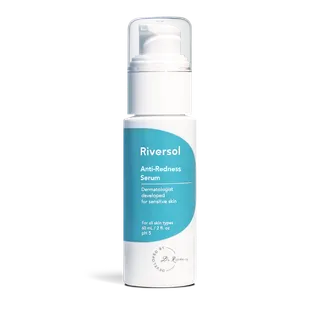
“Improves facial redness Safe anti-aging for sensitive skin”
This product contains aminopropyl ascorbyl phosphate. This ingredient might be able to help reduce and prevent fine lines and wrinkles, improve skin elasticity and firmness, but there is not enough evidence that it actually works.
Can it cause trouble?
Irritancy1 strong irritant: Alcohol denat.Medium risk
ComedogenicClean of flagged comedogenic ingredientsNone flagged
User reviews
Be the first — your take helps the next person decide.
Ingredients
Filter by role to see what each ingredient is doing.
Water~40–60%
Propylene glycol~4.3–6.5%
- Irritation risk
- High
Helps oil and water mix together and can enhance the penetration of other ingredients into the skin. It can be irritating
More about Propylene glycolAminopropyl ascorbyl phosphate~3.7–5.5%
- Irritation risk
- Medium
A more stable but less potent derivative of vitamin C. It can help neautralize free radicals and even out the skin tone if used in high enough concentration (required levels are likely to be much higher than for pure vitamin C, and solid studies are lacking at the moment)
More about Aminopropyl ascorbyl phosphateSodium tocopheryl phosphate~2.3–3.4%
Hinokitiol~2–3%
- Irritation risk
- Low
Propylene glycol alginate~1.5–2.2%
- Irritation risk
- Low
Hydroxyethylcellulose~1–1.5%
- Irritation risk
- Low
Used to thicken product formulations and create gel-like textures
More about HydroxyethylcelluloseSodium lauriminodipropionate~1.1–1.7%
Phenoxyethanol~0.35–0.85%
- Irritation risk
- Low
A preservative. It helps prevent bacterial growth in cosmetic products
More about PhenoxyethanolCaprylyl glycol~0.35–0.85%
- Irritation risk
- Medium
Helps preserve products and creates a nice product texture
More about Caprylyl glycolAlcohol denat.~0.1–0.5%
- Irritation risk
- High
Produces temporary toning effect. Can help dissolve other ingredients or preserve products
More about Alcohol denat.Sodium citrate~0.05–0.3%
- Irritation risk
- Medium
Helps to control the skin's pH level. Maintains the skin's natural film of amino-lactic acids and oils. Helps to preserve products
More about Sodium citrateSodium hydroxide~0.05–0.2%
Citric acid~0.01–0.05%
- Irritation risk
- Medium
Can work as an exfoliant but is typically used to adjust the product pH
More about Citric acidIngredient list view
Water, Propylene glycol, Aminopropyl ascorbyl phosphate, Sodium tocopheryl phosphate, Hinokitiol, Propylene glycol alginate, Hydroxyethylcellulose, Sodium lauriminodipropionate, Phenoxyethanol, Caprylyl glycol, Alcohol denat., Sodium citrate, Sodium hydroxide, Citric acid
Compare prices
Retailers ranked by price — lowest first.

Worth comparing, line by line.
Match % combines shared ingredients, the first five ingredients, shared actives and hero ingredients, irritancy (lower counts in the alternative's favour), texture and body area. Only products in the same routine step are compared.
| RiversolAnti-Redness SerumYOUR PRODUCT | Riversol CS[CS] Anti-Redness Serum | Riversol WholesaleTravel Serum | HigherDoseGlow Serum | |
|---|---|---|---|---|
| Match | — | 43% | 39% | 39% |
| Price | $27.95 | — | — | $69.00+$41.05 |
| Shared key ingredients | — | 1 of 1 | 1 of 1 | 1 of 1 |
| Key difference | — | Disodium Lauriminodipropionate Tocopheryl Phosphates | Disodium Lauriminodipropionate Tocopheryl Phosphates | Niacinamide |
| Irritancy | Medium | Medium | Medium | Low |
| Drying alcohol | Contains drying alcohol | Contains drying alcohol | Contains drying alcohol | — |
| View product | Shop | Shop | Shop |


More alternatives: Consonant VITAMIN C + LICORICE SERUMADVANCED CLINICALS Vitamin C Serum
Sources cited in this review
Every concentration estimate and effectiveness label is anchored to one of these 4 studies and safety reviews.
- 1Surfactants and experimental irritant contact dermatitisncbi.nlm.nih.gov
- 2Propylene Glycolpubmed.ncbi.nlm.nih.gov
- 3Skin-sensitizing and irritant properties of propylene glycolonlinelibrary.wiley.com
- 4

Affiliate links · As an Amazon Associate, WIMJ earns from qualifying purchases.