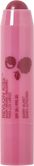
Revlon Kiss Balm Lip Balm
Works for
1 of 2 advertised claims delivered
Sun protectionSPF 20 · 4 UV filters · Broad spectrumWeak protectionSPF under 30
This product offers broad spectrum sun protection, but it is weak. We recommend to use a broad spectrum sunscreen with at least SPF 30.
Moisturizing9 ingredients credited for this claimGood support
“Revlon Kiss Balm Lip Balm is ultra hydrating lip care that provides instantly softer, smoother, kissable lips.”
This product can help soften the skin and reduce its moisture loss with emollients and occlusives: beeswax, bis-diglyceryl polyacyladipate-2.
Keep in mind that this product does not contain effective ingredients to attract water to the upper layer of the skin. This is why an additional product with humectants like glycerin or hyaluronic acid can be helpful (apply it before this product for the best results).
Anti-oxidationNot advertised by the brand · 2 ingredients credited for this claimModerate support
This product contains antioxidants (rubus idaeus seed oil) that might be able to help neutralize free radicals in skin to lessen the damage it gets from the UV light (sun). There is not enough evidence to confirm their effectiveness in skin though.
Can it cause trouble?
Irritancy2 strong irritants: Benzophenone-3, ParfumMedium risk
Comedogenic1 ingredient rated 2 or more on the 0–5 pore-clogging scale1 flagged
User reviews
Be the first — your take helps the next person decide.
Ingredients
Filter by role to see what each ingredient is doing.
Tin~26–39%
Butyl methoxydibenzoylmethane2%
- Irritation risk
- Medium
Avobenzone. An organic, or so-called "chemical" UV filter. Protects against both UVA and UVB rays. Needs to be combined with other filters in a formulation to be stable.
More about Butyl methoxydibenzoylmethaneEthylhexyl methoxycinnamate7.5%
- Irritation risk
- High
Octinoxate. When used in higher concentrations, works as a sunscreen protecting the skin from UVB rays. When used in lower concentration, helps to preserve the product formulation. Is shown to be harmful to coral reefs - consider avoiding bathing in coral reef areas when wearing a product with this ingredient. It can be irritating
More about Ethylhexyl methoxycinnamateBenzophenone-33%
- Irritation risk
- High
Same as oxybenzone. Protects in the UVB and short UVA range. In small concentrations, used to stabilize product formulation. Can be irritating. Is shown to be harmful to coral reefs - consider avoiding bathing in coral reef areas when wearing a product with this ingredient. It can penetrate the skin and get absorbed into bloodstream faster than other popular filters available in the US. The study that produced this finding did not address any potential health effects of the absorption
More about Benzophenone-3Polybutene~4.6–6.9%
Diisostearyl malate~4.5–6.8%
- Irritation risk
- Medium
Helps to soften the upper layer of the skin
More about Diisostearyl malateIsononyl isononanoate~3.4–5.1%
- Irritation risk
- Low
Forms a protective film on the surface of the skin to prevent moisture loss. Gives a velvety feel to products while reducing tackiness
More about Isononyl isononanoateBis-diglyceryl polyacyladipate-2~2.4–3.7%
- Irritation risk
- Low
Helps soften the upper layer of the skin and reduce water loss from its surface
More about Bis-diglyceryl polyacyladipate-2Octyldodecyl neopentanoate~1.9–2.8%
- Irritation risk
- Low
An emollient that helps soften the skin. Often used to stabilize other ingredients, for example, sunscreen
More about Octyldodecyl neopentanoateDiisopropyl dimer dilinoleate~1.5–2.3%
- Irritation risk
- Low
Polyethylene~1.5–2.2%
Ozokerite~1.1–1.6%
Cera alba~1–1.5%
- Irritation risk
- Medium
Forms a protective barrier that holds water and keeps dry skin hydrated. Keeps an emulsion from separating into its oil and liquid components, and increases the thickness of a product. Can be an allergen
More about Cera albaBeeswax~0.6–1.35%
- Irritation risk
- Low
Forms a protective barrier that holds water and keeps dry skin hydrated. Keeps an emulsion from separating into its oil and liquid components, and increases the thickness of a product. Can be an allergen
More about BeeswaxParfum~0.4–0.9%
- Irritation risk
- High
An aromatic blend of unspecified and possibly irritating ingredients
More about ParfumEuphorbia cerifera wax~0.4–1%
- Irritation risk
- Low
Punica granatum seed oil~0.4–0.9%
- Irritation risk
- Low
Helps soften the upper layer of the skin
More about Punica granatum seed oilRubus idaeus seed oil~0.35–0.85%
- Irritation risk
- Medium
A plant oil that might be able to help neutralize free radicals in skin
More about Rubus idaeus seed oilVitis vinifera seed oil~0.35–0.85%
- Irritation risk
- Medium
A great emollient that can also have anti-oxidant properties
More about Vitis vinifera seed oilCalcium aluminum borosilicate~0.3–0.75%
Cetyl palmitate~0.35–0.75%
- Irritation risk
- Low
An emollient that helps soften the skin and is used to improve product texture and stability
More about Cetyl palmitateBenzoic acid~0.25–0.5%
Oxidized polyethylene~0.15–0.65%
- Irritation risk
- Low
Bht~0.15–0.55%
Silica~0.3–0.7%
Sodium saccharin~0.15–0.55%
- Irritation risk
- Low
Mica~0.15–0.65%
- Irritation risk
- Low
Creates an illusion of smoother and more radiant skin tone. Adds shimmer to the skin by reflecting light
More about MicaIron oxides~0.1–0.5%
- Irritation risk
- Low
An umbrella term for the following three colorants: CI 77491, CI 77492, CI 77499. They might be able to offer some protection against visible light, but the degree of the protection is not clear
More about Iron oxidesCi 77491~0.15–0.55%
- Irritation risk
- Low
A red colorant made of iron oxide. Typically is not irritating
More about Ci 77491Titanium dioxide~0.2–0.8%
- Irritation risk
- Low
Works as a UV filter when used in high concentrations. It is photostable and is effective mostly against the UVB light, with some protection in the UVA range. In small concentrations, used for its ability to improve the color of cosmetic products. Is usually well tolerated by the skin
More about Titanium dioxideCi 77891~0.15–0.5%
- Irritation risk
- Low
Blue 1 lake~0.1–0.5%
Ci 42090~0.1–0.45%
Ci 15850~0.1–0.4%
Ci 45410~0.1–0.4%
Ci 17200~0.1–0.35%
Ci 19140~0.05–0.25%
Ci 15985~0.05–0.2%
Ingredient list view
Tin, Butyl methoxydibenzoylmethane, Ethylhexyl methoxycinnamate, Benzophenone-3, Polybutene, Diisostearyl malate, Isononyl isononanoate, Bis-diglyceryl polyacyladipate-2, Octyldodecyl neopentanoate, Diisopropyl dimer dilinoleate, Polyethylene, Ozokerite, Cera alba, Beeswax, Parfum, Euphorbia cerifera wax, Punica granatum seed oil, Rubus idaeus seed oil, Vitis vinifera seed oil, Calcium aluminum borosilicate, Cetyl palmitate, Benzoic acid, Oxidized polyethylene, Bht, Silica, Sodium saccharin, Mica, Iron oxides, Ci 77491, Unknown, Titanium dioxide, Ci 77891, Blue 1 lake, Ci 42090, Ci 15850, Ci 45410, Ci 17200, Ci 19140, Ci 15985
Compare prices
Retailers ranked by price — lowest first.
Affiliate links · prices updated regularly · As an Amazon Associate, WIMJ earns from qualifying purchases.
Product summary
"Revlon - Kiss Balm Lip Balm" offers broad spectrum protection. It means that it protects from both UVA and UVB rays (you can remember UVB as "burning" sunlight - they cause sunburn. You can remember UVA rays as "aging" - they do not lead to sunburn, but they cause photodamage and contribute to early signs of skin aging and hyperpigmentation). On the negative side, the SPF of it is not high enough. We recommend to use a sunscreen with at least SPF 30 daily.
Sunscreen filters
This is a "mixed" sunscreen in the sense that it uses both mineral and organic (so-called "chemical") sun filters. The organic filters in the product are: oxybenzone, avobenzone and octinoxate. As for the mineral filters, this sunscreen uses titanium dioxide.
Irritation risk
There are quite a few common irritants in this product, including ingredients without particular skin benefits. We would not recommend it for sensitive skin. We assess the overall irritancy of this lip product to be medium. For a detailed overview of all potential irritants: click here
You can see the detailed formula review with the breakdown of all actives in the product and the full ingredient list with estimated concentrations in the tables below.
Price
The product retails from 4.26$ up to 5.89$ in the United States and for 11.95£ in the United Kingdom.
For a detailed price comparison: click here.
Sources cited in this review
Every concentration estimate and effectiveness label is anchored to one of these 10 studies and safety reviews.
- 1
- 2
- 3On Photostability of Oxybenzonecore.ac.uk
- 4
- 5
- 6

Affiliate links · As an Amazon Associate, WIMJ earns from qualifying purchases.