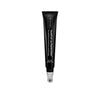
Revision Skincare YouthFull Lip Replenisher
Works for
2 of 2 advertised claims delivered
MoisturizingPalmitoyl tripeptide-1, Palmitoyl tripeptide-38 + 16 moreStrong evidence
“Hyaluronic Acid delivers immediate and intense hydration to help lips look fuller and more youthful.”
This product can help improve hydration of the skin with the two types of ingredients.
The first type is called “humectants”:
these ingredients help attract water.
When humectants are on the surface of the skin, they “pull in” the moisture from the outside environment, or from
within deeper layers of the skin. The following ingredients in this product do the job:
sodium hyaluronate, butylene glycol.
This product also contains ingredients called “occlusives”. They help reduce the speed with which our skin loses moisture to the outside environment. These ingredients also help soften the upper layer of the skin, so it feels less tight and nicer to the touch. The following ingredients in this product do the job: butyrospermum parkii butter, phenyl trimethicone.
The following ingredients in this product are especially good for supporting the skin barrier and helping with the hydration level: palmitoyl tripeptide-1, palmitoyl tripeptide-38
Anti-agingPalmitoyl tripeptide-1, Palmitoyl tripeptide-38 + 4 moreModerate evidence
“YouthFull Lip Replenisher® - renews youthfulness with a scientifically advanced formula that targets the visible signs of lip aging.”
This product contains palmitoyl tripeptide-1, palmitoyl tripeptide-38. These ingredients might be able to help reduce and prevent fine lines and wrinkles, improve skin elasticity and firmness, but there is not enough evidence that it actually works.
Anti-oxidationNot advertised by the brand · Camellia sinensis leaf extract, Butyrospermum parkii butter + 5 moreModerate evidence
This product contains antioxidants (camellia sinensis leaf extract) that might be able to help neutralize free radicals in skin to lessen the damage it gets from the UV light (sun). There is not enough evidence to confirm their effectiveness in skin though.
Can it cause trouble?
Irritancy1 strong irritant: Mentha arvensis leaf oilMedium risk
Comedogenic5 ingredients rated 2 or more on the 0–5 pore-clogging scale5 flagged
User reviews
Be the first — your take helps the next person decide.
Ingredients
Filter by role to see what each ingredient is doing.
Hydrogenated polyisobutene~22–33%
- Irritation risk
- Low
Used to improve the product consistency and soften the upper layer of the skin
More about Hydrogenated polyisobuteneJojoba esters~5–7.5%
- Irritation risk
- Medium
An emollient made of jojoba oil. Helps soften the skin and support its barrier function
More about Jojoba estersPhenyl trimethicone~4.9–7.3%
- Irritation risk
- Low
A type of silicone that can decrease loss of moisture from the skin surface. It helps create a nice product texture
More about Phenyl trimethiconeTribehenin~3.9–5.9%
- Irritation risk
- Low
Used to create a thicker product consistency and soften the upper layer of the skin
More about TribeheninHelianthus annuus seed oil unsaponifiables~2.9–4.4%
- Irritation risk
- Low
A great emollient due to its high linoleic acid content. One of the most effective plant oils in helping skin hydration and repairing skin barrier function
More about Helianthus annuus seed oil unsaponifiablesEthylhexyl palmitate~2.2–3.3%
- Irritation risk
- Low
- Comedogenicity
- 3/5
An emollient that helps soften the skin and create a nice product texture
More about Ethylhexyl palmitateButyrospermum parkii butter~1.8–2.8%
- Irritation risk
- Low
- Comedogenicity
- 3/5
A great moisturising ingredient that softens the skin and reduces water loss from its upper layer. It also can be helpful in protecting skin from free radicals
More about Butyrospermum parkii butterButyrospermum parkii butter unsaponifiables~1.3–2%
- Irritation risk
- Low
- Comedogenicity
- 2/5
A great moisturizing ingredient that softens the skin and reduces water loss from its upper layer. It also can be helpful in protecting skin from free radicals
More about Butyrospermum parkii butter unsaponifiablesSodium hyaluronate~1.1–1.6%
- Irritation risk
- Low
One of the best moisturizing ingredients. Attracts water into the upper layer of the skin
More about Sodium hyaluronateSucrose cocoate~0.9–1.3%
Tetrahexyldecyl ascorbate~0.55–1.25%
- Irritation risk
- Medium
Being a lipid soluble form of vitamin C, it is more stable than ascorbic acid, but still degrades quickly and needs to be stabilized in a formulation with another ingredient. It is claimed to penetrate skin better than pure vitamin C and have the the similar benefits, but solid studies of its effectiveness are lacking. Is likely to require a higher concentration in a product than pure vitamin C to be effective. It might be able to help reduce pore clogging.
More about Tetrahexyldecyl ascorbateTocopheryl acetate~0.45–1.05%
- Irritation risk
- Medium
A more stable but less bio-available form of vitamin E compared to Tocopherol. Might help moisturize and protect the skin from free radicals, but mostly used in low concentrations to stabilize other ingredients.
More about Tocopheryl acetateCamellia sinensis leaf extract~0.45–1%
- Irritation risk
- Low
Can contain potent anti-oxidant compounds (abbreviated ECG, GCG, EGC, and EGCG) that might help protect the skin from free radicals. Can help calm down inflammation and has some anti-bacterial properties. Unfortunately, these antioxidants are unstable and lose their effectiveness very quickly in products. The concentration of the antioxidant compounds in the extract also tends to be low to be effective in topical formulation
More about Camellia sinensis leaf extractPalmitoyl tripeptide-1~0.45–1%
- Irritation risk
- Low
A type of peptide. Peptides are excellent moisturizers and might be able support collagen production reducing fine lines and wrinkles
More about Palmitoyl tripeptide-1Palmitoyl tripeptide-38~0.35–0.85%
- Irritation risk
- Low
A type of peptide. Peptides are excellent moisturizers and might be able support collagen production reducing fine lines and wrinkles
More about Palmitoyl tripeptide-38Dipalmitoyl hydroxyproline~0.35–0.85%
- Irritation risk
- Low
Is claimed to stimulate collagen and elastin production, as well as work as an anti-oxidant. There is however not enough evidence for its effectiveness
More about Dipalmitoyl hydroxyprolinePortulaca pilosa extract~0.35–0.8%
Caprylic/capric triglyceride~0.4–0.9%
- Irritation risk
- Medium
A good mix of fatty acids that forms a protective layer on the skin. Improves the shelf life of products. Derived from coconut and glycerin
More about Caprylic/capric triglycerideButylene glycol~0.2–0.75%
- Irritation risk
- Low
Used to create a nice product texture and help delivery of other ingredients. Might be somewhat helpful in attracting water to the upper layer of the skin
More about Butylene glycolCetearyl ethylhexanoate~0.3–0.75%
- Irritation risk
- Low
An emollient that helps soften the skin
More about Cetearyl ethylhexanoateSorbitan isostearate~0.15–0.7%
- Irritation risk
- Low
Helps oil and water mix together
More about Sorbitan isostearateSilica dimethyl silylate~0.3–0.7%
Glyceryl caprylate~0.3–0.7%
- Irritation risk
- Low
An emollient that can also help water and oil mix together, as well as prevent bacteria growth in products
More about Glyceryl caprylateMentha arvensis leaf oil~0.15–0.5%
Butyrospermum parkii butter~0.2–0.7%
- Irritation risk
- Low
- Comedogenicity
- 3/5
A great moisturising ingredient that softens the skin and reduces water loss from its upper layer. It also can be helpful in protecting skin from free radicals
More about Butyrospermum parkii butterButyrospermum parkii butter unsaponifiables~0.1–0.45%
- Irritation risk
- Low
- Comedogenicity
- 2/5
A great moisturizing ingredient that softens the skin and reduces water loss from its upper layer. It also can be helpful in protecting skin from free radicals
More about Butyrospermum parkii butter unsaponifiablesHelianthus annuus seed oil unsaponifiables~0.15–0.6%
- Irritation risk
- Low
A great emollient due to its high linoleic acid content. One of the most effective plant oils in helping skin hydration and repairing skin barrier function
More about Helianthus annuus seed oil unsaponifiablesJojoba esters~0.15–0.55%
- Irritation risk
- Medium
An emollient made of jojoba oil. Helps soften the skin and support its barrier function
More about Jojoba estersPortulaca pilosa extract~0.1–0.35%
Ingredient list view
Hydrogenated polyisobutene, Jojoba esters, Phenyl trimethicone, Tribehenin, Helianthus annuus seed oil unsaponifiables, Ethylhexyl palmitate, Butyrospermum parkii butter, Butyrospermum parkii butter unsaponifiables, Sodium hyaluronate, Sucrose cocoate, Tetrahexyldecyl ascorbate, Tocopheryl acetate, Camellia sinensis leaf extract, Palmitoyl tripeptide-1, Palmitoyl tripeptide-38, Dipalmitoyl hydroxyproline, Portulaca pilosa extract, Caprylic/capric triglyceride, Butylene glycol, Cetearyl ethylhexanoate, Sorbitan isostearate, Silica dimethyl silylate, Glyceryl caprylate, Mentha arvensis leaf oil, Butyrospermum parkii butter, Butyrospermum parkii butter unsaponifiables, Helianthus annuus seed oil unsaponifiables, Jojoba esters, Portulaca pilosa extract
Compare prices
Retailers ranked by price — lowest first.


Product summary
Based on the ingredient list, "Revision Skincare - YouthFull Lip Replenisher" can work well for skin moisturization. The formulation is based on a combination of good humectants and emollients. Both are needed to increase the skin hydration level. Sodium hyaluronate and butylene glycol in this product (humectants) attract water molecules to the upper layer of the skin (the water comes from the outside air or from the deeper layers of the skin if the air is dry). Emollients in this formulation (palmitoyl tripeptide-1, helianthus annuus seed oil unsaponifiables, jojoba esters, butyrospermum parkii butter and phenyl trimethicone) help to reduce the moisture loss from the skin. They also soften the skin surface and relieve the feeling of dryness and tightness.
Ingredient callouts
- We like that this moisturizer contains peptides (palmitoyl tripeptide-38 0.35% - 0.85% and palmitoyl tripeptide-1 0.45% - 1.00%). There are many different kind of peptides and they are naturally present in our skin. They all are a combination of amino-acids. Some of them work as natural anti-biotics, promote wound-healing and production of collagen. The science is still not settled on how effective peptides in skincare are, but it is very likely that they have a benefit. Peptides might help restore the skin barrier and fight the signs of aging. At the very least, peptides work as humectants: they attract water to the upper layer of the skin and improve its hydration.
Irritation risk
This lip product contains some common irritants, including those without a benefit for the skin. We assess the overall irritancy of this lip product to be medium. For a detailed overview of all potential irritants: click here
You can see the detailed formula review with the breakdown of all actives in the product and the full ingredient list with estimated concentrations in the tables below.
Price
The product retails from 30.60$ up to 36.00$ in the United States and for 58.00£ in the United Kingdom.
For a detailed price comparison: click here.
Sources cited in this review
Every concentration estimate and effectiveness label is anchored to one of these 5 studies and safety reviews.
- 1
- 2Hyaluronic acid: A key molecule in skin agingncbi.nlm.nih.gov
- 3
- 4
- 5

Affiliate links · As an Amazon Associate, WIMJ earns from qualifying purchases.