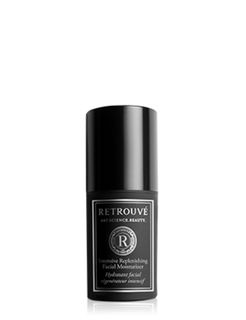
Retrouvé Voyage Intensive Replenishing Moisturizer
Works for
1 of 1 advertised claim delivered
MoisturizingPanthenol, Ceramide ng + 15 moreStrong evidence
“Voyage Intensive Replenishing Moisturizer”
This product can help improve hydration of the skin with the two types of ingredients.
The first type is called “humectants”:
these ingredients help attract water.
When humectants are on the surface of the skin, they “pull in” the moisture from the outside environment, or from
within deeper layers of the skin. The following ingredients in this product do the job:
glycerin.
This product also contains ingredients called “occlusives”. They help reduce the speed with which our skin loses moisture to the outside environment. These ingredients also help soften the upper layer of the skin, so it feels less tight and nicer to the touch. The following ingredients in this product do the job: butyrospermum parkii butter, squalane.
The following ingredients in this product are especially good for supporting the skin barrier and helping with the hydration level: ceramide ng, palmitoyl hexapeptide-12, panthenol
Anti-agingNot advertised by the brand · Tetrahexyldecyl ascorbate, Palmitoyl hexapeptide-12 + 5 moreStrong evidence
This product can help reduce and prevent fine lines and wrinkles, improve skin elasticity and firmness because it contains palmitoyl hexapeptide-12, tetrahexyldecyl ascorbate.
These ingredients in the product can also be helpful, even though there is less evidence for their effectiveness: retinyl palmitate.
Keep in mind that it typically takes at least 6 weeks to notice any results because the changes that are needed to improve fine lines and elasticity happen in the deeper layers of the skin. No topical anti-aging product can “erase” wrinkles or fully reverse signs of aging.
Evens skin toneNot advertised by the brand · Tetrahexyldecyl ascorbate, Retinyl palmitate + 3 moreStrong evidence
This product can help reduce hypepigmentation and even out the skin tone because it contains the following effective ingredients: tetrahexyldecyl ascorbate
The following ingredient (ingredients) in this product might be helpful, but there is no evidence to confirm that it actually can help even out the skin tone: punica granatum extract, retinyl palmitate.
Keep in mind that you would need to apply any topical skincare targetted at hypigmentation consistently for a couple of months to get a result. No topical skincare product can help get rid of hyperpigmentation (including post-acne marks and age spots) instantly.
Anti-oxidationNot advertised by the brand · Tetrahexyldecyl ascorbate, Superoxide dismutase + 9 moreStrong evidence
This product contains antioxidants (superoxide dismutase, tetrahexyldecyl ascorbate, ubiquinone) that can help neutralize free radicals in skin. By doing so, they can lessen the damage the skin gets from the UV light (sun).
The following ingredients - camellia sinensis leaf extract, punica granatum extract also can have an antioxidant effect, but there is less evidence to confirm their effectiveness in skin.
Can it cause trouble?
Irritancy4 strong irritants: Sd alcohol 40-b, Retinyl palmitate + 2 more — patch-test recommendedHigh risk
Comedogenic3 ingredients rated 2 or more on the 0–5 pore-clogging scale3 flagged


User reviews
Be the first — your take helps the next person decide.
Ingredients
Filter by role to see what each ingredient is doing.
C10-30 cholesterol/lanosterol esters~25–31%
Tetrahexyldecyl ascorbate~7.6–9.3%
- Irritation risk
- Medium
Being a lipid soluble form of vitamin C, it is more stable than ascorbic acid, but still degrades quickly and needs to be stabilized in a formulation with another ingredient. It is claimed to penetrate skin better than pure vitamin C and have the the similar benefits, but solid studies of its effectiveness are lacking. Is likely to require a higher concentration in a product than pure vitamin C to be effective. It might be able to help reduce pore clogging.
More about Tetrahexyldecyl ascorbateTocopheryl acetate~5.1–6.2%
- Irritation risk
- Medium
A more stable but less bio-available form of vitamin E compared to Tocopherol. Might help moisturize and protect the skin from free radicals, but mostly used in low concentrations to stabilize other ingredients.
More about Tocopheryl acetateSqualane~4.8–5.8%
- Irritation risk
- Low
An oil naturally present in skin. Works as an emollient to soften the skin and form a protective layer on its surface without a greasy feeling.
More about SqualaneCarthamus tinctorius seed oil~3.7–4.6%
- Irritation risk
- Low
An emollient that helps soften the skin and might help calm down inflammation
More about Carthamus tinctorius seed oilGlycerin~2.9–3.5%
- Irritation risk
- Low
One of the best moisturizing ingredients. Naturally present in skin. It attracts water to the upper layer of the skin working as a humectant
More about GlycerinSd alcohol 40-b~2.3–2.8%
- Irritation risk
- High
Can be drying and contribute to skin irritation. Used in formulars to dissolve other ingredients, create a thinner product consistency or for its antibacterial properties
More about Sd alcohol 40-bButyrospermum parkii butter~2.2–2.6%
- Irritation risk
- Low
- Comedogenicity
- 3/5
A great moisturising ingredient that softens the skin and reduces water loss from its upper layer. It also can be helpful in protecting skin from free radicals
More about Butyrospermum parkii butterPunica granatum extract~1.6–2%
- Irritation risk
- Medium
A plant extract that can help neutralize free radicals in skin and even out the skin tone, but is typically used in products in a concentration that is too low to be effective
More about Punica granatum extractC12-15 alkyl benzoate~1.5–1.9%
- Irritation risk
- Low
Enhances the product texture and makes it more spreadable. Helps reduce water loss from the outer layer of skin. Extands the shelf life by preventing bacteria growth
More about C12-15 alkyl benzoateTribehenin~1.3–1.6%
- Irritation risk
- Low
Used to create a thicker product consistency and soften the upper layer of the skin
More about TribeheninCeramide ng~1.2–1.5%
- Irritation risk
- Low
A type of lipid similar to ceramides naturally present in skin. Helps to soften the upper layer of the skin and supports the skin barrier function to keep it hydrated. Can help to prevent inflammation in skin
More about Ceramide ngPeg-10 phytosterol~1.2–1.4%
- Irritation risk
- Medium
Helps oil and water mix together
More about Peg-10 phytosterolPalmitoyl hexapeptide-12~1.1–1.3%
- Irritation risk
- Low
A type of peptide. Peptides are excellent moisturizers and might be able support collagen production reducing fine lines and wrinkles
More about Palmitoyl hexapeptide-12Ubiquinone~1.1–1.3%
- Irritation risk
- Low
Coenzyme Q10. It helps neutralize free radicals in skin, improves skin hydration and might be helpful agains fine lines and wrinkles. It can be an allergen
More about UbiquinoneCamellia sinensis leaf extract~1.1–1.3%
- Irritation risk
- Low
Can contain potent anti-oxidant compounds (abbreviated ECG, GCG, EGC, and EGCG) that might help protect the skin from free radicals. Can help calm down inflammation and has some anti-bacterial properties. Unfortunately, these antioxidants are unstable and lose their effectiveness very quickly in products. The concentration of the antioxidant compounds in the extract also tends to be low to be effective in topical formulation
More about Camellia sinensis leaf extractLaureth-4~1–1.2%
- Irritation risk
- Medium
- Comedogenicity
- 2/5
Helps water and oil mix together
More about Laureth-4Panthenol~0.95–1.15%
- Irritation risk
- Low
Helps attract water to the upper layer of the skin and can help improve skin barrier function
More about PanthenolNiacinamide~0.9–1.1%
- Irritation risk
- Low
Is proven to be effective in reducing blemishes, evening out skin tone and helping to improve lines and wrinkles. It helps the skin to repair sun damage, calm down inflammation and keep maintain good levels of moisture. The concentration of about 2% is effective for supporting the skin barrier and evening out the skin tone. Concentration of 4-6% is better for helping with acne and balancing the sebum production
More about NiacinamidePlantago lanceolata leaf extract~0.8–1.2%
- Irritation risk
- Medium
A plant extract that might have anti-oxidant properties
More about Plantago lanceolata leaf extractVernonia appendiculata leaf extract~0.75–1.1%
- Irritation risk
- Low
Glyceryl behenate/eicosadioate~0.75–1.15%
Polyglyceryl-10 behenate/eicosadioate~0.65–1%
Retinyl palmitate~0.6–0.9%
- Irritation risk
- High
Three steps removed from the active form of vitamin A - retinoic acid. To have an effect in the skin, it first needs to be converted twice to become the retinoic acid. This means it is less potent than retinol, but could also be less irritating. Once converted to the retinoic acid in the skin, it helps against all signs of aging, improves skin cell turnover and helps fight blemishes and clogged pores. However, in many cosmetic formulations, it is used in a concentration that is too low to have the full effect
More about Retinyl palmitateMalus domestica fruit cell culture extract~0.6–0.9%
- Irritation risk
- Low
Xanthan gum~0.6–0.9%
- Irritation risk
- Low
Used to create a thicker product consistency
More about Xanthan gumLecithin~0.65–1%
- Irritation risk
- Low
Used mostly for creating emulsions - helping oil and water mix together. Helps soften the upper layer of the skin
More about LecithinPhenoxyethanol~0.55–0.85%
- Irritation risk
- Low
A preservative. It helps prevent bacterial growth in cosmetic products
More about PhenoxyethanolWater~0.5–0.8%
Chamomilla recutita oil~0.45–0.7%
- Irritation risk
- Low
Superoxide dismutase~0.3–0.55%
- Irritation risk
- Low
An antioxidant enzyme that is naturally present in skin. It can help support skin barrier function and reduce inflammation in skin. It is used in topical medications for inflammatory skin conditions including atopic dermatitis (eczema) and psoriasis. There are three types of natural Superoxide Dismutase in human skin. The compound used in topical treatments and cosmetics are mimics of typically one of these natural variants
More about Superoxide dismutaseLavandula angustifolia oil~0.25–0.45%
- Irritation risk
- High
An essential oil. Potential allergen and can be irritating. It has some anti-bacterial properties
More about Lavandula angustifolia oilRosmarinus officinalis leaf oil~0.25–0.4%
- Irritation risk
- High
A plant oil with high content of volatile compounds that can irritate the skin. Can be used as a fragrance. Has anti-bacterial properties and might help neutralize free radicals on the surface of the skin
More about Rosmarinus officinalis leaf oilProline~0.25–0.4%
Simmondsia chinensis seed oil~0.3–0.55%
- Irritation risk
- Medium
Softens the upper layer of skin and helps restore the healthy skin barrier. Has shown to help calm down inflammation in skin. It is a stable oil, meaning that it retains its properties even when exposed to air.
More about Simmondsia chinensis seed oilPadina pavonica thallus extract~0.2–0.35%
- Irritation risk
- Low
- Comedogenicity
- 3/5
Might help to soften the upper layer of the skin. Is claimed to have anti-oxidant properties, but evidence in missing
More about Padina pavonica thallus extractIngredient list view
C10-30 cholesterol/lanosterol esters, Tetrahexyldecyl ascorbate, Tocopheryl acetate, Squalane, Carthamus tinctorius seed oil, Glycerin, Sd alcohol 40-b, Butyrospermum parkii butter, Punica granatum extract, C12-15 alkyl benzoate, Tribehenin, Ceramide ng, Peg-10 phytosterol, Palmitoyl hexapeptide-12, Ubiquinone, Camellia sinensis leaf extract, Laureth-4, Panthenol, Niacinamide, Plantago lanceolata leaf extract, Vernonia appendiculata leaf extract, Glyceryl behenate/eicosadioate, Polyglyceryl-10 behenate/eicosadioate, Retinyl palmitate, Malus domestica fruit cell culture extract, Xanthan gum, Lecithin, Phenoxyethanol, Water, Unknown, Chamomilla recutita oil, Superoxide dismutase, Lavandula angustifolia oil, Rosmarinus officinalis leaf oil, Proline, Simmondsia chinensis seed oil, Padina pavonica thallus extract
Compare prices
Retailers ranked by price — lowest first.

Affiliate links · prices updated regularly
Worth comparing, line by line.
Match % combines shared ingredients, the first five ingredients, shared actives and hero ingredients, irritancy (lower counts in the alternative's favour), texture and body area. Only products in the same routine step are compared.
| RetrouvéVoyage Intensive Replenishing MoisturizerYOUR PRODUCT | Shani Darden Skin CareHydration Peptide Cream | BloomeffectsRoyal Tulip Vitamin C Facial Oil | BonjourGreen Tea Water Bomb Cream | |
|---|---|---|---|---|
| Match | — | 74% | 70% | 67% |
| Price | $380.00 | $60.00−$320.00 | $85.00−$295.00 | $15.50−$364.50 |
| Shared key ingredients | — | 6 of 15 | 6 of 15 | 5 of 15 |
| Key difference | — | Lactic Acid | Bakuchiol | Sh-Octapeptide-4 |
| Irritancy | High | Low | Medium | Low |
| Drying alcohol | Contains drying alcohol | — | — | — |
| View product | Shop | Shop | Shop |


Product summary
Judging from the ingredient list, "Retrouvé - Voyage Intensive Replenishing Moisturizer" works well for improving skin hydration To work well, any moisturizer needs to include a combination of water-binding and emollient ingredients. Retrouvé - Voyage Intensive Replenishing Moisturizer ticks this box. Panthenol and glycerin in this product (humectants) attract water molecules to the upper layer of the skin (the water comes from the outside air or from the deeper layers of the skin if the air is dry). Emollients in this formulation (ceramide ng, carthamus tinctorius seed oil, butyrospermum parkii butter, squalane and c12-15 alkyl benzoate) help to reduce the moisture loss from the skin. They also soften the skin surface and relieve the feeling of dryness and tightness.
Ingredient callouts
- this moisturizer includes a form of retinoids (vitamin A) - retinyl palmitate 0.60% - 0.90%, but this type of vitamin A is not very effective. It could in theory help with fine lines and wrinkles, but the effect is most likely minimal.
- Another benefit is that this moisturizer contain ceramides (ceramide ng 1.20% - 1.50%). Ceramides are an important part of our natural skin barrier. The ceramides used in skincare are synthetic or come from plants. They help soften the skin and can help "fill the gaps" in the skin barrier, keeping the skin hydrated and resilient for longer.
- This moistruizer also contains peptides (palmitoyl hexapeptide-12 1.10% - 1.30%). Peptides is a very big group of ingredients. They all consist of a different combination of amino-acids. Our skin produces peptides naturally. Some of them work as natural anti-biotics, promote wound-healing and production of collagen. The scientists are still studying how effective the topical application of peptides is, but it is very likely that peptides in skincare are helpful. They might be able to support skin barrier restoration and even have an anti-aging benefit. At the very least, they certainly help attract water to the skin and support the hydration in this way.
- This formulation also includes panthenol (pro-vitamin B5) at about 0.95% - 1.15% concentration. In this concentration, panthenol works effectively to improve the skin barrier and reduce inflammation.
Irritation risk
This moisturizer contains some common irritants, including those without a benefit for the skin. We assess the overall irritancy of this moisturizer to be high. For a detailed overview of all potential irritants: click here
You can see the detailed formula review with the breakdown of all actives in the product and the full ingredient list with estimated concentrations in the tables below.
Price
The product retails for 380.00$ in the United States.
For a detailed price comparison: click here.
Sources cited in this review
Every concentration estimate and effectiveness label is anchored to one of these 26 studies and safety reviews.
- 1
- 2
- 3
- 4
- 5
- 6

Affiliate links · As an Amazon Associate, WIMJ earns from qualifying purchases.