Works for
1 of 1 advertised claim delivered
Moisturizing11 ingredients credited for this claimGood support
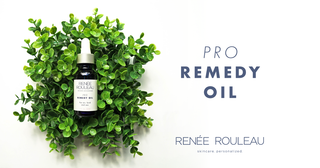
“Pro Remedy Oil by Renée Rouleau contains a blend of 12 carefully selected lipid-rich skin oils delivering exceptional barrier repair benefits to dry, parched skin in need of moisture.”
This product can help soften the skin and reduce its moisture loss with emollients and occlusives: helianthus annuus seed oil, carthamus tinctorius seed oil.
Keep in mind that this product does not contain effective ingredients to attract water to the upper layer of the skin. This is why an additional product with humectants like glycerin or hyaluronic acid can be helpful (apply it before this product for the best results).
Anti-oxidationNot advertised by the brand · 9 ingredients credited for this claimStrong support
This product contains antioxidants (dimethylmethoxy chromanol) that can help neutralize free radicals in skin. By doing so, they can lessen the damage the skin gets from the UV light (sun).
The following ingredients - vaccinium macrocarpon seed oil also can have an antioxidant effect, but there is less evidence to confirm their effectiveness in skin.
Anti-agingNot advertised by the brand · 3 ingredients credited for this claimModerate support
This product contains dimethylmethoxy chromanol. This ingredient help neutralize free radicals in skin. By doing so, they might be able to prevent early signs of aging (like fine lines and wrinkles), at least to some extent. These ingredients will not be able to "reverse" signs of aging.
Can it cause trouble?
Irritancy1 strong irritant: Citrus paradisi peel oilMedium risk
ComedogenicClean of flagged comedogenic ingredientsNone flagged
User reviews
Be the first — your take helps the next person decide.
Ingredients
Filter by role to see what each ingredient is doing.
Prunus amygdalus dulcis oil~25–38%
- Irritation risk
- Low
An emollient that softens the skin
More about Prunus amygdalus dulcis oilHelianthus annuus seed oil~6.8–10.1%
- Irritation risk
- Low
A great emollient due to its high linoleic acid content. One of the most effective plant oils in helping skin hydration and repairing skin barrier function
More about Helianthus annuus seed oilIsoamyl laurate~4.7–7%
- Irritation risk
- Medium
Helps stabilize emulsions and create a nice product texture
More about Isoamyl laurateCarthamus tinctorius seed oil~3.6–5.4%
- Irritation risk
- Low
An emollient that helps soften the skin and might help calm down inflammation
More about Carthamus tinctorius seed oilOenothera biennis oil~2.7–4%
- Irritation risk
- Medium
Helps soften the upper layer of the skin and can support skin barrier function
More about Oenothera biennis oilPassiflora edulis seed oil~2.1–3.2%
- Irritation risk
- High
A good emollient helping to soften the skin. Might have some anti-oxidant properties. Adds a fragrance to the product
More about Passiflora edulis seed oilCitrus paradisi peel oil~1.3–2%
Tetrahexyldecyl ascorbate~1.1–1.7%
- Irritation risk
- Medium
Being a lipid soluble form of vitamin C, it is more stable than ascorbic acid, but still degrades quickly and needs to be stabilized in a formulation with another ingredient. It is claimed to penetrate skin better than pure vitamin C and have the the similar benefits, but solid studies of its effectiveness are lacking. Is likely to require a higher concentration in a product than pure vitamin C to be effective. It might be able to help reduce pore clogging.
More about Tetrahexyldecyl ascorbateNigella sativa seed oil~1.1–1.7%
- Irritation risk
- Medium
Helps soften the upper layer of the skin and support the skin's barrier due to the high content of linoleic acid
More about Nigella sativa seed oilVaccinium macrocarpon seed oil~0.9–1.3%
- Irritation risk
- Medium
A plant oil that can help neutralize free radicals, soften the upper layer of the skin, and support skin's barrier function
More about Vaccinium macrocarpon seed oilPunica granatum seed oil~0.55–1.3%
- Irritation risk
- Low
Helps soften the upper layer of the skin
More about Punica granatum seed oilDimethylmethoxy chromanol~0.35–0.8%
- Irritation risk
- Low
Can help neutralize free radicals in skin
More about Dimethylmethoxy chromanolRosa canina fruit oil~0.35–0.85%
- Irritation risk
- Medium
A great emollient. Contains vitamin E (tocopherol) which may give it some anti-oxidant properties. Can contain volatile compounds and can be irritating
More about Rosa canina fruit oilTocopherol~0.15–0.55%
- Irritation risk
- Low
Pure form of vitamin E. Can help moisturise and protect the skin from free radicals. Often used to help stabilise other ingredients or the formula itself
More about TocopherolGuaiazulene~0.1–0.35%
- Irritation risk
- Low
A blue-colored ingredient that is traditionally used as a colorant. It has anti-inflammatory properties. For example, it is successfully used to treat diaper rash for new borns. It can help support the skin barrier by reducing inflammation
More about GuaiazuleneTocopheryl acetate~0.05–0.3%
- Irritation risk
- Medium
A more stable but less bio-available form of vitamin E compared to Tocopherol. Might help moisturize and protect the skin from free radicals, but mostly used in low concentrations to stabilize other ingredients.
More about Tocopheryl acetateIngredient list view
Prunus amygdalus dulcis oil, Helianthus annuus seed oil, Isoamyl laurate, Carthamus tinctorius seed oil, Oenothera biennis oil, Passiflora edulis seed oil, Citrus paradisi peel oil, Tetrahexyldecyl ascorbate, Nigella sativa seed oil, Unknown, Vaccinium macrocarpon seed oil, Punica granatum seed oil, Dimethylmethoxy chromanol, Rosa canina fruit oil, Tocopherol, Guaiazulene, Tocopheryl acetate
Compare prices
Retailers ranked by price — lowest first.
Sources cited in this review
Every concentration estimate and effectiveness label is anchored to one of these 14 studies and safety reviews.
- 1
- 2
- 3
- 4Effect of topically applied lipids on surfactant-irritated skinonlinelibrary.wiley.com
- 5
- 6

Affiliate links · As an Amazon Associate, WIMJ earns from qualifying purchases.