Works for
1 of 1 advertised claim delivered
MoisturizingCeramide as, Ceramide np + 15 moreStrong evidence
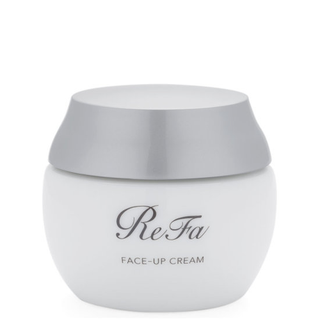
“FACE-UP CREAM”
This product can help improve hydration of the skin with the two types of ingredients.
The first type is called “humectants”:
these ingredients help attract water.
When humectants are on the surface of the skin, they “pull in” the moisture from the outside environment, or from
within deeper layers of the skin. The following ingredients in this product do the job:
alcaligenes polysaccharides, glycerin.
This product also contains ingredients called “occlusives”. They help reduce the speed with which our skin loses moisture to the outside environment. These ingredients also help soften the upper layer of the skin, so it feels less tight and nicer to the touch. The following ingredients in this product do the job: simmondsia chinensis seed oil, squalane.
The following ingredients in this product are especially good for supporting the skin barrier and helping with the hydration level: acetyl decapeptide-3, ceramide as, ceramide np
Anti-agingNot advertised by the brand · Acetyl decapeptide-3, Retinyl palmitate + 3 moreModerate evidence
This product contains acetyl decapeptide-3, retinyl palmitate. These ingredients might be able to help reduce and prevent fine lines and wrinkles, improve skin elasticity and firmness, but there is not enough evidence that it actually works.
Evens skin toneNot advertised by the brand · Retinyl palmitate, Ascorbyl tetraisopalmitateModerate evidence
The following ingredient (ingredients) in this product might be helpful, but there is no evidence to confirm that it actually works: retinyl palmitate.
Can it cause trouble?
Irritancy1 strong irritant: Retinyl palmitateMedium risk
Comedogenic1 ingredient rated 2 or more on the 0–5 pore-clogging scale1 flagged
User reviews
Be the first — your take helps the next person decide.
Ingredients
Filter by role to see what each ingredient is doing.
Water~45–55%
Glycerin~4.5–5.5%
- Irritation risk
- Low
One of the best moisturizing ingredients. Naturally present in skin. It attracts water to the upper layer of the skin working as a humectant
More about GlycerinIsotridecyl isononanoate~4.1–5%
- Irritation risk
- Low
Octyldodecanol~3–3.6%
- Irritation risk
- Low
An emollient that helps to soften the skin and create a pleasant product texture and stabilize the formulation
More about OctyldodecanolPolyacrylate crosspolymer-6~2.2–2.7%
- Irritation risk
- Low
Squalane~1.9–2.3%
- Irritation risk
- Low
An oil naturally present in skin. Works as an emollient to soften the skin and form a protective layer on its surface without a greasy feeling.
More about SqualaneMacadamia ternifolia seed oil~1.6–1.9%
- Irritation risk
- Medium
Plant oil from nuts that helps soften the upper layer of the skin. Contains a high concentration of oleic acid that can weaken skin's barrier function and increase water-loss while enhancing penetration of other ingredients
More about Macadamia ternifolia seed oilSimmondsia chinensis seed oil~1.4–1.8%
- Irritation risk
- Medium
Softens the upper layer of skin and helps restore the healthy skin barrier. Has shown to help calm down inflammation in skin. It is a stable oil, meaning that it retains its properties even when exposed to air.
More about Simmondsia chinensis seed oilZea mays oil~1–1.3%
- Irritation risk
- Low
- Comedogenicity
- 3/5
A good moisturizing plant oil. Due to the high linoleic acid content, it helps soften the upper layer of the skin, reduce water loss and support skin barrier function
More about Zea mays oilRetinyl palmitate~0.75–1.15%
- Irritation risk
- High
Three steps removed from the active form of vitamin A - retinoic acid. To have an effect in the skin, it first needs to be converted twice to become the retinoic acid. This means it is less potent than retinol, but could also be less irritating. Once converted to the retinoic acid in the skin, it helps against all signs of aging, improves skin cell turnover and helps fight blemishes and clogged pores. However, in many cosmetic formulations, it is used in a concentration that is too low to have the full effect
More about Retinyl palmitateAscorbyl tetraisopalmitate~0.65–1%
- Irritation risk
- Medium
A vitamin C derivative. Studies show that is might be effective in reducing hyperpigmentation, but there are no studies confirming that it is effectively converted into the bioavailable form of Vitamin C in skin. It is not clear how this derivative compares in effectiveness to the topical application of bioavailable form of vitamin C (L-ascorbic acid)
More about Ascorbyl tetraisopalmitateTocopherol~0.55–0.8%
- Irritation risk
- Low
Pure form of vitamin E. Can help moisturise and protect the skin from free radicals. Often used to help stabilise other ingredients or the formula itself
More about TocopherolCeramide as~0.45–0.7%
- Irritation risk
- Low
A type of lipid similar to ceramides naturally present in skin. Helps to soften the upper layer of the skin and supports the skin barrier function to keep it hydrated. Can help to prevent inflammation in skin
More about Ceramide asCeramide np~0.45–0.7%
- Irritation risk
- Low
A type of lipid similar to ceramides naturally present in skin. Helps to soften the upper layer of the skin and supports the skin barrier function to keep it hydrated. Can help to prevent inflammation in skin
More about Ceramide npAlcaligenes polysaccharides~0.4–0.6%
- Irritation risk
- Low
Help attract water to the upper layer of the skin
More about Alcaligenes polysaccharidesCrocus chrysanthus bulb extract~0.35–0.6%
- Irritation risk
- Low
Alaria esculenta extract~0.35–0.6%
- Irritation risk
- Low
Works as a humectant helping to attract water to the upper layer of the skin and might be effective as an anti-oxidant.
More about Alaria esculenta extractAcetyl decapeptide-3~0.3–0.55%
- Irritation risk
- Low
A type of peptide. Peptides are excellent moisturizers and might be able support collagen production reducing fine lines and wrinkles
More about Acetyl decapeptide-3Methyl carboxymethylphenyl aminocarboxypropylphosphonate~0.25–0.5%
- Irritation risk
- Low
Cholesteryl/octyldodecyl lauroyl glutamate~0.25–0.45%
- Irritation risk
- Low
Sodium dilauramidoglutamide lysine~0.25–0.45%
- Irritation risk
- Low
Butylene glycol~0.25–0.45%
- Irritation risk
- Low
Used to create a nice product texture and help delivery of other ingredients. Might be somewhat helpful in attracting water to the upper layer of the skin
More about Butylene glycolAcacia senegal gum~0.25–0.45%
- Irritation risk
- Medium
Helps mask the small of other ingredients and improve the product texture
More about Acacia senegal gumGlyceryl glucoside~0.2–0.4%
- Irritation risk
- Low
Can help to restore skin barrier function and soften its upper layer
More about Glyceryl glucosideOctyldodecyl xyloside~0.25–0.45%
Peg-30 dipolyhydroxystearate~0.25–0.45%
- Irritation risk
- Medium
Helps oil and water mix together
More about Peg-30 dipolyhydroxystearateGlyceryl behenate~0.25–0.45%
- Irritation risk
- Medium
Used to create a thicker product consistency and help soften the upper layer of the skin
More about Glyceryl behenatePolyglyceryl-6 octastearate~0.25–0.45%
Dipentaerythrityl tetrahydroxystearate/tetraisostearate~0.2–0.35%
- Irritation risk
- Low
Caprylic/capric triglyceride~0.25–0.45%
- Irritation risk
- Medium
A good mix of fatty acids that forms a protective layer on the skin. Improves the shelf life of products. Derived from coconut and glycerin
More about Caprylic/capric triglyceridePolyglyceryl-2 isostearate~0.2–0.4%
Polyglyceryl-10 isostearate~0.2–0.35%
- Irritation risk
- Low
Polyglyceryl-10 stearate~0.2–0.35%
- Irritation risk
- Medium
Helps water and oil mix together and softens the upper layer of the skin
More about Polyglyceryl-10 stearateSilver oxide~0.15–0.25%
- Irritation risk
- Low
Phytic acid~0.1–0.25%
- Irritation risk
- Medium
An alpha-hydroxy acid (AHA), but is mostly used to stabilize product formulations in cosmetics
More about Phytic acidPentasodium pentetate~0.1–0.2%
Sodium chloride~0.1–0.15%
- Irritation risk
- Low
Used to stabilize mixtures of oil and water, and create thicker, gel-like product textures
More about Sodium chlorideT-butyl alcohol~0.05–0.1%
- Irritation risk
- Medium
Used to dissolve other ingredients and to improve smell of products. It could be irritating
More about T-butyl alcoholPhenoxyethanol~0.1–0.15%
- Irritation risk
- Low
A preservative. It helps prevent bacterial growth in cosmetic products
More about PhenoxyethanolIngredient list view
Water, Glycerin, Isotridecyl isononanoate, Octyldodecanol, Polyacrylate crosspolymer-6, Squalane, Macadamia ternifolia seed oil, Simmondsia chinensis seed oil, Zea mays oil, Retinyl palmitate, Ascorbyl tetraisopalmitate, Tocopherol, Ceramide as, Ceramide np, Alcaligenes polysaccharides, Crocus chrysanthus bulb extract, Alaria esculenta extract, Acetyl decapeptide-3, Methyl carboxymethylphenyl aminocarboxypropylphosphonate, Cholesteryl/octyldodecyl lauroyl glutamate, Sodium dilauramidoglutamide lysine, Butylene glycol, Acacia senegal gum, Glyceryl glucoside, Octyldodecyl xyloside, Peg-30 dipolyhydroxystearate, Glyceryl behenate, Polyglyceryl-6 octastearate, Dipentaerythrityl tetrahydroxystearate/tetraisostearate, Caprylic/capric triglyceride, Polyglyceryl-2 isostearate, Polyglyceryl-10 isostearate, Polyglyceryl-10 stearate, Silver oxide, Phytic acid, Pentasodium pentetate, Sodium chloride, T-butyl alcohol, Phenoxyethanol
Compare prices
Retailers ranked by price — lowest first.

Product summary
"ReFa - FACE-UP CREAM" has a good moisturizing formula. The formulation is based on a combination of good humectants and emollients. Both are needed to increase the skin hydration level. Alcaligenes polysaccharides, glycerin, glyceryl glucoside and butylene glycol in this product (humectants) attract water molecules to the upper layer of the skin (the water comes from the outside air or from the deeper layers of the skin if the air is dry). Ceramide np, alcaligenes polysaccharides, simmondsia chinensis seed oil, squalane and macadamia ternifolia seed oil in this product help decrease the water evoporation from the skin, so that it stays hydrated for longer. These ingredients also soften the skin and take away the feeling of tightness and dryness.
Ingredient callouts
- this moisturizer includes a form of retinoids (vitamin A) - retinyl palmitate 0.75% - 1.15%, but this type of vitamin A is not very effective. It could in theory help with fine lines and wrinkles, but the effect is most likely minimal.
- As a plus, this moisturizer also contains ceramides (ceramide np 0.45% - 0.70% and ceramide as 0.45% - 0.70%). Ceramides are a type of lipids that our skin produces itself. They are a building block of the skin's barrier. Ceramides used in skincare are synthetic or extracted from plants. They work well for softening the skin surface and "patch holes" in the skin's barrier.
- We like that this moisturizer contains peptides (acetyl decapeptide-3 0.30% - 0.55%). There are many different kind of peptides and they are naturally present in our skin. They all are a combination of amino-acids. Some of them work as natural anti-biotics, promote wound-healing and production of collagen. The science is still not settled on how effective peptides in skincare are, but it is very likely that they have a benefit. Peptides might help restore the skin barrier and fight the signs of aging. At the very least, peptides work as humectants: they attract water to the upper layer of the skin and improve its hydration.
Irritation risk
There are actives in this product that can be irritating. We assess the overall irritancy of this moisturizer to be medium. For a detailed overview of all potential irritants: click here
You can see the detailed formula review with the breakdown of all actives in the product and the full ingredient list with estimated concentrations in the tables below.
Price
The product retails for 50.00$ in the United States and for 60.00CA$ in Canada.
For a detailed price comparison: click here.
Sources cited in this review
Every concentration estimate and effectiveness label is anchored to one of these 17 studies and safety reviews.
- 1
- 2
- 3Content of fatty acids in corn (Zea mays L.) oil from Ecuadorresearchgate.net
- 4
- 5
- 6

Affiliate links · As an Amazon Associate, WIMJ earns from qualifying purchases.