Works for:
based on ingredients and %- Cleansing
Can it cause trouble?
- Irritation risk: high
- Comedogenic risk ingredients: 2
Key actives


Works for
Cleansing
What does the product description say?
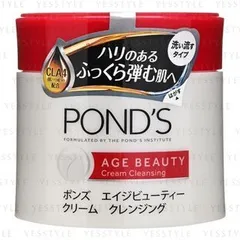
Age Beauty Cream Cleansing
Source: From product name
This product works by removing dirt and oil from the surface of the skin.
It contains the following cleansing agents that tend to be harsh on the skin: sodium laureth sulfate.
The following cleansing agents are typically mild, but still can cause an irritation or allergy for some people cocamidopropyl betaine.
Keep in mind that cleansing can disrupt the skin barrier, and most people do not need to cleanse their skin more than once per day.
An emollient that helps soften the skin
Helps create a thicker or gel-like product texture. It is not a surfactant but can be used in gentle cleansing formulations
Helps water and oil mix together
Helps water and oil mix together. Used as a cleansing ingredient. Could be an allergen
Helps water and oil mix together
An emollient that is naturally present in skin and helps soften it
Helps water and oil mix together
Helps oil and water mix together
Works as a foaming cleansing agent
Helps oil and water mix together and works as an emollient
How honest is this product?
| Promise | Can it deliver? |
|---|---|
| Cleansing |
Total Promises Fulfilled score: 75/100.
We receive a small commission for purchases made through these links at no cost for you. Thank you for your support! Learn more
Potential irritants
Comedogenic ingredients
User reviews (0)
Averages from community submissions.
No reviews yet for this product.
Be the first to share your experience!
Tried this product?
Help capture what the ingredient list can't—texture, finish, pilling, scent, and more. Answer what you can, skip the rest.
Takes ~30 seconds.
Reviews are shown in aggregate. No personal details.
| Product | Similarity | Price | Irritancy |
|---|---|---|---|
 Pond's Japan Age Beauty Cream Cleansing | Current | $32.83 | |
Olay Regenerist Collagen Peptide 24 Cream Cleanser | 80% | $10.99 | |
Paula's choice Softening Cream Cleanser | 80% | $19.00 | |
 Revken Detox Hair Cleansing Cream Clarifying Shampoo | 79% | $31.00 | |
 Neutrogena Oil-Free Acne Wash Cream Cleanser | 79% | $9.49 | |
 Clean & Clear Cream Facial Cleanser Oil-Free | 79% | $7.29 |
Key Actives
An effective moisturizing and skin barrier repair ingredient. Helps calm down inflammation and has some anti-oxidant properties
Used for skin exfoliation. It has an anti-inflammatory and anti-bacterial effect, helps to unclog pores, prevent blemishes and speed up healing of the existing ones. Sometimes referred to as a BHA (beta-hydroxy acid)
Three steps removed from the active form of vitamin A - retinoic acid. To have an effect in the skin, it first needs to be converted twice to become the retinoic acid. This means it is less potent than retinol, but could also be less irritating. Once converted to the retinoic acid in the skin, it helps against all signs of aging, improves skin cell turnover and helps fight blemishes and clogged pores. However, in many cosmetic formulations, it is used in a concentration that is too low to have the full effect
A silicone that helps improve the product texture and spreadability. Can absorb oil creating a short-term mattifying effect on the skin
Helps oil and water mix together and works as an emollient
An emollient that is naturally present in skin and helps soften it
Helps water and oil mix together
An emollient. Found to be as effective as a moisturizer for dry skin as mineral oil. Could be comedogenic
One of the best moisturizing ingredients. Naturally present in skin. It attracts water to the upper layer of the skin working as a humectant
An emollient that helps soften the skin
A great emollient due to its high linoleic acid content. One of the most effective plant oils in helping skin hydration and repairing skin barrier function
Works as a foaming cleansing agent
Helps soften the upper layer of the skin
Helps water and oil mix together. Used as a cleansing ingredient. Could be an allergen
Helps create a thicker or gel-like product texture. It is not a surfactant but can be used in gentle cleansing formulations
Potential irritants
Three steps removed from the active form of vitamin A - retinoic acid. To have an effect in the skin, it first needs to be converted twice to become the retinoic acid. This means it is less potent than retinol, but could also be less irritating. Once converted to the retinoic acid in the skin, it helps against all signs of aging, improves skin cell turnover and helps fight blemishes and clogged pores. However, in many cosmetic formulations, it is used in a concentration that is too low to have the full effect
Works as a foaming cleansing agent
Helps water and oil mix together. Used as a cleansing ingredient. Could be an allergen
Used for skin exfoliation. It has an anti-inflammatory and anti-bacterial effect, helps to unclog pores, prevent blemishes and speed up healing of the existing ones. Sometimes referred to as a BHA (beta-hydroxy acid)
A preservative. Is a frequent allergen in cosmetics
An aromatic blend of unspecified and possibly irritating ingredients
Comedogenic ingredients
An emollient. Found to be as effective as a moisturizer for dry skin as mineral oil. Could be comedogenic
Works as a foaming cleansing agent
All ingredients
An emollient. Found to be as effective as a moisturizer for dry skin as mineral oil. Could be comedogenic
Helps to dissolve other ingredients in a formulation. Slows down the rate of product drying
One of the best moisturizing ingredients. Naturally present in skin. It attracts water to the upper layer of the skin working as a humectant
An effective moisturizing and skin barrier repair ingredient. Helps calm down inflammation and has some anti-oxidant properties
A silicone that helps improve the product texture and spreadability. Can absorb oil creating a short-term mattifying effect on the skin
Three steps removed from the active form of vitamin A - retinoic acid. To have an effect in the skin, it first needs to be converted twice to become the retinoic acid. This means it is less potent than retinol, but could also be less irritating. Once converted to the retinoic acid in the skin, it helps against all signs of aging, improves skin cell turnover and helps fight blemishes and clogged pores. However, in many cosmetic formulations, it is used in a concentration that is too low to have the full effect
A great emollient due to its high linoleic acid content. One of the most effective plant oils in helping skin hydration and repairing skin barrier function
Helps form a film on the surface of the skin and disperse other ingredients (like colorants) in cosmetics. Lac is a resinous substance secreted by parasite insects living on trees
Works as a foaming cleansing agent
An emollient that is naturally present in skin and helps soften it
Helps water and oil mix together. Used as a cleansing ingredient. Could be an allergen
Helps create a thicker or gel-like product texture. It is not a surfactant but can be used in gentle cleansing formulations
Used to stabilize mixtures of oil and water, and create thicker, gel-like product textures
Used for skin exfoliation. It has an anti-inflammatory and anti-bacterial effect, helps to unclog pores, prevent blemishes and speed up healing of the existing ones. Sometimes referred to as a BHA (beta-hydroxy acid)
A preservative. Is a frequent allergen in cosmetics
An aromatic blend of unspecified and possibly irritating ingredients
Ingredient list view
Water, Peg-20 glyceryl triisostearate, Peg-7, Unknown, Cocos nucifera oil, Unknown, Peg-8, Isopentyldiol, Dipropylene glycol, Polysorbate 20, Glycol distearate, Glycerin, Avena sativa kernel extract, Ceteth-20, Isostearyl alcohol, Cyclopentasiloxane, Isomerized linoleic acid, Acetamide mea, Retinyl palmitate, Ammonium lactate, Stearic acid, Stearyl alcohol, Helianthus annuus seed oil, Lac, Sodium laureth sulfate, Triethylhexanoin, Palmitic acid, Cocamidopropyl betaine, Carbomer, Sodium chloride, Potassium hydroxide, Salicylic acid, Bht, Disodium edta, Methylparaben, Methylisothiazolinone, Methylchloroisothiazolinone, Parfum
- Safety Evaluation of Polyethylene Glycol (PEG) Compounds for Cosmetic Use
- Glycerol and the skin: holistic approach to its origin and functions
- Effect of Olive and Sunflower Seed Oil on the Adult Skin Barrier: Implications for Neonatal Skin Care
- Topically Applied Sunflower Seed Oil Prevents Invasive Bacterial Infections in Preterm Infants in Egypt
- Effect of topically applied lipids on surfactant-irritated skin
- Impact of topical oils on the skin barrier: possible implications for neonatal health in developing countries
- Surfactants and experimental irritant contact dermatitis
- Amended Safety Assessment of Triglycerides as Used in Cosmetics
- Salicylic acid as a peeling agent: a comprehensive review
- Beta Hydroxy Acids
- A review of toxicity from topical salicylic acid preparations
- Glycolic Acid Peels Versus Salicylic–Mandelic Acid Peels in Active Acne Vulgaris and Post‐Acne Scarring and Hyperpigmentation: A Comparative Study
- Methylisothiazolinone contact allergy: a review