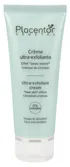
Placentor Végétal Ultra-Exfoliant Cream
Works for
MoisturizingPanthenol, Caprylic/capric triglyceride + 12 moreWorks well
“Its formula is enriched with urea and panthenol, dermatological reference ingredients known for their moisturizing and restorative properties.”
This product can help improve hydration of the skin with the two types of ingredients.
The first type is called “humectants”:
these ingredients help attract water.
When humectants are on the surface of the skin, they “pull in” the moisture from the outside environment, or from
within deeper layers of the skin. The following ingredients in this product do the job:
glycerin, hydroxyethyl urea.
This product also contains ingredients called “occlusives”. They help reduce the speed with which our skin loses moisture to the outside environment. These ingredients also help soften the upper layer of the skin, so it feels less tight and nicer to the touch. The following ingredients in this product do the job: caprylic/capric triglyceride, helianthus annuus seed oil.
The following ingredients in this product are especially good for supporting the skin barrier and helping with the hydration level: panthenol
ExfoliationLactic acid ~0.45–0.65%, below the ~2% it needsUnder-dosed
“Placentor Végétal Ultra-Exfoliant Cream 75g is a smoothing cream that ensures an intense exfoliation of face and décolleté epidermis.”
This product does not contain effective exfoliating ingredients. It might be able to deliver physical exfoliation, that is scrub off some of the dead cells on the surface of the skin. We do not recommend physical exfoliation, because it is not uniform (some bits of skin can get exfoliated too much while others not at all). It can also traumatize the skin and aggrevate acne and other skin conditions.
Can it cause trouble?
Irritancy2 strong irritants: Parfum, Sodium anisateMedium risk
ComedogenicClean of flagged comedogenic ingredientsNone flagged
User reviews
Be the first — your take helps the next person decide.
Ingredients
Filter by role to see what each ingredient is doing.
Water~45–55%
Alumina~7–8.6%
- Irritation risk
- Low
The same compound that is used safely in dental implants and bone cements. In cosmetics, it is used to improve the consistency of products
More about AluminaCaprylic/capric triglyceride~4.5–5.5%
- Irritation risk
- Medium
A good mix of fatty acids that forms a protective layer on the skin. Improves the shelf life of products. Derived from coconut and glycerin
More about Caprylic/capric triglycerideGlycerin~3.1–3.8%
- Irritation risk
- Low
One of the best moisturizing ingredients. Naturally present in skin. It attracts water to the upper layer of the skin working as a humectant
More about GlycerinIsocetyl stearate~2.4–2.9%
- Irritation risk
- Low
An emollient that helps soften the skin
More about Isocetyl stearatePeg-100 stearate~2–2.5%
- Irritation risk
- Low
Helps oil and water mix togehter and creates a nice product texture
More about Peg-100 stearateGlyceryl stearate~1.7–2.1%
- Irritation risk
- Low
An emollient that softens the skin and forms a protective layer on its surface. Helps water and oil mix together
More about Glyceryl stearateHydroxyethyl urea~1.4–1.7%
- Irritation risk
- Low
A synthetic humectant made from urea. It pulls water into the upper layer of the skin about as well as glycerin, but without glycerin's stickiness. Unlike urea, it has not been shown to exfoliate. Lab and animal tests suggest a low risk of irritation at the levels used in products.
More about Hydroxyethyl ureaPanthenol~1.2–1.4%
- Irritation risk
- Low
Helps attract water to the upper layer of the skin and can help improve skin barrier function
More about PanthenolCetyl alcohol~1–1.3%
- Irritation risk
- Low
A non-drying alcohol that works to soften the skin and stabilize product formulations helping oil and water mix together
More about Cetyl alcoholGlyceryl caprylate~0.7–1.05%
- Irritation risk
- Low
An emollient that can also help water and oil mix together, as well as prevent bacteria growth in products
More about Glyceryl caprylateAllantoin~0.4–0.6%
- Irritation risk
- Low
Helps calm down inflammation in skin and can help reduce itching. Helps to repair the skin barrier and keep skin hydrated
More about AllantoinAvena sativa kernel extract~0.5–0.75%
- Irritation risk
- Low
An effective moisturizing and skin barrier repair ingredient. Helps calm down inflammation and has some anti-oxidant properties
More about Avena sativa kernel extractLactic acid~0.45–0.65%
- Irritation risk
- Medium
An exfoliating and moisturizing alpha-hydroxy acid (AHA). Typically causes less irritation than other AHAs, for example, glycolic acid. At high concentrations (about 15%), lactic acid can help reduce lines and wrinkles. Recent studies show that lactic acid can support the "good" bacteria living on skin's surface (healthy skin microbiome)
More about Lactic acidHydrolyzed soy protein~0.4–0.6%
- Irritation risk
- Low
Helps attract water to the upper layer of the skin. Might have some anti-aging, anti-oxidant, and skin lightening properties, but solid evidence is missing
More about Hydrolyzed soy proteinFagus sylvatica bud extract~0.35–0.65%
- Irritation risk
- Low
Tocopherol~0.35–0.65%
- Irritation risk
- Low
Pure form of vitamin E. Can help moisturise and protect the skin from free radicals. Often used to help stabilise other ingredients or the formula itself
More about TocopherolHelianthus annuus seed oil~0.35–0.65%
- Irritation risk
- Low
A great emollient due to its high linoleic acid content. One of the most effective plant oils in helping skin hydration and repairing skin barrier function
More about Helianthus annuus seed oilAmmonium acryloyldimethyltaurate/vp copolymer~0.3–0.55%
- Irritation risk
- Low
Increases thickness of a product. Texture enhancer for oil-in-water emulsions
More about Ammonium acryloyldimethyltaurate/vp copolymerXanthan gum~0.3–0.5%
- Irritation risk
- Low
Used to create a thicker product consistency
More about Xanthan gumParfum~0.25–0.45%
- Irritation risk
- High
An aromatic blend of unspecified and possibly irritating ingredients
More about ParfumSodium levulinate~0.25–0.45%
Sodium anisate~0.25–0.4%
Sodium benzoate~0.2–0.4%
Potassium sorbate~0.2–0.4%
Phenoxyethanol~0.2–0.35%
- Irritation risk
- Low
A preservative. It helps prevent bacterial growth in cosmetic products
More about PhenoxyethanolBenzoic acid~0.15–0.3%
Sorbic acid~0.15–0.25%
Citric acid~0.15–0.25%
- Irritation risk
- Medium
Can work as an exfoliant but is typically used to adjust the product pH
More about Citric acidPhytic acid~0.1–0.2%
- Irritation risk
- Medium
An alpha-hydroxy acid (AHA), but is mostly used to stabilize product formulations in cosmetics
More about Phytic acidAmmonium lactate~0.1–0.15%
- Irritation risk
- Low
Ingredient list view
Water, Alumina, Caprylic/capric triglyceride, Glycerin, Isocetyl stearate, Peg-100 stearate, Glyceryl stearate, Hydroxyethyl urea, Panthenol, Cetyl alcohol, Glyceryl caprylate, Allantoin, Avena sativa kernel extract, Lactic acid, Hydrolyzed soy protein, Fagus sylvatica bud extract, Tocopherol, Helianthus annuus seed oil, Ammonium acryloyldimethyltaurate/vp copolymer, Xanthan gum, Parfum, Sodium levulinate, Sodium anisate, Sodium benzoate, Potassium sorbate, Phenoxyethanol, Benzoic acid, Sorbic acid, Citric acid, Phytic acid, Ammonium lactate
Compare prices
Retailers ranked by price — lowest first.

Worth comparing, line by line.
Match % combines shared ingredients, the first five ingredients, shared actives and hero ingredients, irritancy (lower counts in the alternative's favour), texture and body area. Only products in the same routine step are compared.
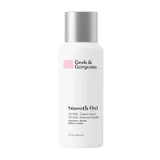
| Placentor VégétalUltra-Exfoliant CreamYOUR PRODUCT | B. KaminsLactic-10 | BABORDoctor BABOR Refine Rx Aha Peel Pads | Geek GorgeousSmooth Out Liquid | |
|---|---|---|---|---|
| Match | — | 44% | 44% | 44% |
| Price | — | — | $53.02 | $39.99 |
| Shared key ingredients | — | 3 of 10 | 3 of 10 | 3 of 10 |
| Key difference | — | Salicylic Acid | Glycolic Acid | Anhydroxylitol |
| Irritancy | Medium | Low | Low | Low |
| Drying alcohol | — | — | — | — |
| View product | Shop | Shop | Shop |


More alternatives: QMS Medicosmetics Active Exfoliant 7 % Resurfacing FluidDr Dennis Gross Alpha Beta Glow Pad - Gradual Glow
Product summary
"Placentor Végétal - Ultra-Exfoliant Cream" is effective for: Moisturizing and Exfoliation
Ingredient callouts
- Panthenol (pro-vitamin B5) at about 1.20% - 1.40% concentration. In this concentration, Panthenol works effectively to improve the skin barrier and reduce inflammation.
- Humectants (panthenol 1.20% - 1.40%, hydroxyethyl urea 1.40% - 1.70% and glycerin 3.10% - 3.80%). These ingredients help attract water to the upper layer of the skin and improve the skin hydration.
Price
The product retails from 19.54£ up to 23.48£ in the United Kingdom.
For a detailed price comparison: click here.
Sources cited in this review
Every concentration estimate and effectiveness label is anchored to one of these 23 studies and safety reviews.
- 1
- 2
- 3
- 4Glycerin and hydroxyethyl urea: Comparing two skin moisturizers (Cosmetics & Toiletries 2004)cosmeticsandtoiletries.com
- 5Hydrovance technical data sheet (Nouryon, 2021)media.knowde.com
- 6NICNAS Full Public Report STD/1365: Hydroxyethyl Urea (2010)industrialchemicals.gov.au

Affiliate links · As an Amazon Associate, WIMJ earns from qualifying purchases.