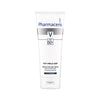
Pharmaceris V - Viti-Melo Day Protective Day Cream for Vitiligo
Works for
1 of 2 advertised claims delivered
Moisturizing12 ingredients credited for this claimGood support
“Recommended for adults and children (aged 5 and older) to protect and nourish vitiligo-affected and depigmented skin during the day.”
This product can help soften the skin and reduce its moisture loss with emollients and occlusives: dimethicone, helianthus annuus seed oil.
Keep in mind that this product does not contain effective ingredients to attract water to the upper layer of the skin. This is why an additional product with humectants like glycerin or hyaluronic acid can be helpful (apply it before this product for the best results).
Evens skin toneNo ingredient credited for this claimNo support
“The synergistic combination of the active ingredients initiates the depigmentation process leading to a gradual evening out of the skin tone.”
Effective ingredients missing or their concentration is too low
Anti-oxidationNot advertised by the brand · 2 ingredients credited for this claimModerate support
This product contains antioxidants (naringenin) that might be able to help neutralize free radicals in skin to lessen the damage it gets from the UV light (sun). There is not enough evidence to confirm their effectiveness in skin though.
Can it cause trouble?
Irritancy1 strong irritant: Rosmarinus officinalis leaf extractMedium risk
ComedogenicClean of flagged comedogenic ingredientsNone flagged
User reviews
Be the first — your take helps the next person decide.
Ingredients
Filter by role to see what each ingredient is doing.
Water~45–55%
Ethylhexyl methoxycinnamate~6.5–8%
- Irritation risk
- High
Octinoxate. When used in higher concentrations, works as a sunscreen protecting the skin from UVB rays. When used in lower concentration, helps to preserve the product formulation. Is shown to be harmful to coral reefs - consider avoiding bathing in coral reef areas when wearing a product with this ingredient. It can be irritating
More about Ethylhexyl methoxycinnamateOctocrylene~4.8–5.8%
- Irritation risk
- Medium
A weak sunscreen that protects against the sun rays that cause sunburn (UVB) and is somewhat effective against the UVA rays. It is quite stable and can help stabilize other, more vulnerable, sunscreen ingredients like Avobenzone. It is an organic, or so called "chemical" sunscreen
More about OctocryleneButyl methoxydibenzoylmethane~3.6–4.4%
- Irritation risk
- Medium
Avobenzone. An organic, or so-called "chemical" UV filter. Protects against both UVA and UVB rays. Needs to be combined with other filters in a formulation to be stable.
More about Butyl methoxydibenzoylmethaneDicaprylyl carbonate~2.4–3%
- Irritation risk
- Low
Helps products spread more easily and works as an emollient to soften skin
More about Dicaprylyl carbonateCetyl alcohol~2–2.5%
- Irritation risk
- Low
A non-drying alcohol that works to soften the skin and stabilize product formulations helping oil and water mix together
More about Cetyl alcoholEthylhexyl triazone~2.2–2.7%
- Irritation risk
- Medium
Uvinul T. A UV filter. Effective against UVB rays. It is photostable. Can increase water resistance properties of the sunscreen. Unfortunately, not approved by the FDA (US) yet
More about Ethylhexyl triazonePotassium cetyl phosphate~1.5–1.8%
- Irritation risk
- Medium
Helps oil and water mix together
More about Potassium cetyl phosphateC12-15 alkyl benzoate~1.3–1.5%
- Irritation risk
- Low
Enhances the product texture and makes it more spreadable. Helps reduce water loss from the outer layer of skin. Extands the shelf life by preventing bacteria growth
More about C12-15 alkyl benzoateMethylene bis-benzotriazolyl tetramethylbutylphenol~1.4–1.7%
- Irritation risk
- Medium
Tinosorb M. A UV filter. Is effective against both UVA and UVB rays. It also provides some protection against visible light. It is photostable and can also be used to improve photostability of other sunscreen ingredients. Its physical properties help to create lightweight sunscreen formulations. It can leave a slight white cast. Unfortunately, it is not approved by the FDA (US) yet
More about Methylene bis-benzotriazolyl tetramethylbutylphenolTitanium dioxide~1.1–1.4%
- Irritation risk
- Low
Works as a UV filter when used in high concentrations. It is photostable and is effective mostly against the UVB light, with some protection in the UVA range. In small concentrations, used for its ability to improve the color of cosmetic products. Is usually well tolerated by the skin
More about Titanium dioxide1,2-hexanediol~0.55–0.85%
Diethylamino hydroxybenzoyl hexyl benzoate~0.75–1.1%
- Irritation risk
- Medium
Uvinul A Plus. A new generation broad spectrum sunscreen that offers an effective protection especially in the UVA range. It is stable in formulations. Unfortunately, is not approved by the FDA (US) yet
More about Diethylamino hydroxybenzoyl hexyl benzoatePolyacrylamide~0.55–0.8%
- Irritation risk
- Medium
Used to improve product texture and help oil and water mix together
More about PolyacrylamideHydroxyacetophenone~0.45–0.7%
Dimethicone~0.5–0.8%
- Irritation risk
- Low
A silicone that helps to reduce water loss from the surface of the skin. Can temporarily "fill in" lines and wrinkles, absorb oil, and create a nice product finish
More about DimethiconeXanthan gum~0.45–0.7%
- Irritation risk
- Low
Used to create a thicker product consistency
More about Xanthan gumC13-14 isoparaffin~0.45–0.7%
- Irritation risk
- Low
Helps soften the upper layer of the skin, dissolve other ingredients and create a thicker product consistency
More about C13-14 isoparaffinDecyl glucoside~0.45–0.7%
- Irritation risk
- High
Helps oil and water mix together. Can be irritating
More about Decyl glucosideAluminum hydroxide~0.4–0.6%
- Irritation risk
- Low
Is used to add opaque (non-transparent) appearance to formulations. Can be used to coat other ingredients for even dispersion. This is a different ingredient compared to the ones used in antipersperants (aluminium chloride and aluminium chlorohydrate)
More about Aluminum hydroxideLaureth-7~0.3–0.55%
Palmitic acid~0.35–0.6%
- Irritation risk
- Low
An emollient that is naturally present in skin and helps soften it
More about Palmitic acidNaringenin~0.25–0.45%
- Irritation risk
- Medium
A flavanoid that can be found in high concentrations in grapefruits, oranges, other citrus fruits, and tomato skin. Early studies suggest that it might be able to help reduce inflammation in skin and neutralize free radicals
More about NaringeninStearic acid~0.4–0.65%
- Irritation risk
- Low
Helps oil and water mix together and works as an emollient
More about Stearic acidHydrogen dimethicone~0.25–0.5%
- Irritation risk
- Low
Helps the function of sunscreen and pigment ingredients in the formulation
More about Hydrogen dimethiconeCichorium intybus root extract~0.25–0.45%
- Irritation risk
- Low
Timonacic~0.25–0.45%
- Irritation risk
- Low
Pentylene glycol~0.3–0.5%
- Irritation risk
- Medium
Used to preserve products, dissolve other ingredients and create a nice product texture
More about Pentylene glycolPropylene glycol~0.2–0.4%
- Irritation risk
- High
Helps oil and water mix together and can enhance the penetration of other ingredients into the skin. It can be irritating
More about Propylene glycolLecithin~0.25–0.45%
- Irritation risk
- Low
Used mostly for creating emulsions - helping oil and water mix together. Helps soften the upper layer of the skin
More about LecithinHelianthus annuus seed oil~0.2–0.4%
- Irritation risk
- Low
A great emollient due to its high linoleic acid content. One of the most effective plant oils in helping skin hydration and repairing skin barrier function
More about Helianthus annuus seed oilRosmarinus officinalis leaf extract~0.15–0.25%
- Irritation risk
- High
Can be helpful in reducing inflammation in skin, including inflamed acne. It can be irritating
More about Rosmarinus officinalis leaf extractHydroxyethylcellulose~0.15–0.25%
- Irritation risk
- Low
Used to thicken product formulations and create gel-like textures
More about HydroxyethylcelluloseEthylhexylglycerin~0.1–0.2%
Phenoxyethanol~0.1–0.25%
- Irritation risk
- Low
A preservative. It helps prevent bacterial growth in cosmetic products
More about PhenoxyethanolIngredient list view
Water, Ethylhexyl methoxycinnamate, Octocrylene, Butyl methoxydibenzoylmethane, Dicaprylyl carbonate, Cetyl alcohol, Ethylhexyl triazone, Potassium cetyl phosphate, C12-15 alkyl benzoate, Methylene bis-benzotriazolyl tetramethylbutylphenol, Titanium dioxide, 1,2-hexanediol, Diethylamino hydroxybenzoyl hexyl benzoate, Polyacrylamide, Hydroxyacetophenone, Dimethicone, Xanthan gum, C13-14 isoparaffin, Decyl glucoside, Aluminum hydroxide, Laureth-7, Palmitic acid, Naringenin, Stearic acid, Hydrogen dimethicone, Cichorium intybus root extract, Timonacic, Pentylene glycol, Propylene glycol, Lecithin, Helianthus annuus seed oil, Rosmarinus officinalis leaf extract, Hydroxyethylcellulose, Ethylhexylglycerin, Phenoxyethanol
Compare prices
Retailers ranked by price — lowest first.

Affiliate links · prices updated regularly
Sources cited in this review
Every concentration estimate and effectiveness label is anchored to one of these 18 studies and safety reviews.
- 1
- 2
- 3Final Report on the Safety Assessment of Dimethicone Copolyoljournals.sagepub.com
- 4Safety Assessment of Isoparaffins as Used in Cosmeticsjournals.sagepub.com
- 5
- 6

Affiliate links · As an Amazon Associate, WIMJ earns from qualifying purchases.