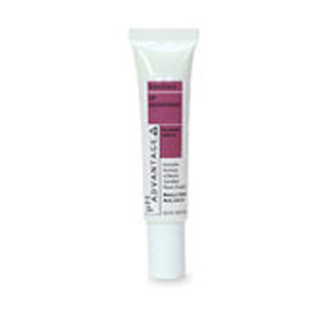
Works for
2 of 3 advertised claims delivered
MoisturizingPalmitoyl oligopeptide, Acetyl hexapeptide-37 + 11 moreStrong evidence
“The visual perception of a fuller lip will be increased while providing moisture to maintain softness and beauty.”
This product can help improve hydration of the skin with the two types of ingredients.
The first type is called “humectants”:
these ingredients help attract water.
When humectants are on the surface of the skin, they “pull in” the moisture from the outside environment, or from
within deeper layers of the skin. The following ingredients in this product do the job:
aminobutyric acid, butylene glycol.
This product also contains ingredients called “occlusives”. They help reduce the speed with which our skin loses moisture to the outside environment. These ingredients also help soften the upper layer of the skin, so it feels less tight and nicer to the touch. The following ingredients in this product do the job: beeswax, glycine soja oil.
The following ingredients in this product are especially good for supporting the skin barrier and helping with the hydration level: acetyl hexapeptide-37, palmitoyl oligopeptide
Anti-agingAcetyl hexapeptide-37, Palmitoyl oligopeptide + 2 moreModerate evidence
“GABA will relax the fine facial lines and will noticeably reduce the appearance of deeper wrinkles.”
This product contains acetyl hexapeptide-37, palmitoyl oligopeptide. These ingredients might be able to help reduce and prevent fine lines and wrinkles, improve skin elasticity and firmness, but there is not enough evidence that it actually works.
ExfoliationRetinyl palmitateWeak evidence
“Lip Advantage will relieve areas of lip dryness and chapped appearances through gentle exfoliation.”
This product does not contain effective exfoliating ingredients. It might be able to deliver physical exfoliation, that is scrub off some of the dead cells on the surface of the skin. We do not recommend physical exfoliation, because it is not uniform (some bits of skin can get exfoliated too much while others not at all). It can also traumatize the skin and aggrevate acne and other skin conditions.
Can it cause trouble?
Irritancy4 strong irritants: Dmdm hydantoin, Parfum + 2 more — patch-test recommendedHigh risk
Comedogenic2 ingredients rated 2 or more on the 0–5 pore-clogging scale2 flagged
User reviews
Be the first — your take helps the next person decide.
Ingredients
Filter by role to see what each ingredient is doing.
Water~45–55%
Cyclopentasiloxane~7.1–8.6%
- Irritation risk
- Low
A silicone that helps improve the product texture and spreadability. Can absorb oil creating a short-term mattifying effect on the skin
More about CyclopentasiloxanePolysilicone-11~4.2–5.1%
- Irritation risk
- Low
A silicone that forms a light film on the skin surface helping to bind water and temporarily absorb oils creating a matt and powdery feel
More about Polysilicone-11Aminobutyric acid~3.1–3.8%
- Irritation risk
- Low
Has been shown to support wound healing and skin barrier function when used topically in rats. Is likely to be effective in supporting skin's hydration and barrier function, but research for human skin is missing. Might have some anti-aging properties but the research is missing
More about Aminobutyric acidCentella asiatica root extract~2.3–2.9%
- Irritation risk
- Low
Brassica campestris/aleurites fordi oil copolymer~2–2.4%
- Irritation risk
- Low
Butylene glycol~1.7–2%
- Irritation risk
- Low
Used to create a nice product texture and help delivery of other ingredients. Might be somewhat helpful in attracting water to the upper layer of the skin
More about Butylene glycolPortulaca oleracea extract~1.4–1.8%
- Irritation risk
- Medium
A plant extract that has some anti-oxidant activity, but solid research is lacking. Can help attract water to the upper layer of the skin
More about Portulaca oleracea extractBeeswax~1.3–1.6%
- Irritation risk
- Low
Forms a protective barrier that holds water and keeps dry skin hydrated. Keeps an emulsion from separating into its oil and liquid components, and increases the thickness of a product. Can be an allergen
More about BeeswaxBehenoyl stearic acid~0.95–1.2%
Barium sulfate~0.75–1.1%
- Irritation risk
- Low
Cetyl peg/ppg-10/1 dimethicone~0.6–0.85%
- Irritation risk
- Low
A type of silicone that helps water and oil mix together. Can help to soften upper layer of the skin
More about Cetyl peg/ppg-10/1 dimethiconeDi-c12-15 alkyl fumarate~0.55–0.85%
- Irritation risk
- Medium
Used to soften the upper layer of the skin and create a nice product texture
More about Di-c12-15 alkyl fumaratePeg-30 dipolyhydroxystearate~0.5–0.75%
- Irritation risk
- Medium
Helps oil and water mix together
More about Peg-30 dipolyhydroxystearateAmmonium polyacryloyldimethyl taurate~0.45–0.65%
- Irritation risk
- Low
Used to create a thicker product consistency
More about Ammonium polyacryloyldimethyl taurateSilica~0.6–0.9%
Ethylhexyl palmitate~0.45–0.7%
- Irritation risk
- Low
- Comedogenicity
- 3/5
An emollient that helps soften the skin and create a nice product texture
More about Ethylhexyl palmitateTocopheryl acetate~0.35–0.65%
- Irritation risk
- Medium
A more stable but less bio-available form of vitamin E compared to Tocopherol. Might help moisturize and protect the skin from free radicals, but mostly used in low concentrations to stabilize other ingredients.
More about Tocopheryl acetateDmdm hydantoin~0.3–0.55%
- Irritation risk
- High
A preservative that releases formaldehyde and can be irritating
More about Dmdm hydantoinParfum~0.25–0.5%
- Irritation risk
- High
An aromatic blend of unspecified and possibly irritating ingredients
More about ParfumSodium chloride~0.3–0.55%
- Irritation risk
- Low
Used to stabilize mixtures of oil and water, and create thicker, gel-like product textures
More about Sodium chlorideMethylparaben~0.15–0.3%
Tribehenin~0.25–0.45%
- Irritation risk
- Low
Used to create a thicker product consistency and soften the upper layer of the skin
More about TribeheninPropylparaben~0.2–0.35%
Retinyl palmitate~0.2–0.35%
- Irritation risk
- High
Three steps removed from the active form of vitamin A - retinoic acid. To have an effect in the skin, it first needs to be converted twice to become the retinoic acid. This means it is less potent than retinol, but could also be less irritating. Once converted to the retinoic acid in the skin, it helps against all signs of aging, improves skin cell turnover and helps fight blemishes and clogged pores. However, in many cosmetic formulations, it is used in a concentration that is too low to have the full effect
More about Retinyl palmitateGlycine soja oil~0.2–0.4%
- Irritation risk
- Medium
- Comedogenicity
- 2/5
A good emollient that helps soften the skin and helps repair its barrier function. It can clog pores if used in high concentrations.
More about Glycine soja oilSorbitan isostearate~0.2–0.4%
- Irritation risk
- Low
Helps oil and water mix together
More about Sorbitan isostearateIodopropynyl butylcarbamate~0.01–0.02%
Palmitoyl oligopeptide~0.25–0.5%
- Irritation risk
- Low
A type of peptide. Peptides are excellent moisturizers and might be able support collagen production reducing fine lines and wrinkles
More about Palmitoyl oligopeptideAscorbyl methylsilanol pectinate~0.15–0.25%
- Irritation risk
- Medium
A stable derivative of pectin and vitamin C. It might help neutralize free radicals in skin, but evidence of effectiveness is lacking. Helps create a thicker product consistency and stabilize the product formulation
More about Ascorbyl methylsilanol pectinateAcetyl hexapeptide-37~0.1–0.2%
- Irritation risk
- Low
A type of peptide. Peptides are excellent moisturizers and might be able support collagen production reducing fine lines and wrinkles
More about Acetyl hexapeptide-37Silica~0.2–0.35%
Titanium dioxide~0.1–0.15%
- Irritation risk
- Low
Works as a UV filter when used in high concentrations. It is photostable and is effective mostly against the UVB light, with some protection in the UVA range. In small concentrations, used for its ability to improve the color of cosmetic products. Is usually well tolerated by the skin
More about Titanium dioxideCi 77492~0.05–0.1%
Ingredient list view
Water, Cyclopentasiloxane, Polysilicone-11, Aminobutyric acid, Centella asiatica root extract, Brassica campestris/aleurites fordi oil copolymer, Butylene glycol, Portulaca oleracea extract, Beeswax, Behenoyl stearic acid, Barium sulfate, Cetyl peg/ppg-10/1 dimethicone, Di-c12-15 alkyl fumarate, Peg-30 dipolyhydroxystearate, Ammonium polyacryloyldimethyl taurate, Silica, Ethylhexyl palmitate, Tocopheryl acetate, Dmdm hydantoin, Parfum, Sodium chloride, Methylparaben, Tribehenin, Propylparaben, Retinyl palmitate, Glycine soja oil, Sorbitan isostearate, Unknown, Iodopropynyl butylcarbamate, Palmitoyl oligopeptide, Ascorbyl methylsilanol pectinate, Acetyl hexapeptide-37, Silica, Titanium dioxide, Ci 77492
Compare prices
Retailers ranked by price — lowest first.
Product summary
"pH Advantage - Lip Advantage" is effective for: Moisturizing
This lip product could be helpful for: Anti-aging, but its actives are not the most effective or are not well-studied.
Ingredient callouts
- this lip sunscreen includes a form of Retinoids (vitamin A) - retinyl palmitate 0.20% - 0.35%, but this type of vitamin A is not very effective. It could in theory help with fine lines and wrinkles, but the effect is most likely minimal.
- This moisturizer also contains Peptides (acetyl hexapeptide-37 0.10% - 0.20% and palmitoyl oligopeptide 0.25% - 0.50%). Peptides are a very big group of ingredients. They all consist of a different combination of aminoacids. Our skin produces Peptides naturally. Some of them work as natural antibiotics, promote wound-healing and production of collagen. The scientists are still studying how effective the topical application of Peptides is, but it is very likely that they are helpful. Peptides might be able to support skin barrier restoration and even have an anti-aging benefit. At the very least, they certainly help attract water to the skin and support the hydration in this way.
Price
The product retails for 24.00$ in the United States.
For a detailed price comparison: click here.
Sources cited in this review
Every concentration estimate and effectiveness label is anchored to one of these 7 studies and safety reviews.
- 1
- 2Wound healing activity of gamma-aminobutyric Acid (GABA) in ratspubmed.ncbi.nlm.nih.gov
- 3Moisturizing effect of Gamma-aminobutyric acid for cosmetic applicationam-2017.weebly.com
- 4Stimulation of human fibroblast collagen synthesis in vitro by gamma-aminobutyric acidpubmed.ncbi.nlm.nih.gov
- 5Portulaca oleracea (purslane)mdedge.com
- 6

Affiliate links · As an Amazon Associate, WIMJ earns from qualifying purchases.