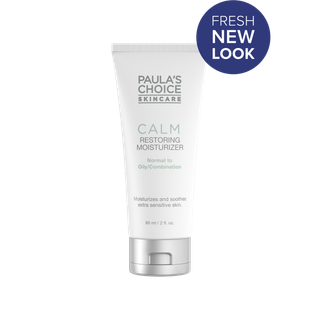
Paula's choice Redness Relief Moisturizer for Normal to Oily Skin
Works for
1 of 3 advertised claims delivered
MoisturizingCeramide np, Cholesterol + 22 moreStrong evidence
“Moisturizer for Normal to Oily Skin”
This product can help improve hydration of the skin with the two types of ingredients.
The first type is called “humectants”:
these ingredients help attract water.
When humectants are on the surface of the skin, they “pull in” the moisture from the outside environment, or from
within deeper layers of the skin. The following ingredients in this product do the job:
glycerin, sodium hyaluronate.
This product also contains ingredients called “occlusives”. They help reduce the speed with which our skin loses moisture to the outside environment. These ingredients also help soften the upper layer of the skin, so it feels less tight and nicer to the touch. The following ingredients in this product do the job: dimethicone, phenyl trimethicone.
The following ingredients in this product are especially good for supporting the skin barrier and helping with the hydration level: ceramide np
Anti-agingDecarboxy carnosine hcl, Tocopherol + 1 moreLimited evidence
“look and feel younger and refreshed”
This product does not contain ingredients that are able to reduce fine lines and wrinkles or help with skin elasticity, but it can improve the look of the skin temporarily through moisturization. Well-moisturized skin might also be able to repair the sun damage better.This ingredient - decarboxy carnosine hcl - could be helpful for preventing or repairing signs of aging in theory, but there is no evidence that it actually works.
This ingredient decarboxy carnosine hcl might be able to help neutralize free radicals in skin and help it fight off some of the sun damage.
Evens skin toneMagnesium ascorbyl phosphateWeak evidence
“refined luminosity”
Effective ingredients missing or their concentration is too low
Anti-oxidationNot advertised by the brand · Decarboxy carnosine hcl, Avena sativa kernel extract + 2 moreModerate evidence
This product contains antioxidants (decarboxy carnosine hcl) that might be able to help neutralize free radicals in skin to lessen the damage it gets from the UV light (sun). There is not enough evidence to confirm their effectiveness in skin though.
Can it cause trouble?
Irritancy16 flagged ingredientsMedium risk
Comedogenic2 ingredients rated 2 or more on the 0–5 pore-clogging scale2 flagged


User reviews
Be the first — your take helps the next person decide.
Ingredients
Filter by role to see what each ingredient is doing.
Water~45–55%
Ethylhexyl stearate~5.5–6.8%
- Irritation risk
- Low
Helps soften the upper layer of the skin
More about Ethylhexyl stearateSimmondsia chinensis seed oil~4.4–5.4%
- Irritation risk
- Medium
Softens the upper layer of skin and helps restore the healthy skin barrier. Has shown to help calm down inflammation in skin. It is a stable oil, meaning that it retains its properties even when exposed to air.
More about Simmondsia chinensis seed oilButylene glycol~3–3.7%
- Irritation risk
- Low
Used to create a nice product texture and help delivery of other ingredients. Might be somewhat helpful in attracting water to the upper layer of the skin
More about Butylene glycolGlycerin~2.4–2.9%
- Irritation risk
- Low
One of the best moisturizing ingredients. Naturally present in skin. It attracts water to the upper layer of the skin working as a humectant
More about GlycerinPetrolatum~1.9–2.3%
- Irritation risk
- Low
One of the most effective and the most studied occlusive ingredients that creates a protective layer on top of the skin preventing moisture loss
More about PetrolatumCetearyl alcohol~1.6–2%
- Irritation risk
- Low
- Comedogenicity
- 2/5
A non-drying alcohol. Works as an emollient. Helps water and oil mix together and creates a nice product texture
More about Cetearyl alcoholDipentaerythrityl hexacaprylate/hexacaprate~1.4–1.7%
- Irritation risk
- Low
Tridecyl trimellitate~1.2–1.5%
- Irritation risk
- Medium
Used to create a thicker product consistency and soften the upper layer of the skin
More about Tridecyl trimellitatePhenyl trimethicone~1–1.2%
- Irritation risk
- Low
A type of silicone that can decrease loss of moisture from the skin surface. It helps create a nice product texture
More about Phenyl trimethiconeSodium hyaluronate~0.7–1%
- Irritation risk
- Low
One of the best moisturizing ingredients. Attracts water into the upper layer of the skin
More about Sodium hyaluronateCeramide np~0.6–0.95%
- Irritation risk
- Low
A type of lipid similar to ceramides naturally present in skin. Helps to soften the upper layer of the skin and supports the skin barrier function to keep it hydrated. Can help to prevent inflammation in skin
More about Ceramide npCholesterol~0.55–0.85%
- Irritation risk
- Low
An emollient that is naturally found in skin
More about CholesterolTocopherol~0.5–0.7%
- Irritation risk
- Low
Pure form of vitamin E. Can help moisturise and protect the skin from free radicals. Often used to help stabilise other ingredients or the formula itself
More about TocopherolSqualane~0.5–0.75%
- Irritation risk
- Low
An oil naturally present in skin. Works as an emollient to soften the skin and form a protective layer on its surface without a greasy feeling.
More about SqualaneMagnesium ascorbyl phosphate~0.45–0.65%
- Irritation risk
- Medium
A derivative of vitamin C that is more stable, but less bioavailable than the pure form of vitamin C. It does not penetrate the skin well, but has been shown to convert to pure vitamin C once in skin. It can be helpful in stimulating collagen production and lightening the skin tone, but the required concentration is likely to be very high
More about Magnesium ascorbyl phosphateDimethicone~0.5–0.75%
- Irritation risk
- Low
A silicone that helps to reduce water loss from the surface of the skin. Can temporarily "fill in" lines and wrinkles, absorb oil, and create a nice product finish
More about DimethiconePolysorbate 60~0.4–0.65%
Hydrolyzed jojoba protein~0.3–0.6%
- Irritation risk
- Low
Helps attract water to the upper layer of the skin
More about Hydrolyzed jojoba proteinHydrolyzed wheat protein~0.3–0.55%
- Irritation risk
- Medium
Can help attract water to the upper layer of the skin. Avoid if sensitive to gluten
More about Hydrolyzed wheat proteinAvena sativa kernel extract~0.3–0.55%
- Irritation risk
- Low
An effective moisturizing and skin barrier repair ingredient. Helps calm down inflammation and has some anti-oxidant properties
More about Avena sativa kernel extractHydrogenated lecithin~0.3–0.55%
- Irritation risk
- Low
Helps to retain moisture by creating a protective barrier on the skin. Rich in fatty acids. Improves product texture and helps with the penetration of other ingredients.
More about Hydrogenated lecithinWhey protein~0.3–0.5%
- Irritation risk
- Low
A protein derived from milk. In skincare products, might help to soften the upper layer of the skin
More about Whey proteinTridecyl stearate~0.3–0.5%
- Irritation risk
- Medium
Used to create a thicker product consistency and soften the upper layer of the skin
More about Tridecyl stearateNeopentyl glycol dicaprylate/dicaprate~0.3–0.5%
- Irritation risk
- Low
Myristyl myristate~0.25–0.5%
- Irritation risk
- Medium
- Comedogenicity
- 3/5
An emollient. Is not recommended for acne-prone skin as it can be comedogenic
More about Myristyl myristateLinoleic acid~0.4–0.6%
- Irritation risk
- Low
An excellent emollient. Helps soften the skin, restore its barrier function, and can help to calm down inflammation. It can be helpful to prevent blemishes and clogged pores
More about Linoleic acidLinolenic acid~0.3–0.6%
- Irritation risk
- Medium
An emollient that helps soften the skin and calm down inflammation
More about Linolenic acidDecarboxy carnosine hcl~0.25–0.45%
- Irritation risk
- Low
Might be able to protect the skin from free radicals, but further evidence of effectiveness is needed
More about Decarboxy carnosine hclHydroxyethyl acrylate/sodium acryloyldimethyl taurate copolymer~0.25–0.45%
- Irritation risk
- Medium
A gelling agent that thickens the product consistency and leaves the skin with a velvety finish
More about Hydroxyethyl acrylate/sodium acryloyldimethyl taurate copolymerAcrylates/c10-30 alkyl acrylate crosspolymer~0.25–0.4%
- Irritation risk
- Medium
Maintains the texture of skincare products. Allows the product to spread evenly. Helps oil and water mix together
More about Acrylates/c10-30 alkyl acrylate crosspolymerCetearyl glucoside~0.2–0.4%
- Irritation risk
- Medium
Helps water and oil in the product mix well together and improves product texture
More about Cetearyl glucosideCetyl alcohol~0.25–0.5%
- Irritation risk
- Low
A non-drying alcohol that works to soften the skin and stabilize product formulations helping oil and water mix together
More about Cetyl alcoholPolyglyceryl-3 beeswax~0.2–0.4%
- Irritation risk
- Medium
Helps water and oil mix together. Could be an allergen (beeswax)
More about Polyglyceryl-3 beeswaxAminomethyl propanol~0.15–0.3%
Disodium edta~0.15–0.25%
Phenoxyethanol~0.15–0.25%
- Irritation risk
- Low
A preservative. It helps prevent bacterial growth in cosmetic products
More about PhenoxyethanolBenzoic acid~0.1–0.2%
Chlorphenesin~0.1–0.2%
Sorbic acid~0.1–0.2%
Ingredient list view
Water, Ethylhexyl stearate, Simmondsia chinensis seed oil, Butylene glycol, Glycerin, Petrolatum, Cetearyl alcohol, Dipentaerythrityl hexacaprylate/hexacaprate, Tridecyl trimellitate, Phenyl trimethicone, Sodium hyaluronate, Ceramide np, Cholesterol, Tocopherol, Squalane, Magnesium ascorbyl phosphate, Dimethicone, Polysorbate 60, Hydrolyzed jojoba protein, Hydrolyzed wheat protein, Avena sativa kernel extract, Hydrogenated lecithin, Whey protein, Tridecyl stearate, Neopentyl glycol dicaprylate/dicaprate, Myristyl myristate, Linoleic acid, Linolenic acid, Decarboxy carnosine hcl, Hydroxyethyl acrylate/sodium acryloyldimethyl taurate copolymer, Acrylates/c10-30 alkyl acrylate crosspolymer, Cetearyl glucoside, Cetyl alcohol, Polyglyceryl-3 beeswax, Aminomethyl propanol, Disodium edta, Phenoxyethanol, Benzoic acid, Chlorphenesin, Sorbic acid
Compare prices
Retailers ranked by price — lowest first.

Worth comparing, line by line.
Match % combines shared ingredients, the first five ingredients, shared actives and hero ingredients, irritancy (lower counts in the alternative's favour), texture and body area. Only products in the same routine step are compared.
| Paula's choiceRedness Relief Moisturizer for Normal to Oily SkinYOUR PRODUCT | PillowtalkDermMajor Fade Active Seal Moisturizer | Deviant SkincarePeptide + Growth Factor Advanced Restore Cream | PrequelAM/PM Modern Moisturizer | |
|---|---|---|---|---|
| Match | — | 52% | 51% | 51% |
| Price | $12.00 | — | $98.00+$86.00 | $17.99+$5.99 |
| Shared key ingredients | — | 7 of 15 | 8 of 15 | 8 of 15 |
| Key difference | — | Hexapeptide-2 | Sh-Polypeptide-9 | Ceramide Ns |
| Irritancy | Medium | Low | Medium | Medium |
| Drying alcohol | — | — | — | — |
| View product | Shop | Shop | Shop |

Product summary
Based on the ingredient list, "Paula's choice - Redness Relief Moisturizer for Normal to Oily Skin" can work well for skin moisturization. To work well, any moisturizer needs to include a combination of water-binding and emollient ingredients. Paula's choice - Redness Relief Moisturizer for Normal to Oily Skin ticks this box. Humectants in this product (acetyl hexapeptide-8, galactoarabinan, glycerin, glycogen and butylene glycol) help to increase the water content in the upper layer of the skin. (These ingredients do so by "capturing" water molecules from the outside air or from within the deeper layers of the skin). Caprylic/capric triglyceride, squalane, caprylyl glycol, ethylhexyl stearate and glyceryl stearate in this product help decrease the water evoporation from the skin, so that it stays hydrated for longer. These ingredients also soften the skin and take away the feeling of tightness and dryness.
Ingredient callouts
- This moistruizer also contains peptides (acetyl hexapeptide-8 0.15% - 0.30%). Peptides is a very big group of ingredients. They all consist of a different combination of amino-acids. Our skin produces peptides naturally. Some of them work as natural anti-biotics, promote wound-healing and production of collagen. The scientists are still studying how effective the topical application of peptides is, but it is very likely that peptides in skincare are helpful. They might be able to support skin barrier restoration and even have an anti-aging benefit. At the very least, they certainly help attract water to the skin and support the hydration in this way.
Irritation risk
This moisturizer contains a bunch of common irritants, including ingredients that do not provide any known benefit for the skin. It might not be the best choice if your skin is sensitive. We assess the overall irritancy of this moisturizer to be high. For a detailed overview of all potential irritants: click here
You can see the detailed formula review with the breakdown of all actives in the product and the full ingredient list with estimated concentrations in the tables below.
Price
The product retails for 75.17CA$ in Canada, from 44.00A$ up to 98.46A$ in Australia and for 33.00$ in the United States.
For a detailed price comparison: click here.
Sources cited in this review
Every concentration estimate and effectiveness label is anchored to one of these 18 studies and safety reviews.
- 1
- 2Hyaluronic acid: A key molecule in skin agingncbi.nlm.nih.gov
- 3
- 4
- 5
- 6Vitamin E in dermatologyncbi.nlm.nih.gov

Affiliate links · As an Amazon Associate, WIMJ earns from qualifying purchases.