Works for
1 of 3 advertised claims delivered
MoisturizingOenothera biennis oil, Vitis vinifera seed oil + 15 moreGood evidence
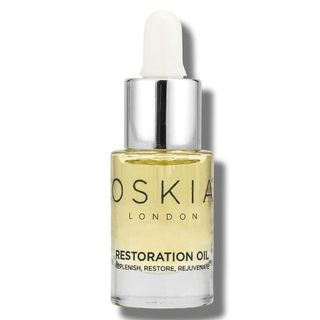
“Restoration Oil Travel”
This product can help soften the skin and reduce its moisture loss with emollients and occlusives: caprylic/capric triglyceride, helianthus annuus seed oil.
Keep in mind that this product does not contain effective ingredients to attract water to the upper layer of the skin. This is why an additional product with humectants like glycerin or hyaluronic acid can be helpful (apply it before this product for the best results).
Evens skin toneRetinyl palmitateWeak evidence
“Lightweight, easily absorbed Improves skin tone & radiance Hydrates & smoothes skin Reduces the appearance of fine lines How to use.”
Effective ingredients missing or their concentration is too low
Anti-agingTocopherol, Alaria esculenta extract + 2 moreWeak evidence
“Lightweight, easily absorbed Improves skin tone & radiance Hydrates & smoothes skin Reduces the appearance of fine lines How to use.”
Effective ingredients missing or their concentration is too low.
Can it cause trouble?
Irritancy18 strong irritants: Citrus aurantium dulcis peel oil, Rosa damascena extract + 16 more — patch-test recommendedHigh risk
Comedogenic1 ingredient rated 2 or more on the 0–5 pore-clogging scale1 flagged
User reviews
Be the first — your take helps the next person decide.
Ingredients
Filter by role to see what each ingredient is doing.
Oryza sativa seed oil~23–34%
- Irritation risk
- Low
Helianthus annuus seed oil~4.7–7%
- Irritation risk
- Low
A great emollient due to its high linoleic acid content. One of the most effective plant oils in helping skin hydration and repairing skin barrier function
More about Helianthus annuus seed oilCoconut alkanes~4.6–6.9%
- Irritation risk
- Medium
- Comedogenicity
- 2/5
An emollient that helps soften the skin
More about Coconut alkanesCaprylic/capric triglyceride~3.9–5.9%
- Irritation risk
- Medium
A good mix of fatty acids that forms a protective layer on the skin. Improves the shelf life of products. Derived from coconut and glycerin
More about Caprylic/capric triglycerideHelianthus annuus seed oil unsaponifiables~2.9–4.3%
- Irritation risk
- Low
A great emollient due to its high linoleic acid content. One of the most effective plant oils in helping skin hydration and repairing skin barrier function
More about Helianthus annuus seed oil unsaponifiablesOenothera biennis oil~2.1–3.2%
- Irritation risk
- Medium
Helps soften the upper layer of the skin and can support skin barrier function
More about Oenothera biennis oilRosa canina seed oil~1.8–2.7%
- Irritation risk
- Medium
A plant oil that helps soften the upper layer of the skin. It might have anti-oxidant properties. Might help reduce inflammation in skin and help against blemishes
More about Rosa canina seed oilOctyldodecanol~1.4–2%
- Irritation risk
- Low
An emollient that helps to soften the skin and create a pleasant product texture and stabilize the formulation
More about OctyldodecanolCoco-caprylate/caprate~1.2–1.8%
- Irritation risk
- Low
Helps to soften the upper layer of the skin without creating a greasy texture
More about Coco-caprylate/caprateEchium plantagineum seed oil~0.9–1.35%
- Irritation risk
- Medium
A plant oil that because of its high content of alpha-linolenic acid help support skin barrier function and moisturize the skin
More about Echium plantagineum seed oilCurcuma longa root extract~0.55–1.25%
- Irritation risk
- High
A plant extract that can contain an active compound curcumin, that may have some anti-inflammatory properties when applied to the skin, but solid research is lacking and the typical concentration used in skincare products is too low. Can be an irritant
More about Curcuma longa root extractTocopherol~0.45–1.1%
- Irritation risk
- Low
Pure form of vitamin E. Can help moisturise and protect the skin from free radicals. Often used to help stabilise other ingredients or the formula itself
More about TocopherolLupinus albus seed extract~0.4–0.95%
- Irritation risk
- Medium
A plant extract that helps soften the upper layer of the skin
More about Lupinus albus seed extractAnthemis nobilis flower oil~0.35–0.85%
- Irritation risk
- High
An essential oil that is used as a fragrance and can be irritating. It might have some anti-oxidant effect in skin
More about Anthemis nobilis flower oilBorago officinalis seed oil~0.4–0.95%
- Irritation risk
- Low
A plant oil that is effective in reducing irritation in skin, restore the barrier function and support its hydration
More about Borago officinalis seed oilCitrus aurantium dulcis peel oil~0.35–0.85%
- Irritation risk
- High
An essentil oil from orange peel. Potential allergen and can be irritating
More about Citrus aurantium dulcis peel oilRosa damascena extract~0.35–0.8%
- Irritation risk
- High
Oil of a very fragrant pink rose used as fragrance in cosmetics. Extensive research has shown it has mixed benefits. In the pro column, inhaling this flower’s scent seems to have relaxing properties and the plant’s petals contain skin-soothing and antioxidant compounds that can benefit skin. On the flipside, the numerous chemicals that create this rose’s distinctive fragrance pose a risk of causing skin aggravation.
More about Rosa damascena extractLecithin~0.4–0.9%
- Irritation risk
- Low
Used mostly for creating emulsions - helping oil and water mix together. Helps soften the upper layer of the skin
More about LecithinAscorbyl palmitate~0.2–0.8%
- Irritation risk
- Medium
Being a lipid soluble form of vitamin C, it is more stable and can penetrate the skin better than L-Ascorbic acid. It is effective in protecting the skin from free radicals, as well as evening the skin tone, but is less effective in stimulating collagen production compared to L-Ascorbic acid.
More about Ascorbyl palmitatePelargonium graveolens oil~0.2–0.75%
Spilanthes acmella flower extract~0.2–0.7%
- Irritation risk
- High
Plant extract that might hep calm down inflammation in skin
More about Spilanthes acmella flower extractRetinyl palmitate~0.15–0.65%
- Irritation risk
- High
Three steps removed from the active form of vitamin A - retinoic acid. To have an effect in the skin, it first needs to be converted twice to become the retinoic acid. This means it is less potent than retinol, but could also be less irritating. Once converted to the retinoic acid in the skin, it helps against all signs of aging, improves skin cell turnover and helps fight blemishes and clogged pores. However, in many cosmetic formulations, it is used in a concentration that is too low to have the full effect
More about Retinyl palmitateLavandula hybrida grosso herb oil~0.15–0.6%
- Irritation risk
- Low
Rosa damascena flower oil~0.15–0.65%
- Irritation risk
- High
Used as a fragrance. Can be irritating
More about Rosa damascena flower oilGlyceryl stearate~0.3–0.75%
- Irritation risk
- Low
An emollient that softens the skin and forms a protective layer on its surface. Helps water and oil mix together
More about Glyceryl stearateCinnamomum camphora linalooliferum wood oil~0.15–0.6%
- Irritation risk
- High
Alaria esculenta extract~0.15–0.65%
- Irritation risk
- Low
Works as a humectant helping to attract water to the upper layer of the skin and might be effective as an anti-oxidant.
More about Alaria esculenta extractRosmarinus officinalis leaf extract~0.15–0.6%
- Irritation risk
- High
Can be helpful in reducing inflammation in skin, including inflamed acne. It can be irritating
More about Rosmarinus officinalis leaf extractVitis vinifera seed oil~0.2–0.8%
- Irritation risk
- Medium
A great emollient that can also have anti-oxidant properties
More about Vitis vinifera seed oilCardiospermum halicacabum flower/leaf/vine extract~0.15–0.65%
- Irritation risk
- High
A plant extract that might have some anti-inflammatory and anti-oxidant properties but evidence is missing
More about Cardiospermum halicacabum flower/leaf/vine extractGlyceryl oleate~0.2–0.75%
- Irritation risk
- High
Helps oil and water mix together. Can be irritating
More about Glyceryl oleateMentha arvensis leaf oil~0.15–0.65%
Vanilla planifolia fruit extract~0.15–0.6%
- Irritation risk
- High
A plant extract used as a fragrance. Can be irritating
More about Vanilla planifolia fruit extractCymbopogon nardus oil~0.15–0.6%
- Irritation risk
- High
Santalum album oil~0.15–0.6%
Eugenia caryophyllus leaf oil~0.15–0.55%
- Irritation risk
- High
An essential oil. Used as a fragrance. Can be irritating and sensitizing
More about Eugenia caryophyllus leaf oilMenthol~0.1–0.5%
- Irritation risk
- High
Citric acid~0.1–0.45%
- Irritation risk
- Medium
Can work as an exfoliant but is typically used to adjust the product pH
More about Citric acidLimonene~0.1–0.4%
- Irritation risk
- High
A common frangrance that can easily irritate skin, especially if exposed to air, light or heat
More about LimoneneGeraniol~0.1–0.4%
Linalool~0.1–0.4%
Citronellol~0.05–0.3%
Citral~0.05–0.3%
Ingredient list view
Oryza sativa seed oil, Helianthus annuus seed oil, Coconut alkanes, Caprylic/capric triglyceride, Helianthus annuus seed oil unsaponifiables, Oenothera biennis oil, Rosa canina seed oil, Octyldodecanol, Coco-caprylate/caprate, Echium plantagineum seed oil, Curcuma longa root extract, Tocopherol, Lupinus albus seed extract, Anthemis nobilis flower oil, Borago officinalis seed oil, Citrus aurantium dulcis peel oil, Rosa damascena extract, Lecithin, Ascorbyl palmitate, Pelargonium graveolens oil, Spilanthes acmella flower extract, Retinyl palmitate, Lavandula hybrida grosso herb oil, Rosa damascena flower oil, Glyceryl stearate, Cinnamomum camphora linalooliferum wood oil, Alaria esculenta extract, Rosmarinus officinalis leaf extract, Vitis vinifera seed oil, Cardiospermum halicacabum flower/leaf/vine extract, Glyceryl oleate, Mentha arvensis leaf oil, Vanilla planifolia fruit extract, Cymbopogon nardus oil, Santalum album oil, Eugenia caryophyllus leaf oil, Menthol, Citric acid, Limonene, Geraniol, Linalool, Citronellol, Citral
Compare prices
Retailers ranked by price — lowest first.

Sources cited in this review
Every concentration estimate and effectiveness label is anchored to one of these 22 studies and safety reviews.
- 1
- 2
- 3Effect of topically applied lipids on surfactant-irritated skinonlinelibrary.wiley.com
- 4
- 5Nutrient composition of rose (Rosa canina L.) seed and oilsncbi.nlm.nih.gov
- 6

Affiliate links · As an Amazon Associate, WIMJ earns from qualifying purchases.