Works for:
based on ingredients and %- Cleansing
Can it cause trouble?
- Irritation risk: high
- Comedogenic risk ingredients: 7
Key actives

Works for
Cleansing
What does the product description say?
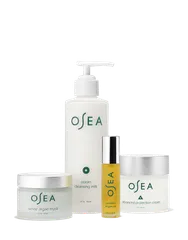
A creamy, soothing, makeup-removing cleanser.
Source: Osea Malibu
This product works by removing dirt and oil from the surface of the skin. It uses a combination of mild cleansing agents (capryloyl glycine, cetearyl alcohol, decyl glucoside, glyceryl stearate, glyceryl stearate citrate, hydrogenated lecithin, palmitic acid, sodium lauroyl oat amino acids, sorbitan olivate, triheptanoin, undecylenoyl glycine, xanthan gum) and should be able to cleanse the skin gently. Still keep in mind that any cleansing can disrupt the skin barrier, and most people do not need to cleanse their skin more than once per day.
Even though this formulation is mild, the following cleansing agents could trigger an irritation or allergy for some people: decyl glucoside
Used to create a thicker product consistency
A non-drying alcohol. Works as an emollient. Helps water and oil mix together and creates a nice product texture
Helps oil and water mix together. Can be irritating
An emollient that softens the skin and forms a protective layer on its surface. Helps water and oil mix together
Helps oil and water mix together while softening the upper layer of the skin
Helps to retain moisture by creating a protective barrier on the skin. Rich in fatty acids. Improves product texture and helps with the penetration of other ingredients.
An emollient that is naturally present in skin and helps soften it
Helps oil and water mix together
Helps oil and water mix together, preserve cosmetic products, and attract water to the upper layer of the skin
A synthetic triglyceride. Helps soften the upper layer of the skin
Helps oil and water mix together and works as an emollient
How honest is this product?
| Promise | Can it deliver? |
|---|---|
| Cleansing |
Total Promises Fulfilled score: 100/100.
We receive a small commission for purchases made through these links at no cost for you. Thank you for your support! Learn more
Potential irritants
Comedogenic ingredients
User reviews (0)
Averages from community submissions.
No reviews yet for this product.
Be the first to share your experience!
Tried this product?
Help capture what the ingredient list can't—texture, finish, pilling, scent, and more. Answer what you can, skip the rest.
Takes ~30 seconds.
Reviews are shown in aggregate. No personal details.
Key Actives
Can contain potent anti-oxidant compounds (abbreviated ECG, GCG, EGC, and EGCG) that might help protect the skin from free radicals. Can help calm down inflammation and has some anti-bacterial properties. Unfortunately, these antioxidants are unstable and lose their effectiveness very quickly in products. The concentration of the antioxidant compounds in the extract also tends to be low to be effective in topical formulation
Pure form of vitamin E. Can help moisturise and protect the skin from free radicals. Often used to help stabilise other ingredients or the formula itself
Pure form of vitamin E. Can help moisturise and protect the skin from free radicals. Often used to help stabilise other ingredients or the formula itself
A great moisturising ingredient that softens the skin and reduces water loss from its upper layer. It also can be helpful in protecting skin from free radicals
An anti-oxidant derived from curcumin (naturally present in tumeric). Is a part of the tetrahydrocurcuminoids complex (THC). The complex might be helpful in neutralizing free radicals in skin and possibly help even out the skin tone. Can be irritating
Can be helpful in reducing inflammation in skin, including inflamed acne. It can be irritating
Can be helpful in reducing inflammation in skin, including inflamed acne. It can be irritating
Helps neutralize free radicals in skin and might help reduce fine lines and wrinkles, as well as even out the skin tone
An emollient that helps soften the skin and might help calm down inflammation
An emollient that softens the skin and forms a protective layer on its surface. Helps water and oil mix together
A non-drying alcohol. Works as an emollient. Helps water and oil mix together and creates a nice product texture
Helps oil and water mix together and works as an emollient
Helps oil and water mix together, preserve cosmetic products, and attract water to the upper layer of the skin
A synthetic triglyceride. Helps soften the upper layer of the skin
Helps oil and water mix together while softening the upper layer of the skin
An emollient that is naturally present in skin and helps soften it
A seaweed extract that helps attract water to the upper layer of the skin and might have an anti-oxidant effect
An oil that is naturally part of skin sebum that helps to soften its upper layer, reduce water loss and neutralize free radicals. It might be comedogenic. Avoid applying large concentrations (or pure oil) before sun exposure as oxidized squalene can clog pores and lead to skin irritation. Today squalene is mostly derived from vegetable oils or synthetized by yeast
A great emollient that can also have anti-oxidant properties
An emollient that helps soften the upper layer of the skin. Might have some weak anti-oxidant properties
Plant extract that helps the skin to attract water and make it more smooth for touch. Also shows promise of anti-aging properties, but research is not extensive yet
A great emollient that can also have anti-oxidant properties
A type of peptide. Peptides are excellent moisturizers and might be able support collagen production reducing fine lines and wrinkles
A good mix of fatty acids that forms a protective layer on the skin. Improves the shelf life of products. Derived from coconut and glycerin
One of the best moisturizing ingredients. Naturally present in skin. It attracts water to the upper layer of the skin working as a humectant
Helps oil and water mix together. Can be irritating
A great emollient due to its high linoleic acid content. One of the most effective plant oils in helping skin hydration and repairing skin barrier function
Used to create a thicker product consistency
One of the best moisturizing ingredients. Naturally present in skin. It attracts water to the upper layer of the skin working as a humectant
Helps attract water to the upper layer of the skin and improves the product texture
Helps to retain moisture by creating a protective barrier on the skin. Rich in fatty acids. Improves product texture and helps with the penetration of other ingredients.
Helps attract water to the upper layer of the skin
Helps soften the upper layer of the skin
Lipids that work as an emollient and can be helpful in repairing skin barrier function
Helps soften the upper layer of the skin
Helps soften the upper layer of the skin. Could be comedogenic due to the myrisic acid content
A good mix of fatty acids that forms a protective layer on the skin. Improves the shelf life of products. Derived from coconut and glycerin
Used to create a thicker product consistency
Helps soften the upper layer of the skin
Helps soften the upper layer of the skin
Yeast extract that contains copper. Can help to attract water to the upper layer of the skin and can help in skin wound healing
Yeast extract that contains zinc. Can help to attract water to the upper layer of the skin. Evidence of effectiveness for other benefits is missing
One of the best moisturizing ingredients. Naturally present in skin. It attracts water to the upper layer of the skin working as a humectant
Works as a UV filter when used in high concentrations. It is photostable and is effective mostly against the UVB light, with some protection in the UVA range. In small concentrations, used for its ability to improve the color of cosmetic products. Is usually well tolerated by the skin
One of the best moisturizing ingredients. Attracts water into the upper layer of the skin
Softens the upper layer of skin and helps restore the healthy skin barrier. Has shown to help calm down inflammation in skin. It is a stable oil, meaning that it retains its properties even when exposed to air.
A good moisturizing plant oil. Due to the high linoleic acid content, it helps soften the upper layer of the skin, reduce water loss and support skin barrier function
Tea extract. Might be helpful in neutralizing free radicals in skin
Potential irritants
Is likely to contain an essential oil that can be irritating. Typically used for its fragrance and to create a thicker product consistency
A plant extract that can help calm down inflammation in skin. Can, however, itself be irritating
A plant extract that one one hand, can contain compounds that can help calm down skin irritation, but, on the other hand, its other compounds (especially fragrant ones) can themselves be irritating
An anti-oxidant derived from curcumin (naturally present in tumeric). Is a part of the tetrahydrocurcuminoids complex (THC). The complex might be helpful in neutralizing free radicals in skin and possibly help even out the skin tone. Can be irritating
Can be helpful in reducing inflammation in skin, including inflamed acne. It can be irritating
An essential oil that is used as a fragrance and can be irritating. It might have some anti-oxidant effect in skin
Might help neutralize free radicals in skin. Is claimed to be able to improve the appearance of undereye darkness but evidence is missing. Can be an allergen and cause irritation
Oil of a very fragrant pink rose used as fragrance in cosmetics. Extensive research has shown it has mixed benefits. In the pro column, inhaling this flower’s scent seems to have relaxing properties and the plant’s petals contain skin-soothing and antioxidant compounds that can benefit skin. On the flipside, the numerous chemicals that create this rose’s distinctive fragrance pose a risk of causing skin aggravation.
A plant extract that has some anti-oxidant and anti-bacterial properties. Can be irritating
A good mix of fatty acids that forms a protective layer on the skin. Improves the shelf life of products. Derived from coconut and glycerin
A preservative that comes from radishes fermented by a bacteria. New research suggests that the preservation properties in the ingredient come from an ammonium salt that is not present naturally in radish root but used in its cultivation. Is problematic because the exact amount of the preservative agents is difficult to determine
Can work as an exfoliant but is typically used to adjust the product pH
A derivative of vitamin C that is more stable, but less bioavailable than the pure form of vitamin C. It does not penetrate the skin well, but has been shown to convert to pure vitamin C once in skin. It can be helpful in stimulating collagen production and lightening the skin tone, but the required concentration is likely to be very high
Traditionally used to treat sunburns, dermatitis and inflammation, but evidence for its effectiveness is lacking. The extract can contain humectants that help attract water into the skin
Helps soften the upper layer of the skin and improve the product texture. It can be comedogenic
Helps soften the upper layer of the skin and improve the product's texture
Lipids that work as an emollient and can be helpful in repairing skin barrier function
Helps soften the upper layer of the skin. Could be comedogenic due to the myrisic acid content
Helps to control the skin's pH level. Maintains the skin's natural film of amino-lactic acids and oils. Helps to preserve products
Used to improve stability of the formulation
A great emollient that can also have anti-oxidant properties
An emollient that helps soften the upper layer of the skin. Might have some weak anti-oxidant properties
A yeast extract that helps attract water to the upper layer of the skin
Helps neutralize free radicals in skin and might help reduce fine lines and wrinkles, as well as even out the skin tone
Softens the upper layer of skin and helps restore the healthy skin barrier. Has shown to help calm down inflammation in skin. It is a stable oil, meaning that it retains its properties even when exposed to air.
A plant extract that can help lighten the skin and calm down inflammation. Might be helpful in neutralizing free radicals
Can have some moisturizing properties due to its sugar content
Comedogenic ingredients
A non-drying alcohol. Works as an emollient. Helps water and oil mix together and creates a nice product texture
A great moisturising ingredient that softens the skin and reduces water loss from its upper layer. It also can be helpful in protecting skin from free radicals
Helps soften the upper layer of the skin and improve the product texture. It can be comedogenic
Cottonseed oil. It is used as an emollient and occlusive in products. It is rich palmitic, oleic acid, and linoleic fatty acids.
An oil that is naturally part of skin sebum that helps to soften its upper layer, reduce water loss and neutralize free radicals. It might be comedogenic. Avoid applying large concentrations (or pure oil) before sun exposure as oxidized squalene can clog pores and lead to skin irritation. Today squalene is mostly derived from vegetable oils or synthetized by yeast
Plant extract that helps the skin to attract water and make it more smooth for touch. Also shows promise of anti-aging properties, but research is not extensive yet
All ingredients
An emollient that helps soften the skin and might help calm down inflammation
A good mix of fatty acids that forms a protective layer on the skin. Improves the shelf life of products. Derived from coconut and glycerin
One of the best moisturizing ingredients. Naturally present in skin. It attracts water to the upper layer of the skin working as a humectant
A preservative that comes from radishes fermented by a bacteria. New research suggests that the preservation properties in the ingredient come from an ammonium salt that is not present naturally in radish root but used in its cultivation. Is problematic because the exact amount of the preservative agents is difficult to determine
A great emollient due to its high linoleic acid content. One of the most effective plant oils in helping skin hydration and repairing skin barrier function
Helps attract water to the upper layer of the skin. Could be helpful in restoring the skin barrier function
An emollient that softens the skin and forms a protective layer on its surface. Helps water and oil mix together
A non-drying alcohol. Works as an emollient. Helps water and oil mix together and creates a nice product texture
Is claimed to stimulate collagen and elastin production, as well as work as an anti-oxidant. There is however not enough evidence for its effectiveness
Used to thicken product formulations and create gel-like textures
Can work as an exfoliant but is typically used to adjust the product pH
Helps oil and water mix together, preserve cosmetic products, and attract water to the upper layer of the skin
Is likely to contain an essential oil that can be irritating. Typically used for its fragrance and to create a thicker product consistency
A plant extract that can help calm down inflammation in skin. Can, however, itself be irritating
A plant extract that one one hand, can contain compounds that can help calm down skin irritation, but, on the other hand, its other compounds (especially fragrant ones) can themselves be irritating
A derivative of vitamin C that is more stable, but less bioavailable than the pure form of vitamin C. It does not penetrate the skin well, but has been shown to convert to pure vitamin C once in skin. It can be helpful in stimulating collagen production and lightening the skin tone, but the required concentration is likely to be very high
A synthetic triglyceride. Helps soften the upper layer of the skin
Traditionally used to treat sunburns, dermatitis and inflammation, but evidence for its effectiveness is lacking. The extract can contain humectants that help attract water into the skin
One of the best moisturizing ingredients. Naturally present in skin. It attracts water to the upper layer of the skin working as a humectant
A great moisturising ingredient that softens the skin and reduces water loss from its upper layer. It also can be helpful in protecting skin from free radicals
Helps to soften the upper layer of the skin without creating a greasy texture
Helps soften the upper layer of the skin and improve the product texture. It can be comedogenic
Helps soften the upper layer of the skin and improve the product's texture
Is claimed to stimulate collagen and elastin production, as well as work as an anti-oxidant. There is however not enough evidence for its effectiveness
Acts as a solvent for other ingredients. Speeds up the absorption of other ingredients into the skin
Helps oil and water mix together while softening the upper layer of the skin
An emollient that is naturally present in skin and helps soften it
Helps attract water to the upper layer of the skin and improves the product texture
Helps to retain moisture by creating a protective barrier on the skin. Rich in fatty acids. Improves product texture and helps with the penetration of other ingredients.
A seaweed extract that helps attract water to the upper layer of the skin and might have an anti-oxidant effect
Cottonseed oil. It is used as an emollient and occlusive in products. It is rich palmitic, oleic acid, and linoleic fatty acids.
Lipids that work as an emollient and can be helpful in repairing skin barrier function
Pure form of vitamin E. Can help moisturise and protect the skin from free radicals. Often used to help stabilise other ingredients or the formula itself
An anti-oxidant derived from curcumin (naturally present in tumeric). Is a part of the tetrahydrocurcuminoids complex (THC). The complex might be helpful in neutralizing free radicals in skin and possibly help even out the skin tone. Can be irritating
Can be helpful in reducing inflammation in skin, including inflamed acne. It can be irritating
Helps soften the upper layer of the skin. Could be comedogenic due to the myrisic acid content
An oil that is naturally part of skin sebum that helps to soften its upper layer, reduce water loss and neutralize free radicals. It might be comedogenic. Avoid applying large concentrations (or pure oil) before sun exposure as oxidized squalene can clog pores and lead to skin irritation. Today squalene is mostly derived from vegetable oils or synthetized by yeast
A good mix of fatty acids that forms a protective layer on the skin. Improves the shelf life of products. Derived from coconut and glycerin
Helps to control the skin's pH level. Maintains the skin's natural film of amino-lactic acids and oils. Helps to preserve products
Can work as an exfoliant but is typically used to adjust the product pH
Used to improve stability of the formulation
A great emollient that can also have anti-oxidant properties
An emollient that helps soften the upper layer of the skin. Might have some weak anti-oxidant properties
Can be helpful in reducing inflammation in skin, including inflamed acne. It can be irritating
Pure form of vitamin E. Can help moisturise and protect the skin from free radicals. Often used to help stabilise other ingredients or the formula itself
An essential oil that is used as a fragrance and can be irritating. It might have some anti-oxidant effect in skin
Plant extract that helps the skin to attract water and make it more smooth for touch. Also shows promise of anti-aging properties, but research is not extensive yet
Yeast extract that contains copper. Can help to attract water to the upper layer of the skin and can help in skin wound healing
A yeast extract that helps attract water to the upper layer of the skin
Yeast extract that contains zinc. Can help to attract water to the upper layer of the skin. Evidence of effectiveness for other benefits is missing
One of the best moisturizing ingredients. Naturally present in skin. It attracts water to the upper layer of the skin working as a humectant
Helps neutralize free radicals in skin and might help reduce fine lines and wrinkles, as well as even out the skin tone
Works as a UV filter when used in high concentrations. It is photostable and is effective mostly against the UVB light, with some protection in the UVA range. In small concentrations, used for its ability to improve the color of cosmetic products. Is usually well tolerated by the skin
One of the best moisturizing ingredients. Attracts water into the upper layer of the skin
Traditionally used to treat sunburns, dermatitis and inflammation, but evidence for its effectiveness is lacking. The extract can contain humectants that help attract water into the skin
A great emollient that can also have anti-oxidant properties
Softens the upper layer of skin and helps restore the healthy skin barrier. Has shown to help calm down inflammation in skin. It is a stable oil, meaning that it retains its properties even when exposed to air.
A good moisturizing plant oil. Due to the high linoleic acid content, it helps soften the upper layer of the skin, reduce water loss and support skin barrier function
Might help neutralize free radicals in skin. Is claimed to be able to improve the appearance of undereye darkness but evidence is missing. Can be an allergen and cause irritation
A type of peptide. Peptides are excellent moisturizers and might be able support collagen production reducing fine lines and wrinkles
A plant extract that can help lighten the skin and calm down inflammation. Might be helpful in neutralizing free radicals
A plant extract that might have an anti-oxidant effect and help even out skin tone, but solid evidence of effectiveness is lacking
Oil of a very fragrant pink rose used as fragrance in cosmetics. Extensive research has shown it has mixed benefits. In the pro column, inhaling this flower’s scent seems to have relaxing properties and the plant’s petals contain skin-soothing and antioxidant compounds that can benefit skin. On the flipside, the numerous chemicals that create this rose’s distinctive fragrance pose a risk of causing skin aggravation.
Can have some moisturizing properties due to its sugar content
Tea extract. Might be helpful in neutralizing free radicals in skin
Can contain potent anti-oxidant compounds (abbreviated ECG, GCG, EGC, and EGCG) that might help protect the skin from free radicals. Can help calm down inflammation and has some anti-bacterial properties. Unfortunately, these antioxidants are unstable and lose their effectiveness very quickly in products. The concentration of the antioxidant compounds in the extract also tends to be low to be effective in topical formulation
A plant extract that has some anti-oxidant and anti-bacterial properties. Can be irritating
Can work as an exfoliant but is typically used to adjust the product pH
Ingredient list view
Water, Carthamus tinctorius seed oil, Nymphaea alba flower extract, Caprylic/capric triglyceride, Sorbitan olivate, Glycerin, Decyl glucoside, Leuconostoc/radish root ferment filtrate, Gigartina skottsbergii extract, Helianthus annuus seed oil, Unknown, Glucose, Glyceryl stearate, Cetearyl alcohol, Stearic acid, Dipalmitoyl hydroxyproline, Sodium lauroyl oat amino acids, Citrus limon peel oil, Hydroxyethylcellulose, Xanthan gum, Citric acid, Sodium palmitoyl proline, Capryloyl glycine, Undecylenoyl glycine, Acacia farnesiana flower wax, Rosa centifolia flower wax, Hamamelis virginiana leaf extract, Anthemis nobilis flower extract, Magnesium ascorbyl phosphate, Water, Triheptanoin, Aloe barbadensis leaf juice, Glycerin, Butyrospermum parkii butter, Coco-caprylate/caprate, Isostearyl isostearate, C12-16 alcohols, Dipalmitoyl hydroxyproline, Propanediol, Jojoba oil/macadamia seed oil esters, Glyceryl stearate citrate, Palmitic acid, Betaine, Hydrogenated lecithin, Undaria pinnatifida extract, Oryza sativa bran extract, Bidens pilosa extract, Gossypium herbaceum seed oil, Linum usitatissimum seed oil, Saccharide isomerate, Phytosteryl macadamiate, Phytosterols, Tocopherol, 1,2-hexanediol, Tetrahydrodiferuloylmethane, Rosmarinus officinalis leaf extract, Helianthus annuus extract, Astrocaryum murumuru seed butter, Squalene, Dilinoleic acid/butanediol copolymer, Castor oil/ipdi copolymer, Caprylic/capric triglyceride, Sodium citrate, Potassium sorbate, Phenethyl alcohol, Citric acid, Sodium hydroxide, Trisodium ethylenediamine disuccinate, Xanthan gum, Caprylhydroxamic acid, Vitis vinifera seed oil, Argania spinosa kernel oil, Undaria pinnatifida powder, Brassica campestris seed oil, Opuntia ficus-indica flower extract, Camelina sativa seed oil, Oryza sativa bran extract, Rosmarinus officinalis leaf extract, Helianthus annuus extract, Tocopherol, Anthemis nobilis flower oil, Water, Algae extract, Saccharomyces/copper ferment, Saccharomyces/manganese ferment, Saccharomyces/zinc ferment, Glycerin, Resveratrol, Titanium dioxide, Sodium hyaluronate, Macrocystis pyrifera extract, Aloe barbadensis leaf juice, Vitis vinifera seed oil, Simmondsia chinensis seed oil, Sesamum indicum seed oil, Hesperidin methyl chalcone, Dipeptide-2, Elaeis guineensis extract, Tetrapeptide-3, Glycyrrhiza glabra root extract, Rubus coreanus fruit extract, Lycium chinense fruit extract, Prunus mume fruit extract, Rosa damascena extract, Oryza sativa bran, Pyrus communis fruit extract, Camellia sinensis extract, Camellia sinensis leaf extract, Calendula officinalis flower extract, Undecylenoyl glycine, Citric acid, Sorbic acid, Potassium sorbate
- Glycerol and the skin: holistic approach to its origin and functions
- Ecofriendly surfactant is allergen of the year
- Effect of Olive and Sunflower Seed Oil on the Adult Skin Barrier: Implications for Neonatal Skin Care
- Topically Applied Sunflower Seed Oil Prevents Invasive Bacterial Infections in Preterm Infants in Egypt
- Effect of topically applied lipids on surfactant-irritated skin
- Impact of topical oils on the skin barrier: possible implications for neonatal health in developing countries
- Topical Glucose Induces Claudin-1 and Filaggrin Expression in a Mouse Model of Atopic Dermatitis and in Keratinocyte Culture, Exerting Anti-inflammatory Effects by Repairing Skin Barrier Function
- Stability, transdermal penetration, and cutaneous effects of ascorbic acid and its derivatives
- Topical L-ascorbic acid: percutaneous absorption studies
- Safety Assessment of Alkyl Esters as Used in Cosmetics
- Safety Assessment of Phytosterols as Used in Cosmetics
- Vitamin E in dermatology
- Vitamin E and Skin Health
- The influence of alkane chain length on the skin irritation potential of 1,2-alkanediols
- Use of tetrahydrocurcuminoids to regulate physiological and pathological events in the skin and mucosa
- Tetrahydrocurcuminoid cream plus targeted narrowband UVB phototherapy for vitiligo: a preliminary randomized controlled study
- Skin lightening effect of tetrahydrocurcumin
- Allergic contact dermatitis induced by rosemary leaf extract in a cleansing gel
- Safety Assessment of Rosmarinus officinalis (Rosemary)-Derived Ingredients as Used in Cosmetics
- Rosmarinus officinalis Extract Suppresses Propionibacterium acnes–Induced Inflammatory Responses
- AMAZON RAINFOREST COSMETICS: CHEMICAL APPROACH FOR QUALITY CONTROL
- Squalene and its potential clinical uses
- Biological and Pharmacological Activities of Squalene and Related Compounds: Potential Uses in Cosmetic Dermatology
- Enhanced comedo formation in rabbit ear skin by squalene and oleic acid peroxides
- Final Report on the Safety Assessment of Phenethyl Alcohol
- Natural vegetable fats in the prevention of irritant contact dermatitis
- Physical and chemical characteristics and fatty acids composition of seeds oil isolated from Camelina sativa (L) cultivated in Mongolia
- Safety Assessment of Anthemis nobilis– Derived Ingredients as Used in Cosmetics
- Skin permeation and antioxidant efficacy of topically applied resveratrol
- Chemoprevention of skin cancer by grape constituent resveratrol: relevance to human disease?
- Evaluation of efficacy and tolerance of a nighttime topical antioxidant containing resveratrol, baicalin, and vitamin e for treatment of mild to moderately photodamaged skin
- Resveratrol as a Multifunctional Topical Hypopigmenting Agent
- Anti-aging properties of resveratrol: review and report of a potent new antioxidant skin care formulation
- Resveratrol: A Unique Antioxidant Offering a Multi-Mechanistic Approach for Treating Aging Skin
- Hyaluronic acid: A key molecule in skin aging
- Hyaluronan (Hyaluronic Acid): a natural moisturizer for skin care
- Protein and oil composition of sesame seeds (Sesamum indicum, L.) grown in the Gizan area of Saudi Arabia
- Triglyceride composition of Sesamum indicum seed oil
- Seed oil content and fatty acid composition in East African sesame (Sesamum indicum L.) accessions evaluated over 3 years
- Hesperidin methyl chalcone - a new cosmetic contact allergen
- Benefits of Hesperidin for Cutaneous Functions
- Fermented Maesil (Prunus mume) with probiotics inhibits development of atopic dermatitis‐like skin lesions in NC/Nga mice
- Topical application of Calendula officinalis (L.): Formulation and evaluation of hydrophilic cream with antioxidant activity
- The seamy side of natural medicines: contact sensitization to arnica (Arnica montana L.) and marigold (Calendula officinalis L.)
- Final report on the safety assessment of Calendula officinalis extract and Calendula officinalis
- Contact dermatitis as an adverse reaction to some topically used European herbal medicinal products – part 1: Achillea millefolium–Curcuma longa