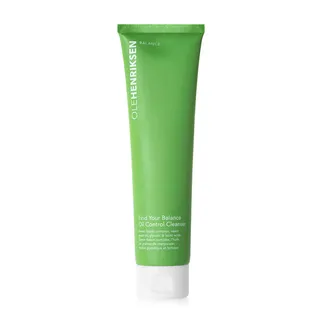
OleHenriksen Find Your Balance Oil Control Cleanser
Works for
CleansingSodium cocoyl isethionate, Decyl glucoside + 6 moreCleanses gently
“Find Your Balance™ Oil Control Cleanser”
This product works by removing dirt and oil from the surface of the skin. It uses a combination of mild cleansing agents (cocamidopropyl betaine, decyl glucoside, glycol distearate, hexylene glycol, laureth-4, linoleic acid, linolenic acid, sodium cocoyl isethionate) and should be able to cleanse the skin gently. Still keep in mind that any cleansing can disrupt the skin barrier, and most people do not need to cleanse their skin more than once per day.
Even though this formulation is mild, the following cleansing agents could trigger an irritation or allergy for some people: cocamidopropyl betaine, decyl glucoside
Anti-blemishGlycolic acid, Linoleic acid + 1 moreNot delivered
“A pore-purifying cleanser with powerful AHAs to reduce excess oil and unclog pores, without stripping skin.”
This product contains ingredients (glycolic acid, linoleic acid) that could help reduce blemishes and clogged pores in theory, but there is not enough evidence that they actually work.
ExfoliationSide benefit the brand mentions · Glycolic acid, Lactic acidWorks well
“Powerful AHAs--glycolic and lactic acids--help loosen and lift dead skin cells that can cause pore-clogging build-up.”
This product can help exfoliate the skin. In other words, it helps break down the bonds between dead cells on the surface of the skin and speed up the skin turnover. Skin often appears softer and brighter after exfoliation, but overdoing it can result in disrupted skin barrier. The following ingredient is doing the exfoliating job in this product: glycolic acid.
Can it cause trouble?
Irritancy4 strong irritants: Eucalyptus globulus leaf oil, Mentha piperita oil + 2 more — patch-test recommendedHigh risk
Comedogenic3 ingredients rated 2 or more on the 0–5 pore-clogging scale3 flagged
User reviews
Be the first — your take helps the next person decide.
Ingredients
Filter by role to see what each ingredient is doing.
Water~45–55%
Sodium cocoyl isethionate~11–13%
- Irritation risk
- Medium
Helps water and oil mix together. Can be used as a cleansing agent
More about Sodium cocoyl isethionateDecyl glucoside~5.6–6.8%
- Irritation risk
- High
Helps oil and water mix together. Can be irritating
More about Decyl glucosideCocamidopropyl betaine~4.5–5.5%
- Irritation risk
- High
Helps water and oil mix together. Used as a cleansing ingredient. Could be an allergen
More about Cocamidopropyl betaineGlycerin~2.4–3%
- Irritation risk
- Low
One of the best moisturizing ingredients. Naturally present in skin. It attracts water to the upper layer of the skin working as a humectant
More about GlycerinAcrylates copolymer~1.9–2.4%
- Irritation risk
- Medium
Used to stabilize product formulation, help create an even product layer over skin (for example, in sunscreen) and create a thicker product consistency
More about Acrylates copolymerGlycol distearate~1.7–2.1%
- Irritation risk
- Medium
Helps water and oil mix together
More about Glycol distearatePhenoxyethanol~0.5–1%
- Irritation risk
- Low
A preservative. It helps prevent bacterial growth in cosmetic products
More about PhenoxyethanolGlycolic acid~1.2–1.5%
- Irritation risk
- High
An alpha-hydroxy acid (AHA) that helps to remove the dead skin cells on the surface of the skin reveling a more even, smoother complexation. It is also able to stimulate collagen production with long-term use. Could help to reduce pore congestion. It can be irritating to the skin. Apply sunscreen daily if using products with glycolic acid
More about Glycolic acidLactic acid~0.95–1.2%
- Irritation risk
- Medium
An exfoliating and moisturizing alpha-hydroxy acid (AHA). Typically causes less irritation than other AHAs, for example, glycolic acid. At high concentrations (about 15%), lactic acid can help reduce lines and wrinkles. Recent studies show that lactic acid can support the "good" bacteria living on skin's surface (healthy skin microbiome)
More about Lactic acidSodium hydroxide~0.7–1.1%
Caprylyl glycol~0.65–0.95%
- Irritation risk
- Medium
Helps preserve products and creates a nice product texture
More about Caprylyl glycolEucalyptus globulus leaf oil~0.55–0.8%
- Irritation risk
- High
An essential oil that can be very irritating. Has some anti-bacterial properties
More about Eucalyptus globulus leaf oilMentha piperita oil~0.5–0.7%
Laureth-4~0.5–0.75%
- Irritation risk
- Medium
- Comedogenicity
- 2/5
Helps water and oil mix together
More about Laureth-4Ethylhexylglycerin~0.45–0.7%
Hexylene glycol~0.45–0.65%
- Irritation risk
- Medium
Helps create a more spreadable product texture
More about Hexylene glycolMelia azadirachta seed oil~0.45–0.65%
- Irritation risk
- Low
Helps soften the upper layer of the skin and can support skin barrier function due to the high linoleic acid content
More about Melia azadirachta seed oilLinoleic acid~0.45–0.65%
- Irritation risk
- Low
An excellent emollient. Helps soften the skin, restore its barrier function, and can help to calm down inflammation. It can be helpful to prevent blemishes and clogged pores
More about Linoleic acidCamellia sinensis leaf extract~0.25–0.5%
- Irritation risk
- Low
Can contain potent anti-oxidant compounds (abbreviated ECG, GCG, EGC, and EGCG) that might help protect the skin from free radicals. Can help calm down inflammation and has some anti-bacterial properties. Unfortunately, these antioxidants are unstable and lose their effectiveness very quickly in products. The concentration of the antioxidant compounds in the extract also tends to be low to be effective in topical formulation
More about Camellia sinensis leaf extractChondrus crispus extract~0.25–0.45%
- Irritation risk
- Low
- Comedogenicity
- 3/5
Red algae extract that helps attract water to the upper layer of the skin and create a nicer product consistency
More about Chondrus crispus extractEucalyptus globulus leaf extract~0.15–0.3%
- Irritation risk
- High
Used as a fragrance. Can be irritating
More about Eucalyptus globulus leaf extractMacrocystis pyrifera extract~0.15–0.3%
- Irritation risk
- Low
- Comedogenicity
- 3/5
Phytic acid~0.15–0.3%
- Irritation risk
- Medium
An alpha-hydroxy acid (AHA), but is mostly used to stabilize product formulations in cosmetics
More about Phytic acidLinolenic acid~0.25–0.45%
- Irritation risk
- Medium
An emollient that helps soften the skin and calm down inflammation
More about Linolenic acidSodium benzoate~0.1–0.2%
Tocopherol~0.1–0.15%
- Irritation risk
- Low
Pure form of vitamin E. Can help moisturise and protect the skin from free radicals. Often used to help stabilise other ingredients or the formula itself
More about TocopherolLimonene~0.05–0.1%
- Irritation risk
- High
A common frangrance that can easily irritate skin, especially if exposed to air, light or heat
More about LimoneneIngredient list view
Water, Sodium cocoyl isethionate, Decyl glucoside, Cocamidopropyl betaine, Glycerin, Acrylates copolymer, Glycol distearate, Phenoxyethanol, Glycolic acid, Lactic acid, Sodium hydroxide, Caprylyl glycol, Eucalyptus globulus leaf oil, Mentha piperita oil, Laureth-4, Ethylhexylglycerin, Hexylene glycol, Melia azadirachta seed oil, Linoleic acid, Camellia sinensis leaf extract, Chondrus crispus extract, Eucalyptus globulus leaf extract, Macrocystis pyrifera extract, Phytic acid, Linolenic acid, Sodium benzoate, Tocopherol, Limonene
Compare prices
Retailers ranked by price — lowest first.
Affiliate links · As an Amazon Associate, WIMJ earns from qualifying purchases.
Worth comparing, line by line.
Match % combines shared ingredients, the first five ingredients, shared actives and hero ingredients, irritancy (lower counts in the alternative's favour), texture and body area. Only products in the same routine step are compared.
| OleHenriksenFind Your Balance Oil Control CleanserYOUR PRODUCT | ADVANCED CLINICALSGlycolic Acid + Lactic Acid Cleanser | CliniqueClarifying Do-Over Peel | Dope Skin CoAHA/BHA Exfoliating Cleanser | |
|---|---|---|---|---|
| Match | — | 48% | 48% | 48% |
| Price | $48.00 | $19.99−$28.01 | $21.75−$26.25 | $33.00−$15.00 |
| Shared key ingredients | — | 5 of 14 | 3 of 14 | 4 of 14 |
| Key difference | — | Salicylic Acid | Salicylic Acid | Niacinamide |
| Irritancy | High | High | Medium | Medium |
| Drying alcohol | — | — | Contains drying alcohol | — |
| View product | Shop | Shop | Shop |

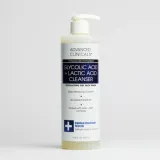

More alternatives: Tiege Hanley GLYCOLIC PADS Pore Cleansing & Oil RemovingCinch Skin Cleanse + Glow Micellar Water
Sources cited in this review
Every concentration estimate and effectiveness label is anchored to one of these 19 studies and safety reviews.
- 1Final Report on the Safety Assessment of Sodium Cocoyl Isethionatejournals.sagepub.com
- 2
- 3
- 4
- 5
- 6

Affiliate links · As an Amazon Associate, WIMJ earns from qualifying purchases.