Works for
1 of 1 advertised claim delivered
Moisturizing16 ingredients credited for this claimGood support
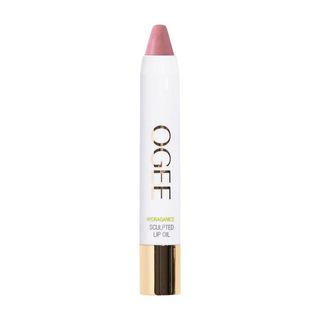
“Key Benefits 92% organic ingredientsLip moisturizerLightly colored lip treatmentLip plumperCold pressed jojoba seed oilCertified organic, cruelty-free, not tested on animals, gluten-free, all natural, GMO-free, made in USA”
This product can help improve hydration of the skin with the two types of ingredients.
The first type is called “humectants”:
these ingredients help attract water.
When humectants are on the surface of the skin, they “pull in” the moisture from the outside environment, or from
within deeper layers of the skin. The following ingredients in this product do the job:
sodium hyaluronate.
This product also contains ingredients called “occlusives”. They help reduce the speed with which our skin loses moisture to the outside environment. These ingredients also help soften the upper layer of the skin, so it feels less tight and nicer to the touch. The following ingredients in this product do the job: beeswax, butyrospermum parkii butter.
Anti-oxidationNot advertised by the brand · 4 ingredients credited for this claimStrong support
This product contains antioxidants (tocopherol) that can help neutralize free radicals in skin. By doing so, they can lessen the damage the skin gets from the UV light (sun).
The following ingredients - squalene also can have an antioxidant effect, but there is less evidence to confirm their effectiveness in skin.
Anti-agingNot advertised by the brand · 3 ingredients credited for this claimModerate support
This product contains tocopherol. This ingredient help neutralize free radicals in skin. By doing so, they might be able to prevent early signs of aging (like fine lines and wrinkles), at least to some extent. These ingredients will not be able to "reverse" signs of aging.
Can it cause trouble?
Irritancy2 strong irritants: Mentha piperita oil, ParfumMedium risk
Comedogenic4 ingredients rated 2 or more on the 0–5 pore-clogging scale4 flagged
User reviews
Be the first — your take helps the next person decide.
Ingredients
Filter by role to see what each ingredient is doing.
Mica~26–31%
- Irritation risk
- Low
Creates an illusion of smoother and more radiant skin tone. Adds shimmer to the skin by reflecting light
More about MicaTitanium dioxide~9.2–11.2%
- Irritation risk
- Low
Works as a UV filter when used in high concentrations. It is photostable and is effective mostly against the UVB light, with some protection in the UVA range. In small concentrations, used for its ability to improve the color of cosmetic products. Is usually well tolerated by the skin
More about Titanium dioxideCi 77891~6.1–7.5%
- Irritation risk
- Low
Ci 75470~4.7–5.8%
Iron oxides~3.9–4.8%
- Irritation risk
- Low
An umbrella term for the following three colorants: CI 77491, CI 77492, CI 77499. They might be able to offer some protection against visible light, but the degree of the protection is not clear
More about Iron oxidesSimmondsia chinensis seed oil~3.1–3.8%
- Irritation risk
- Medium
Softens the upper layer of skin and helps restore the healthy skin barrier. Has shown to help calm down inflammation in skin. It is a stable oil, meaning that it retains its properties even when exposed to air.
More about Simmondsia chinensis seed oilButyrospermum parkii butter~2.5–3.1%
- Irritation risk
- Low
- Comedogenicity
- 3/5
A great moisturising ingredient that softens the skin and reduces water loss from its upper layer. It also can be helpful in protecting skin from free radicals
More about Butyrospermum parkii butterTocopherol~1.7–2.1%
- Irritation risk
- Low
Pure form of vitamin E. Can help moisturise and protect the skin from free radicals. Often used to help stabilise other ingredients or the formula itself
More about TocopherolOlea europaea fruit oil~1.6–2%
- Irritation risk
- Medium
An emollient that helps soften the skin but is not effective for restoring its barrier function. Might be helpful to calm down inflammation
More about Olea europaea fruit oilBeeswax~1.5–1.8%
- Irritation risk
- Low
Forms a protective barrier that holds water and keeps dry skin hydrated. Keeps an emulsion from separating into its oil and liquid components, and increases the thickness of a product. Can be an allergen
More about BeeswaxCera alba~1.5–1.8%
- Irritation risk
- Medium
Forms a protective barrier that holds water and keeps dry skin hydrated. Keeps an emulsion from separating into its oil and liquid components, and increases the thickness of a product. Can be an allergen
More about Cera albaCocos nucifera oil~1.1–1.3%
- Irritation risk
- Low
- Comedogenicity
- 3/5
An emollient. Found to be as effective as a moisturizer for dry skin as mineral oil. Could be comedogenic
More about Cocos nucifera oilSimmondsia chinensis seed oil~1.1–1.4%
- Irritation risk
- Medium
Softens the upper layer of skin and helps restore the healthy skin barrier. Has shown to help calm down inflammation in skin. It is a stable oil, meaning that it retains its properties even when exposed to air.
More about Simmondsia chinensis seed oilCopernicia cerifera wax~1.1–1.4%
- Irritation risk
- Low
Helps to soften the upper layer of the skin and create a nice product consistency
More about Copernicia cerifera waxJojoba esters~1–1.3%
- Irritation risk
- Medium
An emollient made of jojoba oil. Helps soften the skin and support its barrier function
More about Jojoba estersDipalmitoyl hydroxyproline~0.9–1.15%
- Irritation risk
- Low
Is claimed to stimulate collagen and elastin production, as well as work as an anti-oxidant. There is however not enough evidence for its effectiveness
More about Dipalmitoyl hydroxyprolineButyrospermum parkii butter~1–1.2%
- Irritation risk
- Low
- Comedogenicity
- 3/5
A great moisturising ingredient that softens the skin and reduces water loss from its upper layer. It also can be helpful in protecting skin from free radicals
More about Butyrospermum parkii butterSodium hyaluronate~0.75–1.1%
- Irritation risk
- Low
One of the best moisturizing ingredients. Attracts water into the upper layer of the skin
More about Sodium hyaluronateMentha piperita oil~0.65–1%
Helianthus annuus seed oil~0.75–1.15%
- Irritation risk
- Low
A great emollient due to its high linoleic acid content. One of the most effective plant oils in helping skin hydration and repairing skin barrier function
More about Helianthus annuus seed oilHydrogenated castor oil~0.75–1.15%
- Irritation risk
- Medium
A plant oil that can help soften the skin. It might be helpful in calming down inflammation, but solid research is lacking. Is often used in lip products to create the needed product consistency
More about Hydrogenated castor oilTocopherol~0.65–1%
- Irritation risk
- Low
Pure form of vitamin E. Can help moisturise and protect the skin from free radicals. Often used to help stabilise other ingredients or the formula itself
More about TocopherolRicinus communis seed oil~0.6–0.9%
- Irritation risk
- Medium
A plant oil that can help soften the skin. It might be helpful in calming down inflammation, but solid research is lacking. Is often used in lip products to create the needed product consistency
More about Ricinus communis seed oilBeta-sitosterol~0.65–0.95%
- Irritation risk
- Low
A phytosterol that can support skin's barrier function and help the skin stay hydrated
More about Beta-sitosterolSqualene~0.65–1%
- Irritation risk
- Low
- Comedogenicity
- 2/5
An oil that is naturally part of skin sebum that helps to soften its upper layer, reduce water loss and neutralize free radicals. It might be comedogenic. Avoid applying large concentrations (or pure oil) before sun exposure as oxidized squalene can clog pores and lead to skin irritation. Today squalene is mostly derived from vegetable oils or synthetized by yeast
More about SqualeneMica~0.55–0.85%
- Irritation risk
- Low
Creates an illusion of smoother and more radiant skin tone. Adds shimmer to the skin by reflecting light
More about MicaTitanium dioxide~0.65–0.95%
- Irritation risk
- Low
Works as a UV filter when used in high concentrations. It is photostable and is effective mostly against the UVB light, with some protection in the UVA range. In small concentrations, used for its ability to improve the color of cosmetic products. Is usually well tolerated by the skin
More about Titanium dioxideCi 77891~0.55–0.8%
- Irritation risk
- Low
Ci 75470~0.5–0.75%
Iron oxides~0.45–0.65%
- Irritation risk
- Low
An umbrella term for the following three colorants: CI 77491, CI 77492, CI 77499. They might be able to offer some protection against visible light, but the degree of the protection is not clear
More about Iron oxidesMica~0.3–0.5%
- Irritation risk
- Low
Creates an illusion of smoother and more radiant skin tone. Adds shimmer to the skin by reflecting light
More about MicaParfum~0.15–0.3%
- Irritation risk
- High
An aromatic blend of unspecified and possibly irritating ingredients
More about ParfumMica~0.1–0.25%
- Irritation risk
- Low
Creates an illusion of smoother and more radiant skin tone. Adds shimmer to the skin by reflecting light
More about MicaIngredient list view
Mica, Titanium dioxide, Ci 77891, Ci 75470, Iron oxides, Unknown, Simmondsia chinensis seed oil, Butyrospermum parkii butter, Tocopherol, Olea europaea fruit oil, Beeswax, Cera alba, Cocos nucifera oil, Simmondsia chinensis seed oil, Copernicia cerifera wax, Jojoba esters, Dipalmitoyl hydroxyproline, Butyrospermum parkii butter, Sodium hyaluronate, Mentha piperita oil, Helianthus annuus seed oil, Hydrogenated castor oil, Tocopherol, Ricinus communis seed oil, Beta-sitosterol, Squalene, Mica, Titanium dioxide, Ci 77891, Ci 75470, Iron oxides, Mica, Parfum, Mica
Compare prices
Retailers ranked by price — lowest first.

Sources cited in this review
Every concentration estimate and effectiveness label is anchored to one of these 18 studies and safety reviews.
- 1Vitamin E in dermatologyncbi.nlm.nih.gov
- 2Vitamin E and Skin Healthlpi.oregonstate.edu
- 3Use of “natural” oils for moisturization: Review of olive, coconut, and sunflower seed oilonlinelibrary.wiley.com
- 4
- 5Hyaluronic acid: A key molecule in skin agingncbi.nlm.nih.gov
- 6

Affiliate links · As an Amazon Associate, WIMJ earns from qualifying purchases.