Works for
1 of 1 advertised claim delivered
Anti-aging5 ingredients credited for this claimModerate support
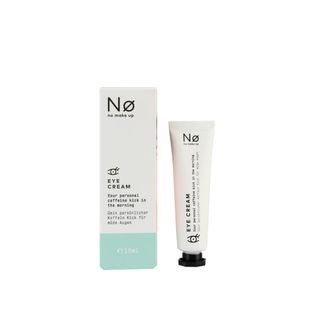
“immediate effect against small wrinkles, long-term effect against dark circles and bags under the eyes.”
This product contains tetrapeptide-5. This ingredient might be able to help reduce and prevent fine lines and wrinkles, improve skin elasticity and firmness, but there is not enough evidence that it actually works.
MoisturizingNot advertised by the brand · 13 ingredients credited for this claimGood support
This product can help improve hydration of the skin with the two types of ingredients.
The first type is called “humectants”:
these ingredients help attract water.
When humectants are on the surface of the skin, they “pull in” the moisture from the outside environment, or from
within deeper layers of the skin. The following ingredients in this product do the job:
glycerin, sodium hyaluronate.
This product also contains ingredients called “occlusives”. They help reduce the speed with which our skin loses moisture to the outside environment. These ingredients also help soften the upper layer of the skin, so it feels less tight and nicer to the touch. The following ingredients in this product do the job: argania spinosa kernel oil, glycine soja oil.
Can it cause trouble?
Irritancy8 strong irritants: Parfum, Citral + 6 more — patch-test recommendedHigh risk
Comedogenic3 ingredients rated 2 or more on the 0–5 pore-clogging scale3 flagged
User reviews
Be the first — your take helps the next person decide.
Ingredients
Filter by role to see what each ingredient is doing.
Water~40–60%
Glycine soja oil~4.8–7.2%
- Irritation risk
- Medium
- Comedogenicity
- 2/5
A good emollient that helps soften the skin and helps repair its barrier function. It can clog pores if used in high concentrations.
More about Glycine soja oilCetearyl alcohol~3.2–4.8%
- Irritation risk
- Low
- Comedogenicity
- 2/5
A non-drying alcohol. Works as an emollient. Helps water and oil mix together and creates a nice product texture
More about Cetearyl alcoholGlyceryl stearate~2.4–3.7%
- Irritation risk
- Low
An emollient that softens the skin and forms a protective layer on its surface. Helps water and oil mix together
More about Glyceryl stearateSilica~2.1–3.2%
Glycerin~1.7–2.6%
- Irritation risk
- Low
One of the best moisturizing ingredients. Naturally present in skin. It attracts water to the upper layer of the skin working as a humectant
More about GlycerinPersea gratissima oil~1.4–2.2%
- Irritation risk
- Medium
An emollient that helps soften the skin and could be helpful in repairing its barrier function
More about Persea gratissima oilPrunus amygdalus dulcis oil~1.3–1.9%
- Irritation risk
- Low
An emollient that softens the skin
More about Prunus amygdalus dulcis oilArgania spinosa kernel oil~1–1.5%
- Irritation risk
- Medium
An emollient that helps soften the upper layer of the skin. Might have some weak anti-oxidant properties
More about Argania spinosa kernel oilSodium cetearyl sulfate~0.9–1.35%
- Irritation risk
- Medium
Helps water and oil mix together and works as a cleansing agent
More about Sodium cetearyl sulfateButyrospermum parkii butter~0.5–1.2%
- Irritation risk
- Low
- Comedogenicity
- 3/5
A great moisturising ingredient that softens the skin and reduces water loss from its upper layer. It also can be helpful in protecting skin from free radicals
More about Butyrospermum parkii butterButylene glycol~0.4–0.9%
- Irritation risk
- Low
Used to create a nice product texture and help delivery of other ingredients. Might be somewhat helpful in attracting water to the upper layer of the skin
More about Butylene glycolTetrapeptide-5~0.35–0.8%
- Irritation risk
- Low
A type of peptide. Peptides are excellent moisturizers and might be able support collagen production reducing fine lines and wrinkles
More about Tetrapeptide-5Coffea arabica seed extract~0.3–0.7%
- Irritation risk
- Low
Might be helpful in neutralizing free radicals in skin
More about Coffea arabica seed extractCamellia sinensis leaf extract~0.2–0.8%
- Irritation risk
- Low
Can contain potent anti-oxidant compounds (abbreviated ECG, GCG, EGC, and EGCG) that might help protect the skin from free radicals. Can help calm down inflammation and has some anti-bacterial properties. Unfortunately, these antioxidants are unstable and lose their effectiveness very quickly in products. The concentration of the antioxidant compounds in the extract also tends to be low to be effective in topical formulation
More about Camellia sinensis leaf extractParfum~0.2–0.7%
- Irritation risk
- High
An aromatic blend of unspecified and possibly irritating ingredients
More about ParfumCitral~0.15–0.65%
Geraniol~0.15–0.6%
Linalool~0.15–0.55%
Citronellol~0.1–0.45%
Hexyl cinnamal~0.1–0.4%
Limonene~0.1–0.35%
- Irritation risk
- High
A common frangrance that can easily irritate skin, especially if exposed to air, light or heat
More about LimoneneRosmarinus officinalis leaf extract~0.1–0.35%
- Irritation risk
- High
Can be helpful in reducing inflammation in skin, including inflamed acne. It can be irritating
More about Rosmarinus officinalis leaf extractSodium hyaluronate~0.1–0.35%
- Irritation risk
- Low
One of the best moisturizing ingredients. Attracts water into the upper layer of the skin
More about Sodium hyaluronateTocopherol~0.1–0.35%
- Irritation risk
- Low
Pure form of vitamin E. Can help moisturise and protect the skin from free radicals. Often used to help stabilise other ingredients or the formula itself
More about TocopherolBisabolol~0.05–0.2%
- Irritation risk
- Low
An active component of chamomile plant that historically has been used to calm down irritated skin. A recent study shows that bisabolol indeed can have some anti-inflammatory effect on skin, even though conclusive data is lacking. Bisabolol has a sweet floral scent and can be added to products for its aromatic properties
More about BisabololPhenoxyethanol~0.05–0.25%
- Irritation risk
- Low
A preservative. It helps prevent bacterial growth in cosmetic products
More about PhenoxyethanolEthylhexylglycerin~0.05–0.15%
Citric acid~0.01–0.05%
- Irritation risk
- Medium
Can work as an exfoliant but is typically used to adjust the product pH
More about Citric acidIngredient list view
Water, Glycine soja oil, Cetearyl alcohol, Glyceryl stearate, Silica, Glycerin, Persea gratissima oil, Prunus amygdalus dulcis oil, Argania spinosa kernel oil, Sodium cetearyl sulfate, Butyrospermum parkii butter, Butylene glycol, Unknown, Tetrapeptide-5, Unknown, Coffea arabica seed extract, Camellia sinensis leaf extract, Parfum, Citral, Geraniol, Linalool, Citronellol, Hexyl cinnamal, Limonene, Rosmarinus officinalis leaf extract, Sodium hyaluronate, Tocopherol, Bisabolol, Phenoxyethanol, Ethylhexylglycerin, Citric acid
Compare prices
Retailers ranked by price — lowest first.
.png)
Affiliate links · prices updated regularly
Sources cited in this review
Every concentration estimate and effectiveness label is anchored to one of these 14 studies and safety reviews.
- 1
- 2
- 3
- 4Final Report on the Safety Assessment of Sodium Cetearyl Sulfate journals.sagepub.com
- 5
- 6

Affiliate links · As an Amazon Associate, WIMJ earns from qualifying purchases.