
Works for:
based on ingredients and %- Moisturizing
Doesn't work for:
based on ingredients and %- Evens skin tone
Can it cause trouble?
- Irritation risk: high
- Comedogenic risk ingredients: 1
Key actives
Moisturizing
What does the product description say?
Saturate skin with nourishing hydration with the best-selling Almond Moisturiser from award-winning pioneers in ethical and sustainable skincare and wellbeing, Neal’s Yard Remedies .
Source: Mankind
This product can help improve hydration of the skin with the two types of ingredients.
The first type is called “humectants”:
these ingredients help attract water.
When humectants are on the surface of the skin, they “pull in” the moisture from the outside environment, or from
within deeper layers of the skin. The following ingredients in this product do the job:
glycerin.
This product also contains ingredients called “occlusives”. They help reduce the speed with which our skin loses moisture to the outside environment. These ingredients also help soften the upper layer of the skin, so it feels less tight and nicer to the touch. The following ingredients in this product do the job: cera alba, cocos nucifera oil.
Softens the upper layer of skin and helps restore the healthy skin barrier. Has shown to help calm down inflammation in skin. It is a stable oil, meaning that it retains its properties even when exposed to air.
Forms a protective barrier that holds water and keeps dry skin hydrated. Keeps an emulsion from separating into its oil and liquid components, and increases the thickness of a product. Can be an allergen
An emollient. Found to be as effective as a moisturizer for dry skin as mineral oil. Could be comedogenic
One of the best moisturizing ingredients. Naturally present in skin. It attracts water to the upper layer of the skin working as a humectant
A great emollient due to its high linoleic acid content. One of the most effective plant oils in helping skin hydration and repairing skin barrier function
Helps soften the upper layer of the skin and can support skin barrier function
A non-drying alcohol that works to soften the skin and stabilize product formulations helping oil and water mix together
An emollient that softens the skin
Used mostly for creating emulsions - helping oil and water mix together. Helps soften the upper layer of the skin
Pure form of vitamin E. Can help moisturise and protect the skin from free radicals. Often used to help stabilise other ingredients or the formula itself
Evens skin tone
What does the product description say?
The Almond Moisturiser features a combination of sweet almond and evening primrose oils which improve the skin’s tone whilst reducing moisture loss.
Source: Allbeauty
Effective ingredients missing or their concentration is too low
How honest is this product?
| Promise | Can it deliver? |
|---|---|
| Moisturizing | |
| Evens skin tone |
Total Promises Fulfilled score: 37/100.
We receive a small commission for purchases made through these links at no cost for you. Thank you for your support! Learn more
Affiliate link · supports WIMJ at no cost to you
Potential irritants
Comedogenic ingredients
User reviews (0)
Averages from community submissions.
No reviews yet for this product.
Be the first to share your experience!
Tried this product?
Help capture what the ingredient list can't—texture, finish, pilling, scent, and more. Answer what you can, skip the rest.
Takes ~30 seconds.
Reviews are shown in aggregate. No personal details.
| Product | Similarity | Price | Irritancy |
|---|---|---|---|
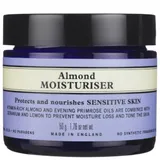 Neal's Yard Remedies Almond Moisturiser | Current | ≈ $29.41 | |
 Go-To Skin Care Super Softy | 44% | - | |
 BABOR Doctor Neuro Sensitive Intensive Calming Cream | 42% | ≈ $82.88 | |
 Willowberry Nutrient Boost Day Cream | 40% | $39.00 | |
 PURE'AM AUTHENTIC BARRIER CREAM BALM | 40% | $36.99 | |
 Andalou Naturals Age Defying Goji Peptide Perfecting Cream | 40% | $15.79 |
Key Actives
Helps soften the upper layer of the skin and can support skin barrier function
Pure form of vitamin E. Can help moisturise and protect the skin from free radicals. Often used to help stabilise other ingredients or the formula itself
Forms a protective barrier that holds water and keeps dry skin hydrated. Keeps an emulsion from separating into its oil and liquid components, and increases the thickness of a product. Can be an allergen
An emollient. Found to be as effective as a moisturizer for dry skin as mineral oil. Could be comedogenic
One of the best moisturizing ingredients. Naturally present in skin. It attracts water to the upper layer of the skin working as a humectant
A great emollient due to its high linoleic acid content. One of the most effective plant oils in helping skin hydration and repairing skin barrier function
Softens the upper layer of skin and helps restore the healthy skin barrier. Has shown to help calm down inflammation in skin. It is a stable oil, meaning that it retains its properties even when exposed to air.
Potential irritants
A plant extract that has some anti-oxidant and anti-bacterial properties. Can be irritating
Plant extract that can have healing and anti-inflammatory properties. It is a potential allergen and can be irritating
An essential oil. Can be irritating. Can become an allergen with oxidation
Produces temporary toning effect. Can help dissolve other ingredients or preserve products
A common frangrance that can easily irritate skin, especially if exposed to air, light or heat
Helps water and oil in the product mix well together and improves product texture
Forms a protective barrier that holds water and keeps dry skin hydrated. Keeps an emulsion from separating into its oil and liquid components, and increases the thickness of a product. Can be an allergen
Softens the upper layer of skin and helps restore the healthy skin barrier. Has shown to help calm down inflammation in skin. It is a stable oil, meaning that it retains its properties even when exposed to air.
Helps soften the upper layer of the skin and can support skin barrier function
Comedogenic ingredients
An emollient. Found to be as effective as a moisturizer for dry skin as mineral oil. Could be comedogenic
All ingredients
An emollient. Found to be as effective as a moisturizer for dry skin as mineral oil. Could be comedogenic
One of the best moisturizing ingredients. Naturally present in skin. It attracts water to the upper layer of the skin working as a humectant
A non-drying alcohol that works to soften the skin and stabilize product formulations helping oil and water mix together
Helps water and oil in the product mix well together and improves product texture
Forms a protective barrier that holds water and keeps dry skin hydrated. Keeps an emulsion from separating into its oil and liquid components, and increases the thickness of a product. Can be an allergen
A great emollient due to its high linoleic acid content. One of the most effective plant oils in helping skin hydration and repairing skin barrier function
A plant extract that has some anti-oxidant and anti-bacterial properties. Can be irritating
Used mostly for creating emulsions - helping oil and water mix together. Helps soften the upper layer of the skin
Softens the upper layer of skin and helps restore the healthy skin barrier. Has shown to help calm down inflammation in skin. It is a stable oil, meaning that it retains its properties even when exposed to air.
Helps soften the upper layer of the skin and can support skin barrier function
Plant extract that can have healing and anti-inflammatory properties. It is a potential allergen and can be irritating
An essential oil. Can be irritating. Can become an allergen with oxidation
Pure form of vitamin E. Can help moisturise and protect the skin from free radicals. Often used to help stabilise other ingredients or the formula itself
Produces temporary toning effect. Can help dissolve other ingredients or preserve products
A common frangrance that can easily irritate skin, especially if exposed to air, light or heat
Ingredient list view
Water, Prunus amygdalus dulcis oil, Cocos nucifera oil, Glycerin, Cetyl alcohol, Cetearyl glucoside, Cetearyl olivate, Cera alba, Helianthus annuus seed oil, Calendula officinalis flower extract, Sorbitan olivate, Lecithin, Simmondsia chinensis seed oil, Oenothera biennis oil, Chamomilla recutita flower extract, Lavandula officinalis flower/extract, Pelargonium graveolens flower oil, Citrus limon peel oil, Xanthan gum, Tocopherol, Levulinic acid, Sodium levulinate, Potassium sorbate, Sodium dehydroacetate, Alcohol denat., Citral, Citronellol, Geraniol, Limonene, Linalool
- Anti-Inflammatory and Skin Barrier Repair Effects of Topical Application of Some Plant Oils
- Glycerol and the skin: holistic approach to its origin and functions
- Efficacy of barrier creams in comparison to skin care products in dental laboratory technicians--a controlled trial
- Effect of Olive and Sunflower Seed Oil on the Adult Skin Barrier: Implications for Neonatal Skin Care
- Topically Applied Sunflower Seed Oil Prevents Invasive Bacterial Infections in Preterm Infants in Egypt
- Effect of topically applied lipids on surfactant-irritated skin
- Impact of topical oils on the skin barrier: possible implications for neonatal health in developing countries
- Topical application of Calendula officinalis (L.): Formulation and evaluation of hydrophilic cream with antioxidant activity
- The seamy side of natural medicines: contact sensitization to arnica (Arnica montana L.) and marigold (Calendula officinalis L.)
- Final report on the safety assessment of Calendula officinalis extract and Calendula officinalis
- Contact dermatitis as an adverse reaction to some topically used European herbal medicinal products – part 1: Achillea millefolium–Curcuma longa
- Fragrance Compound Geraniol Forms Contact Allergens on Air Exposure. Identification and Quantification of Oxidation Products and Effect on Skin Sensitization
- Vitamin E in dermatology
- Vitamin E and Skin Health
- 4 Final Report on the Safety Assessment of Sodium Dehydroacetate and Dehydroacetic Acid
- Annex I: Clinical evidence regarding sensitisation to individual fragrance chemicals and to natural extracts