Works for
Anti-agingGlycolic acid, Lactic acid + 2 moreWorks well
“The non-aggressive formula helps remove dead cells and impurities from the surface of your skin while providing anti-aging properties.”
This product can help reduce and prevent fine lines and wrinkles, improve skin elasticity and firmness because it contains glycolic acid.
These ingredients in the product can also be helpful, even though there is less evidence for their effectiveness: hexanoyl dipeptide-3 norleucine acetate, lactic acid.
Keep in mind that it typically takes at least 6 weeks to notice any results because the changes that are needed to improve fine lines and elasticity happen in the deeper layers of the skin. No topical anti-aging product can “erase” wrinkles or fully reverse signs of aging.
ExfoliationGlycolic acid, Lactic acid + 2 moreWorks well
“The non-aggressive formula helps remove dead cells and impurities from the surface of your skin while providing anti-aging properties.”
This product can help exfoliate the skin. In other words, it helps break down the bonds between dead cells on the surface of the skin and speed up the skin turnover. Skin often appears softer and brighter after exfoliation, but overdoing it can result in disrupted skin barrier. The following ingredient is doing the exfoliating job in this product: glycolic acid, lactic acid.
Evens skin toneGlycolic acid, Lactic acidWorks well
“This star product gives you extraordinarily soft, even-toned, luminous and flawless skin.”
This product can help reduce hypepigmentation and even out the skin tone because it contains the following effective ingredients: glycolic acid, lactic acid
Keep in mind that you would need to apply any topical skincare targetted at hypigmentation consistently for a couple of months to get a result. No topical skincare product can help get rid of hyperpigmentation (including post-acne marks and age spots) instantly.
MoisturizingSide benefit · Salicyloyl phytosphingosine, Hexanoyl dipeptide-3 norleucine acetate + 6 moreWorks well
This product contains good ingredients to attract water to the upper layer of the skin. These ingredients are called "humectants": glycerin, lactic acid.
When humectants are on the surface of the skin, they “pull in” the moisture from the outside environment, or from within deeper layers of the skin. If the air is dry, humectants can speed up the moisture loss from the skin. This is why it is a good idea to use another product on top of this one to help "seal in" the moisture (look for ingredients like dimethicone, squalane, oils and butters).
The following ingredients in this product are especially good for supporting the skin barrier and helping with the hydration level: hexanoyl dipeptide-3 norleucine acetate, salicyloyl phytosphingosine
Anti-oxidationSide benefit · Tartaric acid, Hydrolyzed opuntia ficus-indica flower extract + 2 moreMay help
This product contains antioxidants (tartaric acid) that can help neutralize free radicals in skin to lessen the damage it gets from the UV light (sun). There is some human evidence for this effect in skin, though it is smaller or less consistent than the evidence for the best antioxidants.
Can it cause trouble?
Irritancy7 strong irritants: Alcohol denat., Parfum + 5 more — patch-test recommendedHigh risk
ComedogenicClean of flagged comedogenic ingredientsNone flagged


User reviews
Be the first — your take helps the next person decide.
Ingredients
Filter by role to see what each ingredient is doing.
Water~40–60%
Glycolic acid~5–7.4%
- Irritation risk
- High
An alpha-hydroxy acid (AHA) that helps to remove the dead skin cells on the surface of the skin reveling a more even, smoother complexation. It is also able to stimulate collagen production with long-term use. Could help to reduce pore congestion. It can be irritating to the skin. Apply sunscreen daily if using products with glycolic acid
More about Glycolic acidAlcohol denat.~3.8–5.7%
- Irritation risk
- High
Produces temporary toning effect. Can help dissolve other ingredients or preserve products
More about Alcohol denat.Sodium hydroxide~2.7–4.1%
Lactic acid~2–3%
- Irritation risk
- Medium
An exfoliating and moisturizing alpha-hydroxy acid (AHA). Typically causes less irritation than other AHAs, for example, glycolic acid. At high concentrations (about 15%), lactic acid can help reduce lines and wrinkles. Recent studies show that lactic acid can support the "good" bacteria living on skin's surface (healthy skin microbiome)
More about Lactic acidGlycerin~1.8–2.6%
- Irritation risk
- Low
One of the best moisturizing ingredients. Naturally present in skin. It attracts water to the upper layer of the skin working as a humectant
More about GlycerinHydroxypropyl starch phosphate~1.5–2.2%
- Irritation risk
- Medium
Helps oil and water mix together and used to stabilize product formulations
More about Hydroxypropyl starch phosphateSalicyloyl phytosphingosine~1.2–1.8%
- Irritation risk
- Low
Helps attract water to the upper layer of the skin. Might have anti-aging benefits but solid study data is lacking
More about Salicyloyl phytosphingosineHydrolyzed opuntia ficus-indica flower extract~1.2–1.7%
- Irritation risk
- High
A plant extract. Can help attract water the upper layer of the skin and might have some anti-oxidant properties
More about Hydrolyzed opuntia ficus-indica flower extractHexanoyl dipeptide-3 norleucine acetate~0.6–1.4%
- Irritation risk
- Low
A type of peptide. Peptides are excellent moisturizers and might be able support collagen production reducing fine lines and wrinkles
More about Hexanoyl dipeptide-3 norleucine acetateSalix alba bark extract~0.4–0.9%
- Irritation risk
- High
A plant extract that can help neutralize free radicals in skin. It contains a compound salicin that can theoretically be converted into salicylic acid that, in turn, helps reduce inflammation in skin, but the evidence of effectiveness in skin is lacking and the extract is usually not used in a concentration that would enable an exfoliating effect
More about Salix alba bark extractAvena sativa kernel extract~0.4–1%
- Irritation risk
- Low
An effective moisturizing and skin barrier repair ingredient. Helps calm down inflammation and has some anti-oxidant properties
More about Avena sativa kernel extractEvernia prunastri extract~0.35–0.8%
- Irritation risk
- Low
Lecithin~0.35–0.85%
- Irritation risk
- Low
Used mostly for creating emulsions - helping oil and water mix together. Helps soften the upper layer of the skin
More about LecithinXanthan gum~0.3–0.7%
- Irritation risk
- Low
Used to create a thicker product consistency
More about Xanthan gumTartaric acid~0.2–0.8%
- Irritation risk
- Medium
An AHA (alpha-hydroxy acid). It oxidizes quickly which makes it less effective in skincare formulations. It can support skin's barrier and moisture levels
More about Tartaric acidMalic acid~0.2–0.75%
Citric acid~0.15–0.7%
- Irritation risk
- Medium
Can work as an exfoliant but is typically used to adjust the product pH
More about Citric acidEthylhexylglycerin~0.15–0.65%
Disodium edta~0.15–0.6%
Phenoxyethanol~0.15–0.6%
- Irritation risk
- Low
A preservative. It helps prevent bacterial growth in cosmetic products
More about PhenoxyethanolSodium benzoate~0.25–0.5%
Potassium sorbate~0.15–0.5%
Parfum~0.1–0.4%
- Irritation risk
- High
An aromatic blend of unspecified and possibly irritating ingredients
More about ParfumLavandula hybrida oil~0.1–0.5%
- Irritation risk
- High
Plant extract that can be irritating and is a known allergen
More about Lavandula hybrida oilHydroxycitronellal~0.1–0.4%
- Irritation risk
- High
A fragrance. A likely allergen and can be irritating
More about HydroxycitronellalLinalool~0.05–0.3%
Coumarin~0.05–0.25%
Amyl cinnamal~0.05–0.2%
- Irritation risk
- High
Datem~0.05–0.25%
Ingredient list view
Water, Glycolic acid, Alcohol denat., Sodium hydroxide, Lactic acid, Glycerin, Hydroxypropyl starch phosphate, Salicyloyl phytosphingosine, Hydrolyzed opuntia ficus-indica flower extract, Hexanoyl dipeptide-3 norleucine acetate, Salix alba bark extract, Avena sativa kernel extract, Evernia prunastri extract, Lecithin, Xanthan gum, Tartaric acid, Malic acid, Citric acid, Ethylhexylglycerin, Disodium edta, Phenoxyethanol, Sodium benzoate, Potassium sorbate, Parfum, Lavandula hybrida oil, Hydroxycitronellal, Linalool, Coumarin, Amyl cinnamal, Datem
Compare prices
Retailers ranked by price — lowest first.
Affiliate links · As an Amazon Associate, WIMJ earns from qualifying purchases.
Worth comparing, line by line.
Match % combines shared ingredients, the first five ingredients, shared actives and hero ingredients, irritancy (lower counts in the alternative's favour), texture and body area. Only products in the same routine step are compared.
| Natura BisséDiamond Glyco Extreme PeelYOUR PRODUCT | Dr Dennis GrossClinical Grade Resurfacing Liquid Peel 2-step | Paula's choice25% AHA + 2% BHA Exfoliant Peel | HydroPeptideTriple Acid Peptide Peel | |
|---|---|---|---|---|
| Match | — | 60% | 54% | 53% |
| Price | $315.00 | $20.00−$295.00 | $44.45−$270.55 | $19.00−$296.00 |
| Shared key ingredients | — | 5 of 6 | 4 of 6 | 4 of 6 |
| Key difference | — | Salicylic Acid | Salicylic Acid | Salicylic Acid |
| Irritancy | High | High | Medium | High |
| Drying alcohol | Contains drying alcohol | Contains drying alcohol | — | — |
| View product | Shop | Shop | Shop |


More alternatives: Skinbetter Science AlphaRet Exfoliating Peel PadsClinique Clarifying Do-Over Peel
Product summary
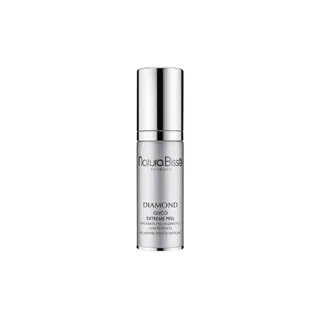
"Natura Bissé - Diamond Glyco Extreme Peel" is effective for: Anti-aging, Exfoliation, Evens skin tone and Moisturizing
This product could be helpful for: Anti-oxidation, but its actives are not the most effective or are not well-studied.
Ingredient callouts
- Exfoliating acids (lactic acid 2.00% - 3.00% and glycolic acid 5.00% - 7.40%). In this concentration, they will have a noticeable exfoliating effect. They can also have an anti-aging effect and stimulate collagen production in a long-run. Lactic Acid can also help to attract water to the upper layer (works as a humectant).
- Ceramides (salicyloyl phytosphingosine 1.20% - 1.80%). Ceramides are a type of lipids that our skin produces itself. They are a building block of the skin's barrier. Ceramides used in skincare are synthetic or extracted from plants. They work well for softening the skin surface and "patch holes" in the skin's barrier.
- Peptides (hexanoyl dipeptide-3 norleucine acetate 0.60% - 1.40%). There are many different kind of Peptides and they are naturally present in our skin. They all are a combination of aminoacids. Some of them work as natural antibiotics, promote wound-healing and production of collagen. The science is still not settled on how effective Peptides are in skincare, but it is very likely that they have a benefit. They might help restore the skin barrier and fight the signs of aging. At the very least, Peptides work as humectants: they attract water to the upper layer of the skin and improve its hydration.
- Humectants (salicyloyl phytosphingosine 1.20% - 1.80%, lactic acid 2.00% - 3.00% and glycerin 1.80% - 2.60%). These ingredients help attract water to the upper layer of the skin and improve the skin hydration.
Price
The product retails for 295.00$ in the United States and for 230.00£ in the United Kingdom.
For a detailed price comparison: click here.
Sources cited in this review
Every concentration estimate and effectiveness label is anchored to one of these 13 studies and safety reviews.
- 1
- 2Glycolic acid peel therapy – a current reviewncbi.nlm.nih.gov
- 3
- 4Epidermal and dermal effects of topical lactic acidncbi.nlm.nih.gov
- 5Dual Effects of Alpha-Hydroxy Acids on the Skinpdfs.semanticscholar.org
- 6

Affiliate links · As an Amazon Associate, WIMJ earns from qualifying purchases.