Works for
1 of 1 advertised claim delivered
Moisturizing24 ingredients credited for this claimStrong support
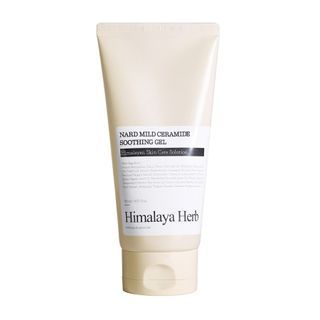
“A hypoallergenic soothing gel formulated with Ceramide, Panthenol that moisturize the skin and help strengthen the skin moisture barrier.”
This product can help improve hydration of the skin with the two types of ingredients.
The first type is called “humectants”:
these ingredients help attract water.
When humectants are on the surface of the skin, they “pull in” the moisture from the outside environment, or from
within deeper layers of the skin. The following ingredients in this product do the job:
glycerin, hydrolyzed hyaluronic acid.
This product also contains ingredients called “occlusives”. They help reduce the speed with which our skin loses moisture to the outside environment. These ingredients also help soften the upper layer of the skin, so it feels less tight and nicer to the touch. The following ingredients in this product do the job: caprylic/capric triglyceride, squalene.
The following ingredients in this product are especially good for supporting the skin barrier and helping with the hydration level: ceramide np, panthenol
Anti-oxidationNot advertised by the brand · 9 ingredients credited for this claimModerate support
This product contains antioxidants (squalene) that might be able to help neutralize free radicals in skin to lessen the damage it gets from the UV light (sun). There is not enough evidence to confirm their effectiveness in skin though.
Can it cause trouble?
Irritancy5 strong irritants: Melaleuca alternifolia leaf extract, Mentha piperita extract + 3 more — patch-test recommendedHigh risk
Comedogenic3 ingredients rated 2 or more on the 0–5 pore-clogging scale3 flagged


User reviews
Be the first — your take helps the next person decide.
Ingredients
Filter by role to see what each ingredient is doing.
Water~45–55%
Glycerin~5.1–6.3%
- Irritation risk
- Low
One of the best moisturizing ingredients. Naturally present in skin. It attracts water to the upper layer of the skin working as a humectant
More about GlycerinDipropylene glycol~4–4.9%
- Irritation risk
- Low
Helps to dissolve other ingredients in a formulation. Slows down the rate of product drying
More about Dipropylene glycolButylene glycol~3–3.7%
- Irritation risk
- Low
Used to create a nice product texture and help delivery of other ingredients. Might be somewhat helpful in attracting water to the upper layer of the skin
More about Butylene glycolCaprylic/capric triglyceride~2.4–2.9%
- Irritation risk
- Medium
A good mix of fatty acids that forms a protective layer on the skin. Improves the shelf life of products. Derived from coconut and glycerin
More about Caprylic/capric triglycerideSqualene~1.9–2.4%
- Irritation risk
- Low
- Comedogenicity
- 2/5
An oil that is naturally part of skin sebum that helps to soften its upper layer, reduce water loss and neutralize free radicals. It might be comedogenic. Avoid applying large concentrations (or pure oil) before sun exposure as oxidized squalene can clog pores and lead to skin irritation. Today squalene is mostly derived from vegetable oils or synthetized by yeast
More about SqualeneSodium polyacryloyldimethyl taurate~1.6–2%
- Irritation risk
- Medium
Helps oil and water mix together
More about Sodium polyacryloyldimethyl taurateCaprylyl glycol~1.5–1.8%
- Irritation risk
- Medium
Helps preserve products and creates a nice product texture
More about Caprylyl glycolTromethamine~1.2–1.4%
Dicaprylyl ether~1–1.2%
- Irritation risk
- Low
Helps soften the upper layer of the skin while creating a non-greasy feel on the skin. Helps to dissolve other ingredients
More about Dicaprylyl etherAcrylates/c10-30 alkyl acrylate crosspolymer~0.75–1.1%
- Irritation risk
- Medium
Maintains the texture of skincare products. Allows the product to spread evenly. Helps oil and water mix together
More about Acrylates/c10-30 alkyl acrylate crosspolymerPentylene glycol~0.6–0.95%
- Irritation risk
- Medium
Used to preserve products, dissolve other ingredients and create a nice product texture
More about Pentylene glycolHydroxyacetophenone~0.5–0.75%
Panthenol~0.45–0.7%
- Irritation risk
- Low
Helps attract water to the upper layer of the skin and can help improve skin barrier function
More about PanthenolEthylhexyl palmitate~0.45–0.7%
- Irritation risk
- Low
- Comedogenicity
- 3/5
An emollient that helps soften the skin and create a nice product texture
More about Ethylhexyl palmitateCetyl ethylhexanoate~0.45–0.7%
- Irritation risk
- Medium
An emollient that helps soften the skin and creates a thicker product texture
More about Cetyl ethylhexanoateCarbomer~0.4–0.6%
- Irritation risk
- Low
Helps create a thicker or gel-like product texture. It is not a surfactant but can be used in gentle cleansing formulations
More about CarbomerHydrogenated lecithin~0.35–0.65%
- Irritation risk
- Low
Helps to retain moisture by creating a protective barrier on the skin. Rich in fatty acids. Improves product texture and helps with the penetration of other ingredients.
More about Hydrogenated lecithinOlea europaea fruit oil~0.3–0.6%
- Irritation risk
- Medium
An emollient that helps soften the skin but is not effective for restoring its barrier function. Might be helpful to calm down inflammation
More about Olea europaea fruit oilEthylhexylglycerin~0.25–0.5%
Polyglyceryl-10 dilaurate~0.25–0.5%
Butyrospermum parkii butter~0.3–0.55%
- Irritation risk
- Low
- Comedogenicity
- 3/5
A great moisturising ingredient that softens the skin and reduces water loss from its upper layer. It also can be helpful in protecting skin from free radicals
More about Butyrospermum parkii butter1,2-hexanediol~0.2–0.4%
Disodium edta~0.2–0.4%
Allantoin~0.2–0.35%
- Irritation risk
- Low
Helps calm down inflammation in skin and can help reduce itching. Helps to repair the skin barrier and keep skin hydrated
More about AllantoinPrunus amygdalus dulcis oil~0.25–0.45%
- Irritation risk
- Low
An emollient that softens the skin
More about Prunus amygdalus dulcis oilCeramide np~0.25–0.45%
- Irritation risk
- Low
A type of lipid similar to ceramides naturally present in skin. Helps to soften the upper layer of the skin and supports the skin barrier function to keep it hydrated. Can help to prevent inflammation in skin
More about Ceramide npMelaleuca alternifolia leaf extract~0.2–0.35%
- Irritation risk
- High
An essential oil that can be irritating. Has some anti-bacterial properties
More about Melaleuca alternifolia leaf extractBambusa vulgaris extract~0.2–0.4%
- Irritation risk
- Low
Simmondsia chinensis seed oil~0.25–0.5%
- Irritation risk
- Medium
Softens the upper layer of skin and helps restore the healthy skin barrier. Has shown to help calm down inflammation in skin. It is a stable oil, meaning that it retains its properties even when exposed to air.
More about Simmondsia chinensis seed oilPyrus malus seed oil~0.25–0.45%
- Irritation risk
- High
Can contain essential oil that can be irritating. Can help to soften the upper layer of the skin. Might be helpful in neutralizing free radicals
More about Pyrus malus seed oilMacadamia integrifolia seed oil~0.25–0.45%
- Irritation risk
- Low
A plant oil that helps soften the upper layer of the skin
More about Macadamia integrifolia seed oilMentha piperita extract~0.25–0.45%
Aloe ferox leaf extract~0.2–0.4%
- Irritation risk
- Low
Cucumis sativus fruit extract~0.2–0.4%
- Irritation risk
- Medium
Might be somewhat helpful in reducing hyperpigmentation and neutralizing free radicals but its typical concentration in a product is too low for having an effect
More about Cucumis sativus fruit extractSodium hyaluronate~0.2–0.4%
- Irritation risk
- Low
One of the best moisturizing ingredients. Attracts water into the upper layer of the skin
More about Sodium hyaluronateArtemisia vulgaris extract~0.2–0.35%
- Irritation risk
- High
A plant extract that might have some anti-inflammatory and anti-oxidant properties. It can be irritating
More about Artemisia vulgaris extractCentella asiatica extract~0.25–0.45%
- Irritation risk
- Medium
A plant extract that has been shown to be able to reduce inflammation in skin, support restoration of skin barrier function, as well as support collagen production. Contains active compounds called centelloids: asiaticoside, madecasosside, asiatic acid and madecassic acid. Might be helpful in preventing stretch marks. It can be itself be irritating though.
More about Centella asiatica extractOcimum basilicum leaf extract~0.2–0.35%
- Irritation risk
- High
Used as a frangrance. Can be irritating. Might have some anti-bacterial properties
More about Ocimum basilicum leaf extractChamomilla recutita flower water~0.2–0.35%
- Irritation risk
- Low
Rosmarinus officinalis leaf extract~0.15–0.3%
- Irritation risk
- High
Can be helpful in reducing inflammation in skin, including inflamed acne. It can be irritating
More about Rosmarinus officinalis leaf extractCamellia sinensis leaf extract~0.2–0.35%
- Irritation risk
- Low
Can contain potent anti-oxidant compounds (abbreviated ECG, GCG, EGC, and EGCG) that might help protect the skin from free radicals. Can help calm down inflammation and has some anti-bacterial properties. Unfortunately, these antioxidants are unstable and lose their effectiveness very quickly in products. The concentration of the antioxidant compounds in the extract also tends to be low to be effective in topical formulation
More about Camellia sinensis leaf extractPanax ginseng seed oil~0.2–0.4%
- Irritation risk
- Low
Hydrolyzed hyaluronic acid~0.15–0.3%
- Irritation risk
- Low
One of the best moisturizing ingredients. Attracts water into the upper layer of the skin. A version of it is naturally present in skin
More about Hydrolyzed hyaluronic acidHydroxypropyltrimonium hyaluronate~0.15–0.3%
- Irritation risk
- Low
Sodium hyaluronate crosspolymer~0.15–0.3%
- Irritation risk
- Medium
Attracts water into the upper layer of the skin
More about Sodium hyaluronate crosspolymerSodium acetylated hyaluronate~0.15–0.25%
- Irritation risk
- Low
A type of hyaluronic acid that works as an excellent moisturizer by attracting water into the upper layer of the skin. Is typically feels less sticky on the skin compared to the usual hyaluronic acid
More about Sodium acetylated hyaluronateNardostachys jatamansi rhizome/root extract~0.1–0.2%
- Irritation risk
- Low
Ingredient list view
Water, Glycerin, Dipropylene glycol, Butylene glycol, Caprylic/capric triglyceride, Squalene, Sodium polyacryloyldimethyl taurate, Caprylyl glycol, Tromethamine, Dicaprylyl ether, Acrylates/c10-30 alkyl acrylate crosspolymer, Pentylene glycol, Hydroxyacetophenone, Panthenol, Ethylhexyl palmitate, Cetyl ethylhexanoate, Carbomer, Hydrogenated lecithin, Olea europaea fruit oil, Ethylhexylglycerin, Polyglyceryl-10 dilaurate, Butyrospermum parkii butter, 1,2-hexanediol, Disodium edta, Allantoin, Prunus amygdalus dulcis oil, Ceramide np, Melaleuca alternifolia leaf extract, Bambusa vulgaris extract, Simmondsia chinensis seed oil, Pyrus malus seed oil, Macadamia integrifolia seed oil, Mentha piperita extract, Aloe ferox leaf extract, Cucumis sativus fruit extract, Sodium hyaluronate, Artemisia vulgaris extract, Centella asiatica extract, Ocimum basilicum leaf extract, Chamomilla recutita flower water, Rosmarinus officinalis leaf extract, Camellia sinensis leaf extract, Panax ginseng seed oil, Hydrolyzed hyaluronic acid, Hydroxypropyltrimonium hyaluronate, Sodium hyaluronate crosspolymer, Sodium acetylated hyaluronate, Nardostachys jatamansi rhizome/root extract
Compare prices
Retailers ranked by price — lowest first.

Worth comparing, line by line.
Match % combines shared ingredients, the first five ingredients, shared actives and hero ingredients, irritancy (lower counts in the alternative's favour), texture and body area. Only products in the same routine step are compared.
| NARDMild Ceramide Soothing GelYOUR PRODUCT | Dr. BioECO Moisture Cream | TOSOWOONGCica Snail Cream | mixsoonMaster Repair Cream Enriched | |
|---|---|---|---|---|
| Match | — | 59% | 57% | 57% |
| Price | $22.10 | $24.69+$2.59 | $16.40−$5.70 | $42.00+$19.90 |
| Shared key ingredients | — | 9 of 15 | 9 of 15 | 8 of 15 |
| Key difference | — | Anhydroxylitol | Copper Tripeptide-1 | Madecassoside |
| Irritancy | High | Medium | Medium | Medium |
| Drying alcohol | — | — | — | Contains drying alcohol |
| View product | Shop | Shop | Shop |


Product summary
Based on the ingredients included, "NARD - Mild Ceramide Soothing Gel" works well for moisturizing the skin. This moisturizer uses a good combo of humectants and emollients. These both types of ingredients are essentials for improving the skin hydration and keeping the skin barrier healthy. Humectants in this product (panthenol, glycerin, hydrolyzed hyaluronic acid, sodium acetylated hyaluronate and sodium hyaluronate) help to increase the water content in the upper layer of the skin. (These ingredients do so by "capturing" water molecules from the outside air or from within the deeper layers of the skin). Emollients in this formulation (ceramide np, caprylic/capric triglyceride, squalene, ethylhexyl palmitate and olea europaea fruit oil) help to reduce the moisture loss from the skin. They also soften the skin surface and relieve the feeling of dryness and tightness.
Ingredient callouts
- As a plus, this moisturizer also contains Ceramides (ceramide np 0.25% - 0.45%). Ceramides are a type of lipids that our skin produces itself. They are a building block of the skin's barrier. Ceramides used in skincare are synthetic or extracted from plants. They work well for softening the skin surface and "patch holes" in the skin's barrier.
Irritation risk
We assess the overall irritancy of this moisturizer to be high. For a detailed overview of all potential irritants: click here
You can see the detailed formula review with the breakdown of all actives in the product and the full ingredient list with estimated concentrations in the tables below.
Price
The product retails from 15.99$ up to 22.10$ in the United States.
For a detailed price comparison: click here.
Sources cited in this review
Every concentration estimate and effectiveness label is anchored to one of these 30 studies and safety reviews.
- 1
- 2Squalene and its potential clinical useseuropepmc.org
- 3
- 4Enhanced comedo formation in rabbit ear skin by squalene and oleic acid peroxidesonlinelibrary.wiley.com
- 5Safety Assessment of Tromethamine as Used in Cosmeticscir-safety.org
- 6Skin moisturizing effects of panthenol-based formulationspdfs.semanticscholar.org

Affiliate links · As an Amazon Associate, WIMJ earns from qualifying purchases.