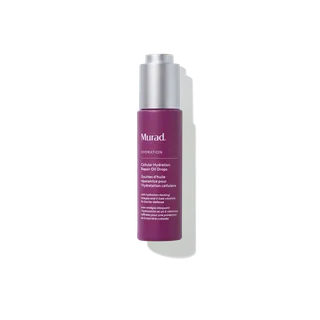
Murad Cellular Hydration Repair Oil Drops

Murad Cellular Hydration Repair Oil Drops

Efficacy75/100IrritancyHigh

Works for

Moisturizing
Caprylic/capric triglyceride, Simmondsia chinensis seed oil + 8 more
Works
What the product description says
“Multi-tasking, fast-absorbing face oil seals in hydration at the cellular level as barrier-restoring omegas and a luxe 6-vitamin blend helps fortify the skin barrier, relieve redness, and smooth texture”
Source: Murad

This product can help soften the skin and reduce its moisture loss with emollients and occlusives: caprylic/capric triglyceride, simmondsia chinensis seed oil.

Keep in mind that this product does not contain effective ingredients to attract water to the upper layer of the skin. This is why an additional product with humectants like glycerin or hyaluronic acid can be helpful (apply it before this product for the best results).

Caprylic/capric triglycerideKey active· Emollient, OcclusiveEffect: HighA good mix of fatty acids that forms a protective layer on the skin. Improves the shelf life of products. Derived from coconut and glycerin~23–34%
Simmondsia chinensis seed oilKey active· Emollient, OcclusiveEffect: HighSoftens the upper layer of skin and helps restore the healthy skin barrier. Has shown to help calm down inflammation in skin. It is a stable oil, meaning that it retains its properties even when exposed to air.~6.5–9.7%
SqualaneKey active· Emollient, OcclusiveEffect: HighAn oil naturally present in skin. Works as an emollient to soften the skin and form a protective layer on its surface without a greasy feeling.~1.8–2.7%
Panthenyl triacetateKey activeEffect: HighA stable oil-soluble derivative of vitamin B5. It can help support skin barrier and reduce inflammation in skin~0.95–1.45%
Zea mays oilKey activeEffect: HighA good moisturizing plant oil. Due to the high linoleic acid content, it helps soften the upper layer of the skin, reduce water loss and support skin barrier function~0.5–1.2%
Helianthus annuus extractKey active· EmollientEffect: HighHelps soften the upper layer of the skin~0.45–1.05%
Coco-caprylate/caprateKey active· EmollientEffect: MediumHelps to soften the upper layer of the skin without creating a greasy texture~0.3–0.7%
7-dehydrocholesterolKey activeEffect: HighPro-vitamin D. It is claimed to have anti-inflammatory effect in skin, but there is no research available confirming that this compound converts to vitamin D in skin or has any other benefits apart from softening the upper layer of the skin. This compound is different from the Vitamin D3 analogues used in medicine to treat psoriasis~0.15–0.5%
Moringa oleifera seed oil· EmollientEffect: LowA plant oil that helps soften the upper layer of the skin. Is unlikely to be helpful in restoring skin barrier function due to the low content of linoleic acid~3.9–5.8%
TocopherolEffect: Low, below effective dosePure form of vitamin E. Can help moisturise and protect the skin from free radicals. Often used to help stabilise other ingredients or the formula itself~0.15–0.65%
Anti-aging
Side benefit the brand mentions · Retinyl linoleate, Panthenyl triacetate + 2 more
Works well
What the product description says
“results on radiance, bounciness & firmness”
Source: Murad

This product can help reduce and prevent fine lines and wrinkles, improve skin elasticity and firmness because it contains retinyl linoleate.

Keep in mind that it typically takes at least 6 weeks to notice any results because the changes that are needed to improve fine lines and elasticity happen in the deeper layers of the skin. No topical anti-aging product can “erase” wrinkles or fully reverse signs of aging.

Retinyl linoleateKey activeEffect: HighAn ester of a retinoid and linoleic acid. Three steps removed from the bioactive form of retinoid, retinoic acid. Once converted to retinoic acid in skin, it can help reduce wrinkles, stimulate collagen production, even out skin tone and reduce blemishes. The concentrations used in cosmetic products are often not high enough to have a positive effect in skin.~1.1–1.7%
Panthenyl triacetateEffect: LowA stable oil-soluble derivative of vitamin B5. It can help support skin barrier and reduce inflammation in skin~0.95–1.45%
TocopherolEffect: Low, below effective dosePure form of vitamin E. Can help moisturise and protect the skin from free radicals. Often used to help stabilise other ingredients or the formula itself~0.15–0.65%
Tetrahexyldecyl ascorbateUnder-dosedBeing a lipid soluble form of vitamin C, it is more stable than ascorbic acid, but still degrades quickly and needs to be stabilized in a formulation with another ingredient. It is claimed to penetrate skin better than pure vitamin C and have the the similar benefits, but solid studies of its effectiveness are lacking. Is likely to require a higher concentration in a product than pure vitamin C to be effective. It might be able to help reduce pore clogging.~1.2–1.8%
Exfoliation
Side benefit · Salicylic acid
Works well

This product can help exfoliate the skin. In other words, it helps break down the bonds between dead cells on the surface of the skin and speed up the skin turnover. Skin often appears softer and brighter after exfoliation, but overdoing it can result in disrupted skin barrier. The following ingredient is doing the exfoliating job in this product: salicylic acid.

Salicylic acidKey activeEffect: HighUsed for skin exfoliation. It has an anti-inflammatory and anti-bacterial effect, helps to unclog pores, prevent blemishes and speed up healing of the existing ones. Sometimes referred to as a BHA (beta-hydroxy acid)~0.55–1.3%
Anti-oxidation
Side benefit · Retinyl linoleate, Hexylresorcinol + 4 more
Works well

This product contains antioxidants (retinyl linoleate) that can help neutralize free radicals in skin. By doing so, they can lessen the damage the skin gets from the UV light (sun).

The following ingredients - hexylresorcinol also can have an antioxidant effect, but there is less evidence to confirm their effectiveness in skin.

Retinyl linoleateKey activeEffect: HighAn ester of a retinoid and linoleic acid. Three steps removed from the bioactive form of retinoid, retinoic acid. Once converted to retinoic acid in skin, it can help reduce wrinkles, stimulate collagen production, even out skin tone and reduce blemishes. The concentrations used in cosmetic products are often not high enough to have a positive effect in skin.~1.1–1.7%
HexylresorcinolKey activeEffect: MediumMight be helpful in reducing hyperpigmentation and neutralizing free radicals in skin~0.4–1%
Tocopheryl acetateEffect: LowA more stable but less bio-available form of vitamin E compared to Tocopherol. Might help moisturize and protect the skin from free radicals, but mostly used in low concentrations to stabilize other ingredients.~2.6–3.9%
Rosmarinus officinalis leaf extractEffect: Low, below effective doseCan be helpful in reducing inflammation in skin, including inflamed acne. It can be irritating~0.3–0.7%
Tetrahexyldecyl ascorbateUnder-dosedBeing a lipid soluble form of vitamin C, it is more stable than ascorbic acid, but still degrades quickly and needs to be stabilized in a formulation with another ingredient. It is claimed to penetrate skin better than pure vitamin C and have the the similar benefits, but solid studies of its effectiveness are lacking. Is likely to require a higher concentration in a product than pure vitamin C to be effective. It might be able to help reduce pore clogging.~1.2–1.8%
TocopherolUnder-dosedPure form of vitamin E. Can help moisturise and protect the skin from free radicals. Often used to help stabilise other ingredients or the formula itself~0.15–0.65%
Anti-blemish
Side benefit · Salicylic acid, Retinyl linoleate + 1 more
Works well

This product can help reduce breakouts and clogged pores because it contains the following ingredient: salicylic acid. This ingredient is used for treating acne and can have a noticeable effect.

The following ingredient (ingredients) in this product might be helpful, but there is no evidence to confirm that it actually works: retinyl linoleate

Salicylic acidHeroEffect: HighUsed for skin exfoliation. It has an anti-inflammatory and anti-bacterial effect, helps to unclog pores, prevent blemishes and speed up healing of the existing ones. Sometimes referred to as a BHA (beta-hydroxy acid)~0.55–1.3%
Retinyl linoleateKey activeEffect: MediumAn ester of a retinoid and linoleic acid. Three steps removed from the bioactive form of retinoid, retinoic acid. Once converted to retinoic acid in skin, it can help reduce wrinkles, stimulate collagen production, even out skin tone and reduce blemishes. The concentrations used in cosmetic products are often not high enough to have a positive effect in skin.~1.1–1.7%
Rosmarinus officinalis leaf extractUnder-dosedCan be helpful in reducing inflammation in skin, including inflamed acne. It can be irritating~0.3–0.7%
Evens skin tone
Side benefit the brand mentions · Retinyl linoleate, Salicylic acid + 2 more
May help
What the product description says
“brightens the skin”
Source: Murad

This product might be able to help reduce hyperpigmentation and even out the skin tone because it contains salicylic acid. The effect, if any, is likely to be small. Keep in mind that you would need to apply any topical skincare targetted at hypigmentation consistently for a couple of months to get a result. No topical skincare product can help get rid of hyperpigmentation (including post-acne marks and age spots) instantly.

The following ingredient (ingredients) in this product might be helpful, but there is no evidence to confirm that it actually works: hexylresorcinol, retinyl linoleate.

Retinyl linoleateKey activeEffect: MediumAn ester of a retinoid and linoleic acid. Three steps removed from the bioactive form of retinoid, retinoic acid. Once converted to retinoic acid in skin, it can help reduce wrinkles, stimulate collagen production, even out skin tone and reduce blemishes. The concentrations used in cosmetic products are often not high enough to have a positive effect in skin.~1.1–1.7%
Salicylic acidEffect: LowUsed for skin exfoliation. It has an anti-inflammatory and anti-bacterial effect, helps to unclog pores, prevent blemishes and speed up healing of the existing ones. Sometimes referred to as a BHA (beta-hydroxy acid)~0.55–1.3%
HexylresorcinolEffect: LowMight be helpful in reducing hyperpigmentation and neutralizing free radicals in skin~0.4–1%
Tetrahexyldecyl ascorbateUnder-dosedBeing a lipid soluble form of vitamin C, it is more stable than ascorbic acid, but still degrades quickly and needs to be stabilized in a formulation with another ingredient. It is claimed to penetrate skin better than pure vitamin C and have the the similar benefits, but solid studies of its effectiveness are lacking. Is likely to require a higher concentration in a product than pure vitamin C to be effective. It might be able to help reduce pore clogging.~1.2–1.8%

Can it cause trouble?

Irritancy
5 strong irritants: Rosmarinus officinalis leaf extract, Limonene + 3 more — patch-test recommended
High risk
We flagged 14 ingredients with irritancy potential. Severity depends on your sensitivity threshold; the table lists the worst offenders first.
IngredientFunctionIrritationEst. amount
Retinyl linoleateAn ester of a retinoid and linoleic acid. Three steps removed from the bioactive form of retinoid, retinoic acid. Once converted to retinoic acid in skin, it can help reduce wrinkles, stimulate collagen production, even out skin tone and reduce blemishes. The concentrations used in cosmetic products are often not high enough to have a positive effect in skin.High~1.1–1.7%est.
Salicylic acidUsed for skin exfoliation. It has an anti-inflammatory and anti-bacterial effect, helps to unclog pores, prevent blemishes and speed up healing of the existing ones. Sometimes referred to as a BHA (beta-hydroxy acid)High~0.55–1.3%est.
Rosmarinus officinalis leaf extractCan be helpful in reducing inflammation in skin, including inflamed acne. It can be irritatingHigh~0.3–0.7%est.
LimoneneA common frangrance that can easily irritate skin, especially if exposed to air, light or heatHigh~0.1–0.35%est.
LinaloolA fragrance. Can be irritatingHigh~0.1–0.35%est.
CitralA fragrance with a lemon scent. A likely irritantHigh~0.1–0.4%est.
ParfumAn aromatic blend of unspecified and possibly irritating ingredientsHigh~0.1–0.4%est.
Caprylic/capric triglycerideA good mix of fatty acids that forms a protective layer on the skin. Improves the shelf life of products. Derived from coconut and glycerinMedium~23–34%est.
Simmondsia chinensis seed oilSoftens the upper layer of skin and helps restore the healthy skin barrier. Has shown to help calm down inflammation in skin. It is a stable oil, meaning that it retains its properties even when exposed to air.Medium~6.5–9.7%est.
Moringa oleifera seed oilA plant oil that helps soften the upper layer of the skin. Is unlikely to be helpful in restoring skin barrier function due to the low content of linoleic acidMedium~3.9–5.8%est.
Tocopheryl acetateA more stable but less bio-available form of vitamin E compared to Tocopherol. Might help moisturize and protect the skin from free radicals, but mostly used in low concentrations to stabilize other ingredients.Medium~2.6–3.9%est.
Tetrahexyldecyl ascorbateBeing a lipid soluble form of vitamin C, it is more stable than ascorbic acid, but still degrades quickly and needs to be stabilized in a formulation with another ingredient. It is claimed to penetrate skin better than pure vitamin C and have the the similar benefits, but solid studies of its effectiveness are lacking. Is likely to require a higher concentration in a product than pure vitamin C to be effective. It might be able to help reduce pore clogging.Medium~1.2–1.8%est.
HexylresorcinolMight be helpful in reducing hyperpigmentation and neutralizing free radicals in skinMedium~0.4–1%est.
7-dehydrocholesterolPro-vitamin D. It is claimed to have anti-inflammatory effect in skin, but there is no research available confirming that this compound converts to vitamin D in skin or has any other benefits apart from softening the upper layer of the skin. This compound is different from the Vitamin D3 analogues used in medicine to treat psoriasisMedium~0.15–0.5%est.
Comedogenic
1 ingredient rated 2 or more on the 0–5 pore-clogging scale
1 flagged
These ingredients have a comedogenic rating of 2 or more on a 0–5 scale; the table shows each one's rating. In leave-on products they can clog pores in acne-prone skin.
IngredientFunctionRatingEst. amount
Zea mays oilA good moisturizing plant oil. Due to the high linoleic acid content, it helps soften the upper layer of the skin, reduce water loss and support skin barrier function3/5~0.5–1.2%est.

User reviews

Would you recommend?
No community reviews yet.

Be the first — your take helps the next person decide.

Ingredients

Filter by role to see what each ingredient is doing.

Caprylic/capric triglyceride~23–34%
Key activeIrritant · medium
Irritation risk
Medium
Works for
Moisturizing

A good mix of fatty acids that forms a protective layer on the skin. Improves the shelf life of products. Derived from coconut and glycerin

More about Caprylic/capric triglyceride
Simmondsia chinensis seed oil~6.5–9.7%
Key activeIrritant · medium
Irritation risk
Medium
Works for
Moisturizing

Softens the upper layer of skin and helps restore the healthy skin barrier. Has shown to help calm down inflammation in skin. It is a stable oil, meaning that it retains its properties even when exposed to air.

More about Simmondsia chinensis seed oil
C9-12 alkane~5–7.5%
Formula
Irritation risk
Low

Helps dissolve other ingredients in a formulation

More about C9-12 alkane
Moringa oleifera seed oil~3.9–5.8%
Irritant · medium
Irritation risk
Medium
Works for
Moisturizing

A plant oil that helps soften the upper layer of the skin. Is unlikely to be helpful in restoring skin barrier function due to the low content of linoleic acid

More about Moringa oleifera seed oil
Tocopheryl acetate~2.6–3.9%
Irritant · medium
Irritation risk
Medium
Works for
Anti-oxidation

A more stable but less bio-available form of vitamin E compared to Tocopherol. Might help moisturize and protect the skin from free radicals, but mostly used in low concentrations to stabilize other ingredients.

More about Tocopheryl acetate
Vaccinium myrtillus seed oil~2–3%
Formula
Squalane~1.8–2.7%
Key active
Irritation risk
Low
Works for
Moisturizing

An oil naturally present in skin. Works as an emollient to soften the skin and form a protective layer on its surface without a greasy feeling.

More about Squalane
Tetrahexyldecyl ascorbate~1.2–1.8%
Under-dosedIrritant · medium
Irritation risk
Medium
Works for
Anti-agingEvens skin toneAnti-oxidation

Being a lipid soluble form of vitamin C, it is more stable than ascorbic acid, but still degrades quickly and needs to be stabilized in a formulation with another ingredient. It is claimed to penetrate skin better than pure vitamin C and have the the similar benefits, but solid studies of its effectiveness are lacking. Is likely to require a higher concentration in a product than pure vitamin C to be effective. It might be able to help reduce pore clogging.

More about Tetrahexyldecyl ascorbate
Retinyl linoleate~1.1–1.7%
Key activeIrritant · high
Irritation risk
High
Works for
Anti-oxidationAnti-agingEvens skin toneAnti-blemish

An ester of a retinoid and linoleic acid. Three steps removed from the bioactive form of retinoid, retinoic acid. Once converted to retinoic acid in skin, it can help reduce wrinkles, stimulate collagen production, even out skin tone and reduce blemishes. The concentrations used in cosmetic products are often not high enough to have a positive effect in skin.

More about Retinyl linoleate
Panthenyl triacetate~0.95–1.45%
Key active
Irritation risk
Low
Works for
MoisturizingAnti-aging

A stable oil-soluble derivative of vitamin B5. It can help support skin barrier and reduce inflammation in skin

More about Panthenyl triacetate
Salicylic acid~0.55–1.3%
Hero · Anti-blemishIrritant · high
Irritation risk
High
Works for
Anti-inflammatoryExfoliationAnti-blemishAntibacterialEvens skin tone

Used for skin exfoliation. It has an anti-inflammatory and anti-bacterial effect, helps to unclog pores, prevent blemishes and speed up healing of the existing ones. Sometimes referred to as a BHA (beta-hydroxy acid)

More about Salicylic acid
Zea mays oil~0.5–1.2%
Key activeComedogenic 3/5
Irritation risk
Low
Comedogenicity
3/5
Works for
MoisturizingCleansing

A good moisturizing plant oil. Due to the high linoleic acid content, it helps soften the upper layer of the skin, reduce water loss and support skin barrier function

More about Zea mays oil
Oryza sativa bran extract~0.5–1.1%
Formula
Irritation risk
Low

Used to thicken the product consistency

More about Oryza sativa bran extract
Punica granatum sterols~0.45–1.05%
Formula
Hexylresorcinol~0.4–1%
Key activeIrritant · medium
Irritation risk
Medium
Works for
Anti-oxidationEvens skin tone

Might be helpful in reducing hyperpigmentation and neutralizing free radicals in skin

More about Hexylresorcinol
Helianthus annuus extract~0.45–1.05%
Key active
Irritation risk
Low
Works for
Moisturizing

Helps soften the upper layer of the skin

More about Helianthus annuus extract
Rosmarinus officinalis leaf extract~0.3–0.7%
Under-dosedIrritant · high
Irritation risk
High
Works for
Anti-blemishAntibacterialAnti-oxidation

Can be helpful in reducing inflammation in skin, including inflamed acne. It can be irritating

More about Rosmarinus officinalis leaf extract
Tocopherol~0.15–0.65%
Under-dosed
Irritation risk
Low
Works for
Anti-oxidationAnti-inflammatoryAnti-agingMoisturizing

Pure form of vitamin E. Can help moisturise and protect the skin from free radicals. Often used to help stabilise other ingredients or the formula itself

More about Tocopherol
Coco-caprylate/caprate~0.3–0.7%
Key active
Irritation risk
Low
Works for
Moisturizing

Helps to soften the upper layer of the skin without creating a greasy texture

More about Coco-caprylate/caprate
7-dehydrocholesterol~0.15–0.5%
Key activeIrritant · medium
Irritation risk
Medium
Works for
Moisturizing

Pro-vitamin D. It is claimed to have anti-inflammatory effect in skin, but there is no research available confirming that this compound converts to vitamin D in skin or has any other benefits apart from softening the upper layer of the skin. This compound is different from the Vitamin D3 analogues used in medicine to treat psoriasis

More about 7-dehydrocholesterol
Water~0.1–0.45%
Formula
Irritation risk
Low

Plain old water

More about Water
Limonene~0.1–0.35%
Irritant · high
Irritation risk
High

A common frangrance that can easily irritate skin, especially if exposed to air, light or heat

More about Limonene
Linalool~0.1–0.35%
Irritant · high
Irritation risk
High

A fragrance. Can be irritating

More about Linalool
Citral~0.1–0.4%
Irritant · high
Irritation risk
High

A fragrance with a lemon scent. A likely irritant

More about Citral
Parfum~0.1–0.4%
Irritant · high
Irritation risk
High

An aromatic blend of unspecified and possibly irritating ingredients

More about Parfum
Ingredient list view

Caprylic/capric triglyceride, Simmondsia chinensis seed oil, C9-12 alkane, Moringa oleifera seed oil, Tocopheryl acetate, Vaccinium myrtillus seed oil, Squalane, Tetrahexyldecyl ascorbate, Retinyl linoleate, Panthenyl triacetate, Salicylic acid, Zea mays oil, Oryza sativa bran extract, Punica granatum sterols, Hexylresorcinol, Helianthus annuus extract, Rosmarinus officinalis leaf extract, Tocopherol, Coco-caprylate/caprate, 7-dehydrocholesterol, Water, Limonene, Linalool, Citral, Parfum

Worth comparing, line by line.

Match % combines shared ingredients, the first five ingredients, shared actives and hero ingredients, irritancy (lower counts in the alternative's favour), texture and body area. Only products in the same routine step are compared.

Side-by-side comparison of this product against its closest alternatives
MuradCellular Hydration Repair Oil DropsYOUR PRODUCTKYLIE SKINClarifying Facial OilImage skincareClear Cell Clarifying LotionSkin JuicePineapple Punch Purifying Face Cream
Match—68%66%64%
Price$42.00—$46.00+$4.00$15.45−$26.55
Shared key ingredients—2 of 123 of 123 of 12
Key difference—Carthamus Tinctorius Seed OilMelia Azadirachta Leaf ExtractCarthamus Tinctorius Seed Oil
Irritancy High Low High Medium
Drying alcohol—— Contains drying alcohol —
View product Shop Shop Shop

More alternatives: Mara Beauty Mara Clear Skin Mineral MilkPaula's choice Redness Relief Moisturizer for Normal to Oily Skin

Cheaper alternatives? See how this stacks up against similar formulas.
We compare ingredient profiles across our catalog — pick the closest match for your budget.
Open dupe finder

Sources cited in this review

Every concentration estimate and effectiveness label is anchored to one of these 21 studies and safety reviews.

  1. 1
  2. 2
  3. 3
  4. 4
  5. 5
  6. 6
Murad Cellular Hydration Repair Oil Drops
MuradCellular Hydration Repair Oil Drops