Works for:
based on ingredients and %- Moisturizing
- Anti-oxidation
- Anti-aging
Doesn't work for:
based on ingredients and %- Anti-blemish
Can it cause trouble?
- Irritation risk: high
- Comedogenic risk ingredients: 3
Key actives
Anti-oxidation
This product contains antioxidants (ubiquinone) that can help neutralize free radicals in skin. By doing so, they can lessen the damage the skin gets from the UV light (sun).
Coenzyme Q10. It helps neutralize free radicals in skin, improves skin hydration and might be helpful agains fine lines and wrinkles. It can be an allergen
A plant extract that might help neutralize free radicals in skin
An emollient that helps soften the skin and might help calm down inflammation
Helps soften the upper layer of the skin and can support skin barrier function
A great moisturising ingredient that softens the skin and reduces water loss from its upper layer. It also can be helpful in protecting skin from free radicals
Helps soften the upper layer of the skin and can be helpful in restoring the skin barrier function. Might have some anti-oxidant effect
A plant oil that helps soften the upper layer of the skin. It might have anti-oxidant properties. Might help reduce inflammation in skin and help against blemishes
Pure form of vitamin E. Can help moisturise and protect the skin from free radicals. Often used to help stabilise other ingredients or the formula itself
An emollient that helps soften the skin
Anti-aging
This product contains ubiquinone. This ingredient help neutralize free radicals in skin. By doing so, they might be able to prevent early signs of aging (like fine lines and wrinkles), at least to some extent. These ingredients will not be able to "reverse" signs of aging.
A great moisturising ingredient that softens the skin and reduces water loss from its upper layer. It also can be helpful in protecting skin from free radicals
Coenzyme Q10. It helps neutralize free radicals in skin, improves skin hydration and might be helpful agains fine lines and wrinkles. It can be an allergen
Traditionally used to treat sunburns, dermatitis and inflammation, but evidence for its effectiveness is lacking. The extract can contain humectants that help attract water into the skin
Pure form of vitamin E. Can help moisturise and protect the skin from free radicals. Often used to help stabilise other ingredients or the formula itself
Moisturizing
What does the product description say?
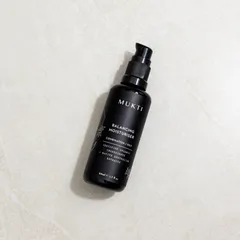
Balancing Moisturiser
Source: From product name
This product can help improve hydration of the skin with the two types of ingredients.
The first type is called “humectants”:
these ingredients help attract water.
When humectants are on the surface of the skin, they “pull in” the moisture from the outside environment, or from
within deeper layers of the skin. The following ingredients in this product do the job:
glycerin, mel.
This product also contains ingredients called “occlusives”. They help reduce the speed with which our skin loses moisture to the outside environment. These ingredients also help soften the upper layer of the skin, so it feels less tight and nicer to the touch. The following ingredients in this product do the job: butyrospermum parkii butter, cocos nucifera oil.
A plant oil that helps soften the upper layer of the skin. It might have anti-oxidant properties. Might help reduce inflammation in skin and help against blemishes
A great moisturising ingredient that softens the skin and reduces water loss from its upper layer. It also can be helpful in protecting skin from free radicals
An emollient that helps soften the skin and might help calm down inflammation
An emollient. Found to be as effective as a moisturizer for dry skin as mineral oil. Could be comedogenic
One of the best moisturizing ingredients. Naturally present in skin. It attracts water to the upper layer of the skin working as a humectant
Helps soften the upper layer of the skin and can support skin barrier function
Chia seed oil. Helps to soften the upper layer of the skin and might be helpful in repairing skin barrier
Helps soften the upper layer of the skin and can be helpful in restoring the skin barrier function. Might have some anti-oxidant effect
Coenzyme Q10. It helps neutralize free radicals in skin, improves skin hydration and might be helpful agains fine lines and wrinkles. It can be an allergen
Helps to soften the upper layer of the skin and attract water to it
Lecithin derivative. It helps oil and water mix together and can enhance penetration of other ingredients. It helps soften the upper layer of the skin
Traditionally used to treat sunburns, dermatitis and inflammation, but evidence for its effectiveness is lacking. The extract can contain humectants that help attract water into the skin
An emollient that helps soften the skin
An emollient that helps soften the skin and could be helpful in repairing its barrier function
Pure form of vitamin E. Can help moisturise and protect the skin from free radicals. Often used to help stabilise other ingredients or the formula itself
Anti-blemish
What does the product description say?
Moisturiser for oily, blemished and acne-prone skin.
Source: Muktiorganics
Effective ingredients missing or their concentration is too low.
Helps soften the upper layer of the skin and can support skin barrier function
Traditionally used to treat sunburns, dermatitis and inflammation, but evidence for its effectiveness is lacking. The extract can contain humectants that help attract water into the skin
How honest is this product?
| Promise | Can it deliver? |
|---|---|
| Moisturizing | |
| Anti-blemish |
Total Promises Fulfilled score: 37/100.
We receive a small commission for purchases made through these links at no cost for you. Thank you for your support! Learn more
Affiliate link · supports WIMJ at no cost to you
Potential irritants
Comedogenic ingredients
User reviews (0)
Averages from community submissions.
No reviews yet for this product.
Be the first to share your experience!
Tried this product?
Help capture what the ingredient list can't—texture, finish, pilling, scent, and more. Answer what you can, skip the rest.
Takes ~30 seconds.
Reviews are shown in aggregate. No personal details.
Key Actives
Helps soften the upper layer of the skin and can support skin barrier function
A great moisturising ingredient that softens the skin and reduces water loss from its upper layer. It also can be helpful in protecting skin from free radicals
Helps soften the upper layer of the skin and can be helpful in restoring the skin barrier function. Might have some anti-oxidant effect
A plant oil that helps soften the upper layer of the skin. It might have anti-oxidant properties. Might help reduce inflammation in skin and help against blemishes
Coenzyme Q10. It helps neutralize free radicals in skin, improves skin hydration and might be helpful agains fine lines and wrinkles. It can be an allergen
An emollient that helps soften the skin
An emollient that helps soften the skin and might help calm down inflammation
An emollient. Found to be as effective as a moisturizer for dry skin as mineral oil. Could be comedogenic
One of the best moisturizing ingredients. Naturally present in skin. It attracts water to the upper layer of the skin working as a humectant
Chia seed oil. Helps to soften the upper layer of the skin and might be helpful in repairing skin barrier
An emollient that helps soften the skin and could be helpful in repairing its barrier function
Creates a thin drying film on the skin resulting in a short-term tightening effect
Potential irritants
Oil of a very fragrant pink rose used as fragrance in cosmetics. Extensive research has shown it has mixed benefits. In the pro column, inhaling this flower’s scent seems to have relaxing properties and the plant’s petals contain skin-soothing and antioxidant compounds that can benefit skin. On the flipside, the numerous chemicals that create this rose’s distinctive fragrance pose a risk of causing skin aggravation.
Creates a thin drying film on the skin resulting in a short-term tightening effect
An essential oil. Potential allergen and can be irritating. It has some anti-bacterial properties
A plant extract that might help neutralize free radicals in skin
A common frangrance that can easily irritate skin, especially if exposed to air, light or heat
Traditionally used to treat sunburns, dermatitis and inflammation, but evidence for its effectiveness is lacking. The extract can contain humectants that help attract water into the skin
Helps water and oil in the product mix well together and improves product texture
A plant oil that helps soften the upper layer of the skin. It might have anti-oxidant properties. Might help reduce inflammation in skin and help against blemishes
Helps soften the upper layer of the skin and can support skin barrier function
An emollient that helps soften the skin and could be helpful in repairing its barrier function
Comedogenic ingredients
An emollient. Found to be as effective as a moisturizer for dry skin as mineral oil. Could be comedogenic
A great moisturising ingredient that softens the skin and reduces water loss from its upper layer. It also can be helpful in protecting skin from free radicals
Helps soften the upper layer of the skin and can be helpful in restoring the skin barrier function. Might have some anti-oxidant effect
All ingredients
Traditionally used to treat sunburns, dermatitis and inflammation, but evidence for its effectiveness is lacking. The extract can contain humectants that help attract water into the skin
An emollient. Found to be as effective as a moisturizer for dry skin as mineral oil. Could be comedogenic
Helps water and oil in the product mix well together and improves product texture
Oil of a very fragrant pink rose used as fragrance in cosmetics. Extensive research has shown it has mixed benefits. In the pro column, inhaling this flower’s scent seems to have relaxing properties and the plant’s petals contain skin-soothing and antioxidant compounds that can benefit skin. On the flipside, the numerous chemicals that create this rose’s distinctive fragrance pose a risk of causing skin aggravation.
Oil of a very fragrant pink rose used as fragrance in cosmetics. Extensive research has shown it has mixed benefits. In the pro column, inhaling this flower’s scent seems to have relaxing properties and the plant’s petals contain skin-soothing and antioxidant compounds that can benefit skin. On the flipside, the numerous chemicals that create this rose’s distinctive fragrance pose a risk of causing skin aggravation.
One of the best moisturizing ingredients. Naturally present in skin. It attracts water to the upper layer of the skin working as a humectant
A great moisturising ingredient that softens the skin and reduces water loss from its upper layer. It also can be helpful in protecting skin from free radicals
Helps soften the upper layer of the skin and can be helpful in restoring the skin barrier function. Might have some anti-oxidant effect
A plant oil that helps soften the upper layer of the skin. It might have anti-oxidant properties. Might help reduce inflammation in skin and help against blemishes
Helps soften the upper layer of the skin and can support skin barrier function
Chia seed oil. Helps to soften the upper layer of the skin and might be helpful in repairing skin barrier
An emollient that helps soften the skin and could be helpful in repairing its barrier function
Lecithin derivative. It helps oil and water mix together and can enhance penetration of other ingredients. It helps soften the upper layer of the skin
Creates a thin drying film on the skin resulting in a short-term tightening effect
An essential oil. Potential allergen and can be irritating. It has some anti-bacterial properties
An emollient that helps soften the skin and might help calm down inflammation
Oil of a very fragrant pink rose used as fragrance in cosmetics. Extensive research has shown it has mixed benefits. In the pro column, inhaling this flower’s scent seems to have relaxing properties and the plant’s petals contain skin-soothing and antioxidant compounds that can benefit skin. On the flipside, the numerous chemicals that create this rose’s distinctive fragrance pose a risk of causing skin aggravation.
Coenzyme Q10. It helps neutralize free radicals in skin, improves skin hydration and might be helpful agains fine lines and wrinkles. It can be an allergen
Pure form of vitamin E. Can help moisturise and protect the skin from free radicals. Often used to help stabilise other ingredients or the formula itself
A plant extract that might help neutralize free radicals in skin
A common frangrance that can easily irritate skin, especially if exposed to air, light or heat
Ingredient list view
Aloe barbadensis leaf juice, Cocos nucifera oil, Cetearyl glucoside, Rosa damascena extract, Rosa damascena extract, Hibiscus sabdariffa fruit extract, Glycerin, Butyrospermum parkii butter, Theobroma cacao seed butter, Phenethyl alcohol, Rosa canina seed oil, Oenothera biennis oil, Salvia hispanica seed oil, Persea gratissima oil, Prunus armeniaca kernel oil, Rosmarinus officinalis extract, Lysolecithin, Sclerotium gum, Xanthan gum, Pullulan, Lavandula angustifolia oil, Santalum album oil, Cananga odorata flower oil, Pelargonium graveolens oil, Carthamus tinctorius seed oil, Mel, Rosa damascena extract, Astragalus membranaceus root extract, Ubiquinone, Tocopherol, Calendula officinalis extract, Citral, Citronellol, Eugenol, Farnesol, Geraniol, Isoeugenol, Limonene, Linalool
- Glycerol and the skin: holistic approach to its origin and functions
- Cocoa polyphenols and their influence on parameters involved in ex vivo skin restructuring
- Final Report on the Safety Assessment of Phenethyl Alcohol
- Nutrient composition of rose (Rosa canina L.) seed and oils
- Characterization of Rosehip (Rosa canina L.) Seed and Seed Oil
- Bioactive ingredients of rose hips (Rosa canina L) with special reference to antioxidative and anti-inflammatory properties: in vitro studies
- Vitamin E in dermatology
- Vitamin E and Skin Health
- Protective effect of Calendula officinalis extract against UVB-induced oxidative stress in skin: evaluation of reduced glutathione levels and matrix metalloproteinase secretion
- Annex I: Clinical evidence regarding sensitisation to individual fragrance chemicals and to natural extracts