Works for
Evens skin tonePaeonia lactiflora root extract, Camellia sinensis leaf extractNot delivered
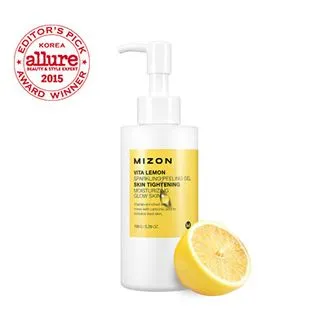
“Packed with vitamin-enriched lemon and carbonic acid, this peeling gel helps to brighten and revitalize skin while gently, yet effectively rids dead skin cells.”
This product contains ingredients (paeonia lactiflora root extract) that could help reduce hyperpigmentation (for example, post-acne marks or age spots) in theory, but there is not enough evidence that they actually work.
ExfoliationNo ingredient credited for this claimNot delivered
“Vita Lemon Sparkling Peeling Gel”
This product does not contain effective exfoliating ingredients. It might be able to deliver physical exfoliation, that is scrub off some of the dead cells on the surface of the skin. We do not recommend physical exfoliation, because it is not uniform (some bits of skin can get exfoliated too much while others not at all). It can also traumatize the skin and aggrevate acne and other skin conditions.
MoisturizingSide benefit · Glycerin, Salvia hispanica seed extract + 8 moreWorks
This product can help improve hydration of the skin with the two types of ingredients.
The first type is called “humectants”:
these ingredients help attract water.
When humectants are on the surface of the skin, they “pull in” the moisture from the outside environment, or from
within deeper layers of the skin. The following ingredients in this product do the job:
glycerin, sodium hyaluronate.
This product also contains ingredients called “occlusives”. They help reduce the speed with which our skin loses moisture to the outside environment. These ingredients also help soften the upper layer of the skin, so it feels less tight and nicer to the touch. The following ingredients in this product do the job: salvia hispanica seed extract.
Anti-agingSide benefit · Centella asiatica extract, Camellia sinensis leaf extractMay help
This product contains centella asiatica extract. There is some human evidence that this ingredient helps reduce and prevent fine lines and wrinkles and improve skin elasticity and firmness, though it is smaller or less consistent than the evidence for the best anti-aging ingredients.
Anti-oxidationSide benefit · Centella asiatica extract, Coptis chinensis root extract + 4 moreMay help
This product contains antioxidants (centella asiatica extract) that can help neutralize free radicals in skin to lessen the damage it gets from the UV light (sun). There is some human evidence for this effect in skin, though it is smaller or less consistent than the evidence for the best antioxidants.
Can it cause trouble?
Irritancy5 strong irritants: Parfum, Citrus limon fruit extract + 3 more — patch-test recommendedHigh risk
ComedogenicClean of flagged comedogenic ingredientsNone flagged
User reviews
Be the first — your take helps the next person decide.
Ingredients
Filter by role to see what each ingredient is doing.
Water~40–60%
Glycerin~4–6%
- Irritation risk
- Low
One of the best moisturizing ingredients. Naturally present in skin. It attracts water to the upper layer of the skin working as a humectant
More about GlycerinPeg-7 glyceryl cocoate~3.2–4.7%
- Irritation risk
- Medium
Helps oils and water mix together and works as a cleansing agent
More about Peg-7 glyceryl cocoateSteartrimonium methosulfate~2.5–3.7%
- Irritation risk
- Low
Acrylates/c10-30 alkyl acrylate crosspolymer~1.9–2.9%
- Irritation risk
- Medium
Maintains the texture of skincare products. Allows the product to spread evenly. Helps oil and water mix together
More about Acrylates/c10-30 alkyl acrylate crosspolymerCellulose~1.5–2.3%
- Irritation risk
- Low
Can be used to help absorb oil as well as add volume and imporve texture of products.
More about CelluloseWater~1.2–1.8%
Isopropyl alcohol~1–1.6%
- Irritation risk
- High
A drying alcohol. Can increase skin's sensitivity and cause dryness and irritation
More about Isopropyl alcoholButylene glycol~0.85–1.3%
- Irritation risk
- Low
Used to create a nice product texture and help delivery of other ingredients. Might be somewhat helpful in attracting water to the upper layer of the skin
More about Butylene glycolSalvia hispanica seed extract~0.5–1.15%
- Irritation risk
- Medium
A plant extract that typically contains linolenic and linoleic acids that help soften the upper layer of the skin and can support skin barrier function
More about Salvia hispanica seed extractCentella asiatica extract~0.15–0.7%
- Irritation risk
- Medium
A plant extract that has been shown to be able to reduce inflammation in skin, support restoration of skin barrier function, as well as support collagen production. Contains active compounds called centelloids: asiaticoside, madecasosside, asiatic acid and madecassic acid. Might be helpful in preventing stretch marks. It can be itself be irritating though.
More about Centella asiatica extractHouttuynia cordata extract~0.15–0.65%
- Irritation risk
- Low
Parfum~0.1–0.35%
- Irritation risk
- High
An aromatic blend of unspecified and possibly irritating ingredients
More about ParfumCitrus limon fruit extract~0.05–0.3%
- Irritation risk
- High
Used as a fragrance. Can be irritating and cause photosensitivity
More about Citrus limon fruit extractPropanediol~0.1–0.35%
- Irritation risk
- Low
Acts as a solvent for other ingredients. Speeds up the absorption of other ingredients into the skin
More about Propanediol1,2-hexanediol~0.05–0.3%
Coptis chinensis root extract~0.05–0.3%
- Irritation risk
- High
A plant extract that might have antioxidant properties
More about Coptis chinensis root extractSodium hyaluronate~0.1–0.3%
- Irritation risk
- Low
One of the best moisturizing ingredients. Attracts water into the upper layer of the skin
More about Sodium hyaluronateCarbomer~0.1–0.35%
- Irritation risk
- Low
Helps create a thicker or gel-like product texture. It is not a surfactant but can be used in gentle cleansing formulations
More about CarbomerPropylene glycol~0.05–0.2%
- Irritation risk
- High
Helps oil and water mix together and can enhance the penetration of other ingredients into the skin. It can be irritating
More about Propylene glycolPyrus malus fruit extract~0.05–0.15%
- Irritation risk
- Medium
Can have some moisturizing properties due to its sugar content
More about Pyrus malus fruit extractCarica papaya fruit water~0.05–0.15%
- Irritation risk
- High
Camellia sinensis leaf extract~0.05–0.15%
- Irritation risk
- Low
Can contain potent anti-oxidant compounds (abbreviated ECG, GCG, EGC, and EGCG) that might help protect the skin from free radicals. Can help calm down inflammation and has some anti-bacterial properties. Unfortunately, these antioxidants are unstable and lose their effectiveness very quickly in products. The concentration of the antioxidant compounds in the extract also tends to be low to be effective in topical formulation
More about Camellia sinensis leaf extractGypsophila paniculata root extract~0.05–0.15%
- Irritation risk
- Low
Aloe barbadensis leaf extract~0.1–0.35%
- Irritation risk
- Medium
Traditionally used to treat sunburns, dermatitis and inflammation, but evidence for its effectiveness is lacking. The extract can contain humectants that help attract water into the skin
More about Aloe barbadensis leaf extractNelumbo nucifera flower extract~0.05–0.15%
Lilium candidum flower extract~0.05–0.15%
Leontopodium alpinum flower/leaf extract~0.05–0.1%
- Irritation risk
- Low
Convallaria majalis bulb/root extract~0.01–0.05%
- Irritation risk
- Low
Magnolia liliflora flower extract~0.01–0.05%
- Irritation risk
- Low
Paeonia lactiflora root extract~0.01–0.05%
- Irritation risk
- Medium
A plant extract that might help neutralize free radicals and reduce hyperpigmentation, but the research on its effectiveness in skin is lacking
More about Paeonia lactiflora root extractPeg-40 hydrogenated castor oil~0.01–0.05%
- Irritation risk
- Medium
Helps oil and water mix together
More about Peg-40 hydrogenated castor oilIngredient list view
Water, Glycerin, Peg-7 glyceryl cocoate, Steartrimonium methosulfate, Acrylates/c10-30 alkyl acrylate crosspolymer, Cellulose, Water, Isopropyl alcohol, Butylene glycol, Salvia hispanica seed extract, Centella asiatica extract, Houttuynia cordata extract, Parfum, Citrus limon fruit extract, Propanediol, 1,2-hexanediol, Coptis chinensis root extract, Sodium hyaluronate, Carbomer, Propylene glycol, Pyrus malus fruit extract, Carica papaya fruit water, Camellia sinensis leaf extract, Gypsophila paniculata root extract, Aloe barbadensis leaf extract, Nelumbo nucifera flower extract, Lilium candidum flower extract, Leontopodium alpinum flower/leaf extract, Convallaria majalis bulb/root extract, Magnolia liliflora flower extract, Paeonia lactiflora root extract, Peg-40 hydrogenated castor oil
Compare prices
Retailers ranked by price — lowest first.

Worth comparing, line by line.
Match % combines shared ingredients, the first five ingredients, shared actives and hero ingredients, irritancy (lower counts in the alternative's favour), texture and body area. Only products in the same routine step are compared.
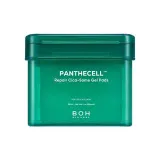
| MizonVita Lemon Sparkling Peeling GelYOUR PRODUCT | MAXCLINICPro Hyaluron Peeling Gel | PrimeraMild Facial Peeling Gel | BIOHEAL BOHPanthecell Repair Cica Gauze Pads | |
|---|---|---|---|---|
| Match | — | 42% | 38% | 36% |
| Price | $8.64 | $14.63+$5.99 | $13.99+$5.35 | $24.49+$15.85 |
| Shared key ingredients | — | 2 of 4 | 1 of 4 | 3 of 4 |
| Key difference | — | Gluconolactone | Helianthus Annuus Extract | Acetyl Octapeptide-3 |
| Irritancy | High | Medium | Medium | Medium |
| Drying alcohol | Contains drying alcohol | Contains drying alcohol | Contains drying alcohol | — |
| View product | Shop | Shop | Shop |


More alternatives: TIRTIR Recica Bio Mild Peeling GelAPLB Hyaluronic Acid Ceramide HA B5 Facial Toner
Product summary
"Mizon - Vita Lemon Sparkling Peeling Gel" could be helpful for: Moisturizing, but its actives are not the most effective or are not well-studied.
Ingredient callouts
- Humectants (sodium hyaluronate 0.10% - 0.30% and glycerin 4.00% - 6.00%). These ingredients help attract water to the upper layer of the skin and improve the skin hydration.
Price
The product retails for 24.00A$ in Australia, from 14.54$ up to 17.50$ in the United States and for 22.00£ in the United Kingdom.
For a detailed price comparison: click here.
Sources cited in this review
Every concentration estimate and effectiveness label is anchored to one of these 18 studies and safety reviews.
- 1
- 2
- 3
- 4Centella asiatica in cosmetologyncbi.nlm.nih.gov
- 5
- 6

Affiliate links · As an Amazon Associate, WIMJ earns from qualifying purchases.