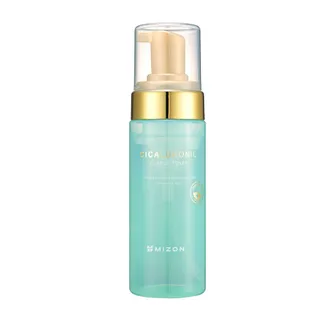
Mizon Cicaluronic Bubble Toner

Mizon Cicaluronic Bubble Toner

Efficacy75/100IrritancyMedium

Works for

Moisturizing
Glycerin, Betaine + 11 more
Works
What the product description says
“Unique foam-type toner including Centella Asiatica and hyaluronic acid that moisturize and calm the skin after cleansing.”
Source: N/A

This product contains good ingredients to attract water to the upper layer of the skin. These ingredients are called "humectants": betaine, glycerin.

When humectants are on the surface of the skin, they “pull in” the moisture from the outside environment, or from within deeper layers of the skin. If the air is dry, humectants can speed up the moisture loss from the skin. This is why it is a good idea to use another product on top of this one to help "seal in" the moisture (look for ingredients like dimethicone, squalane, oils and butters).

GlycerinKey active· HumectantEffect: HighOne of the best moisturizing ingredients. Naturally present in skin. It attracts water to the upper layer of the skin working as a humectant~1.7–2.6%
BetaineKey active· HumectantEffect: HighHelps attract water to the upper layer of the skin and improves the product texture~1.3–2%
Centella asiatica extractKey activeEffect: HighA plant extract that has been shown to be able to reduce inflammation in skin, support restoration of skin barrier function, as well as support collagen production. Contains active compounds called centelloids: asiaticoside, madecasosside, asiatic acid and madecassic acid. Might be helpful in preventing stretch marks. It can be itself be irritating though.~1.2–1.8%
AdenosineKey activeEffect: MediumMight help improve cell turnover and reduce inflammation in skin. One study shows that the ingredients might be able to help reduce dynamic wrinkles (for example, in the corners of the eyes or on the forehead)~0.4–0.9%
Hydrolyzed glycosaminoglycansKey active· HumectantEffect: HighLong sugars that help attract water to the upper layer of the skin~0.15–0.55%
Sodium hyaluronateKey active· HumectantEffect: HighOne of the best moisturizing ingredients. Attracts water into the upper layer of the skin~0.15–0.55%
Sodium hyaluronate crosspolymerKey active· HumectantEffect: HighAttracts water into the upper layer of the skin~0.15–0.5%
Propolis extractKey activeEffect: MediumA complex substance produced by honey bees. Can have anti-bacterial and some anti-oxidant effect. Is an allergen and can be irritating~0.15–0.5%
Hydrolyzed hyaluronic acidKey active· HumectantEffect: HighOne of the best moisturizing ingredients. Attracts water into the upper layer of the skin. A version of it is naturally present in skin~0.1–0.4%
Hyaluronic acidKey active· HumectantEffect: HighOne of the best moisturizing ingredients. Attracts water into the upper layer of the skin. Naturally present in skin. Typically has large molecule size unless advertised otherwise on the product label. Helps support skin's barrier function and may help to reduce inflammation~0.05–0.2%
Sodium acetylated hyaluronateKey active· HumectantEffect: HighA type of hyaluronic acid that works as an excellent moisturizer by attracting water into the upper layer of the skin. Is typically feels less sticky on the skin compared to the usual hyaluronic acid~0.05–0.1%
Butylene glycol· HumectantEffect: LowUsed to create a nice product texture and help delivery of other ingredients. Might be somewhat helpful in attracting water to the upper layer of the skin~3.2–4.9%
Camellia sinensis leaf extractEffect: LowCan contain potent anti-oxidant compounds (abbreviated ECG, GCG, EGC, and EGCG) that might help protect the skin from free radicals. Can help calm down inflammation and has some anti-bacterial properties. Unfortunately, these antioxidants are unstable and lose their effectiveness very quickly in products. The concentration of the antioxidant compounds in the extract also tends to be low to be effective in topical formulation~0.4–0.9%
Anti-aging
Side benefit · Centella asiatica extract, Adenosine + 2 more
Works well

This product can help reduce and prevent fine lines and wrinkles, improve skin elasticity and firmness because it contains adenosine.

These ingredients in the product can also be helpful, even though there is less evidence for their effectiveness: centella asiatica extract.

Keep in mind that it typically takes at least 6 weeks to notice any results because the changes that are needed to improve fine lines and elasticity happen in the deeper layers of the skin. No topical anti-aging product can “erase” wrinkles or fully reverse signs of aging.

Centella asiatica extractKey activeEffect: MediumA plant extract that has been shown to be able to reduce inflammation in skin, support restoration of skin barrier function, as well as support collagen production. Contains active compounds called centelloids: asiaticoside, madecasosside, asiatic acid and madecassic acid. Might be helpful in preventing stretch marks. It can be itself be irritating though.~1.2–1.8%
AdenosineKey activeEffect: HighMight help improve cell turnover and reduce inflammation in skin. One study shows that the ingredients might be able to help reduce dynamic wrinkles (for example, in the corners of the eyes or on the forehead)~0.4–0.9%
Camellia sinensis leaf extractEffect: LowCan contain potent anti-oxidant compounds (abbreviated ECG, GCG, EGC, and EGCG) that might help protect the skin from free radicals. Can help calm down inflammation and has some anti-bacterial properties. Unfortunately, these antioxidants are unstable and lose their effectiveness very quickly in products. The concentration of the antioxidant compounds in the extract also tends to be low to be effective in topical formulation~0.4–0.9%
Hyaluronic acidEffect: LowOne of the best moisturizing ingredients. Attracts water into the upper layer of the skin. Naturally present in skin. Typically has large molecule size unless advertised otherwise on the product label. Helps support skin's barrier function and may help to reduce inflammation~0.05–0.2%
Anti-oxidation
Side benefit · Centella asiatica extract, Camellia sinensis leaf extract + 5 more
May help

This product contains antioxidants (camellia sinensis leaf extract, centella asiatica extract) that can help neutralize free radicals in skin to lessen the damage it gets from the UV light (sun). There is some human evidence for this effect in skin, though it is smaller or less consistent than the evidence for the best antioxidants.

Centella asiatica extractKey activeEffect: MediumA plant extract that has been shown to be able to reduce inflammation in skin, support restoration of skin barrier function, as well as support collagen production. Contains active compounds called centelloids: asiaticoside, madecasosside, asiatic acid and madecassic acid. Might be helpful in preventing stretch marks. It can be itself be irritating though.~1.2–1.8%
Camellia sinensis leaf extractKey activeEffect: MediumCan contain potent anti-oxidant compounds (abbreviated ECG, GCG, EGC, and EGCG) that might help protect the skin from free radicals. Can help calm down inflammation and has some anti-bacterial properties. Unfortunately, these antioxidants are unstable and lose their effectiveness very quickly in products. The concentration of the antioxidant compounds in the extract also tends to be low to be effective in topical formulation~0.4–0.9%
AdenosineEffect: LowMight help improve cell turnover and reduce inflammation in skin. One study shows that the ingredients might be able to help reduce dynamic wrinkles (for example, in the corners of the eyes or on the forehead)~0.4–0.9%
Glycyrrhiza glabra root extractEffect: LowA plant extract that can help lighten the skin and calm down inflammation. Might be helpful in neutralizing free radicals~0.35–0.75%
Perilla frutescens leaf extractEffect: LowUsed as a fragrance for its mint-like smell~0.3–0.75%
Propolis extractEffect: LowA complex substance produced by honey bees. Can have anti-bacterial and some anti-oxidant effect. Is an allergen and can be irritating~0.15–0.5%
Salix alba bark extractEffect: LowA plant extract that can help neutralize free radicals in skin. It contains a compound salicin that can theoretically be converted into salicylic acid that, in turn, helps reduce inflammation in skin, but the evidence of effectiveness in skin is lacking and the extract is usually not used in a concentration that would enable an exfoliating effect~0.1–0.4%

Can it cause trouble?

Irritancy
2 strong irritants: Perilla frutescens leaf extract, Oenothera biennis flower extract
Medium risk
We flagged 13 ingredients with irritancy potential. Severity depends on your sensitivity threshold; the table lists the worst offenders first.
IngredientFunctionIrritationEst. amount
Perilla frutescens leaf extractUsed as a fragrance for its mint-like smellHigh~0.3–0.75%est.
Propolis extractA complex substance produced by honey bees. Can have anti-bacterial and some anti-oxidant effect. Is an allergen and can be irritatingHigh~0.15–0.5%est.
Salix alba bark extractA plant extract that can help neutralize free radicals in skin. It contains a compound salicin that can theoretically be converted into salicylic acid that, in turn, helps reduce inflammation in skin, but the evidence of effectiveness in skin is lacking and the extract is usually not used in a concentration that would enable an exfoliating effectHigh~0.1–0.4%est.
Oenothera biennis flower extractUsed as a fragranceHigh~0.05–0.25%est.
1,2-hexanediolA preservativeMedium~1.9–2.9%est.
Centella asiatica extractA plant extract that has been shown to be able to reduce inflammation in skin, support restoration of skin barrier function, as well as support collagen production. Contains active compounds called centelloids: asiaticoside, madecasosside, asiatic acid and madecassic acid. Might be helpful in preventing stretch marks. It can be itself be irritating though.Medium~1.2–1.8%est.
Sodium citrateHelps to control the skin's pH level. Maintains the skin's natural film of amino-lactic acids and oils. Helps to preserve productsMedium~0.95–1.45%est.
EthylhexylglycerinA preservativeMedium~0.8–1.2%est.
Citric acidCan work as an exfoliant but is typically used to adjust the product pHMedium~0.5–1.1%est.
Glycyrrhiza glabra root extractA plant extract that can help lighten the skin and calm down inflammation. Might be helpful in neutralizing free radicalsMedium~0.35–0.75%est.
Disodium edtaStabilizes the product formulationMedium~0.3–0.75%est.
Benzyl glycolHelps dissolve other ingredients and preserve productsMedium~0.15–0.65%est.
Sodium hyaluronate crosspolymerAttracts water into the upper layer of the skinMedium~0.15–0.5%est.
Comedogenic
Clean of flagged comedogenic ingredients
None flagged
Did this help you decide?

User reviews

Would you recommend?
No community reviews yet.

Be the first — your take helps the next person decide.

Ingredients

Filter by role to see what each ingredient is doing.

Water~40–60%
Formula
Irritation risk
Low

Plain old water

More about Water
Propanediol~4.6–6.9%
Formula
Irritation risk
Low

Acts as a solvent for other ingredients. Speeds up the absorption of other ingredients into the skin

More about Propanediol
Butylene glycol~3.2–4.9%
Formula
Irritation risk
Low
Works for
Moisturizing

Used to create a nice product texture and help delivery of other ingredients. Might be somewhat helpful in attracting water to the upper layer of the skin

More about Butylene glycol
1,2-hexanediol~1.9–2.9%
Irritant · medium
Irritation risk
Medium

A preservative

More about 1,2-hexanediol
C12-14 pareth-12~2–2.9%
Formula
Irritation risk
Low
Works for
Cleansing

Helps oil and water mix together

More about C12-14 pareth-12
Glycerin~1.7–2.6%
Key active
Irritation risk
Low
Works for
Moisturizing

One of the best moisturizing ingredients. Naturally present in skin. It attracts water to the upper layer of the skin working as a humectant

More about Glycerin
Betaine~1.3–2%
Key active
Irritation risk
Low
Works for
Moisturizing

Helps attract water to the upper layer of the skin and improves the product texture

More about Betaine
Centella asiatica extract~1.2–1.8%
Key activeIrritant · medium
Irritation risk
Medium
Works for
Reduces irritationAnti-inflammatoryReduces rednessMoisturizingAnti-agingAnti-oxidationAnti-blemish

A plant extract that has been shown to be able to reduce inflammation in skin, support restoration of skin barrier function, as well as support collagen production. Contains active compounds called centelloids: asiaticoside, madecasosside, asiatic acid and madecassic acid. Might be helpful in preventing stretch marks. It can be itself be irritating though.

More about Centella asiatica extract
Sodium citrate~0.95–1.45%
Irritant · medium
Irritation risk
Medium

Helps to control the skin's pH level. Maintains the skin's natural film of amino-lactic acids and oils. Helps to preserve products

More about Sodium citrate
Ethylhexylglycerin~0.8–1.2%
Irritant · medium
Irritation risk
Medium

A preservative

More about Ethylhexylglycerin
Citric acid~0.5–1.1%
Irritant · medium
Irritation risk
Medium

Can work as an exfoliant but is typically used to adjust the product pH

More about Citric acid
Adenosine~0.4–0.9%
Key active
Irritation risk
Low
Works for
Anti-agingMoisturizingAnti-oxidation

Might help improve cell turnover and reduce inflammation in skin. One study shows that the ingredients might be able to help reduce dynamic wrinkles (for example, in the corners of the eyes or on the forehead)

More about Adenosine
Camellia sinensis leaf extract~0.4–0.9%
Key active
Irritation risk
Low
Works for
AntibacterialAnti-oxidationAnti-agingAnti-blemishEvens skin toneMoisturizing

Can contain potent anti-oxidant compounds (abbreviated ECG, GCG, EGC, and EGCG) that might help protect the skin from free radicals. Can help calm down inflammation and has some anti-bacterial properties. Unfortunately, these antioxidants are unstable and lose their effectiveness very quickly in products. The concentration of the antioxidant compounds in the extract also tends to be low to be effective in topical formulation

More about Camellia sinensis leaf extract
Glycyrrhiza glabra root extract~0.35–0.75%
Irritant · medium
Irritation risk
Medium
Works for
Anti-inflammatoryAnti-oxidationEvens skin toneReduces rednessAntibacterial

A plant extract that can help lighten the skin and calm down inflammation. Might be helpful in neutralizing free radicals

More about Glycyrrhiza glabra root extract
Agrimonia eupatoria extract~0.35–0.75%
Formula
Disodium edta~0.3–0.75%
Irritant · medium
Irritation risk
Medium

Stabilizes the product formulation

More about Disodium edta
Perilla frutescens leaf extract~0.3–0.75%
Irritant · high
Irritation risk
High
Works for
Anti-oxidation

Used as a fragrance for its mint-like smell

More about Perilla frutescens leaf extract
Water~0.2–0.75%
Formula
Irritation risk
Low

Plain old water

More about Water
Anthemis nobilis flower water~0.15–0.7%
Formula
Benzyl glycol~0.15–0.65%
Irritant · medium
Irritation risk
Medium

Helps dissolve other ingredients and preserve products

More about Benzyl glycol
Hydrolyzed glycosaminoglycans~0.15–0.55%
Key active
Irritation risk
Low
Works for
Moisturizing

Long sugars that help attract water to the upper layer of the skin

More about Hydrolyzed glycosaminoglycans
Sodium hyaluronate~0.15–0.55%
Key active
Irritation risk
Low
Works for
Moisturizing

One of the best moisturizing ingredients. Attracts water into the upper layer of the skin

More about Sodium hyaluronate
Silybum marianum seed extract~0.1–0.5%
Formula
Sodium hyaluronate crosspolymer~0.15–0.5%
Key activeIrritant · medium
Irritation risk
Medium
Works for
Moisturizing

Attracts water into the upper layer of the skin

More about Sodium hyaluronate crosspolymer
Broussonetia kazinoki root extract~0.1–0.5%
Formula
Propolis extract~0.15–0.5%
Key activeIrritant · high
Irritation risk
High
Works for
MoisturizingAntibacterialAnti-oxidation

A complex substance produced by honey bees. Can have anti-bacterial and some anti-oxidant effect. Is an allergen and can be irritating

More about Propolis extract
Cimicifuga dahurica root extract~0.1–0.45%
Formula
Salix alba bark extract~0.1–0.4%
Irritant · high
Irritation risk
High
Works for
Anti-inflammatoryAnti-oxidationAnti-blemishExfoliation

A plant extract that can help neutralize free radicals in skin. It contains a compound salicin that can theoretically be converted into salicylic acid that, in turn, helps reduce inflammation in skin, but the evidence of effectiveness in skin is lacking and the extract is usually not used in a concentration that would enable an exfoliating effect

More about Salix alba bark extract
Hydrolyzed hyaluronic acid~0.1–0.4%
Key active
Irritation risk
Low
Works for
Moisturizing

One of the best moisturizing ingredients. Attracts water into the upper layer of the skin. A version of it is naturally present in skin

More about Hydrolyzed hyaluronic acid
Oenothera biennis flower extract~0.05–0.25%
Irritant · high
Irritation risk
High

Used as a fragrance

More about Oenothera biennis flower extract
Hydroxypropyltrimonium hyaluronate~0.05–0.25%
Formula
Hyaluronic acid~0.05–0.2%
Key active
Irritation risk
Low
Works for
MoisturizingAnti-inflammatoryAnti-aging

One of the best moisturizing ingredients. Attracts water into the upper layer of the skin. Naturally present in skin. Typically has large molecule size unless advertised otherwise on the product label. Helps support skin's barrier function and may help to reduce inflammation

More about Hyaluronic acid
Sodium acetylated hyaluronate~0.05–0.1%
Key active
Irritation risk
Low
Works for
Moisturizing

A type of hyaluronic acid that works as an excellent moisturizer by attracting water into the upper layer of the skin. Is typically feels less sticky on the skin compared to the usual hyaluronic acid

More about Sodium acetylated hyaluronate
Ingredient list view

Water, Propanediol, Butylene glycol, 1,2-hexanediol, C12-14 pareth-12, Glycerin, Betaine, Centella asiatica extract, Sodium citrate, Ethylhexylglycerin, Citric acid, Adenosine, Camellia sinensis leaf extract, Glycyrrhiza glabra root extract, Agrimonia eupatoria extract, Disodium edta, Perilla frutescens leaf extract, Water, Anthemis nobilis flower water, Benzyl glycol, Hydrolyzed glycosaminoglycans, Sodium hyaluronate, Silybum marianum seed extract, Sodium hyaluronate crosspolymer, Broussonetia kazinoki root extract, Propolis extract, Cimicifuga dahurica root extract, Salix alba bark extract, Hydrolyzed hyaluronic acid, Oenothera biennis flower extract, Hydroxypropyltrimonium hyaluronate, Hyaluronic acid, Sodium acetylated hyaluronate

Compare prices

Retailers ranked by price — lowest first.

Amazon US
Price unavailable Out of stock
Check

Affiliate links · As an Amazon Associate, WIMJ earns from qualifying purchases.

Worth comparing, line by line.

Match % combines shared ingredients, the first five ingredients, shared actives and hero ingredients, irritancy (lower counts in the alternative's favour), texture and body area. Only products in the same routine step are compared.

Side-by-side comparison of this product against its closest alternatives
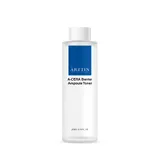
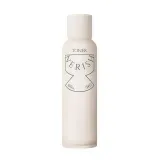
MizonCicaluronic Bubble TonerYOUR PRODUCTARZTINA-Cera Barrier Ampoule TonerSCINICCollagen Jelly Mist TonerNERISHSoy Ceramide Barrier Toner
Match—60%58%57%
Price—$7.09$15.36$21.15
Shared key ingredients—6 of 116 of 119 of 11
Key difference—NiacinamideNiacinamideNiacinamide
Irritancy Medium Low Low Medium
Drying alcohol————
View product Shop Shop Shop

More alternatives: Farm Stay Hyaluronic Acid Treatment Essence12 GRABS Octuple Hyaluron Moist Toner

Cheaper alternatives? Browse formulas in the same category.
We compare ingredient profiles across our catalog — pick the closest match for your budget.
Open dupe finder

Sources cited in this review

Every concentration estimate and effectiveness label is anchored to one of these 18 studies and safety reviews.

  1. 1
  2. 2
  3. 3
  4. 4
  5. 5
  6. 6
Mizon Cicaluronic Bubble Toner
MizonCicaluronic Bubble Toner

Affiliate links · As an Amazon Associate, WIMJ earns from qualifying purchases.

As an Amazon Associate, WIMJ earns from qualifying purchases.