Works for:
based on ingredients and %- Moisturizing
- Anti-oxidation
Can it cause trouble?
- Irritation risk: high
- Comedogenic risk ingredients: 1
Key actives
Works for
Anti-oxidation
This product contains antioxidants (ficus carica fruit extract) that might be able to help neutralize free radicals in skin to lessen the damage it gets from the UV light (sun). There is not enough evidence to confirm their effectiveness in skin though.
A plant extract that can help neutralize free radicals. The concentrations typically used in cosmetics are too small to have an effect
A great moisturising ingredient that softens the skin and reduces water loss from its upper layer. It also can be helpful in protecting skin from free radicals
An emollient that softens the skin
A berry extract. Might have some anti-oxidant properties
Moisturizing
What does the product description say?
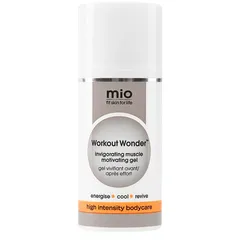
Fig Extract, Shea and Murumuru Butter Powerful moisturising actives that balance skin to keep it looking smooth and supple.
Source: Mio
This product can help improve hydration of the skin with the two types of ingredients.
The first type is called “humectants”:
these ingredients help attract water.
When humectants are on the surface of the skin, they “pull in” the moisture from the outside environment, or from
within deeper layers of the skin. The following ingredients in this product do the job:
glycerin, aloe barbadensis leaf juice.
This product also contains ingredients called “occlusives”. They help reduce the speed with which our skin loses moisture to the outside environment. These ingredients also help soften the upper layer of the skin, so it feels less tight and nicer to the touch. The following ingredients in this product do the job: butyrospermum parkii butter, caprylic/capric triglyceride.
A great moisturising ingredient that softens the skin and reduces water loss from its upper layer. It also can be helpful in protecting skin from free radicals
A good mix of fatty acids that forms a protective layer on the skin. Improves the shelf life of products. Derived from coconut and glycerin
One of the best moisturizing ingredients. Naturally present in skin. It attracts water to the upper layer of the skin working as a humectant
Helps soften the upper layer of the skin. Could be comedogenic due to the myrisic acid content
An emollient that softens the skin
An emollient that can also help water and oil mix together, as well as prevent bacteria growth in products
Traditionally used to treat sunburns, dermatitis and inflammation, but evidence for its effectiveness is lacking. The extract can contain humectants that help attract water into the skin
How honest is this product?
| Promise | Can it deliver? |
|---|---|
| Moisturizing |
Total Promises Fulfilled score: 75/100.
We receive a small commission for purchases made through these links at no cost for you. Thank you for your support! Learn more
Affiliate link · supports WIMJ at no cost to you
Potential irritants
Comedogenic ingredients
User reviews (0)
Averages from community submissions.
No reviews yet for this product.
Be the first to share your experience!
Tried this product?
Help capture what the ingredient list can't—texture, finish, pilling, scent, and more. Answer what you can, skip the rest.
Takes ~30 seconds.
Reviews are shown in aggregate. No personal details.
| Product | Similarity | Price | Irritancy |
|---|---|---|---|
 Mio Skincare Workout Wonder Invigorating Muscle Gel | Current | ≈ $28.03 | |
 Mama Mio Lucky Legs Cooling Energising Leg Gel | 40% | - | |
 Tula Barrier Balance | 36% | $32.00 | |
 Too Cool For School Egg Mellow Body Butter | 36% | $25.00 | |
 One Ocean Beauty Bioactive Body Sculpting Marine Cream | 36% | ≈ $118.79 | |
 Biosecure Moisturising Body Milk | 35% | ≈ $18.41 |
Key Actives
A great moisturising ingredient that softens the skin and reduces water loss from its upper layer. It also can be helpful in protecting skin from free radicals
A good mix of fatty acids that forms a protective layer on the skin. Improves the shelf life of products. Derived from coconut and glycerin
One of the best moisturizing ingredients. Naturally present in skin. It attracts water to the upper layer of the skin working as a humectant
Helps soften the upper layer of the skin. Could be comedogenic due to the myrisic acid content
A plant extract that can help neutralize free radicals. The concentrations typically used in cosmetics are too small to have an effect
Potential irritants
Can be drying and contribute to skin irritation. Used in formulars to dissolve other ingredients, create a thinner product consistency or for its antibacterial properties
An aromatic blend of unspecified and possibly irritating ingredients
A plant extract. Benefits of topical application are not confirmed
A plant extract that can be irritating. It can have some anti-bacterial properties, but there are no evidence of a beneficial effect for skin
Plant extract that can have healing and anti-inflammatory properties. It is a potential allergen and can be irritating
A berry extract. Might have some anti-oxidant properties
A plant extract that might have anti-oxidant properties. Can be irritating
Plant extract that can be irritating and is a known allergen
A common frangrance that can easily irritate skin, especially if exposed to air, light or heat
Traditionally used to treat sunburns, dermatitis and inflammation, but evidence for its effectiveness is lacking. The extract can contain humectants that help attract water into the skin
A good mix of fatty acids that forms a protective layer on the skin. Improves the shelf life of products. Derived from coconut and glycerin
Helps soften the upper layer of the skin. Could be comedogenic due to the myrisic acid content
Maintains the texture of skincare products. Allows the product to spread evenly. Helps oil and water mix together
A plant extract that can help neutralize free radicals. The concentrations typically used in cosmetics are too small to have an effect
Comedogenic ingredients
A great moisturising ingredient that softens the skin and reduces water loss from its upper layer. It also can be helpful in protecting skin from free radicals
All ingredients
Traditionally used to treat sunburns, dermatitis and inflammation, but evidence for its effectiveness is lacking. The extract can contain humectants that help attract water into the skin
Can be drying and contribute to skin irritation. Used in formulars to dissolve other ingredients, create a thinner product consistency or for its antibacterial properties
A good mix of fatty acids that forms a protective layer on the skin. Improves the shelf life of products. Derived from coconut and glycerin
One of the best moisturizing ingredients. Naturally present in skin. It attracts water to the upper layer of the skin working as a humectant
Acts as a solvent for other ingredients. Speeds up the absorption of other ingredients into the skin
A great moisturising ingredient that softens the skin and reduces water loss from its upper layer. It also can be helpful in protecting skin from free radicals
Helps soften the upper layer of the skin. Could be comedogenic due to the myrisic acid content
An emollient that can also help water and oil mix together, as well as prevent bacteria growth in products
Maintains the texture of skincare products. Allows the product to spread evenly. Helps oil and water mix together
An aromatic blend of unspecified and possibly irritating ingredients
A plant extract. Benefits of topical application are not confirmed
A plant extract that can be irritating. It can have some anti-bacterial properties, but there are no evidence of a beneficial effect for skin
Plant extract that can have healing and anti-inflammatory properties. It is a potential allergen and can be irritating
A plant extract that can help neutralize free radicals. The concentrations typically used in cosmetics are too small to have an effect
A berry extract. Might have some anti-oxidant properties
A plant extract that might have anti-oxidant properties. Can be irritating
Plant extract that can be irritating and is a known allergen
A common frangrance that can easily irritate skin, especially if exposed to air, light or heat
Ingredient list view
Aloe barbadensis leaf juice, Sd alcohol 40-b, Caprylic/capric triglyceride, Glycerin, Propanediol, Butyrospermum parkii butter, Menthol, Menthone glycerin acetal, Polyglyceryl-4 laurate/succinate, Mentha viridis leaf oil, Caprylhydroxamic acid, Astrocaryum murumuru seed butter, Polyglyceryl-4 caprylate/caprate, Polyglyceryl-4 laurate/sebacate, Prunus amygdalus dulcis oil, Mentha piperita oil, Glyceryl caprylate, Acrylates/c10-30 alkyl acrylate crosspolymer, Parfum, Aesculus hippocastanum extract, Arnica montana flower extract, Chamomilla recutita flower extract, Ficus carica fruit extract, Vaccinium macrocarpon fruit extract, Equisetum arvense extract, Citrus limon peel oil, Mentha arvensis leaf oil, Lavandula hybrida oil, Cupressus sempervirens oil, Cistus ladaniferus oil, Sodium hydroxide, Linalool, Limonene
- Glycerol and the skin: holistic approach to its origin and functions
- AMAZON RAINFOREST COSMETICS: CHEMICAL APPROACH FOR QUALITY CONTROL
- Anti-Inflammatory and Skin Barrier Repair Effects of Topical Application of Some Plant Oils
- Contact dermatitis to extract of horse chestnut (esculin)
- Effects of Topical Arnica Gel on Post-Laser Treatment Bruises
- Effects of microcurrent application alone or in combination with topical Hypericum perforatum L. and Arnica montana L. on surgically induced wound healing in Wistar rats
- The seamy side of natural medicines: contact sensitization to arnica (Arnica montana L.) and marigold (Calendula officinalis L.)
- Accelerated resolution of laser‐induced bruising with topical 20% arnica: a rater‐blinded randomized controlled trial