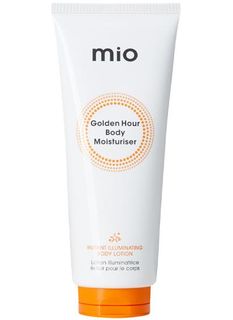
Mio Skincare Mio Golden Hour Body Moisturiser
Works for
1 of 1 advertised claim delivered
MoisturizingCaprylic/capric triglyceride, Glycerin + 10 moreGood evidence
“Mio Golden Hour Body Moisturiser”
This product can help improve hydration of the skin with the two types of ingredients.
The first type is called “humectants”:
these ingredients help attract water.
When humectants are on the surface of the skin, they “pull in” the moisture from the outside environment, or from
within deeper layers of the skin. The following ingredients in this product do the job:
glycerin.
This product also contains ingredients called “occlusives”. They help reduce the speed with which our skin loses moisture to the outside environment. These ingredients also help soften the upper layer of the skin, so it feels less tight and nicer to the touch. The following ingredients in this product do the job: caprylic/capric triglyceride, cetearyl alcohol.
Can it cause trouble?
Irritancy8 strong irritants: Parfum, Limonene + 6 more — patch-test recommendedHigh risk
Comedogenic3 ingredients rated 2 or more on the 0–5 pore-clogging scale3 flagged
User reviews
Be the first — your take helps the next person decide.
Ingredients
Filter by role to see what each ingredient is doing.
Water~45–55%
Dicaprylyl carbonate~4.3–5.2%
- Irritation risk
- Low
Helps products spread more easily and works as an emollient to soften skin
More about Dicaprylyl carbonateCetearyl alcohol~3.7–4.5%
- Irritation risk
- Low
- Comedogenicity
- 2/5
A non-drying alcohol. Works as an emollient. Helps water and oil mix together and creates a nice product texture
More about Cetearyl alcoholGlycerin~3.1–3.8%
- Irritation risk
- Low
One of the best moisturizing ingredients. Naturally present in skin. It attracts water to the upper layer of the skin working as a humectant
More about GlycerinCaprylic/capric triglyceride~2.5–3%
- Irritation risk
- Medium
A good mix of fatty acids that forms a protective layer on the skin. Improves the shelf life of products. Derived from coconut and glycerin
More about Caprylic/capric triglycerideOlus oil~2–2.4%
- Irritation risk
- Low
An oil from a mixture of different vegetables. Helps soften the upper layer of the skin
More about Olus oilGlyceryl stearate se~1.7–2%
- Irritation risk
- Low
- Comedogenicity
- 2/5
Used to stabilize the product formulations and works as an emollient
More about Glyceryl stearate seOctyldodecanol~1.4–1.7%
- Irritation risk
- Low
An emollient that helps to soften the skin and create a pleasant product texture and stabilize the formulation
More about OctyldodecanolParfum~1.1–1.4%
- Irritation risk
- High
An aromatic blend of unspecified and possibly irritating ingredients
More about ParfumSynthetic fluorphlogopite~1–1.2%
- Irritation risk
- Low
A mineral that is used as an optical filter (makes the skin looks nicer through light reflection) and to improve the texture of cosmetic products
More about Synthetic fluorphlogopiteLimonene~0.65–0.95%
- Irritation risk
- High
A common frangrance that can easily irritate skin, especially if exposed to air, light or heat
More about LimonenePropanediol~0.55–0.85%
- Irritation risk
- Low
Acts as a solvent for other ingredients. Speeds up the absorption of other ingredients into the skin
More about PropanediolCetyl palmitate~0.55–0.8%
- Irritation risk
- Low
An emollient that helps soften the skin and is used to improve product texture and stability
More about Cetyl palmitatePolyacrylate-13~0.45–0.7%
- Irritation risk
- Low
Used to create a thicker product consistency and stabilize the product formulation
More about Polyacrylate-13Sorbitan palmitate~0.4–0.6%
- Irritation risk
- Medium
Helps water and oil mix together and stabilize the product formulation
More about Sorbitan palmitatePhenoxyethanol~0.4–0.6%
- Irritation risk
- Low
A preservative. It helps prevent bacterial growth in cosmetic products
More about PhenoxyethanolHydroxyacetophenone~0.35–0.65%
Olea europaea fruit oil~0.3–0.6%
- Irritation risk
- Medium
An emollient that helps soften the skin but is not effective for restoring its barrier function. Might be helpful to calm down inflammation
More about Olea europaea fruit oilPolyisobutene~0.3–0.6%
Xanthan gum~0.25–0.5%
- Irritation risk
- Low
Used to create a thicker product consistency
More about Xanthan gumCarapa guianensis seed oil~0.25–0.5%
- Irritation risk
- Low
Sorbitan oleate~0.25–0.45%
- Irritation risk
- Medium
- Comedogenicity
- 2/5
Helps oil and water mix together
More about Sorbitan oleateAlcohol~0.2–0.35%
- Irritation risk
- High
Can be drying and contribute to skin irritation. Used in formulars to dissolve other ingredients, create a thinner product consistency or for its antibacterial properties
More about AlcoholEvodia rutaecarpa fruit extract~0.2–0.35%
- Irritation risk
- Low
Citral~0.2–0.35%
Polysorbate 20~0.2–0.4%
Myrtus communis leaf extract~0.15–0.3%
- Irritation risk
- High
A plant extract that contains an essential oil and often used for its fragrance. Can be irritating. It has some anti-bacterial and anti-oxidant properties
More about Myrtus communis leaf extractOlea europaea leaf extract~0.15–0.3%
- Irritation risk
- Medium
A plant extract that might have some anti-oxidant and anti-inflammatory properties but evidence for effectiveness in skin is missing
More about Olea europaea leaf extractSorbitan isostearate~0.2–0.4%
- Irritation risk
- Low
Helps oil and water mix together
More about Sorbitan isostearateTrisodium ethylenediamine disuccinate~0.2–0.35%
- Irritation risk
- Medium
Used to improve stability of the formulation
More about Trisodium ethylenediamine disuccinateTin oxide~0.3–0.5%
- Irritation risk
- Low
A colorant that can add a pearl-like appearance to the formulation
More about Tin oxideLecithin~0.25–0.45%
- Irritation risk
- Low
Used mostly for creating emulsions - helping oil and water mix together. Helps soften the upper layer of the skin
More about LecithinLinalool~0.2–0.35%
Opuntia ficus-indica stem extract~0.2–0.35%
- Irritation risk
- Low
Tocopherol~0.2–0.35%
- Irritation risk
- Low
Pure form of vitamin E. Can help moisturise and protect the skin from free radicals. Often used to help stabilise other ingredients or the formula itself
More about TocopherolVitex agnus-castus extract~0.2–0.35%
- Irritation risk
- Medium
A plant extract that might have some antioxidant properties but evidence of effectiveness in skin is missing
More about Vitex agnus-castus extractAscorbyl tetraisopalmitate~0.2–0.4%
- Irritation risk
- Medium
A vitamin C derivative. Studies show that is might be effective in reducing hyperpigmentation, but there are no studies confirming that it is effectively converted into the bioavailable form of Vitamin C in skin. It is not clear how this derivative compares in effectiveness to the topical application of bioavailable form of vitamin C (L-ascorbic acid)
More about Ascorbyl tetraisopalmitateCyclodextrin~0.15–0.3%
- Irritation risk
- Low
A type of sugar that is used to support delivery of active ingredients and can enhance their penetration into the skin without disrupting the skin's barrier
More about CyclodextrinGeraniol~0.15–0.25%
Citronellol~0.15–0.3%
Sodium hydroxide~0.15–0.3%
Ci 77891~0.1–0.2%
- Irritation risk
- Low
Ci 77491~0.1–0.2%
- Irritation risk
- Low
A red colorant made of iron oxide. Typically is not irritating
More about Ci 77491Ingredient list view
Water, Dicaprylyl carbonate, Cetearyl alcohol, Glycerin, Caprylic/capric triglyceride, Olus oil, Glyceryl stearate se, Octyldodecanol, Parfum, Synthetic fluorphlogopite, Limonene, Propanediol, Cetyl palmitate, Polyacrylate-13, Sorbitan palmitate, Phenoxyethanol, Hydroxyacetophenone, Olea europaea fruit oil, Polyisobutene, Xanthan gum, Carapa guianensis seed oil, Sorbitan oleate, Alcohol, Evodia rutaecarpa fruit extract, Citral, Polysorbate 20, Myrtus communis leaf extract, Olea europaea leaf extract, Sorbitan isostearate, Trisodium ethylenediamine disuccinate, Tin oxide, Lecithin, Linalool, Opuntia ficus-indica stem extract, Tocopherol, Vitex agnus-castus extract, Ascorbyl tetraisopalmitate, Cyclodextrin, Geraniol, Citronellol, Sodium hydroxide, Ci 77891, Ci 77491
Compare prices
Retailers ranked by price — lowest first.


Sources cited in this review
Every concentration estimate and effectiveness label is anchored to one of these 16 studies and safety reviews.
- 1
- 2Use of “natural” oils for moisturization: Review of olive, coconut, and sunflower seed oilonlinelibrary.wiley.com
- 3
- 4Surfactants and experimental irritant contact dermatitisncbi.nlm.nih.gov
- 5
- 6

Affiliate links · As an Amazon Associate, WIMJ earns from qualifying purchases.