Works for:
based on ingredients and %- Cleansing
Can it cause trouble?
- Irritation risk: high
- Comedogenic risk ingredients: 4
Key actives

Works for
Cleansing
What does the product description say?
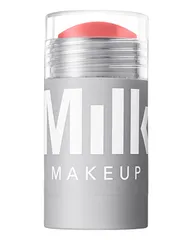
Milk Makeup Lip + Cheek Rally Part lip tint, part blush, Milk Makeup’s multi-purpose Lip + Cheek is perfect for those who want glow on-the-go.
Source: Cultbeauty
This product works by removing dirt and oil from the surface of the skin. It uses a combination of mild cleansing agents (isopropyl titanium triisostearate, polyhydroxystearic acid) and should be able to cleanse the skin gently. Still keep in mind that any cleansing can disrupt the skin barrier, and most people do not need to cleanse their skin more than once per day.
Helps water and oil mix together
Used to create a thicker product consistency and stabilize the formulation
How honest is this product?
| Promise | Can it deliver? |
|---|---|
| Cleansing |
Total Promises Fulfilled score: 100/100.
We receive a small commission for purchases made through these links at no cost for you. Thank you for your support! Learn more
Potential irritants
Comedogenic ingredients
User reviews (0)
Averages from community submissions.
No reviews yet for this product.
Be the first to share your experience!
Tried this product?
Help capture what the ingredient list can't—texture, finish, pilling, scent, and more. Answer what you can, skip the rest.
Takes ~30 seconds.
Reviews are shown in aggregate. No personal details.
Key Actives
A plant oil that can help soften the skin. It might be helpful in calming down inflammation, but solid research is lacking. Is often used in lip products to create the needed product consistency
Helps to soften the upper layer of the skin and might have some anti-oxidant effect
An emollient that helps soften the skin
An emollient that helps soften the skin and could be helpful in repairing its barrier function
Helps soften the upper layer of the skin and support skin's barrier function while creating a thicker product consistency
An emollient that helps soften the skin. Could be comedogenic
Used to create a thicker product consistency and stabilize the formulation
Helps water and oil mix together
Potential irritants
Essential oil that can be irritating. Can lead to photosensitivity
A plant oil that can help soften the skin. It might be helpful in calming down inflammation, but solid research is lacking. Is often used in lip products to create the needed product consistency
An emollient that helps soften the skin and could be helpful in repairing its barrier function
A more stable but less bio-available form of vitamin E compared to Tocopherol. Might help moisturize and protect the skin from free radicals, but mostly used in low concentrations to stabilize other ingredients.
Used to create a thicker product consistency and stabilize the formulation
Comedogenic ingredients
An emollient that helps soften the skin and create a nice product texture
An oil from a mixture of different vegetables. Helps soften the upper layer of the skin
An emollient that helps soften the skin. Could be comedogenic
All ingredients
A plant oil that can help soften the skin. It might be helpful in calming down inflammation, but solid research is lacking. Is often used in lip products to create the needed product consistency
An emollient that helps soften the skin and could be helpful in repairing its barrier function
An emollient that helps soften the skin and create a nice product texture
Helps soften the upper layer of the skin and support skin's barrier function while creating a thicker product consistency
Enhances the product texture and makes it more spreadable. Helps reduce water loss from the outer layer of skin. Extands the shelf life by preventing bacteria growth
Forms a protective film on the surface of the skin to prevent moisture loss. Gives a velvety feel to products while reducing tackiness
Essential oil that can be irritating. Can lead to photosensitivity
Helps to soften the upper layer of the skin and might have some anti-oxidant effect
Creates an illusion of smoother and more radiant skin tone. Adds shimmer to the skin by reflecting light
A more stable but less bio-available form of vitamin E compared to Tocopherol. Might help moisturize and protect the skin from free radicals, but mostly used in low concentrations to stabilize other ingredients.
An oil from a mixture of different vegetables. Helps soften the upper layer of the skin
An oil from a mixture of different vegetables. Helps soften the upper layer of the skin
An emollient that helps soften the skin. Could be comedogenic
Is used to dissolve other ingredients and create nice product texture
Used to create a thicker product consistency and stabilize the formulation
A preservative. It helps prevent bacterial growth in cosmetic products
A colorant that can add a pearl-like appearance to the formulation
Works as a UV filter when used in high concentrations. It is photostable and is effective mostly against the UVB light, with some protection in the UVA range. In small concentrations, used for its ability to improve the color of cosmetic products. Is usually well tolerated by the skin
An umbrella term for the following three colorants: CI 77491, CI 77492, CI 77499. They might be able to offer some protection against visible light, but the degree of the protection is not clear
Ingredient list view
Ricinus communis seed oil, Persea gratissima oil, Ethylhexyl palmitate, Helianthus annuus seed wax, C12-15 alkyl benzoate, Euphorbia cerifera wax, Candelilla cera, Silica, Isononyl isononanoate, Citrus tangerina peel oil, Mangifera indica seed butter, Prunus armeniaca kernel oil, Mica, Citrus aurantium dulcis peel wax, Citrus limon peel extract, Prunus persica kernel oil, Tocopheryl acetate, Hydrogenated vegetable oil, Vegetable oil, Hydrogen, Bis-stearyl dimethicone, Isopropyl myristate, Propylene carbonate, Polyhydroxystearic acid, Isopropyl titanium triisostearate, Stearalkonium hectorite, Phenoxyethanol, Calcium aluminum borosilicate, Tin oxide, Ci 15850, Ci 19140, Ci 15985, Ci 17200, Ci 19140, Blue 1 lake, Ci 42090, Ci 45410, Titanium dioxide, Ci 77891, Iron oxides
- Final report on the safety assessment of Ricinus Communis (Castor) Seed Oil, Hydrogenated Castor Oil, Glyceryl Ricinoleate, Glyceryl Ricinoleate SE, Ricinoleic Acid, Potassium Ricinoleate, Sodium Ricinoleate, Zinc Ricinoleate, Cetyl Ricinoleate, Ethyl Ricinoleate, Glycol Ricinoleate, Isopropyl Ricinoleate, Methyl Ricinoleate, and Octyldodecyl Ricinoleate
- Castor Oil: Properties, Uses, and Optimization of Processing Parameters in Commercial Production
- Effect of ricinoleic acid in acute and subchronic experimental models of inflammation
- Effect of Olive and Sunflower Seed Oil on the Adult Skin Barrier: Implications for Neonatal Skin Care
- Biological Activities and Safety of Citrus spp. Essential Oils
- Extraction and Characteristics of Seed Kernel Oil from Mango
- Promising features of mango (Mangifera indica L.) kernel oil: a review
- Evaluation of the fatty acid composition of the seeds of Mangifera indica L. and their application
- Safety Assessment of Borosilicate Glasses as Used in Cosmetics
- Safety Assessment of Tin(IV) Oxide as Used in Cosmetics
- Analysis of Dyes in Cosmetics: Challenges and Recent Developments
- Scientific Committee on Consumer Safety Opinion on Acid Red 92