Works for
1 of 1 advertised claim delivered
Moisturizing10 ingredients credited for this claimGood support
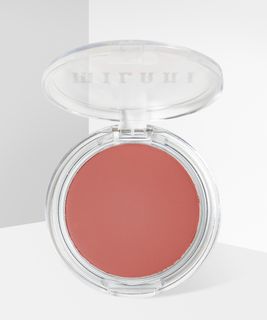
“Cheek Kiss Cream Blush”
This product can help soften the skin and reduce its moisture loss with emollients and occlusives: bis-diglyceryl polyacyladipate-2, caprylic/capric triglyceride.
Keep in mind that this product does not contain effective ingredients to attract water to the upper layer of the skin. This is why an additional product with humectants like glycerin or hyaluronic acid can be helpful (apply it before this product for the best results).
Can it cause trouble?
Irritancy2 strong irritants: Sorbitan sesquioleate, Rosa damascena flower oilMedium risk
Comedogenic1 ingredient rated 2 or more on the 0–5 pore-clogging scale1 flagged
User reviews
Be the first — your take helps the next person decide.
Ingredients
Filter by role to see what each ingredient is doing.
Triethylhexanoin~26–40%
- Irritation risk
- Medium
Helps soften the upper layer of the skin
More about TriethylhexanoinOctyldodecanol~4.8–7.2%
- Irritation risk
- Low
An emollient that helps to soften the skin and create a pleasant product texture and stabilize the formulation
More about OctyldodecanolSilica~4.4–6.7%
Bis-diglyceryl polyacyladipate-2~3.5–5.3%
- Irritation risk
- Low
Helps soften the upper layer of the skin and reduce water loss from its surface
More about Bis-diglyceryl polyacyladipate-2Caprylic/capric triglyceride~2.5–3.8%
- Irritation risk
- Medium
A good mix of fatty acids that forms a protective layer on the skin. Improves the shelf life of products. Derived from coconut and glycerin
More about Caprylic/capric triglycerideSynthetic wax~1.9–2.9%
- Irritation risk
- Low
Used to stabilize product formulations and thicken product consistency
More about Synthetic waxSynthetic beeswax~1.5–2.3%
- Irritation risk
- Low
Helps soften the upper layer of the skin
More about Synthetic beeswaxPolyethylene~1.5–2.3%
Triethoxycaprylylsilane~1.1–1.6%
- Irritation risk
- Low
A type of silicone that helps oil and water mix well together. Helps to disperse other ingredients, e.g. pigments, evenly in a formulation
More about TriethoxycaprylylsilaneSorbitan sesquioleate~0.9–1.3%
- Irritation risk
- High
Used to help oil and water mix together. Can be irritating
More about Sorbitan sesquioleateStearalkonium hectorite~0.55–1.25%
Propylene carbonate~0.5–1.15%
- Irritation risk
- Low
Is used to dissolve other ingredients and create nice product texture
More about Propylene carbonateEthylene/propylene copolymer~0.6–1.4%
- Irritation risk
- Low
1,2-hexanediol~0.35–0.85%
Tocopheryl acetate~0.35–0.85%
- Irritation risk
- Medium
A more stable but less bio-available form of vitamin E compared to Tocopherol. Might help moisturize and protect the skin from free radicals, but mostly used in low concentrations to stabilize other ingredients.
More about Tocopheryl acetateCaprylyl glycol~0.4–0.95%
- Irritation risk
- Medium
Helps preserve products and creates a nice product texture
More about Caprylyl glycolEthylhexylglycerin~0.35–0.8%
Dimethicone~0.4–0.9%
- Irritation risk
- Low
A silicone that helps to reduce water loss from the surface of the skin. Can temporarily "fill in" lines and wrinkles, absorb oil, and create a nice product finish
More about DimethiconePunica granatum seed oil~0.3–0.75%
- Irritation risk
- Low
Helps soften the upper layer of the skin
More about Punica granatum seed oilCitrullus lanatus seed oil~0.2–0.8%
- Irritation risk
- Low
Rosa damascena flower oil~0.15–0.55%
- Irritation risk
- High
Used as a fragrance. Can be irritating
More about Rosa damascena flower oilCalcium titanium borosilicate~0.2–0.7%
- Irritation risk
- Low
Tin oxide~0.2–0.75%
- Irritation risk
- Low
A colorant that can add a pearl-like appearance to the formulation
More about Tin oxideTitanium dioxide~0.15–0.7%
- Irritation risk
- Low
Works as a UV filter when used in high concentrations. It is photostable and is effective mostly against the UVB light, with some protection in the UVA range. In small concentrations, used for its ability to improve the color of cosmetic products. Is usually well tolerated by the skin
More about Titanium dioxideCi 45410~0.1–0.35%
Iron oxides~0.05–0.3%
- Irritation risk
- Low
An umbrella term for the following three colorants: CI 77491, CI 77492, CI 77499. They might be able to offer some protection against visible light, but the degree of the protection is not clear
More about Iron oxidesCi 77491~0.05–0.2%
- Irritation risk
- Low
A red colorant made of iron oxide. Typically is not irritating
More about Ci 77491Ci 77499~0.05–0.2%
Ingredient list view
Triethylhexanoin, Octyldodecanol, Silica, Bis-diglyceryl polyacyladipate-2, Caprylic/capric triglyceride, Synthetic wax, Synthetic beeswax, Polyethylene, Triethoxycaprylylsilane, Sorbitan sesquioleate, Stearalkonium hectorite, Propylene carbonate, Ethylene/propylene copolymer, 1,2-hexanediol, Tocopheryl acetate, Caprylyl glycol, Ethylhexylglycerin, Dimethicone, Punica granatum seed oil, Citrullus lanatus seed oil, Rosa damascena flower oil, Calcium titanium borosilicate, Tin oxide, Titanium dioxide, Ci 45410, Iron oxides, Ci 77491, Ci 77499
Compare prices
Retailers ranked by price — lowest first.
Affiliate links · prices updated regularly · As an Amazon Associate, WIMJ earns from qualifying purchases.
Sources cited in this review
Every concentration estimate and effectiveness label is anchored to one of these 9 studies and safety reviews.
- 1
- 2
- 3
- 4
- 5
- 6Final Report on the Safety Assessment of Dimethicone Copolyoljournals.sagepub.com

Affiliate links · As an Amazon Associate, WIMJ earns from qualifying purchases.