Works for:
based on ingredients and %- Evens skin tone
- Moisturizing
- Anti-aging
- Anti-oxidation
Can it cause trouble?
- Irritation risk: high
- Comedogenic risk ingredients: 1
Key actives
Anti-oxidation
This product contains antioxidants (resveratrol) that can help neutralize free radicals in skin. By doing so, they can lessen the damage the skin gets from the UV light (sun).
Helps neutralize free radicals in skin and might help reduce fine lines and wrinkles, as well as even out the skin tone
An active component of chamomile plant that historically has been used to calm down irritated skin. A recent study shows that bisabolol indeed can have some anti-inflammatory effect on skin, even though conclusive data is lacking. Bisabolol has a sweet floral scent and can be added to products for its aromatic properties
An emollient that helps soften the skin and might help calm down inflammation
A fermentation product created by bacteria Lactobacillus. The fermented product has anti-bacterial properties and might be helpful in calming down inflammation, but studies are lacking. Helps attract water to the upper layer of the skin. Can be used as a preservative
Can be helpful in reducing inflammation in skin, including inflamed acne. It can be irritating
Evens skin tone
What does the product description say?
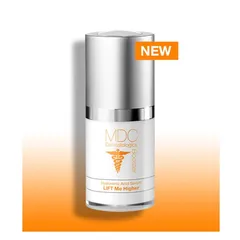
It's more active and absorbs deeper into the surface of the skin for improved plumping, firming and skin tone.
Source: MD complete
This product can help reduce hypepigmentation and even out the skin tone because it contains the following effective ingredients: lactic acid
The following ingredient (ingredients) in this product might be helpful, but there is no evidence to confirm that it actually can help even out the skin tone: resveratrol.
Keep in mind that you would need to apply any topical skincare targetted at hypigmentation consistently for a couple of months to get a result. No topical skincare product can help get rid of hyperpigmentation (including post-acne marks and age spots) instantly.
An exfoliating and moisturizing alpha-hydroxy acid (AHA). Typically causes less irritation than other AHAs, for example, glycolic acid. At high concentrations (about 15%), lactic acid can help reduce lines and wrinkles. Recent studies show that lactic acid can support the "good" bacteria living on skin's surface (healthy skin microbiome)
Helps neutralize free radicals in skin and might help reduce fine lines and wrinkles, as well as even out the skin tone
A salt derived from licorice. Works as an emollient to soften the upper layer of the skin and can help calm down inflammation. Might be helpful for skin lightening
Exfoliation
This product can help exfoliate the skin. In other words, it helps break down the bonds between dead cells on the surface of the skin and speed up the skin turnover. Skin often appears softer and brighter after exfoliation, but overdoing it can result in disrupted skin barrier. The following ingredient is doing the exfoliating job in this product: lactic acid.
An exfoliating and moisturizing alpha-hydroxy acid (AHA). Typically causes less irritation than other AHAs, for example, glycolic acid. At high concentrations (about 15%), lactic acid can help reduce lines and wrinkles. Recent studies show that lactic acid can support the "good" bacteria living on skin's surface (healthy skin microbiome)
Helps calm down inflammation in skin and can help reduce itching. Helps to repair the skin barrier and keep skin hydrated
Moisturizing
What does the product description say?
NanoActive HA (Hyaluronic Acid) Complex plumps and firms skin, while reducing crepiness.
Source: MD complete
This product can help improve hydration of the skin with the two types of ingredients.
The first type is called “humectants”:
these ingredients help attract water.
When humectants are on the surface of the skin, they “pull in” the moisture from the outside environment, or from
within deeper layers of the skin. The following ingredients in this product do the job:
glycerin, glycogen.
This product also contains ingredients called “occlusives”. They help reduce the speed with which our skin loses moisture to the outside environment. These ingredients also help soften the upper layer of the skin, so it feels less tight and nicer to the touch. The following ingredients in this product do the job: squalane, carthamus tinctorius seed oil.
The following ingredients in this product are especially good for supporting the skin barrier and helping with the hydration level: palmitoyl dipeptide-5 diaminobutyroyl hydroxythreonine, palmitoyl tripeptide-5, panthenol, sh-oligopeptide-1, sh-oligopeptide-2
A type of peptide. Peptides are excellent moisturizers and might be able support collagen production reducing fine lines and wrinkles
One of the best moisturizing ingredients. Attracts water into the upper layer of the skin
Helps attract water to the upper layer of the skin. Is often used to adjust the pH level of the product
An oil naturally present in skin. Works as an emollient to soften the skin and form a protective layer on its surface without a greasy feeling.
A fermentation product created by bacteria Lactobacillus. The fermented product has anti-bacterial properties and might be helpful in calming down inflammation, but studies are lacking. Helps attract water to the upper layer of the skin. Can be used as a preservative
A type of peptide. Peptides are excellent moisturizers and might be able support collagen production reducing fine lines and wrinkles
Helps attract water to the upper layer of the skin and can help improve skin barrier function
A type of peptide. Peptides are excellent moisturizers and might be able support collagen production reducing fine lines and wrinkles
A peptide. It helps attract water to the upper layer of the skin, support skin's barrier function and might have some slight anti-aging effect through stimulating skin's own production of hyaluronic acid
An emollient that helps soften the skin and might help calm down inflammation
An emollient. Found to be as effective as a moisturizer for dry skin as mineral oil. Could be comedogenic
One of the best moisturizing ingredients. Naturally present in skin. It attracts water to the upper layer of the skin working as a humectant
Helps attract water to the upper layer of the skin
One of the best moisturizing ingredients. Attracts water into the upper layer of the skin. Naturally present in skin. Typically has large molecule size unless advertised otherwise on the product label. Helps support skin's barrier function and may help to reduce inflammation
Attracts water into the upper layer of the skin
An exfoliating and moisturizing alpha-hydroxy acid (AHA). Typically causes less irritation than other AHAs, for example, glycolic acid. At high concentrations (about 15%), lactic acid can help reduce lines and wrinkles. Recent studies show that lactic acid can support the "good" bacteria living on skin's surface (healthy skin microbiome)
A non-living ingredient made by fermentation with the bacteria Lactobacillus. It can help attract water to the upper layer of the skin and might help reduce inflammation
Used to create a nice product texture and help delivery of other ingredients. Might be somewhat helpful in attracting water to the upper layer of the skin
Helps preserve products and creates a nice product texture
Helps calm down inflammation in skin and can help reduce itching. Helps to repair the skin barrier and keep skin hydrated
A salt derived from licorice. Works as an emollient to soften the upper layer of the skin and can help calm down inflammation. Might be helpful for skin lightening
Traditionally used to treat sunburns, dermatitis and inflammation, but evidence for its effectiveness is lacking. The extract can contain humectants that help attract water into the skin
Used mostly for creating emulsions - helping oil and water mix together. Helps soften the upper layer of the skin
Anti-aging
What does the product description say?
Carefully selected peptides are powered by our proprietary mix of naturally derived nutrients to nourish and support the skin’s own growth and repair processes, reducing the look of fine lines and loss of firmness.
Source: MD complete
This product contains lactic acid, palmitoyl dipeptide-5 diaminobutyroyl hydroxythreonine, palmitoyl tripeptide-5, resveratrol, sh-oligopeptide-1, sh-oligopeptide-2, tetradecyl aminobutyroylvalylaminobutyric urea trifluoroacetate. These ingredients might be able to help reduce and prevent fine lines and wrinkles, improve skin elasticity and firmness, but there is not enough evidence that it actually works.
Helps neutralize free radicals in skin and might help reduce fine lines and wrinkles, as well as even out the skin tone
A type of peptide. Peptides are excellent moisturizers and might be able support collagen production reducing fine lines and wrinkles
A type of peptide. Peptides are excellent moisturizers and might be able support collagen production reducing fine lines and wrinkles
A peptide. It helps attract water to the upper layer of the skin, support skin's barrier function and might have some slight anti-aging effect through stimulating skin's own production of hyaluronic acid
An exfoliating and moisturizing alpha-hydroxy acid (AHA). Typically causes less irritation than other AHAs, for example, glycolic acid. At high concentrations (about 15%), lactic acid can help reduce lines and wrinkles. Recent studies show that lactic acid can support the "good" bacteria living on skin's surface (healthy skin microbiome)
A type of peptide. Peptides are excellent moisturizers and might be able support collagen production reducing fine lines and wrinkles
One of the best moisturizing ingredients. Attracts water into the upper layer of the skin. Naturally present in skin. Typically has large molecule size unless advertised otherwise on the product label. Helps support skin's barrier function and may help to reduce inflammation
Traditionally used to treat sunburns, dermatitis and inflammation, but evidence for its effectiveness is lacking. The extract can contain humectants that help attract water into the skin
How honest is this product?
| Promise | Can it deliver? |
|---|---|
| Moisturizing | |
| Evens skin tone | |
| Anti-aging |
Total Promises Fulfilled score: 91/100.
Potential irritants
Comedogenic ingredients
User reviews (0)
Averages from community submissions.
No reviews yet for this product.
Be the first to share your experience!
Tried this product?
Help capture what the ingredient list can't—texture, finish, pilling, scent, and more. Answer what you can, skip the rest.
Takes ~30 seconds.
Reviews are shown in aggregate. No personal details.
Key Actives
Helps calm down inflammation in skin and can help reduce itching. Helps to repair the skin barrier and keep skin hydrated
An exfoliating and moisturizing alpha-hydroxy acid (AHA). Typically causes less irritation than other AHAs, for example, glycolic acid. At high concentrations (about 15%), lactic acid can help reduce lines and wrinkles. Recent studies show that lactic acid can support the "good" bacteria living on skin's surface (healthy skin microbiome)
A fermentation product created by bacteria Lactobacillus. The fermented product has anti-bacterial properties and might be helpful in calming down inflammation, but studies are lacking. Helps attract water to the upper layer of the skin. Can be used as a preservative
An active component of chamomile plant that historically has been used to calm down irritated skin. A recent study shows that bisabolol indeed can have some anti-inflammatory effect on skin, even though conclusive data is lacking. Bisabolol has a sweet floral scent and can be added to products for its aromatic properties
Helps neutralize free radicals in skin and might help reduce fine lines and wrinkles, as well as even out the skin tone
One of the best moisturizing ingredients. Attracts water into the upper layer of the skin. Naturally present in skin. Typically has large molecule size unless advertised otherwise on the product label. Helps support skin's barrier function and may help to reduce inflammation
One of the best moisturizing ingredients. Attracts water into the upper layer of the skin. Naturally present in skin. Typically has large molecule size unless advertised otherwise on the product label. Helps support skin's barrier function and may help to reduce inflammation
A salt derived from licorice. Works as an emollient to soften the upper layer of the skin and can help calm down inflammation. Might be helpful for skin lightening
One of the best moisturizing ingredients. Attracts water into the upper layer of the skin. Naturally present in skin. Typically has large molecule size unless advertised otherwise on the product label. Helps support skin's barrier function and may help to reduce inflammation
Helps attract water to the upper layer of the skin and can help improve skin barrier function
Can be helpful in reducing inflammation in skin, including inflamed acne. It can be irritating
A peptide. It helps attract water to the upper layer of the skin, support skin's barrier function and might have some slight anti-aging effect through stimulating skin's own production of hyaluronic acid
An emollient that helps soften the skin and might help calm down inflammation
A type of peptide. Peptides are excellent moisturizers and might be able support collagen production reducing fine lines and wrinkles
A type of peptide. Peptides are excellent moisturizers and might be able support collagen production reducing fine lines and wrinkles
A type of peptide. Peptides are excellent moisturizers and might be able support collagen production reducing fine lines and wrinkles
A new synthetic humectant that, according to the first tests, works better than glycerin in attracting moisture to the skin surface. It might be able to keep attracting water to the upper layer of the skin for longer compared with glycerin. Its texture is also nicer. Because of this, products with it are likely to be less sticky and more pleasant on application. It is unlikely to cause irritation and products with it work for sensitive skin. For best hydration results, it should be used at about 5-10% in a formulation. This ingredient is developed by a supplier Nouryon and is sold to skincare brands under the name Elfamoist AC.
An oil naturally present in skin. Works as an emollient to soften the skin and form a protective layer on its surface without a greasy feeling.
A non-living ingredient made by fermentation with the bacteria Lactobacillus. It can help attract water to the upper layer of the skin and might help reduce inflammation
Helps attract water to the upper layer of the skin. Is often used to adjust the pH level of the product
An emollient. Found to be as effective as a moisturizer for dry skin as mineral oil. Could be comedogenic
One of the best moisturizing ingredients. Attracts water into the upper layer of the skin
One of the best moisturizing ingredients. Naturally present in skin. It attracts water to the upper layer of the skin working as a humectant
Attracts water into the upper layer of the skin
Helps attract water to the upper layer of the skin
Potential irritants
Produces temporary toning effect. Can help dissolve other ingredients or preserve products
Helps oil and water mix together and can enhance the penetration of other ingredients into the skin. It can be irritating
An aromatic blend of unspecified and possibly irritating ingredients
An aromatic irritating plant extract that can cause photosensitivity in skin
Can be helpful in reducing inflammation in skin, including inflamed acne. It can be irritating
An exfoliating and moisturizing alpha-hydroxy acid (AHA). Typically causes less irritation than other AHAs, for example, glycolic acid. At high concentrations (about 15%), lactic acid can help reduce lines and wrinkles. Recent studies show that lactic acid can support the "good" bacteria living on skin's surface (healthy skin microbiome)
Used to create a thicker product consistency and stabilize emulsions
Helps neutralize free radicals in skin and might help reduce fine lines and wrinkles, as well as even out the skin tone
Helps attract water to the upper layer of the skin. Is often used to adjust the pH level of the product
Helps preserve products and creates a nice product texture
Traditionally used to treat sunburns, dermatitis and inflammation, but evidence for its effectiveness is lacking. The extract can contain humectants that help attract water into the skin
Comedogenic ingredients
An emollient. Found to be as effective as a moisturizer for dry skin as mineral oil. Could be comedogenic
All ingredients
An exfoliating and moisturizing alpha-hydroxy acid (AHA). Typically causes less irritation than other AHAs, for example, glycolic acid. At high concentrations (about 15%), lactic acid can help reduce lines and wrinkles. Recent studies show that lactic acid can support the "good" bacteria living on skin's surface (healthy skin microbiome)
Produces temporary toning effect. Can help dissolve other ingredients or preserve products
Helps oil and water mix together and can enhance the penetration of other ingredients into the skin. It can be irritating
A peptide. It helps attract water to the upper layer of the skin, support skin's barrier function and might have some slight anti-aging effect through stimulating skin's own production of hyaluronic acid
Used to create a nice product texture and help delivery of other ingredients. Might be somewhat helpful in attracting water to the upper layer of the skin
A new synthetic humectant that, according to the first tests, works better than glycerin in attracting moisture to the skin surface. It might be able to keep attracting water to the upper layer of the skin for longer compared with glycerin. Its texture is also nicer. Because of this, products with it are likely to be less sticky and more pleasant on application. It is unlikely to cause irritation and products with it work for sensitive skin. For best hydration results, it should be used at about 5-10% in a formulation. This ingredient is developed by a supplier Nouryon and is sold to skincare brands under the name Elfamoist AC.
An active component of chamomile plant that historically has been used to calm down irritated skin. A recent study shows that bisabolol indeed can have some anti-inflammatory effect on skin, even though conclusive data is lacking. Bisabolol has a sweet floral scent and can be added to products for its aromatic properties
A fermentation product created by bacteria Lactobacillus. The fermented product has anti-bacterial properties and might be helpful in calming down inflammation, but studies are lacking. Helps attract water to the upper layer of the skin. Can be used as a preservative
An oil naturally present in skin. Works as an emollient to soften the skin and form a protective layer on its surface without a greasy feeling.
A non-living ingredient made by fermentation with the bacteria Lactobacillus. It can help attract water to the upper layer of the skin and might help reduce inflammation
An aromatic blend of unspecified and possibly irritating ingredients
Increases thickness of a product. Texture enhancer for oil-in-water emulsions
Used mostly for creating emulsions - helping oil and water mix together. Helps soften the upper layer of the skin
An emollient that helps soften the skin and might help calm down inflammation
A type of peptide. Peptides are excellent moisturizers and might be able support collagen production reducing fine lines and wrinkles
Used to create a thicker product consistency and stabilize emulsions
Helps neutralize free radicals in skin and might help reduce fine lines and wrinkles, as well as even out the skin tone
Acts as a solvent for other ingredients. Speeds up the absorption of other ingredients into the skin
Helps attract water to the upper layer of the skin. Is often used to adjust the pH level of the product
Helps calm down inflammation in skin and can help reduce itching. Helps to repair the skin barrier and keep skin hydrated
An aromatic irritating plant extract that can cause photosensitivity in skin
An emollient. Found to be as effective as a moisturizer for dry skin as mineral oil. Could be comedogenic
One of the best moisturizing ingredients. Attracts water into the upper layer of the skin
One of the best moisturizing ingredients. Attracts water into the upper layer of the skin. Naturally present in skin. Typically has large molecule size unless advertised otherwise on the product label. Helps support skin's barrier function and may help to reduce inflammation
One of the best moisturizing ingredients. Naturally present in skin. It attracts water to the upper layer of the skin working as a humectant
Attracts water into the upper layer of the skin
One of the best moisturizing ingredients. Attracts water into the upper layer of the skin. Naturally present in skin. Typically has large molecule size unless advertised otherwise on the product label. Helps support skin's barrier function and may help to reduce inflammation
A salt derived from licorice. Works as an emollient to soften the upper layer of the skin and can help calm down inflammation. Might be helpful for skin lightening
One of the best moisturizing ingredients. Attracts water into the upper layer of the skin. Naturally present in skin. Typically has large molecule size unless advertised otherwise on the product label. Helps support skin's barrier function and may help to reduce inflammation
Helps preserve products and creates a nice product texture
Helps attract water to the upper layer of the skin and can help improve skin barrier function
Traditionally used to treat sunburns, dermatitis and inflammation, but evidence for its effectiveness is lacking. The extract can contain humectants that help attract water into the skin
Can be helpful in reducing inflammation in skin, including inflamed acne. It can be irritating
A type of peptide. Peptides are excellent moisturizers and might be able support collagen production reducing fine lines and wrinkles
A type of peptide. Peptides are excellent moisturizers and might be able support collagen production reducing fine lines and wrinkles
Ingredient list view
Water, Lactic acid, Alcohol denat., Unknown, Propylene glycol, Tetradecyl aminobutyroylvalylaminobutyric urea trifluoroacetate, Butylene glycol, Acetamidoethoxyethanol, Bisabolol, Lactobacillus ferment, Squalane, Lactobacillus, Parfum, Sodium hydroxide, Ammonium acryloyldimethyltaurate/vp copolymer, Lecithin, Carthamus tinctorius seed oil, Polysorbate 20, Caprylyl glyceryl ether, Ethoxydiglycol, Palmitoyl tripeptide-5, Caprylhydroxamic acid, Hydroxypropyl guar, Polydatin glucoside, Unknown, Resveratrol, Propanediol, Sodium lactate, Allantoin, Citrus grandis peel extract, Citrus bergamia peel oil expressed, Citrus aurantium bergamia fruit extract, Cocos nucifera fruit extract, Citrus limon peel oil, Unknown, Citrus limon peel extract, Sodium hyaluronate, Unknown, Hyaluronic acid, Glycerin, Hydrolyzed sodium hyaluronate, Unknown, Hyaluronic acid, Dipotassium glycyrrhizate, Glycogen, Unknown, Hyaluronic acid, Acetyl glutamine, Caprylyl glycol, Panthenol, Coriandrum sativum seed extract, Aloe barbadensis leaf juice, Rosmarinus officinalis leaf extract, Bacillus/folic acid ferment filtrate extract, Sh-oligopeptide-1, Sh-oligopeptide-2, Sh-polypeptide-7 sh-polypeptide-94 sh-polypeptide-95, Magnesium chloride, Palmitoyl dipeptide-5 diaminobutyroyl hydroxythreonine
- Epidermal and dermal effects of topical lactic acid
- Dual Effects of Alpha-Hydroxy Acids on the Skin
- Surfactants and experimental irritant contact dermatitis
- Propylene Glycol
- Skin-sensitizing and irritant properties of propylene glycol
- NATIONAL INDUSTRIAL CHEMICALS NOTIFICATION AND ASSESSMENT SCHEME (NICNAS) PUBLIC REPORT Acetamide, N-[2-(2-hydroxyethoxy)ethyl]- (INCI Name: Acetamidoethoxyethanol)
- ElfaMoist AC humectant (manufacturer's report)
- α-(-)-Bisabolol Reduces Pro-Inflammatory Cytokine Production and Ameliorates Skin Inflammation
- The effect of probiotics on immune regulation, acne, and photoaging
- Comparison of clinical and histological effects between lactobacillus-fermented Chamaecyparis obtusa and tea tree oil for the treatment of acne: an eight-week double-blind randomized controlled split-face study
- Use of Probiotics for Dermal Applications
- Skin permeation and antioxidant efficacy of topically applied resveratrol
- Chemoprevention of skin cancer by grape constituent resveratrol: relevance to human disease?
- Evaluation of efficacy and tolerance of a nighttime topical antioxidant containing resveratrol, baicalin, and vitamin e for treatment of mild to moderately photodamaged skin
- Resveratrol as a Multifunctional Topical Hypopigmenting Agent
- Anti-aging properties of resveratrol: review and report of a potent new antioxidant skin care formulation
- Resveratrol: A Unique Antioxidant Offering a Multi-Mechanistic Approach for Treating Aging Skin
- Profile of wound healing process induced by allantoin
- Safety Assessment of Citrus Peel-Derived Ingredients as Used in Cosmetics
- Photosensitivity in children: An approach to diagnosis and management
- Hyaluronic acid: A key molecule in skin aging
- Hyaluronan (Hyaluronic Acid): a natural moisturizer for skin care
- Efficacy of a New Topical Nano-hyaluronic Acid in Humans
- Physiochemical properties and application of hyaluronic acid: a systematic review
- Glycerol and the skin: holistic approach to its origin and functions
- Ameliorating effect of dipotassium glycyrrhizinate on an IL-4- and IL-13-induced atopic dermatitis-like skin-equivalent model
- Final report on the safety assessment of Glycyrrhetinic Acid, Potassium Glycyrrhetinate, Disodium Succinoyl Glycyrrhetinate, Glyceryl Glycyrrhetinate, Glycyrrhetinyl Stearate, Stearyl Glycyrrhetinate, Glycyrrhizic Acid, Ammonium Glycyrrhizate, Dipotassium Glycyrrhizate, Disodium Glycyrrhizate, Trisodium Glycyrrhizate, Methyl Glycyrrhizate, and Potassium Glycyrrhizinate.
- Skin moisturizing effects of panthenol-based formulations
- Safety Assessment of Panthenol, Pantothenic Acid, and Derivatives as Used in Cosmetics
- Allergic contact dermatitis induced by rosemary leaf extract in a cleansing gel
- Safety Assessment of Rosmarinus officinalis (Rosemary)-Derived Ingredients as Used in Cosmetics
- Rosmarinus officinalis Extract Suppresses Propionibacterium acnes–Induced Inflammatory Responses