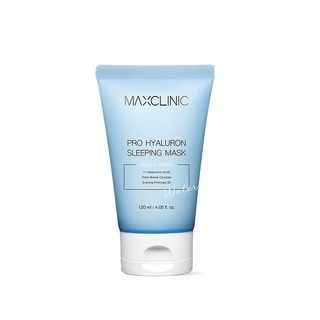
MAXCLINIC Pro Hyaluron Sleeping Mask

MAXCLINIC Pro Hyaluron Sleeping Mask

Efficacy100/100IrritancyMedium
Edit

Works for

1 of 1 advertised claim delivered

Moisturizing
Madecassoside, Trehalose + 29 more
Strong evidence
What the product description says
“Pro Hyaluron Sleeping Mask”
From product name

This product can help improve hydration of the skin with the two types of ingredients.

The first type is called “humectants”:
these ingredients help attract water. When humectants are on the surface of the skin, they “pull in” the moisture from the outside environment, or from within deeper layers of the skin. The following ingredients in this product do the job: arginine, glycerin.

This product also contains ingredients called “occlusives”. They help reduce the speed with which our skin loses moisture to the outside environment. These ingredients also help soften the upper layer of the skin, so it feels less tight and nicer to the touch. The following ingredients in this product do the job: arginine, phenyl trimethicone.

The following ingredients in this product are especially good for supporting the skin barrier and helping with the hydration level: madecassoside

TrehaloseKey active· HumectantEffect: HighA sugar that attracts water to the upper layer of the skin~1.7–2.1%
ArginineKey active· Humectant, OcclusiveEffect: HighAn amino acid that is naturally present in skin and helps keep it hydrated. When used together with AHAs, it can reduce their irritating effect on the skin~0.45–0.7%
Asiatic acidKey activeEffect: HighAn active compound of Centella Asiatica plant extract. In combination with other active compounds of Centella Asiatica extract (asiaticoside, madecasosside and madecassic acid) asiatic acid has been shown to be helpful in wound-healing, restoring skin barrier function and supporting collagen production in skin. It can, however, itself be irritating~0.25–0.45%
AsiaticosideKey activeEffect: HighAn active compound of Centella Asiatica plant extract. In combination with other active compounds of Centella Asiatica extract (madecasosside, asiatic acid and madecassic acid), asiaticoside has been shown to be helpful in wound-healing, restoring skin barrier function and supporting collagen production in skin. It can, however, itself be irritating~0.2–0.4%
GlycerinKey active· HumectantEffect: HighOne of the best moisturizing ingredients. Naturally present in skin. It attracts water to the upper layer of the skin working as a humectant~3.1–3.8%
Hyaluronic acidKey active· HumectantEffect: HighOne of the best moisturizing ingredients. Attracts water into the upper layer of the skin. Naturally present in skin. Typically has large molecule size unless advertised otherwise on the product label. Helps support skin's barrier function and may help to reduce inflammation~0.25–0.5%
Hydrolyzed hyaluronic acidKey active· HumectantEffect: HighOne of the best moisturizing ingredients. Attracts water into the upper layer of the skin. A version of it is naturally present in skin~0.25–0.45%
Hydrolyzed sodium hyaluronateKey activeEffect: HighAttracts water into the upper layer of the skin~0.25–0.45%
Lactobacillus fermentKey active· HumectantEffect: HighA fermentation product created by bacteria Lactobacillus. The fermented product has anti-bacterial properties and might be helpful in calming down inflammation, but studies are lacking. Helps attract water to the upper layer of the skin. Can be used as a preservative~0.25–0.45%
Lactococcus ferment lysateKey activeEffect: HighConsists of remains of dead bacteria cells. Is likely helpful in attracting water to the upper layer of the skin. Might be helpful in reducing inflammation and neutralizing free radicals in skin~0.2–0.4%
Madecassic acidKey activeEffect: HighAn active compound of Centella Asiatica plant extract. In combination with other active compounds of Centella Asiatica extract (asiaticoside, madecasosside and asiatic acid), madecassic acid has been shown to be helpful in wound-healing, restoring skin barrier function and supporting collagen production in skin. It can, however, itself be irritating~0.25–0.45%
MadecassosideHeroEffect: HighAn antioxidant that is typically derived from plant Centella Asiatica. It can help neutralize free radicals in skin and support skin barrier function. It could, however, itself be irritating. It is often unstable in formulations~0.1–0.2%
Oenothera biennis oilKey active· EmollientEffect: HighHelps soften the upper layer of the skin and can support skin barrier function~0.35–0.65%
Phenyl trimethiconeKey active· OcclusiveEffect: HighA type of silicone that can decrease loss of moisture from the skin surface. It helps create a nice product texture~1.5–1.8%
Sodium acetylated hyaluronateKey active· HumectantEffect: HighA type of hyaluronic acid that works as an excellent moisturizer by attracting water into the upper layer of the skin. Is typically feels less sticky on the skin compared to the usual hyaluronic acid~0.2–0.35%
Sodium hyaluronateKey active· HumectantEffect: HighOne of the best moisturizing ingredients. Attracts water into the upper layer of the skin~0.3–0.55%
Sodium hyaluronate crosspolymerKey active· HumectantEffect: HighAttracts water into the upper layer of the skin~0.25–0.5%
Lactobacillus ferment lysateKey activeEffect: MediumA "broth" with parts of dead cells of lactobacteria. Might be helpful supporting diverse microbiome in skin, but evidence is lacking~0.25–0.45%
AdenosineKey activeEffect: MediumMight help improve cell turnover and reduce inflammation in skin. One study shows that the ingredients might be able to help reduce dynamic wrinkles (for example, in the corners of the eyes or on the forehead)~0.4–0.65%
CyclopentasiloxaneKey active· EmollientEffect: MediumA silicone that helps improve the product texture and spreadability. Can absorb oil creating a short-term mattifying effect on the skin~6–7.3%
Scutellaria baicalensis root extract· HumectantEffect: LowA plant extract that might contain a compound baicalin that could be helpful in neutralizing free radicals and reducing inflammation in skin. The baicalin concentration in skincare products is often too low for an effective action. Can be used for its fragrant properties~0.25–0.45%
Caprylyl glycol· Humectant, EmollientEffect: LowHelps preserve products and creates a nice product texture~0.3–0.5%
Butylene glycol· HumectantEffect: LowUsed to create a nice product texture and help delivery of other ingredients. Might be somewhat helpful in attracting water to the upper layer of the skin~4.2–5.2%
Cyclohexasiloxane· EmollientEffect: LowA silicone that serves as an emollient. Helps create a nice non-greasy feels~2.4–3%
Pentylene glycol· EmollientEffect: LowUsed to preserve products, dissolve other ingredients and create a nice product texture~0.3–0.5%
C13-14 isoparaffin· EmollientEffect: LowHelps soften the upper layer of the skin, dissolve other ingredients and create a thicker product consistency~0.55–0.85%
Centella asiatica extractUnder-dosedEffect: HighA plant extract that has been shown to be able to reduce inflammation in skin, support restoration of skin barrier function, as well as support collagen production. Contains active compounds called centelloids: asiaticoside, madecasosside, asiatic acid and madecassic acid. Might be helpful in preventing stretch marks. It can be itself be irritating though.~0.3–0.55%
Avena sativa kernel oilUnder-dosedEffect: HighAn effective moisturizing and skin barrier repair ingredient. Helps calm down inflammation and has some anti-oxidant properties~0.25–0.45%
Bifida ferment lysateUnder-dosedEffect: HighConsists of remains of dead yeast bacteria cells. Helps to hydrate the skin and reduce irritation. Might has some anti-oxidant effect~0.2–0.4%
Simmondsia chinensis seed oilUnder-dosedEffect: HighSoftens the upper layer of skin and helps restore the healthy skin barrier. Has shown to help calm down inflammation in skin. It is a stable oil, meaning that it retains its properties even when exposed to air.~0.45–0.65%
Camellia sinensis leaf extractEffect: Low, below effective doseCan contain potent anti-oxidant compounds (abbreviated ECG, GCG, EGC, and EGCG) that might help protect the skin from free radicals. Can help calm down inflammation and has some anti-bacterial properties. Unfortunately, these antioxidants are unstable and lose their effectiveness very quickly in products. The concentration of the antioxidant compounds in the extract also tends to be low to be effective in topical formulation~0.25–0.5%
Anti-aging
Not advertised by the brand · Adenosine, Asiaticoside + 6 more
Strong evidence

This product can help reduce and prevent fine lines and wrinkles, improve skin elasticity and firmness because it contains adenosine.

These ingredients in the product can also be helpful, even though there is less evidence for their effectiveness: asiaticoside, centella asiatica leaf extract, madecassoside.

Keep in mind that it typically takes at least 6 weeks to notice any results because the changes that are needed to improve fine lines and elasticity happen in the deeper layers of the skin. No topical anti-aging product can “erase” wrinkles or fully reverse signs of aging.

AdenosineKey activeEffect: HighMight help improve cell turnover and reduce inflammation in skin. One study shows that the ingredients might be able to help reduce dynamic wrinkles (for example, in the corners of the eyes or on the forehead)~0.4–0.65%
AsiaticosideKey activeEffect: MediumAn active compound of Centella Asiatica plant extract. In combination with other active compounds of Centella Asiatica extract (madecasosside, asiatic acid and madecassic acid), asiaticoside has been shown to be helpful in wound-healing, restoring skin barrier function and supporting collagen production in skin. It can, however, itself be irritating~0.2–0.4%
MadecassosideKey activeEffect: MediumAn antioxidant that is typically derived from plant Centella Asiatica. It can help neutralize free radicals in skin and support skin barrier function. It could, however, itself be irritating. It is often unstable in formulations~0.1–0.2%
Centella asiatica leaf extractKey activeEffect: MediumA plant extract that has been shown to be able to reduce inflammation in skin, support restoration of skin barrier function, as well as support collagen production. It can be irritating to sensitive skin. Might be helpful in preventing stretch marks. It could, however, itself be irritating.~0.25–0.5%
Hyaluronic acidEffect: LowOne of the best moisturizing ingredients. Attracts water into the upper layer of the skin. Naturally present in skin. Typically has large molecule size unless advertised otherwise on the product label. Helps support skin's barrier function and may help to reduce inflammation~0.25–0.5%
Lactococcus ferment lysateEffect: LowConsists of remains of dead bacteria cells. Is likely helpful in attracting water to the upper layer of the skin. Might be helpful in reducing inflammation and neutralizing free radicals in skin~0.2–0.4%
Centella asiatica extractUnder-dosedEffect: MediumA plant extract that has been shown to be able to reduce inflammation in skin, support restoration of skin barrier function, as well as support collagen production. Contains active compounds called centelloids: asiaticoside, madecasosside, asiatic acid and madecassic acid. Might be helpful in preventing stretch marks. It can be itself be irritating though.~0.3–0.55%
Camellia sinensis leaf extractEffect: Low, below effective doseCan contain potent anti-oxidant compounds (abbreviated ECG, GCG, EGC, and EGCG) that might help protect the skin from free radicals. Can help calm down inflammation and has some anti-bacterial properties. Unfortunately, these antioxidants are unstable and lose their effectiveness very quickly in products. The concentration of the antioxidant compounds in the extract also tends to be low to be effective in topical formulation~0.25–0.5%
Anti-oxidation
Not advertised by the brand · Madecassoside, Asiaticoside + 11 more
Strong evidence

This product contains antioxidants (asiaticoside, madecassoside) that can help neutralize free radicals in skin. By doing so, they can lessen the damage the skin gets from the UV light (sun).

MadecassosideKey activeEffect: HighAn antioxidant that is typically derived from plant Centella Asiatica. It can help neutralize free radicals in skin and support skin barrier function. It could, however, itself be irritating. It is often unstable in formulations~0.1–0.2%
AsiaticosideKey activeEffect: HighAn active compound of Centella Asiatica plant extract. In combination with other active compounds of Centella Asiatica extract (madecasosside, asiatic acid and madecassic acid), asiaticoside has been shown to be helpful in wound-healing, restoring skin barrier function and supporting collagen production in skin. It can, however, itself be irritating~0.2–0.4%
Scutellaria baicalensis root extractEffect: LowA plant extract that might contain a compound baicalin that could be helpful in neutralizing free radicals and reducing inflammation in skin. The baicalin concentration in skincare products is often too low for an effective action. Can be used for its fragrant properties~0.25–0.45%
Glycyrrhiza glabra root extractEffect: LowA plant extract that can help lighten the skin and calm down inflammation. Might be helpful in neutralizing free radicals~0.25–0.45%
Lactobacillus fermentEffect: LowA fermentation product created by bacteria Lactobacillus. The fermented product has anti-bacterial properties and might be helpful in calming down inflammation, but studies are lacking. Helps attract water to the upper layer of the skin. Can be used as a preservative~0.25–0.45%
Lactococcus ferment lysateEffect: LowConsists of remains of dead bacteria cells. Is likely helpful in attracting water to the upper layer of the skin. Might be helpful in reducing inflammation and neutralizing free radicals in skin~0.2–0.4%
Oenothera biennis oilEffect: LowHelps soften the upper layer of the skin and can support skin barrier function~0.35–0.65%
AdenosineEffect: LowMight help improve cell turnover and reduce inflammation in skin. One study shows that the ingredients might be able to help reduce dynamic wrinkles (for example, in the corners of the eyes or on the forehead)~0.4–0.65%
Camellia sinensis leaf extractUnder-dosedEffect: MediumCan contain potent anti-oxidant compounds (abbreviated ECG, GCG, EGC, and EGCG) that might help protect the skin from free radicals. Can help calm down inflammation and has some anti-bacterial properties. Unfortunately, these antioxidants are unstable and lose their effectiveness very quickly in products. The concentration of the antioxidant compounds in the extract also tends to be low to be effective in topical formulation~0.25–0.5%
Centella asiatica extractUnder-dosedEffect: MediumA plant extract that has been shown to be able to reduce inflammation in skin, support restoration of skin barrier function, as well as support collagen production. Contains active compounds called centelloids: asiaticoside, madecasosside, asiatic acid and madecassic acid. Might be helpful in preventing stretch marks. It can be itself be irritating though.~0.3–0.55%
Bifida ferment lysateUnder-dosedEffect: MediumConsists of remains of dead yeast bacteria cells. Helps to hydrate the skin and reduce irritation. Might has some anti-oxidant effect~0.2–0.4%
Rosmarinus officinalis leaf extractEffect: Low, below effective doseCan be helpful in reducing inflammation in skin, including inflamed acne. It can be irritating~0.25–0.45%
Polygonum cuspidatum root extractEffect: Low, below effective doseA plant extract that can contain resveratrol, an antioxidant that can help neutralize free radicals in skin. The effectiveness depends on the extract quality and concentration in the product~0.3–0.5%

Can it cause trouble?

Irritancy
1 strong irritant: Rosmarinus officinalis leaf extract
Medium risk
We flagged 22 ingredients with irritancy potential. Severity depends on your sensitivity threshold; the table lists the worst offenders first.
IngredientFunctionIrritationEst. amount
Scutellaria baicalensis root extractA plant extract that might contain a compound baicalin that could be helpful in neutralizing free radicals and reducing inflammation in skin. The baicalin concentration in skincare products is often too low for an effective action. Can be used for its fragrant propertiesHigh~0.25–0.45%est.
Rosmarinus officinalis leaf extractCan be helpful in reducing inflammation in skin, including inflamed acne. It can be irritatingHigh~0.25–0.45%est.
Chamomilla recutita flower extractPlant extract that can have healing and anti-inflammatory properties. It is a potential allergen and can be irritatingHigh~0.25–0.45%est.
1,2-hexanediolA preservativeMedium~0.95–1.2%est.
PolyacrylamideUsed to improve product texture and help oil and water mix togetherMedium~1.3–1.5%est.
EthylhexylglycerinA preservativeMedium~0.45–0.65%est.
Laureth-7Helps oil and water mix togetherMedium~0.45–0.7%est.
Disodium edtaStabilizes the product formulationMedium~0.35–0.65%est.
Simmondsia chinensis seed oilSoftens the upper layer of skin and helps restore the healthy skin barrier. Has shown to help calm down inflammation in skin. It is a stable oil, meaning that it retains its properties even when exposed to air.Medium~0.45–0.65%est.
Oenothera biennis oilHelps soften the upper layer of the skin and can support skin barrier functionMedium~0.35–0.65%est.
Centella asiatica leaf extractA plant extract that has been shown to be able to reduce inflammation in skin, support restoration of skin barrier function, as well as support collagen production. It can be irritating to sensitive skin. Might be helpful in preventing stretch marks. It could, however, itself be irritating.Medium~0.25–0.5%est.
AsiaticosideAn active compound of Centella Asiatica plant extract. In combination with other active compounds of Centella Asiatica extract (madecasosside, asiatic acid and madecassic acid), asiaticoside has been shown to be helpful in wound-healing, restoring skin barrier function and supporting collagen production in skin. It can, however, itself be irritatingMedium~0.2–0.4%est.
Madecassic acidAn active compound of Centella Asiatica plant extract. In combination with other active compounds of Centella Asiatica extract (asiaticoside, madecasosside and asiatic acid), madecassic acid has been shown to be helpful in wound-healing, restoring skin barrier function and supporting collagen production in skin. It can, however, itself be irritatingMedium~0.25–0.45%est.
Asiatic acidAn active compound of Centella Asiatica plant extract. In combination with other active compounds of Centella Asiatica extract (asiaticoside, madecasosside and madecassic acid) asiatic acid has been shown to be helpful in wound-healing, restoring skin barrier function and supporting collagen production in skin. It can, however, itself be irritatingMedium~0.25–0.45%est.
Centella asiatica extractA plant extract that has been shown to be able to reduce inflammation in skin, support restoration of skin barrier function, as well as support collagen production. Contains active compounds called centelloids: asiaticoside, madecasosside, asiatic acid and madecassic acid. Might be helpful in preventing stretch marks. It can be itself be irritating though.Medium~0.3–0.55%est.
Sodium hyaluronate crosspolymerAttracts water into the upper layer of the skinMedium~0.25–0.5%est.
Polygonum cuspidatum root extractA plant extract that can contain resveratrol, an antioxidant that can help neutralize free radicals in skin. The effectiveness depends on the extract quality and concentration in the productMedium~0.3–0.5%est.
Glycyrrhiza glabra root extractA plant extract that can help lighten the skin and calm down inflammation. Might be helpful in neutralizing free radicalsMedium~0.25–0.45%est.
Caprylyl glycolHelps preserve products and creates a nice product textureMedium~0.3–0.5%est.
Leuconostoc/radish root ferment filtrateA preservative that comes from radishes fermented by a bacteria. New research suggests that the preservation properties in the ingredient come from an ammonium salt that is not present naturally in radish root but used in its cultivation. Is problematic because the exact amount of the preservative agents is difficult to determineMedium~0.25–0.45%est.
Pentylene glycolUsed to preserve products, dissolve other ingredients and create a nice product textureMedium~0.3–0.5%est.
MadecassosideAn antioxidant that is typically derived from plant Centella Asiatica. It can help neutralize free radicals in skin and support skin barrier function. It could, however, itself be irritating. It is often unstable in formulationsMedium~0.1–0.2%est.
Comedogenic
Clean of flagged comedogenic ingredients
None flagged
Edit

User reviews

Would you recommend?
No community reviews yet.

Be the first — your take helps the next person decide.

Write a review · ~30s

Ingredients

Filter by role to see what each ingredient is doing.

Water~45–55%
Formula
Irritation risk
Low

Plain old water

More about Water
Cyclopentasiloxane~6–7.3%
Key active
Irritation risk
Low
Works for
MoisturizingMattifying

A silicone that helps improve the product texture and spreadability. Can absorb oil creating a short-term mattifying effect on the skin

More about Cyclopentasiloxane
Butylene glycol~4.2–5.2%
Formula
Irritation risk
Low
Works for
Moisturizing

Used to create a nice product texture and help delivery of other ingredients. Might be somewhat helpful in attracting water to the upper layer of the skin

More about Butylene glycol
Glycerin~3.1–3.8%
Key active
Irritation risk
Low
Works for
Moisturizing

One of the best moisturizing ingredients. Naturally present in skin. It attracts water to the upper layer of the skin working as a humectant

More about Glycerin
Cyclohexasiloxane~2.4–3%
Formula
Irritation risk
Low
Works for
Moisturizing

A silicone that serves as an emollient. Helps create a nice non-greasy feels

More about Cyclohexasiloxane
1,2-hexanediol~0.95–1.2%
Irritant · medium
Irritation risk
Medium

A preservative

More about 1,2-hexanediol
Trehalose~1.7–2.1%
Key active
Irritation risk
Low
Works for
Moisturizing

A sugar that attracts water to the upper layer of the skin

More about Trehalose
Phenyl trimethicone~1.5–1.8%
Key active
Irritation risk
Low
Works for
Moisturizing

A type of silicone that can decrease loss of moisture from the skin surface. It helps create a nice product texture

More about Phenyl trimethicone
Polyacrylamide~1.3–1.5%
Irritant · medium
Irritation risk
Medium

Used to improve product texture and help oil and water mix together

More about Polyacrylamide
Dimethicone/vinyl dimethicone crosspolymer~0.95–1.15%
Formula
Irritation risk
Low

Used to stabilize product formulations and create a nice product texture

More about Dimethicone/vinyl dimethicone crosspolymer
Ammonium acryloyldimethyltaurate/vp copolymer~0.7–1.05%
Formula
Irritation risk
Low

Increases thickness of a product. Texture enhancer for oil-in-water emulsions

More about Ammonium acryloyldimethyltaurate/vp copolymer
Carbomer~0.55–0.85%
Formula
Irritation risk
Low
Works for
Cleansing

Helps create a thicker or gel-like product texture. It is not a surfactant but can be used in gentle cleansing formulations

More about Carbomer
C13-14 isoparaffin~0.55–0.85%
Formula
Irritation risk
Low
Works for
Moisturizing

Helps soften the upper layer of the skin, dissolve other ingredients and create a thicker product consistency

More about C13-14 isoparaffin
Arginine~0.45–0.7%
Key active
Irritation risk
Low
Works for
Moisturizing

An amino acid that is naturally present in skin and helps keep it hydrated. When used together with AHAs, it can reduce their irritating effect on the skin

More about Arginine
Ethylhexylglycerin~0.45–0.65%
Irritant · medium
Irritation risk
Medium

A preservative

More about Ethylhexylglycerin
Laureth-7~0.45–0.7%
Irritant · medium
Irritation risk
Medium
Works for
Cleansing

Helps oil and water mix together

More about Laureth-7
Adenosine~0.4–0.65%
Key active
Irritation risk
Low
Works for
Anti-agingMoisturizingAnti-oxidation

Might help improve cell turnover and reduce inflammation in skin. One study shows that the ingredients might be able to help reduce dynamic wrinkles (for example, in the corners of the eyes or on the forehead)

More about Adenosine
Disodium edta~0.35–0.65%
Irritant · medium
Irritation risk
Medium

Stabilizes the product formulation

More about Disodium edta
Simmondsia chinensis seed oil~0.45–0.65%
Under-dosedIrritant · medium
Irritation risk
Medium
Works for
Moisturizing

Softens the upper layer of skin and helps restore the healthy skin barrier. Has shown to help calm down inflammation in skin. It is a stable oil, meaning that it retains its properties even when exposed to air.

More about Simmondsia chinensis seed oil
Oenothera biennis oil~0.35–0.65%
Key activeIrritant · medium
Irritation risk
Medium
Works for
MoisturizingAnti-oxidationAnti-blemishAnti-inflammatory

Helps soften the upper layer of the skin and can support skin barrier function

More about Oenothera biennis oil
Sodium hyaluronate~0.3–0.55%
Key active
Irritation risk
Low
Works for
Moisturizing

One of the best moisturizing ingredients. Attracts water into the upper layer of the skin

More about Sodium hyaluronate
Centella asiatica leaf extract~0.25–0.5%
Key activeIrritant · medium
Irritation risk
Medium
Works for
Anti-inflammatoryReduces irritationReduces rednessAnti-agingAnti-blemish

A plant extract that has been shown to be able to reduce inflammation in skin, support restoration of skin barrier function, as well as support collagen production. It can be irritating to sensitive skin. Might be helpful in preventing stretch marks. It could, however, itself be irritating.

More about Centella asiatica leaf extract
Asiaticoside~0.2–0.4%
Key activeIrritant · medium
Irritation risk
Medium
Works for
MoisturizingAnti-oxidationReduces irritationAnti-aging

An active compound of Centella Asiatica plant extract. In combination with other active compounds of Centella Asiatica extract (madecasosside, asiatic acid and madecassic acid), asiaticoside has been shown to be helpful in wound-healing, restoring skin barrier function and supporting collagen production in skin. It can, however, itself be irritating

More about Asiaticoside
Madecassic acid~0.25–0.45%
Key activeIrritant · medium
Irritation risk
Medium
Works for
MoisturizingReduces irritation

An active compound of Centella Asiatica plant extract. In combination with other active compounds of Centella Asiatica extract (asiaticoside, madecasosside and asiatic acid), madecassic acid has been shown to be helpful in wound-healing, restoring skin barrier function and supporting collagen production in skin. It can, however, itself be irritating

More about Madecassic acid
Asiatic acid~0.25–0.45%
Key activeIrritant · medium
Irritation risk
Medium
Works for
Anti-inflammatoryReduces irritationMoisturizing

An active compound of Centella Asiatica plant extract. In combination with other active compounds of Centella Asiatica extract (asiaticoside, madecasosside and madecassic acid) asiatic acid has been shown to be helpful in wound-healing, restoring skin barrier function and supporting collagen production in skin. It can, however, itself be irritating

More about Asiatic acid
Avena sativa kernel oil~0.25–0.45%
Under-dosed
Irritation risk
Low
Works for
Moisturizing

An effective moisturizing and skin barrier repair ingredient. Helps calm down inflammation and has some anti-oxidant properties

More about Avena sativa kernel oil
Lactobacillus ferment~0.25–0.45%
Key active
Irritation risk
Low
Works for
MoisturizingAnti-inflammatoryAnti-oxidationReduces irritation

A fermentation product created by bacteria Lactobacillus. The fermented product has anti-bacterial properties and might be helpful in calming down inflammation, but studies are lacking. Helps attract water to the upper layer of the skin. Can be used as a preservative

More about Lactobacillus ferment
Centella asiatica extract~0.3–0.55%
Under-dosedIrritant · medium
Irritation risk
Medium
Works for
Reduces irritationAnti-inflammatoryReduces rednessMoisturizingAnti-agingAnti-oxidationAnti-blemish

A plant extract that has been shown to be able to reduce inflammation in skin, support restoration of skin barrier function, as well as support collagen production. Contains active compounds called centelloids: asiaticoside, madecasosside, asiatic acid and madecassic acid. Might be helpful in preventing stretch marks. It can be itself be irritating though.

More about Centella asiatica extract
Sodium hyaluronate crosspolymer~0.25–0.5%
Key activeIrritant · medium
Irritation risk
Medium
Works for
Moisturizing

Attracts water into the upper layer of the skin

More about Sodium hyaluronate crosspolymer
Potassium hyaluronate~0.25–0.5%
Formula
Hydroxypropyltrimonium hyaluronate~0.3–0.5%
Formula
Hydrolyzed sodium hyaluronate~0.25–0.45%
Key active
Irritation risk
Low
Works for
Moisturizing

Attracts water into the upper layer of the skin

More about Hydrolyzed sodium hyaluronate
Hydrolyzed hyaluronic acid~0.25–0.45%
Key active
Irritation risk
Low
Works for
Moisturizing

One of the best moisturizing ingredients. Attracts water into the upper layer of the skin. A version of it is naturally present in skin

More about Hydrolyzed hyaluronic acid
Hyaluronic acid~0.25–0.5%
Key active
Irritation risk
Low
Works for
MoisturizingAnti-inflammatoryAnti-aging

One of the best moisturizing ingredients. Attracts water into the upper layer of the skin. Naturally present in skin. Typically has large molecule size unless advertised otherwise on the product label. Helps support skin's barrier function and may help to reduce inflammation

More about Hyaluronic acid
Polygonum cuspidatum root extract~0.3–0.5%
Irritant · medium
Irritation risk
Medium
Works for
Anti-oxidation

A plant extract that can contain resveratrol, an antioxidant that can help neutralize free radicals in skin. The effectiveness depends on the extract quality and concentration in the product

More about Polygonum cuspidatum root extract
Scutellaria baicalensis root extract~0.25–0.45%
Irritant · high
Irritation risk
High
Works for
Anti-inflammatoryAnti-oxidationMoisturizingReduces irritationAntibacterial

A plant extract that might contain a compound baicalin that could be helpful in neutralizing free radicals and reducing inflammation in skin. The baicalin concentration in skincare products is often too low for an effective action. Can be used for its fragrant properties

More about Scutellaria baicalensis root extract
Camellia sinensis leaf extract~0.25–0.5%
Under-dosed
Irritation risk
Low
Works for
AntibacterialAnti-oxidationAnti-agingAnti-blemishEvens skin toneMoisturizing

Can contain potent anti-oxidant compounds (abbreviated ECG, GCG, EGC, and EGCG) that might help protect the skin from free radicals. Can help calm down inflammation and has some anti-bacterial properties. Unfortunately, these antioxidants are unstable and lose their effectiveness very quickly in products. The concentration of the antioxidant compounds in the extract also tends to be low to be effective in topical formulation

More about Camellia sinensis leaf extract
Glycyrrhiza glabra root extract~0.25–0.45%
Irritant · medium
Irritation risk
Medium
Works for
Evens skin toneReduces rednessAnti-oxidationAnti-inflammatoryAntibacterial

A plant extract that can help lighten the skin and calm down inflammation. Might be helpful in neutralizing free radicals

More about Glycyrrhiza glabra root extract
Rosmarinus officinalis leaf extract~0.25–0.45%
Irritant · high
Irritation risk
High
Works for
Anti-blemishAnti-oxidationAntibacterial

Can be helpful in reducing inflammation in skin, including inflamed acne. It can be irritating

More about Rosmarinus officinalis leaf extract
Chamomilla recutita flower extract~0.25–0.45%
Irritant · high
Irritation risk
High
Works for
Anti-inflammatory

Plant extract that can have healing and anti-inflammatory properties. It is a potential allergen and can be irritating

More about Chamomilla recutita flower extract
Caprylyl glycol~0.3–0.5%
Irritant · medium
Irritation risk
Medium
Works for
Moisturizing

Helps preserve products and creates a nice product texture

More about Caprylyl glycol
Lactobacillus ferment lysate~0.25–0.45%
Key active
Irritation risk
Low
Works for
Moisturizing

A "broth" with parts of dead cells of lactobacteria. Might be helpful supporting diverse microbiome in skin, but evidence is lacking

More about Lactobacillus ferment lysate
Leuconostoc/radish root ferment filtrate~0.25–0.45%
Irritant · medium
Irritation risk
Medium

A preservative that comes from radishes fermented by a bacteria. New research suggests that the preservation properties in the ingredient come from an ammonium salt that is not present naturally in radish root but used in its cultivation. Is problematic because the exact amount of the preservative agents is difficult to determine

More about Leuconostoc/radish root ferment filtrate
Pentylene glycol~0.3–0.5%
Irritant · medium
Irritation risk
Medium
Works for
Moisturizing

Used to preserve products, dissolve other ingredients and create a nice product texture

More about Pentylene glycol
Lactococcus ferment lysate~0.2–0.4%
Key active
Irritation risk
Low
Works for
MoisturizingAnti-oxidationAnti-agingAnti-inflammatory

Consists of remains of dead bacteria cells. Is likely helpful in attracting water to the upper layer of the skin. Might be helpful in reducing inflammation and neutralizing free radicals in skin

More about Lactococcus ferment lysate
Bifida ferment lysate~0.2–0.4%
Under-dosed
Irritation risk
Low
Works for
MoisturizingAnti-oxidationEvens skin tone

Consists of remains of dead yeast bacteria cells. Helps to hydrate the skin and reduce irritation. Might has some anti-oxidant effect

More about Bifida ferment lysate
Sodium acetylated hyaluronate~0.2–0.35%
Key active
Irritation risk
Low
Works for
Moisturizing

A type of hyaluronic acid that works as an excellent moisturizer by attracting water into the upper layer of the skin. Is typically feels less sticky on the skin compared to the usual hyaluronic acid

More about Sodium acetylated hyaluronate
Streptococcus thermophilus ferment~0.15–0.3%
Formula
Disodium phosphate~0.15–0.3%
Formula
Irritation risk
Low

Helps adjust the product pH and stabilize the formulation

More about Disodium phosphate
Monosodium citrate~0.1–0.2%
Formula
Madecassoside~0.1–0.2%
Hero · MoisturizingIrritant · medium
Irritation risk
Medium
Works for
MoisturizingAnti-oxidationAnti-agingEvens skin tone

An antioxidant that is typically derived from plant Centella Asiatica. It can help neutralize free radicals in skin and support skin barrier function. It could, however, itself be irritating. It is often unstable in formulations

More about Madecassoside
Ingredient list view

Water, Cyclopentasiloxane, Butylene glycol, Glycerin, Cyclohexasiloxane, 1,2-hexanediol, Trehalose, Phenyl trimethicone, Polyacrylamide, Dimethicone/vinyl dimethicone crosspolymer, Ammonium acryloyldimethyltaurate/vp copolymer, Carbomer, C13-14 isoparaffin, Arginine, Ethylhexylglycerin, Laureth-7, Adenosine, Disodium edta, Simmondsia chinensis seed oil, Oenothera biennis oil, Sodium hyaluronate, Centella asiatica leaf extract, Asiaticoside, Madecassic acid, Asiatic acid, Avena sativa kernel oil, Lactobacillus ferment, Centella asiatica extract, Sodium hyaluronate crosspolymer, Potassium hyaluronate, Hydroxypropyltrimonium hyaluronate, Hydrolyzed sodium hyaluronate, Hydrolyzed hyaluronic acid, Hyaluronic acid, Polygonum cuspidatum root extract, Scutellaria baicalensis root extract, Camellia sinensis leaf extract, Glycyrrhiza glabra root extract, Rosmarinus officinalis leaf extract, Chamomilla recutita flower extract, Caprylyl glycol, Lactobacillus ferment lysate, Leuconostoc/radish root ferment filtrate, Pentylene glycol, Lactococcus ferment lysate, Bifida ferment lysate, Sodium acetylated hyaluronate, Streptococcus thermophilus ferment, Disodium phosphate, Monosodium citrate, Madecassoside

Compare prices

Retailers ranked by price — lowest first.

Yesstyle
$17.10
Buy

Affiliate links · prices updated regularly

Worth comparing, line by line.

Match % combines shared ingredients, the first five ingredients, shared actives and hero ingredients, irritancy (lower counts in the alternative's favour), texture and body area. Only products in the same routine step are compared.

Side-by-side comparison of this product against its closest alternatives
MAXCLINICPro Hyaluron Sleeping MaskYOUR PRODUCTROUND LABPine Calming Cica Cream Plus 60mlFarm StayCeramide Firming Facial CreamTOSOWOONGJeju Mayu Cream
Match—60%58%57%
Price$17.10$14.01−$3.09$13.05−$4.05$22.45+$5.35
Shared key ingredients—17 of 2514 of 2512 of 25
Key difference—NiacinamideNiacinamideNiacinamide
Irritancy Medium Medium Medium Medium
Drying alcohol————
View product Shop Shop Shop
Cheaper alternatives? See how this stacks up against similar formulas.
We compare ingredient profiles across our catalog — pick the closest match for your budget.
Open dupe finder

Product summary

"MAXCLINIC - Pro Hyaluron Sleeping Mask" is effective for: Anti-aging and Moisturizing

Ingredient callouts

  • Adenosine 0.40% - 0.65%. It is a compound that in involved in many biological processes inside the skin cells. According one high-quality clinical trial, topical Adenosine in low concentrations can somewhat help improve "deep wrinkles" - the wrinkles that appear with age in places where our faces are most dynamic (for example, on the forehead or in the corners of the eyes).
  • Actives derived from an extract of the Centella Asiatica plant (also known as Gotu Kola) - madecassoside 0.10% - 0.20%, asiatic acid 0.25% - 0.45%, madecassic acid 0.25% - 0.45% and asiaticoside 0.20% - 0.40% The Centella Asiatica Actives, even in low concentration, can help reduce inflammation in skin, strengthen the skin barrier and reduce photodamage. They can also help to decrease scarring.

Price

The product retails from 13.50$ up to 17.10$ in the United States.

For a detailed price comparison: click here.

Sources cited in this review

Every concentration estimate and effectiveness label is anchored to one of these 37 studies and safety reviews.

  1. 1
  2. 2
  3. 3
  4. 4
  5. 5
  6. 6
MAXCLINIC Pro Hyaluron Sleeping Mask
MAXCLINICPro Hyaluron Sleeping Mask

Affiliate links · As an Amazon Associate, WIMJ earns from qualifying purchases.

As an Amazon Associate, WIMJ earns from qualifying purchases.