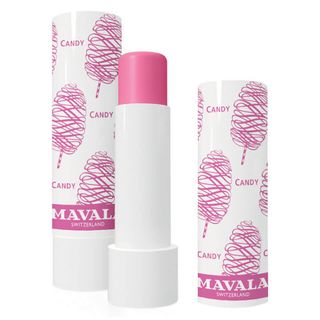
Mavala Tinted Candy Lip Balm
Works for
1 of 2 advertised claims delivered
Sun protectionSPF 15 · 3 UV filters · Broad spectrumWeak protectionSPF under 30
This product offers broad spectrum sun protection, but it is weak. We recommend to use a broad spectrum sunscreen with at least SPF 30.
Moisturizing14 ingredients credited for this claimGood support
“Shea Butter unleashes its moisture-rich properties, supporting a supple and silky finish.”
This product can help soften the skin and reduce its moisture loss with emollients and occlusives: bis-diglyceryl polyacyladipate-2, cera microcristallina.
Keep in mind that this product does not contain effective ingredients to attract water to the upper layer of the skin. This is why an additional product with humectants like glycerin or hyaluronic acid can be helpful (apply it before this product for the best results).
Can it cause trouble?
Irritancy3 strong irritants: Parfum, Limonene + 1 more — patch-test recommendedHigh risk
Comedogenic3 ingredients rated 2 or more on the 0–5 pore-clogging scale3 flagged
User reviews
Be the first — your take helps the next person decide.
Ingredients
Filter by role to see what each ingredient is doing.
Octyldodecyl stearoyl stearate~22–33%
- Irritation risk
- Low
Microcrystalline wax~4.3–6.5%
Cera microcristallina~4.8–7.2%
- Irritation risk
- Low
Helps to soften the upper layer of the skin, reduce water loss from its surface and create a thicker product consistency
More about Cera microcristallinaOctyldodecanol~3.7–5.6%
- Irritation risk
- Low
An emollient that helps to soften the skin and create a pleasant product texture and stabilize the formulation
More about OctyldodecanolEthylhexyl methoxycinnamate~3.4–5.1%
- Irritation risk
- High
Octinoxate. When used in higher concentrations, works as a sunscreen protecting the skin from UVB rays. When used in lower concentration, helps to preserve the product formulation. Is shown to be harmful to coral reefs - consider avoiding bathing in coral reef areas when wearing a product with this ingredient. It can be irritating
More about Ethylhexyl methoxycinnamatePhenyl trimethicone~2.2–3.3%
- Irritation risk
- Low
A type of silicone that can decrease loss of moisture from the skin surface. It helps create a nice product texture
More about Phenyl trimethiconeOctyldodecyl myristate~1.7–2.5%
- Irritation risk
- Low
Helps soften the upper layer of the skin
More about Octyldodecyl myristateGlyceryl hydrogenated rosinate~1.5–2.3%
- Irritation risk
- Low
Euphorbia cerifera wax~1.5–2.2%
- Irritation risk
- Low
Isopropyl lanolate~1–1.5%
Helianthus annuus seed oil~0.8–1.25%
- Irritation risk
- Low
A great emollient due to its high linoleic acid content. One of the most effective plant oils in helping skin hydration and repairing skin barrier function
More about Helianthus annuus seed oilPentaerythrityl tetraisostearate~0.55–1.3%
- Irritation risk
- Medium
Used to create a thicker product consistency
More about Pentaerythrityl tetraisostearateDiisostearyl malate~0.5–1.2%
- Irritation risk
- Medium
Helps to soften the upper layer of the skin
More about Diisostearyl malatePolyethylene~0.9–1.35%
Bis-diglyceryl polyacyladipate-2~0.45–1.1%
- Irritation risk
- Low
Helps soften the upper layer of the skin and reduce water loss from its surface
More about Bis-diglyceryl polyacyladipate-2Nylon-12~0.45–1.05%
Butyrospermum parkii butter~0.45–1.05%
- Irritation risk
- Low
- Comedogenicity
- 3/5
A great moisturising ingredient that softens the skin and reduces water loss from its upper layer. It also can be helpful in protecting skin from free radicals
More about Butyrospermum parkii butterGlycine soja oil~0.4–0.95%
- Irritation risk
- Medium
- Comedogenicity
- 2/5
A good emollient that helps soften the skin and helps repair its barrier function. It can clog pores if used in high concentrations.
More about Glycine soja oilParfum~0.35–0.75%
- Irritation risk
- High
An aromatic blend of unspecified and possibly irritating ingredients
More about ParfumButyl methoxydibenzoylmethane~0.45–1.05%
- Irritation risk
- Medium
Avobenzone. An organic, or so-called "chemical" UV filter. Protects against both UVA and UVB rays. Needs to be combined with other filters in a formulation to be stable.
More about Butyl methoxydibenzoylmethaneSilica~0.4–0.95%
Mica~0.35–0.8%
- Irritation risk
- Low
Creates an illusion of smoother and more radiant skin tone. Adds shimmer to the skin by reflecting light
More about MicaTocopheryl acetate~0.3–0.7%
- Irritation risk
- Medium
A more stable but less bio-available form of vitamin E compared to Tocopherol. Might help moisturize and protect the skin from free radicals, but mostly used in low concentrations to stabilize other ingredients.
More about Tocopheryl acetateBisabolol~0.2–0.7%
- Irritation risk
- Low
An active component of chamomile plant that historically has been used to calm down irritated skin. A recent study shows that bisabolol indeed can have some anti-inflammatory effect on skin, even though conclusive data is lacking. Bisabolol has a sweet floral scent and can be added to products for its aromatic properties
More about BisabololEchium plantagineum seed oil~0.2–0.8%
- Irritation risk
- Medium
A plant oil that because of its high content of alpha-linolenic acid help support skin barrier function and moisturize the skin
More about Echium plantagineum seed oilPrunus armeniaca fruit extract~0.2–0.75%
- Irritation risk
- Medium
A fruit extract that might have some antioxidant properties and might help attract water to the skin, but evidence of effectiveness is lacking
More about Prunus armeniaca fruit extractPentaerythrityl tetra-di-t-butyl hydroxyhydrocinnamate~0.3–0.7%
- Irritation risk
- Low
Used to increase stability of product formulations
More about Pentaerythrityl tetra-di-t-butyl hydroxyhydrocinnamateHelianthus annuus seed oil unsaponifiables~0.35–0.8%
- Irritation risk
- Low
A great emollient due to its high linoleic acid content. One of the most effective plant oils in helping skin hydration and repairing skin barrier function
More about Helianthus annuus seed oil unsaponifiablesAloe barbadensis leaf extract~0.35–0.85%
- Irritation risk
- Medium
Traditionally used to treat sunburns, dermatitis and inflammation, but evidence for its effectiveness is lacking. The extract can contain humectants that help attract water into the skin
More about Aloe barbadensis leaf extractCardiospermum halicacabum flower/leaf/vine extract~0.2–0.75%
- Irritation risk
- High
A plant extract that might have some anti-inflammatory and anti-oxidant properties but evidence is missing
More about Cardiospermum halicacabum flower/leaf/vine extractVp/hexadecene copolymer~0.35–0.85%
- Irritation risk
- Low
Creates a nice product texture and can support water-resistance of sunscreens
More about Vp/hexadecene copolymerTocopherol~0.2–0.7%
- Irritation risk
- Low
Pure form of vitamin E. Can help moisturise and protect the skin from free radicals. Often used to help stabilise other ingredients or the formula itself
More about TocopherolBht~0.15–0.65%
Tin oxide~0.35–0.85%
- Irritation risk
- Low
A colorant that can add a pearl-like appearance to the formulation
More about Tin oxideTitanium dioxide~0.3–0.75%
- Irritation risk
- Low
Works as a UV filter when used in high concentrations. It is photostable and is effective mostly against the UVB light, with some protection in the UVA range. In small concentrations, used for its ability to improve the color of cosmetic products. Is usually well tolerated by the skin
More about Titanium dioxideCi 77891~0.1–0.45%
- Irritation risk
- Low
Ci 15850~0.1–0.45%
Ci 75470~0.1–0.4%
Limonene~0.1–0.3%
- Irritation risk
- High
A common frangrance that can easily irritate skin, especially if exposed to air, light or heat
More about LimoneneCinnamyl alcohol~0.05–0.25%
- Irritation risk
- High
Ingredient list view
Octyldodecyl stearoyl stearate, Microcrystalline wax, Cera microcristallina, Octyldodecanol, Ethylhexyl methoxycinnamate, Phenyl trimethicone, Octyldodecyl myristate, Glyceryl hydrogenated rosinate, Euphorbia cerifera wax, Unknown, Isopropyl lanolate, Helianthus annuus seed oil, Pentaerythrityl tetraisostearate, Diisostearyl malate, Polyethylene, Bis-diglyceryl polyacyladipate-2, Nylon-12, Butyrospermum parkii butter, Glycine soja oil, Parfum, Butyl methoxydibenzoylmethane, Silica, Mica, Tocopheryl acetate, Bisabolol, Echium plantagineum seed oil, Prunus armeniaca fruit extract, Pentaerythrityl tetra-di-t-butyl hydroxyhydrocinnamate, Helianthus annuus seed oil unsaponifiables, Aloe barbadensis leaf extract, Cardiospermum halicacabum flower/leaf/vine extract, Vp/hexadecene copolymer, Tocopherol, Bht, Tin oxide, Titanium dioxide, Ci 77891, Ci 15850, Ci 75470, Limonene, Cinnamyl alcohol
Compare prices
Retailers ranked by price — lowest first.
Affiliate links · prices updated regularly · As an Amazon Associate, WIMJ earns from qualifying purchases.
Product summary
"Mavala - Tinted Candy Lip Balm" offers broad spectrum protection. It means that it protects from both UVA and UVB rays (you can remember UVB as "burning" sunlight - they cause sunburn. You can remember UVA rays as "aging" - they do not lead to sunburn, but they cause photodamage and contribute to early signs of skin aging and hyperpigmentation). On the negative side, the SPF of this lip product is not high enough. We recommend to use a sunscreen with at least SPF 30 daily.
Sunscreen filters
This sunscreen uses a mixture of both mineral and organic (so-called "chemical") UV filters. The organic filters in the product are: avobenzone and octinoxate. As for the mineral filters, this sunscreen uses titanium dioxide.
Irritation risk
This lip product contains a bunch of common irritants, including ingredients that do not provide any known benefit for the skin. It might not be the best choice if your skin is sensitive. We assess the overall irritancy of this lip sunscreen to be high. For a detailed overview of all potential irritants: click here
You can see the detailed formula review with the breakdown of all actives in the product and the full ingredient list with estimated concentrations in the tables below.
Price
The product retails for 13.95A$ in Australia, from 6.85$ up to 9.97$ in the United States and from 6.85£ up to 9.99£ in the United Kingdom.
For a detailed price comparison: click here.
Sources cited in this review
Every concentration estimate and effectiveness label is anchored to one of these 13 studies and safety reviews.
- 1
- 2
- 3Effect of topically applied lipids on surfactant-irritated skinonlinelibrary.wiley.com
- 4
- 5
- 6

Affiliate links · As an Amazon Associate, WIMJ earns from qualifying purchases.