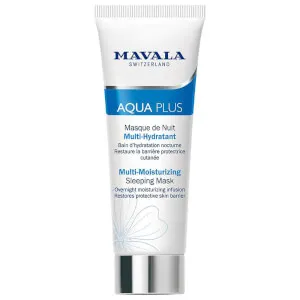
Mavala Aqua Plus Multi-Moisturising Sleeping Mask

Mavala Aqua Plus Multi-Moisturising Sleeping Mask

Efficacy75/100IrritancyHigh

Works for

Moisturizing
Glycerin, Caprylic/capric triglyceride + 19 more
Works
What the product description says
“Aqua Plus Multi-Moisturising Sleeping Mask”
Source: Mankind

This product can help improve hydration of the skin with the two types of ingredients.

The first type is called “humectants”:
these ingredients help attract water. When humectants are on the surface of the skin, they “pull in” the moisture from the outside environment, or from within deeper layers of the skin. The following ingredients in this product do the job: anhydroxylitol, glycerin.

This product also contains ingredients called “occlusives”. They help reduce the speed with which our skin loses moisture to the outside environment. These ingredients also help soften the upper layer of the skin, so it feels less tight and nicer to the touch. The following ingredients in this product do the job: caprylic/capric triglyceride, squalane.

GlycerinKey active· HumectantEffect: HighOne of the best moisturizing ingredients. Naturally present in skin. It attracts water to the upper layer of the skin working as a humectant~5.2–6.4%
Caprylic/capric triglycerideKey active· Emollient, OcclusiveEffect: HighA good mix of fatty acids that forms a protective layer on the skin. Improves the shelf life of products. Derived from coconut and glycerin~2.4–2.9%
Cetyl alcoholKey active· EmollientEffect: MediumA non-drying alcohol that works to soften the skin and stabilize product formulations helping oil and water mix together~1.5–1.8%
XylitylglucosideKey active· HumectantEffect: HighHelps attract water to the upper layer of the skin and repair the skin barrier function~0.95–1.15%
AnhydroxylitolKey active· HumectantEffect: HighHelps attract water to the upper layer of the skin and repair the skin barrir function~0.7–1%
Sodium hyaluronateKey active· HumectantEffect: HighOne of the best moisturizing ingredients. Attracts water into the upper layer of the skin~0.55–0.85%
Hydrolyzed hyaluronic acidKey active· HumectantEffect: HighOne of the best moisturizing ingredients. Attracts water into the upper layer of the skin. A version of it is naturally present in skin~0.5–0.75%
Soluble collagenKey active· HumectantEffect: HighA typically plant-derived compound that is supposed mimic human collagen. Cannot penetrate the skin barrier so is not particularly useful in skincare products beyond attracting water to the upper layer of the skin~0.45–0.65%
Ethyl linoleateKey active· EmollientEffect: HighHelps reduce acne and blemishes. Helps to soften the upper layer of the skin and reduce inflammation. Might be helpful in reducing hyperpigmentation and evening out the skin tone, but evidence of effectiveness in skin are lacking~0.3–0.55%
SqualaneKey active· Emollient, OcclusiveEffect: HighAn oil naturally present in skin. Works as an emollient to soften the skin and form a protective layer on its surface without a greasy feeling.~0.25–0.45%
UbiquinoneKey activeEffect: HighCoenzyme Q10. It helps neutralize free radicals in skin, improves skin hydration and might be helpful agains fine lines and wrinkles. It can be an allergen~0.15–0.3%
Octyldodecanol· EmollientEffect: LowAn emollient that helps to soften the skin and create a pleasant product texture and stabilize the formulation~4–4.9%
Butylene glycol· HumectantEffect: LowUsed to create a nice product texture and help delivery of other ingredients. Might be somewhat helpful in attracting water to the upper layer of the skin~3–3.7%
Hydrogenated polyisobutene· Emollient, OcclusiveEffect: LowUsed to improve the product consistency and soften the upper layer of the skin~1.7–2.1%
Ethyl oleate· EmollientEffect: LowEthyl oleate is a long-chain fatty acid ethyl ester resulting from the formal condensation of the carboxy group of oleic acid with the hydroxy group of ethanol. It derives from an oleic acid. In skincare, it is used to soften the upper layer of the skin, improve the product texture and smell~0.25–0.45%
Glyceryl stearate· EmollientEffect: LowAn emollient that softens the skin and forms a protective layer on its surface. Helps water and oil mix together~0.25–0.5%
Propylene glycol· HumectantEffect: LowHelps oil and water mix together and can enhance the penetration of other ingredients into the skin. It can be irritating~0.2–0.35%
Sorbitol· HumectantEffect: LowHelps attract water to the upper layer of the skin and improves the product texture~0.2–0.35%
LecithinEffect: Low, below effective doseUsed mostly for creating emulsions - helping oil and water mix together. Helps soften the upper layer of the skin~0.25–0.45%
TocopherolEffect: Low, below effective dosePure form of vitamin E. Can help moisturise and protect the skin from free radicals. Often used to help stabilise other ingredients or the formula itself~0.2–0.35%
AllantoinUnder-dosedHelps calm down inflammation in skin and can help reduce itching. Helps to repair the skin barrier and keep skin hydrated~0.35–0.65%
Anti-oxidation
Not advertised by the brand · Ubiquinone, Malva sylvestris flower extract + 2 more
Works well

This product contains antioxidants (ubiquinone) that can help neutralize free radicals in skin. By doing so, they can lessen the damage the skin gets from the UV light (sun).

UbiquinoneKey activeEffect: HighCoenzyme Q10. It helps neutralize free radicals in skin, improves skin hydration and might be helpful agains fine lines and wrinkles. It can be an allergen~0.15–0.3%
Malva sylvestris flower extractEffect: LowUsed as a fragrance~0.45–0.65%
Tocopheryl acetateEffect: Low, below effective doseA more stable but less bio-available form of vitamin E compared to Tocopherol. Might help moisturize and protect the skin from free radicals, but mostly used in low concentrations to stabilize other ingredients.~0.2–0.35%
TocopherolUnder-dosedPure form of vitamin E. Can help moisturise and protect the skin from free radicals. Often used to help stabilise other ingredients or the formula itself~0.2–0.35%
Anti-blemish
Not advertised by the brand · Ethyl linoleate, Allantoin + 1 more
May help

This product might be able to help reduce blemishes and clogged pores because it contains ethyl linoleate.

Ethyl linoleateKey activeEffect: HighHelps reduce acne and blemishes. Helps to soften the upper layer of the skin and reduce inflammation. Might be helpful in reducing hyperpigmentation and evening out the skin tone, but evidence of effectiveness in skin are lacking~0.3–0.55%
AllantoinEffect: Low, below effective doseHelps calm down inflammation in skin and can help reduce itching. Helps to repair the skin barrier and keep skin hydrated~0.35–0.65%
Retinyl palmitateUnder-dosedThree steps removed from the active form of vitamin A - retinoic acid. To have an effect in the skin, it first needs to be converted twice to become the retinoic acid. This means it is less potent than retinol, but could also be less irritating. Once converted to the retinoic acid in the skin, it helps against all signs of aging, improves skin cell turnover and helps fight blemishes and clogged pores. However, in many cosmetic formulations, it is used in a concentration that is too low to have the full effect~0.2–0.35%
Anti-aging
Not advertised by the brand · Ubiquinone, Tocopherol + 1 more
May help

This product contains ubiquinone. This ingredient help neutralize free radicals in skin. By doing so, they might be able to prevent early signs of aging (like fine lines and wrinkles), at least to some extent. These ingredients will not be able to "reverse" signs of aging.

UbiquinoneEffect: LowCoenzyme Q10. It helps neutralize free radicals in skin, improves skin hydration and might be helpful agains fine lines and wrinkles. It can be an allergen~0.15–0.3%
TocopherolEffect: Low, below effective dosePure form of vitamin E. Can help moisturise and protect the skin from free radicals. Often used to help stabilise other ingredients or the formula itself~0.2–0.35%
Retinyl palmitateUnder-dosedThree steps removed from the active form of vitamin A - retinoic acid. To have an effect in the skin, it first needs to be converted twice to become the retinoic acid. This means it is less potent than retinol, but could also be less irritating. Once converted to the retinoic acid in the skin, it helps against all signs of aging, improves skin cell turnover and helps fight blemishes and clogged pores. However, in many cosmetic formulations, it is used in a concentration that is too low to have the full effect~0.2–0.35%

Can it cause trouble?

Irritancy
3 strong irritants: Malva sylvestris flower extract, Retinyl palmitate + 1 more — patch-test recommended
High risk
We flagged 18 ingredients with irritancy potential. Severity depends on your sensitivity threshold; the table lists the worst offenders first.
IngredientFunctionIrritationEst. amount
Malva sylvestris flower extractUsed as a fragranceHigh~0.45–0.65%est.
Propylene glycolHelps oil and water mix together and can enhance the penetration of other ingredients into the skin. It can be irritatingHigh~0.2–0.35%est.
Retinyl palmitateThree steps removed from the active form of vitamin A - retinoic acid. To have an effect in the skin, it first needs to be converted twice to become the retinoic acid. This means it is less potent than retinol, but could also be less irritating. Once converted to the retinoic acid in the skin, it helps against all signs of aging, improves skin cell turnover and helps fight blemishes and clogged pores. However, in many cosmetic formulations, it is used in a concentration that is too low to have the full effectHigh~0.2–0.35%est.
ParfumAn aromatic blend of unspecified and possibly irritating ingredientsHigh~0.2–0.35%est.
Caprylic/capric triglycerideA good mix of fatty acids that forms a protective layer on the skin. Improves the shelf life of products. Derived from coconut and glycerinMedium~2.4–2.9%est.
Pentaerythrityl tetraisostearateUsed to create a thicker product consistencyMedium~2–2.4%est.
Hydroxyethyl acrylate/sodium acryloyldimethyl taurate copolymerA gelling agent that thickens the product consistency and leaves the skin with a velvety finishMedium~1.2–1.5%est.
ChlorphenesinA preservativeMedium~0.16–0.32%est.
Disodium edtaStabilizes the product formulationMedium~0.3–0.55%est.
Ethyl linoleateHelps reduce acne and blemishes. Helps to soften the upper layer of the skin and reduce inflammation. Might be helpful in reducing hyperpigmentation and evening out the skin tone, but evidence of effectiveness in skin are lackingMedium~0.3–0.55%est.
Ethyl oleateEthyl oleate is a long-chain fatty acid ethyl ester resulting from the formal condensation of the carboxy group of oleic acid with the hydroxy group of ethanol. It derives from an oleic acid. In skincare, it is used to soften the upper layer of the skin, improve the product texture and smellMedium~0.25–0.45%est.
EthylhexylglycerinA preservativeMedium~0.2–0.4%est.
Polysorbate 60Helps oil and water mix togetherMedium~0.25–0.45%est.
Potassium hydroxideUsed to adjust the pH level of productsMedium~0.2–0.4%est.
Sodium cetearyl sulfateHelps water and oil mix together and works as a cleansing agentMedium~0.3–0.55%est.
Tocopheryl acetateA more stable but less bio-available form of vitamin E compared to Tocopherol. Might help moisturize and protect the skin from free radicals, but mostly used in low concentrations to stabilize other ingredients.Medium~0.2–0.35%est.
Potassium sorbateA preservativeMedium~0.15–0.25%est.
Ci 14700A colorantMedium~0.1–0.15%est.
Comedogenic
Clean of flagged comedogenic ingredients
None flagged

User reviews

Would you recommend?
No community reviews yet.

Be the first — your take helps the next person decide.

Ingredients

Filter by role to see what each ingredient is doing.

Water~45–55%
Formula
Irritation risk
Low

Plain old water

More about Water
Glycerin~5.2–6.4%
Key active
Irritation risk
Low
Works for
Moisturizing

One of the best moisturizing ingredients. Naturally present in skin. It attracts water to the upper layer of the skin working as a humectant

More about Glycerin
Octyldodecanol~4–4.9%
Formula
Irritation risk
Low
Works for
Moisturizing

An emollient that helps to soften the skin and create a pleasant product texture and stabilize the formulation

More about Octyldodecanol
Butylene glycol~3–3.7%
Formula
Irritation risk
Low
Works for
Moisturizing

Used to create a nice product texture and help delivery of other ingredients. Might be somewhat helpful in attracting water to the upper layer of the skin

More about Butylene glycol
Caprylic/capric triglyceride~2.4–2.9%
Key activeIrritant · medium
Irritation risk
Medium
Works for
Moisturizing

A good mix of fatty acids that forms a protective layer on the skin. Improves the shelf life of products. Derived from coconut and glycerin

More about Caprylic/capric triglyceride
Pentaerythrityl tetraisostearate~2–2.4%
Irritant · medium
Irritation risk
Medium
Works for
Cleansing

Used to create a thicker product consistency

More about Pentaerythrityl tetraisostearate
Hydrogenated polyisobutene~1.7–2.1%
Formula
Irritation risk
Low
Works for
Moisturizing

Used to improve the product consistency and soften the upper layer of the skin

More about Hydrogenated polyisobutene
Cetyl alcohol~1.5–1.8%
Key active
Irritation risk
Low
Works for
CleansingMoisturizing

A non-drying alcohol that works to soften the skin and stabilize product formulations helping oil and water mix together

More about Cetyl alcohol
Hydroxyethyl acrylate/sodium acryloyldimethyl taurate copolymer~1.2–1.5%
Irritant · medium
Irritation risk
Medium

A gelling agent that thickens the product consistency and leaves the skin with a velvety finish

More about Hydroxyethyl acrylate/sodium acryloyldimethyl taurate copolymer
Xylitylglucoside~0.95–1.15%
Key active
Irritation risk
Low
Works for
Moisturizing

Helps attract water to the upper layer of the skin and repair the skin barrier function

More about Xylitylglucoside
Anhydroxylitol~0.7–1%
Key active
Irritation risk
Low
Works for
Moisturizing

Helps attract water to the upper layer of the skin and repair the skin barrir function

More about Anhydroxylitol
Sodium hyaluronate~0.55–0.85%
Key active
Irritation risk
Low
Works for
Moisturizing

One of the best moisturizing ingredients. Attracts water into the upper layer of the skin

More about Sodium hyaluronate
Hydrolyzed hyaluronic acid~0.5–0.75%
Key active
Irritation risk
Low
Works for
Moisturizing

One of the best moisturizing ingredients. Attracts water into the upper layer of the skin. A version of it is naturally present in skin

More about Hydrolyzed hyaluronic acid
Malva sylvestris flower extract~0.45–0.65%
Irritant · high
Irritation risk
High
Works for
Anti-oxidation

Used as a fragrance

More about Malva sylvestris flower extract
Soluble collagen~0.45–0.65%
Key active
Irritation risk
Low
Works for
Moisturizing

A typically plant-derived compound that is supposed mimic human collagen. Cannot penetrate the skin barrier so is not particularly useful in skincare products beyond attracting water to the upper layer of the skin

More about Soluble collagen
Allantoin~0.35–0.65%
Under-dosed
Irritation risk
Low
Works for
Anti-inflammatoryMoisturizingAnti-blemishReduces irritationReduces rednessExfoliation

Helps calm down inflammation in skin and can help reduce itching. Helps to repair the skin barrier and keep skin hydrated

More about Allantoin
Arachidyl propionate~0.45–0.65%
Formula
Chlorphenesin~0.16–0.32%
Irritant · medium
Irritation risk
Medium

A preservative

More about Chlorphenesin
Disodium edta~0.3–0.55%
Irritant · medium
Irritation risk
Medium

Stabilizes the product formulation

More about Disodium edta
Ethyl linoleate~0.3–0.55%
Key activeIrritant · medium
Irritation risk
Medium
Works for
Anti-blemishMoisturizingAnti-inflammatoryEvens skin tone

Helps reduce acne and blemishes. Helps to soften the upper layer of the skin and reduce inflammation. Might be helpful in reducing hyperpigmentation and evening out the skin tone, but evidence of effectiveness in skin are lacking

More about Ethyl linoleate
Ethyl linolenate~0.3–0.55%
Formula
Ethyl oleate~0.25–0.45%
Irritant · medium
Irritation risk
Medium
Works for
Moisturizing

Ethyl oleate is a long-chain fatty acid ethyl ester resulting from the formal condensation of the carboxy group of oleic acid with the hydroxy group of ethanol. It derives from an oleic acid. In skincare, it is used to soften the upper layer of the skin, improve the product texture and smell

More about Ethyl oleate
Ethylhexylglycerin~0.2–0.4%
Irritant · medium
Irritation risk
Medium

A preservative

More about Ethylhexylglycerin
Glyceryl stearate~0.25–0.5%
Formula
Irritation risk
Low
Works for
CleansingMoisturizing

An emollient that softens the skin and forms a protective layer on its surface. Helps water and oil mix together

More about Glyceryl stearate
Lecithin~0.25–0.45%
Formula
Irritation risk
Low
Works for
CleansingMoisturizing

Used mostly for creating emulsions - helping oil and water mix together. Helps soften the upper layer of the skin

More about Lecithin
Methylcellulose~0.2–0.4%
Formula
Irritation risk
Low

Helps improve the product texture

More about Methylcellulose
Polysorbate 60~0.25–0.45%
Irritant · medium
Irritation risk
Medium
Works for
Cleansing

Helps oil and water mix together

More about Polysorbate 60
Polysorbate 65~0.25–0.45%
Formula
Irritation risk
Low
Works for
Cleansing
More about Polysorbate 65
Potassium hydroxide~0.2–0.4%
Irritant · medium
Irritation risk
Medium

Used to adjust the pH level of products

More about Potassium hydroxide
Propylene glycol~0.2–0.35%
Irritant · high
Irritation risk
High
Works for
Moisturizing

Helps oil and water mix together and can enhance the penetration of other ingredients into the skin. It can be irritating

More about Propylene glycol
Retinyl palmitate~0.2–0.35%
Under-dosedIrritant · high
Irritation risk
High
Works for
Evens skin toneAnti-blemishAnti-agingExfoliation

Three steps removed from the active form of vitamin A - retinoic acid. To have an effect in the skin, it first needs to be converted twice to become the retinoic acid. This means it is less potent than retinol, but could also be less irritating. Once converted to the retinoic acid in the skin, it helps against all signs of aging, improves skin cell turnover and helps fight blemishes and clogged pores. However, in many cosmetic formulations, it is used in a concentration that is too low to have the full effect

More about Retinyl palmitate
Simethicone~0.25–0.45%
Formula
Irritation risk
Low

A type of silicone that helps to create nice product texture and is used as an anti-foaming agent

More about Simethicone
Parfum~0.2–0.35%
Irritant · high
Irritation risk
High

An aromatic blend of unspecified and possibly irritating ingredients

More about Parfum
Sodium cetearyl sulfate~0.3–0.55%
Irritant · medium
Irritation risk
Medium
Works for
Cleansing

Helps water and oil mix together and works as a cleansing agent

More about Sodium cetearyl sulfate
Sorbitan isostearate~0.2–0.4%
Formula
Irritation risk
Low
Works for
Cleansing

Helps oil and water mix together

More about Sorbitan isostearate
Phenoxyethanol~0.2–0.4%
Formula
Irritation risk
Low

A preservative. It helps prevent bacterial growth in cosmetic products

More about Phenoxyethanol
Sorbitol~0.2–0.35%
Formula
Irritation risk
Low
Works for
Moisturizing

Helps attract water to the upper layer of the skin and improves the product texture

More about Sorbitol
Squalane~0.25–0.45%
Key active
Irritation risk
Low
Works for
Moisturizing

An oil naturally present in skin. Works as an emollient to soften the skin and form a protective layer on its surface without a greasy feeling.

More about Squalane
Tocopherol~0.2–0.35%
Under-dosed
Irritation risk
Low
Works for
Anti-oxidationMoisturizingAnti-inflammatoryAnti-aging

Pure form of vitamin E. Can help moisturise and protect the skin from free radicals. Often used to help stabilise other ingredients or the formula itself

More about Tocopherol
Tocopheryl acetate~0.2–0.35%
Irritant · medium
Irritation risk
Medium
Works for
Anti-oxidation

A more stable but less bio-available form of vitamin E compared to Tocopherol. Might help moisturize and protect the skin from free radicals, but mostly used in low concentrations to stabilize other ingredients.

More about Tocopheryl acetate
Trisodium edta~0.15–0.3%
Formula
Irritation risk
Low

Helps preserve product formulations

More about Trisodium edta
Potassium sorbate~0.15–0.25%
Irritant · medium
Irritation risk
Medium

A preservative

More about Potassium sorbate
Ubiquinone~0.15–0.3%
Key active
Irritation risk
Low
Works for
MoisturizingAnti-oxidationAnti-aging

Coenzyme Q10. It helps neutralize free radicals in skin, improves skin hydration and might be helpful agains fine lines and wrinkles. It can be an allergen

More about Ubiquinone
Xylitol~0.15–0.3%
Formula
Irritation risk
Low

Helps attract water to the upper layer of the skin and repair the skin barrier function

More about Xylitol
Ci 14700~0.1–0.15%
Irritant · medium
Irritation risk
Medium

A colorant

More about Ci 14700
Ingredient list view

Water, Glycerin, Octyldodecanol, Butylene glycol, Caprylic/capric triglyceride, Pentaerythrityl tetraisostearate, Hydrogenated polyisobutene, Cetyl alcohol, Hydroxyethyl acrylate/sodium acryloyldimethyl taurate copolymer, Xylitylglucoside, Anhydroxylitol, Sodium hyaluronate, Hydrolyzed hyaluronic acid, Malva sylvestris flower extract, Soluble collagen, Allantoin, Arachidyl propionate, Chlorphenesin, Disodium edta, Ethyl linoleate, Ethyl linolenate, Ethyl oleate, Ethylhexylglycerin, Glyceryl stearate, Lecithin, Methylcellulose, Polysorbate 60, Polysorbate 65, Potassium hydroxide, Propylene glycol, Retinyl palmitate, Simethicone, Parfum, Sodium cetearyl sulfate, Sorbitan isostearate, Phenoxyethanol, Sorbitol, Squalane, Tocopherol, Tocopheryl acetate, Trisodium edta, Potassium sorbate, Ubiquinone, Xylitol, Ci 14700

Compare prices

Retailers ranked by price — lowest first.

🇬🇧 Lookfantastic (UK)75 ml
≈ $40.15 Out of stock
Check
🇬🇧 Mankind (UK)75 ml
≈ $40.15 Out of stock
Check

Affiliate links · As an Amazon Associate, WIMJ earns from qualifying purchases.

Worth comparing, line by line.

Match % combines shared ingredients, the first five ingredients, shared actives and hero ingredients, irritancy (lower counts in the alternative's favour), texture and body area. Only products in the same routine step are compared.

Side-by-side comparison of this product against its closest alternatives
MavalaAqua Plus Multi-Moisturising Sleeping MaskYOUR PRODUCTMEDIHEALD.N.A Hydrating Protein Sheet MaskAbibMild Acidic pH Sheet Mask Aqua FitFOREOUFO and Glow Addict Mask
Match—58%56%56%
Price——$22.67$20.00
Shared key ingredients—9 of 137 of 134 of 13
Key difference—Copper Tripeptide-1Acetyl Dipeptide-1 Cetyl EsterNiacinamide
Irritancy High Medium Medium Medium
Drying alcohol—— Contains drying alcohol —
View product Shop Shop Shop

More alternatives: SKIN 1004. Madagascar Centella Hyalu-Cica Hydrating Mask 23mlDr. Barbara Sturm Super Anti-Aging Face Mask Rich

Cheaper alternatives? See how this stacks up against similar formulas.
We compare ingredient profiles across our catalog — pick the closest match for your budget.
Open dupe finder

Sources cited in this review

Every concentration estimate and effectiveness label is anchored to one of these 17 studies and safety reviews.

  1. 1
  2. 2
  3. 3
  4. 4
  5. 5
  6. 6
Mavala Aqua Plus Multi-Moisturising Sleeping Mask
MavalaAqua Plus Multi-Moisturising Sleeping Mask

Affiliate links · As an Amazon Associate, WIMJ earns from qualifying purchases.

As an Amazon Associate, WIMJ earns from qualifying purchases.