Works for:
based on ingredients and %- Cleansing
Doesn't work for:
based on ingredients and %- Anti-blemish
Can it cause trouble?
- Irritation risk: high
- Comedogenic risk ingredients: 4
Key actives

Cleansing
What does the product description say?
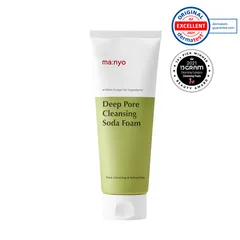
Deep Pore Cleansing Soda Foam
Source: From product name
This product works by removing dirt and oil from the surface of the skin. It uses a combination of mild cleansing agents (decyl glucoside, glyceryl stearate, glycol distearate, lauric acid, myristic acid, sorbitan olivate, stearic acid) and should be able to cleanse the skin gently. Still keep in mind that any cleansing can disrupt the skin barrier, and most people do not need to cleanse their skin more than once per day.
Even though this formulation is mild, the following cleansing agents could trigger an irritation or allergy for some people: decyl glucoside
Helps oil and water mix together and works as an emollient
Helps water and oil mix together. Has anti-bacterial properties that might be helpful in preventing blemishes
Helps oil and water mix together. Could be comedogenic
Helps oil and water mix together
Helps oil and water mix together. Can be irritating
An emollient that softens the skin and forms a protective layer on its surface. Helps water and oil mix together
Helps water and oil mix together
Anti-blemish
What does the product description say?
Deep Pore Cleansing Soda Foam
Source: From product name
Effective ingredients missing or their concentration is too low.
A type of clay that consists mainly of aluminum silicate. Helps absorb oil and creates a thicker product consistency. Can be used to add a white color
Helps water and oil mix together. Has anti-bacterial properties that might be helpful in preventing blemishes
Can contain potent anti-oxidant compounds (abbreviated ECG, GCG, EGC, and EGCG) that might help protect the skin from free radicals. Can help calm down inflammation and has some anti-bacterial properties. Unfortunately, these antioxidants are unstable and lose their effectiveness very quickly in products. The concentration of the antioxidant compounds in the extract also tends to be low to be effective in topical formulation
How honest is this product?
| Promise | Can it deliver? |
|---|---|
| Cleansing | |
| Anti-blemish |
Total Promises Fulfilled score: 50/100.
We receive a small commission for purchases made through these links at no cost for you. Thank you for your support! Learn more
Potential irritants
Comedogenic ingredients
User reviews (0)
Averages from community submissions.
No reviews yet for this product.
Be the first to share your experience!
Tried this product?
Help capture what the ingredient list can't—texture, finish, pilling, scent, and more. Answer what you can, skip the rest.
Takes ~30 seconds.
Reviews are shown in aggregate. No personal details.
Key Actives
Can contain potent anti-oxidant compounds (abbreviated ECG, GCG, EGC, and EGCG) that might help protect the skin from free radicals. Can help calm down inflammation and has some anti-bacterial properties. Unfortunately, these antioxidants are unstable and lose their effectiveness very quickly in products. The concentration of the antioxidant compounds in the extract also tends to be low to be effective in topical formulation
Helps water and oil mix together. Has anti-bacterial properties that might be helpful in preventing blemishes
Helps oil and water mix together and works as an emollient
A type of clay that consists mainly of aluminum silicate. Helps absorb oil and creates a thicker product consistency. Can be used to add a white color
An emollient that softens the skin and forms a protective layer on its surface. Helps water and oil mix together
One of the best moisturizing ingredients. Naturally present in skin. It attracts water to the upper layer of the skin working as a humectant
Helps oil and water mix together. Could be comedogenic
Forms a protective barrier that holds water and keeps dry skin hydrated. Keeps an emulsion from separating into its oil and liquid components, and increases the thickness of a product. Can be an allergen
Naturally present in skin and helps to attract water to its upper layer
Helps oil and water mix together. Can be irritating
One of the best moisturizing ingredients. Attracts water into the upper layer of the skin
Potential irritants
An essentil oil from orange peel. Potential allergen and can be irritating
An essential oil. Potential allergen and can be irritating. It has some anti-bacterial properties
An essential oil that can be irritating. Has some anti-bacterial properties
Used as a fragrance. Can be irritating and cause photosensitivity
A plant extract that might have some anti-inflammatory properties, but solid evidence is lacking. It can be irritating
A common frangrance that can easily irritate skin, especially if exposed to air, light or heat
Helps oil and water mix together. Could be comedogenic
Helps water and oil mix together. Has anti-bacterial properties that might be helpful in preventing blemishes
Used to thicken the product's consistency
Helps preserve products and creates a nice product texture
An emollient that helps soften the skin but is not effective for restoring its barrier function. Might be helpful to calm down inflammation
A plant extract that can help lighten the skin and calm down inflammation. Might be helpful in neutralizing free radicals
Traditionally used to treat sunburns, dermatitis and inflammation, but evidence for its effectiveness is lacking. The extract can contain humectants that help attract water into the skin
A plant extract that has some anti-oxidant activity, but solid research is lacking. Can help attract water to the upper layer of the skin
Used to preserve products, dissolve other ingredients and create a nice product texture
Comedogenic ingredients
Helps oil and water mix together. Could be comedogenic
Helps water and oil mix together. Has anti-bacterial properties that might be helpful in preventing blemishes
Used to thicken the product's consistency
All ingredients
One of the best moisturizing ingredients. Naturally present in skin. It attracts water to the upper layer of the skin working as a humectant
Helps oil and water mix together. Could be comedogenic
Used to create a nice product texture and help delivery of other ingredients. Might be somewhat helpful in attracting water to the upper layer of the skin
Helps water and oil mix together. Has anti-bacterial properties that might be helpful in preventing blemishes
An essentil oil from orange peel. Potential allergen and can be irritating
A type of clay that consists mainly of aluminum silicate. Helps absorb oil and creates a thicker product consistency. Can be used to add a white color
Used to thicken the product's consistency
An emollient that softens the skin and forms a protective layer on its surface. Helps water and oil mix together
Forms a protective barrier that holds water and keeps dry skin hydrated. Keeps an emulsion from separating into its oil and liquid components, and increases the thickness of a product. Can be an allergen
An essential oil. Potential allergen and can be irritating. It has some anti-bacterial properties
Can contain potent anti-oxidant compounds (abbreviated ECG, GCG, EGC, and EGCG) that might help protect the skin from free radicals. Can help calm down inflammation and has some anti-bacterial properties. Unfortunately, these antioxidants are unstable and lose their effectiveness very quickly in products. The concentration of the antioxidant compounds in the extract also tends to be low to be effective in topical formulation
Helps preserve products and creates a nice product texture
Naturally present in skin and helps to attract water to its upper layer
An essential oil that can be irritating. Has some anti-bacterial properties
An emollient that helps soften the skin but is not effective for restoring its barrier function. Might be helpful to calm down inflammation
A plant extract that can help lighten the skin and calm down inflammation. Might be helpful in neutralizing free radicals
Used as a fragrance. Can be irritating and cause photosensitivity
A plant extract that might have some anti-inflammatory properties, but solid evidence is lacking. It can be irritating
Traditionally used to treat sunburns, dermatitis and inflammation, but evidence for its effectiveness is lacking. The extract can contain humectants that help attract water into the skin
A plant extract that has some anti-oxidant activity, but solid research is lacking. Can help attract water to the upper layer of the skin
One of the best moisturizing ingredients. Attracts water into the upper layer of the skin
Bean extract that in theory might help to reduce hyperpigmentation, but evidence of effectiveness in skin are missing
Used to preserve products, dissolve other ingredients and create a nice product texture
A common frangrance that can easily irritate skin, especially if exposed to air, light or heat
Ingredient list view
Water, Glycerin, Myristic acid, Butylene glycol, Stearic acid, Lauric acid, Potassium hydroxide, Citrus aurantium dulcis peel oil, Glycol distearate, Kaolin, Zea mays starch, Sorbitan olivate, Glyceryl stearate, Diatomaceous earth, Beeswax, Lavandula angustifolia oil, Camellia sinensis leaf extract, Caprylyl glycol, Sodium pca, Melaleuca alternifolia leaf oil, Chlorella vulgaris powder, Anthemis nobilis flower powder, Olea europaea fruit oil, Sodium bicarbonate, Morus alba root extract, Phaseolus radiatus seed powder, Decyl glucoside, Camellia sinensis leaf powder, Carica papaya fruit extract, Glycyrrhiza glabra root extract, Citrus limon fruit extract, 1,2-hexanediol, Panax ginseng root extract, Oryza sativa bran extract, Saponaria officinalis leaf extract, Aloe barbadensis leaf extract, Portulaca oleracea extract, Sodium hyaluronate, Lactuca scariola sativa leaf extract, Vigna radiata seed extract, Pentylene glycol, Ethylhexylglycerin, Dioscorea japonica root extract, Limonene, Linalool
- Glycerol and the skin: holistic approach to its origin and functions
- The fatty acid profile of the skin surface lipid layer in papulopustular rosacea
- Use of “natural” oils for moisturization: Review of olive, coconut, and sunflower seed oil
- Ecofriendly surfactant is allergen of the year
- Safety Assessment of Citrus-Derived Peel Oils as Used in Cosmetics
- The influence of alkane chain length on the skin irritation potential of 1,2-alkanediols
- Ginseng in Dermatology: A Review
- Antiaging effects of the mixture of Panax ginseng and Crataegus pinnatifida in human dermal fibroblasts and healthy human skin
- Portulaca oleracea (purslane)
- Hyaluronic acid: A key molecule in skin aging
- Hyaluronan (Hyaluronic Acid): a natural moisturizer for skin care
- Inhibitory effects of mung bean (Vigna radiata L.) seed and sprout extracts on melanogenesis